Flying with a Toddler: The Complete Parent's Guide (2026)
Complete guide to flying with a toddler — booking seats, packing carry-ons, and surviving meltdowns at 35,000 feet. Real parent advice.
Parents have flown with toddlers more times than they can count. Cross-country red-eyes with a teething 14-month-old. International hauls with a freshly-turned-two-year-old who had just discovered the word "no." Holiday flights where a 3-year-old announced to the entire cabin that she needed to poop — during final descent.
Every single one of those flights worked out fine. Not because those parents are travel geniuses, but because they eventually figured out what actually matters and what is just noise. This guide is everything traveling parents wish someone had handed them before that first flight.
No generic "bring snacks and toys" advice here. This guide covers specific strategies for specific ages, real product recommendations based on parent reviews, and honest talk about the parts nobody warns you about — like the guilt spiral when your kid screams for 20 minutes and you can feel 47 pairs of eyes on the back of your head.
Let us get into it.
Before You Book: Seat Selection Strategy That Actually Matters
The decisions you make during booking determine about 60 percent of how your flight will go. Seat selection is not a minor detail — it is strategy.
Window vs Aisle vs Bulkhead
Window seats are almost always the right call with a toddler. Here is why:
- Your child has a wall to lean against for naps
- They can look outside during takeoff and landing (this alone can buy you 15 minutes of quiet fascination)
- If you are using a car seat on the plane, the FAA requires it to go in the window seat
- Nobody needs to climb over you when they need the bathroom
Aisle seats seem appealing because you can escape quickly for diaper changes or meltdown walks. But you also get the beverage cart banging into your elbow, passengers brushing past your kid's head, and a toddler who can stick their arm or leg into the aisle at the worst possible moment.
Bulkhead rows are a mixed bag. The extra legroom is genuinely helpful — your toddler can stand on the floor in front of you, and you have more space for activity setups. But bulkhead rows usually have fixed armrests (making car seat installation harder), no under-seat storage (everything goes overhead), and the tray table folds out of the armrest (smaller and flimsier). For kids under 18 months, bulkhead can be great. For older toddlers who need constant access to snacks and toys from a bag at your feet, it is often worse.
The recommendation: Book a window and middle seat together. One parent at the window with the toddler, the other in the middle. If you are flying solo with your kid, window seat, period.
The Red-Eye Debate
Conventional wisdom says avoid red-eye flights with toddlers. Many experienced parents disagree — sometimes.
Red-eyes work brilliantly with kids who fall asleep easily in any environment and stay asleep. If your toddler passes out in the car seat within five minutes of any car ride, a red-eye is your golden ticket. They sleep through most of the flight, you arrive at your destination in the morning, and the hardest part is carrying them through the airport.
Red-eyes are a disaster with kids who fight sleep, need complete darkness, or wake up disoriented and angry. You know which kid you have. Be honest with yourself.
For most families, early morning flights are the best bet. Yes, the 6 AM departure means a 4 AM wake-up. But toddlers are usually in decent moods in the early morning, the airports are less crowded, and flights are less likely to be delayed.
Lap Infant vs Own Seat: The Real Talk
Children under 2 can fly free as a "lap infant" on domestic flights. Free is appealing. But here is what "lap infant" actually means: your child sits on your lap for the entire flight, restrained only by your arms.
The FAA recommends — but does not require — that all children fly in an approved car seat. During severe turbulence, your arms are not a reliable restraint. This is not fear-mongering; it is physics.
That said, we understand the financial reality. A round-trip seat for a baby can cost $300 to $800. For a short domestic flight with low turbulence risk, many parents choose the lap infant route. For longer flights, flights over mountains or water, or if you have the budget, a purchased seat with a car seat is the safer choice.
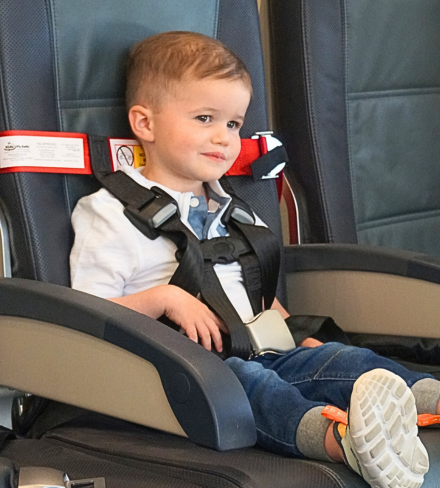
If you go the car seat route, our airline car seat rules guide walks you through every FAA regulation, installation tip, and airline-specific policy. The CARES harness is also worth considering — it is the only FAA-approved harness alternative to a full car seat, weighs just 1 lb, and works for kids 22 to 44 lb.
Airline Family Policies Worth Knowing
Not all airlines treat families the same. A few things worth checking before you book:
- Southwest does not assign seats, but families with children under 6 board between the A and B groups. This usually gets you decent seats together.
- United and American offer family pre-boarding for children under 2. After that, you board with your zone.
- JetBlue has some of the most consistent family-friendly policies, including free checked car seats and strollers.
- Delta is generally helpful but varies wildly by gate agent.
Always call the airline after booking if you need seats together and could not select them online. Most airlines will accommodate families with small children — but you have to ask.
Packing the Perfect Carry-On
Overpacking is a real problem, and many parents have been guilty of it. On a first flight with a toddler, it is common to bring so much stuff that getting it all through security becomes a full-blown logistics operation. But experienced traveling parents have it down to a science.
The Two-Bag System
You get two bags on most airlines: a carry-on (overhead) and a personal item (under the seat). Use them strategically.
Personal item (under the seat) — this is your lifeline bag:
- 3 to 4 diapers (not the whole pack — just enough for the flight plus a delay buffer)
- Travel wipes pack
- One full change of clothes for your toddler (sealed in a zip-lock bag)
- One extra shirt for you (trust us on this one)
- Sippy cup or water bottle — the Munchkin Miracle 360 is spill-proof and TSA-friendly when empty
- Pacifier or comfort item if your child uses one
- Your phone, wallet, boarding passes
- 2 to 3 snack options (more on this below)
Carry-on (overhead bin) — everything else:
- Entertainment kit (detailed below)
- Extra snacks
- A light blanket or muslin swaddle
- Any gear you do not need during the actual flight
The key principle: everything you might need while the seatbelt sign is on goes in the personal item under the seat. You cannot access the overhead bin during taxi, takeoff, landing, or turbulence — exactly the moments when your toddler is most likely to need something.
The Snack Strategy
Snacks are not just food on a plane. They are entertainment, bribery, comfort, and a timing tool. Here is the approach that works:
The rotation system: Pack 5 to 7 different snacks in individual small bags or containers. Do not hand your toddler a big bag of goldfish crackers — they will eat them all in 10 minutes and then you have nothing. Instead, introduce one new snack every 20 to 30 minutes. Each new snack buys you time.
What works on planes:
- Dry cereal (Cheerios, puffs) — the original toddler plane snack
- String cheese (stays good unrefrigerated for a few hours)
- Squeeze pouches — mess-free and filling
- Small crackers (animal crackers, graham crackers)
- Dried fruit (but not too much — you do not want a sugar crash at altitude)
- One "special" treat they do not normally get — this is your emergency reserve
What to avoid:
- Anything crumbly that will get ground into every crevice of the seat
- Peanut butter anything (allergies are a real concern in an enclosed cabin)
- Too much juice or milk (pressure changes plus sugar plus a full stomach equals potential vomiting)
The Entertainment Kit
This deserves its own section because it is the single most important thing you will pack. Check our full travel toys and activities roundup for detailed reviews, but here is the quick version:
For 12 to 24 months:
- Sticker books — the Cupkin sticker book has 500+ stickers and lasts for ages
- A busy board with buckles, zippers, and velcro — the Gojmzo busy board is silent and perfect for airplane seat play
- 2 to 3 small figurines or cars they have never seen before (novelty is everything at this age)
- Board books — bring ones you do not mind losing between the seats
For 2 to 4 years:
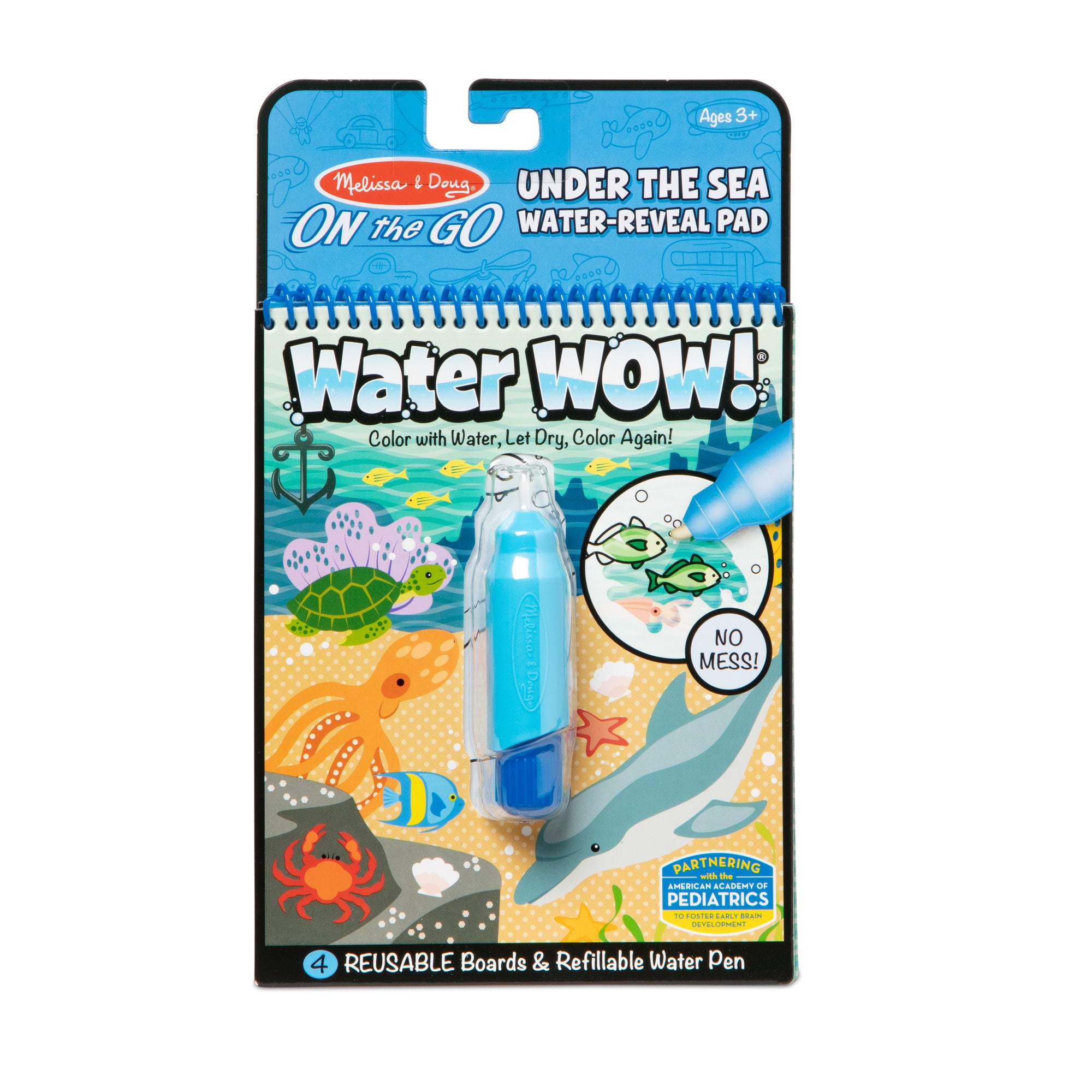
- Melissa & Doug Water Wow pads — mess-free, reusable, and genuinely fascinating for toddlers
- TEKFUN LCD writing tablet — a 10-inch drawing tablet that erases with one button, no paper needed
- Crayola Color Wonder sets — the markers only work on the special paper, so nothing else gets colored on
- A loaded tablet with volume-limited headphones — we will talk about screen time guilt later
The gift-wrap trick: Wrap 3 to 4 small toys or activities in wrapping paper or tissue paper. The unwrapping itself is an activity that buys you 5 minutes per item. Combined with the actual toy, you are looking at 15 to 20 minutes per wrapped item. This is legitimately one of the best airplane hacks parents report using.
At the Airport: Navigating the Chaos
The airport is often harder than the actual flight. You are carrying too much, your toddler wants to run, and everyone is in a hurry. For a dedicated deep-dive on airport logistics, check our guide to navigating airports with a toddler. Here is how to make it manageable.
TSA With Toddlers
Security with a toddler is not as bad as you think, as long as you know the rules:
Shoes: Children under 12 do not need to remove their shoes. Leave them on. One less thing to deal with. For the full list of TSA rules for traveling with children, check the TSA website before your trip.
Liquids: The 3-1-1 rule applies to your toiletries, but there are exceptions for children:
- Formula, breast milk, and juice for infants and toddlers are allowed in "reasonable quantities" exceeding 3.4 oz
- You need to declare them to the TSA agent before sending your bags through
- They may test the liquids with a strip — this takes an extra 30 seconds
- Baby food pouches and purees are also exempt from the 3.4 oz limit
Strollers and car seats: Both go through the X-ray if they fit on the belt. Most umbrella strollers fit. Full-size strollers and car seats get a manual inspection. Neither counts against your carry-on allowance — they are classified as child safety devices.
The process that works well:
- Approach security with everything loaded on the stroller
- Collapse the stroller at the X-ray belt
- Take the toddler out of any carrier
- Send everything through: stroller, car seat (if bringing one), bags, shoes (yours, not theirs)
- Walk through the scanner holding your toddler's hand or carrying them
- Reassemble everything on the other side — accept that this takes a minute
Family Lanes and Pre-Boarding
Many airports have family security lanes. They are not always faster, but the agents are more patient and the line is more forgiving when your toddler decides to sit down in the middle of the conveyor area.
Pre-boarding is available on most airlines for families with children under 2. Take it. Not because you need more time to stow your bags, but because you need time to:
- Get the car seat installed without a line of people waiting
- Set up the tray table cover and entertainment station
- Let your toddler explore the seat and row before it gets crowded
If your child is over 2, you will usually board with your zone. Try to have one parent board early to set up while the other stays in the gate area with the toddler, burning energy. Board the toddler as late as possible.
Using Your Stroller to the Gate
Every US airline allows you to gate-check your stroller for free. Use this to your advantage — ride the stroller all the way to the gate, then hand it off at the jet bridge.
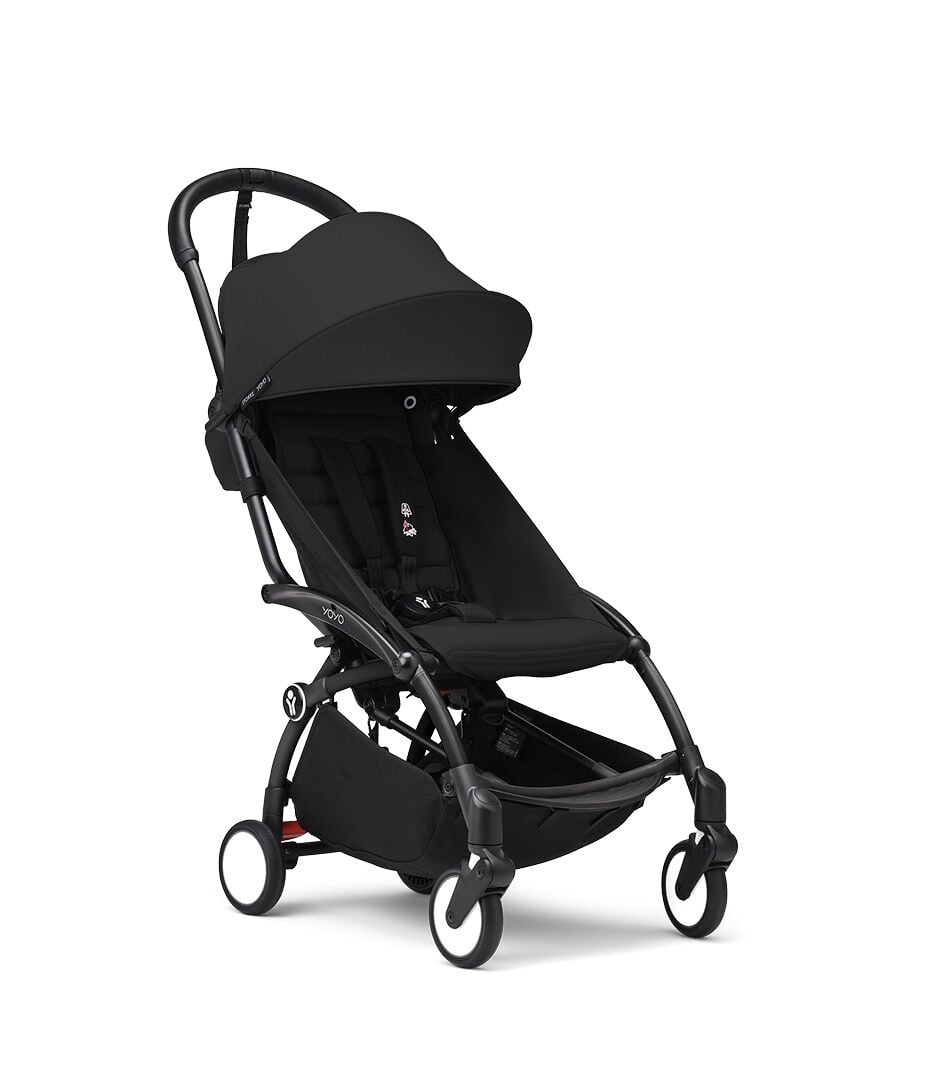
If you have a lightweight travel stroller, this is straightforward. Check our travel strollers for flying roundup for options that are specifically designed for air travel. The key features you want: compact fold, lightweight (under 15 lb), and easy one-hand operation so you can fold it while holding your child.
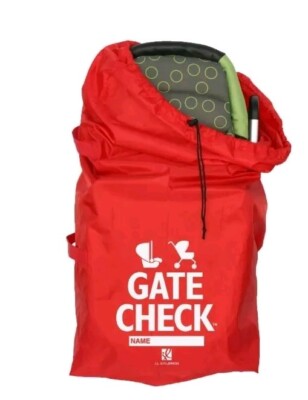
Put a gate-check bag over your stroller to protect it in the cargo hold. The J.L. Childress gate check bag and V VOLKGO stroller bag are both solid options. Without protection, your stroller will get scratched, rained on, and possibly damaged.
On the Plane: The Main Event
You are in your seats. The door is closed. Here is how to handle the next 2 to 6 hours.
Ear Pressure Management
This is the number one concern parents have about flying with toddlers, and for good reason. The pressure changes during ascent and descent can cause real ear pain, and toddlers cannot pop their ears on command like adults can.
During ascent (takeoff to about 10 minutes after):
- Have your toddler drink from a sippy cup, water bottle, or straw cup — the swallowing motion naturally equalizes ear pressure
- Nursing or bottle feeding works perfectly for younger toddlers
- A pacifier helps for kids who still use one
- Offer chewy snacks like dried fruit or fruit leather
- For kids over 2, teach them to yawn with their mouth wide open
During descent (starting about 30 minutes before landing):
- This is when ear pain is worst — cabin pressure increases as you descend
- Start the sippy cup or snack 5 to 10 minutes before you feel the descent begin
- If your toddler is asleep, you generally do not need to wake them — the swallowing reflex continues during sleep for most children
- If they do wake up crying and grabbing their ears, get liquid in them immediately
If your child is congested: Fly with saline nose spray and consider asking your pediatrician about children's ibuprofen before the flight. Congestion makes pressure equalization much harder. If your toddler has an active ear infection, talk to your doctor before flying — the pain can be severe. The CDC's travel health page for children has additional guidance on flying with young children who are unwell.
Managing Sleep on the Plane
Sleep on a plane is a gift. Sometimes it happens, sometimes it does not. You cannot force it, but you can set up the conditions:
Create a mini sleep environment:
- If your child is in a car seat, the familiar structure can actually help them fall asleep
- Use a portable sound machine clipped to the seat or in your pocket — the white noise masks the engine sound
- Bring a familiar blanket or lovey — the one thing from home that signals "sleep time"
- A window shade pulled down plus a blanket draped over the car seat creates darkness
Timing your flight around nap schedule: If your toddler naps at 1 PM every day, booking a 12:30 departure means the engine noise and motion may knock them out right on schedule. This is not guaranteed, but it gives you the best odds.
When they will not sleep: Accept it. Some toddlers are too stimulated by the airplane environment to sleep. If your child is wired and wide-eyed, lean into entertainment and snacks rather than fighting a losing sleep battle. The worst thing you can do is spend an hour trying to force sleep — that is how meltdowns start.
Meal Timing and the Tray Table Setup
Meals on planes are strategic events with a toddler. Here is the approach parents recommend:
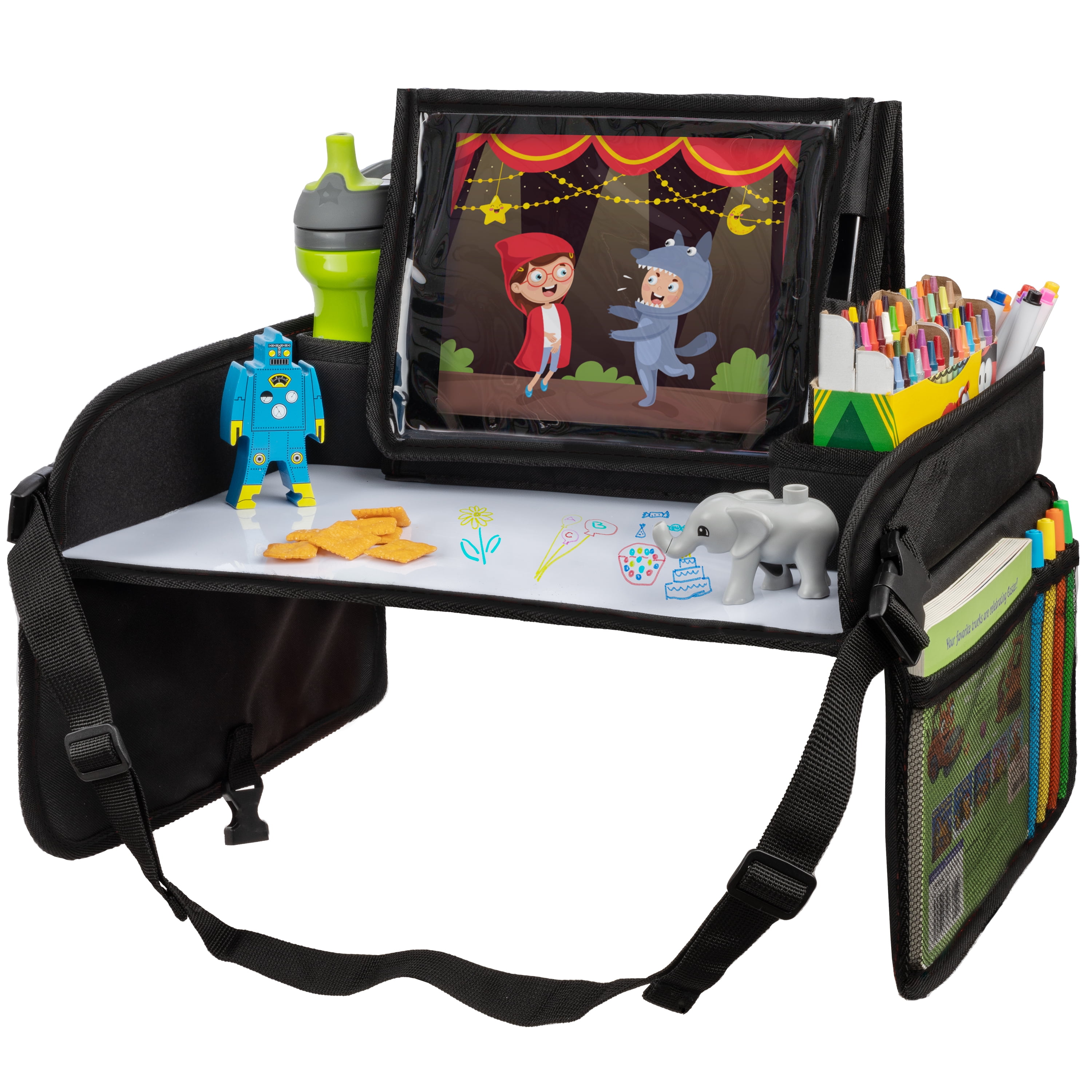
Set up the tray table immediately after the seatbelt sign goes off. A tray table cover is genuinely worth packing — airplane tray tables are filthy, and your toddler will put their mouth on every surface. The Lusso Gear tray table cover has built-in pockets for snacks and toys plus a tablet stand.
For lap trays, the PILLANI travel tray works in both car seats and airplane seats, giving your toddler a contained activity surface on their lap.
Time meals to coincide with when you need the most distraction. On a 3-hour flight, a good strategy is snacks during ascent, a bigger "meal" about 45 minutes in, and saving special snacks for the last 30 minutes when patience is running thin.
The Seatbelt Sign and the Walk Dilemma
The seatbelt sign will be on during takeoff, landing, and turbulence. During these times, your toddler needs to stay seated and buckled. For a kid who has just discovered walking, this is torture.
Strategies that work:
- A car seat actually helps here — kids are used to being strapped in a car seat and tend to accept it
- The CARES harness gives them more freedom of movement than a car seat while keeping them safe
- New toys or snacks introduced during seatbelt-on periods
- Window watching — point out clouds, other planes, the ground getting smaller
- Tablet time — this is when screen time is most valuable
When the seatbelt sign is off, let your toddler walk. Yes, the "walk of shame" down the aisle with a wobbly toddler while people pull their elbows in feels awkward. Do it anyway. A toddler who has been walking for 10 minutes up and down the aisle will sit quietly for 30 minutes afterward. That trade is worth every sideways glance.
Head to the back of the plane near the lavatories — there is usually a small standing area. Flight attendants are almost always friendly about toddlers hanging out back there for a few minutes.
Screen Time Guilt: Let It Go
Here is something that might be controversial: a flight is not the time to enforce your family's screen time rules.
If a tablet loaded with Bluey or Ms. Rachel keeps your toddler happy and quiet for two hours, that is a parenting win, not a failure. Your child will not be harmed by watching extra shows on a single travel day. The stress of trying to entertain a toddler for a 4-hour flight with zero screens, however, will absolutely harm you.
The practical setup:
- Download shows and movies to your tablet before the flight — airplane Wi-Fi is unreliable for streaming
- Bring volume-limited headphones — the Kidrox wired headphones are designed for ages 1 to 7 with an 85dB volume limit
- For babies and young toddlers who will not keep headphones on, keep the volume low and angle the screen away from neighbors — most people understand
- Have a splitter cable so you can share headphones if both kids want to watch
The Meltdown Plan
Here is the honest truth: your toddler will probably have at least one rough moment on the plane. Maybe a full meltdown. Maybe just 10 minutes of escalating whining that feels like an eternity. It will happen, and you need a plan.
Why Airplane Meltdowns Happen
Toddlers melt down on planes for the same reasons they melt down anywhere — they are tired, hungry, overstimulated, or frustrated by a lack of control. But planes amplify all of it:
- They cannot move freely
- The pressure changes are uncomfortable
- The noise and vibration are unfamiliar
- Their routine is destroyed
- They are picking up on your stress (toddlers are emotional sponges)
Specific De-Escalation Techniques That Work at 35,000 Feet
The escalation ladder — go through these in order:
-
Identify the need. Before you do anything, run through the checklist: hungry? thirsty? wet diaper? ears hurting? tired? Sometimes the fix is as simple as a cup of water or a diaper change.
-
Novel distraction. Pull out something they have never seen before. This is why we gift-wrap toys — the novelty factor can interrupt a meltdown in progress. A new sticker book, a new figurine, even a cup of ice from the flight attendant can reset their emotional state.
-
Physical comfort. Pick them up. Hold them against your chest. Rock gently. Sometimes a toddler mid-meltdown just needs to feel contained and safe. The airplane seat makes this awkward, but if you can get them chest-to-chest with their head on your shoulder, the physical pressure often calms them down.
-
Change of scenery. If the seatbelt sign is off, take them to the back of the plane. The change of environment alone can break the cycle. Let them stand, look at the beverage cart, watch the flight attendants. A 3-minute walk can reset everything.
-
The screen nuke. Pull out the tablet with their absolute favorite show. This is your emergency button. If nothing else has worked and they are escalating, give them the screen. You can reset screen time boundaries tomorrow.
-
Accept and ride it out. Sometimes nothing works. Sometimes a 20-month-old is going to scream for 15 minutes because they are exhausted and cannot fall asleep in this weird vibrating chair. Hold them, stay calm, and let it pass. It will pass.
Dealing With Other Passengers
Most people are far more understanding than you expect. Genuinely. The person who sighs loudly when your toddler cries is the exception, not the rule. Most passengers — especially those who are parents themselves — get it.
That said, the judgment (real or imagined) is one of the hardest parts of flying with a toddler. Here is how experienced parents handle it:
- Do not apologize preemptively. You do not need to hand out goodie bags or apologize to everyone in your row before the flight starts. You have a right to fly with your child. You are not doing anything wrong.
- A brief acknowledgment goes a long way. If your toddler is having a rough stretch, a simple "sorry about the noise — we are doing our best" to your immediate neighbors usually gets a sympathetic response.
- Ignore the sighs. If someone rolls their eyes or makes a comment, ignore them. Your job is to take care of your child, not manage a stranger's annoyance.
- Accept help when offered. If the passenger next to you offers to hold something, make a funny face at your kid, or help in any way — let them. It takes a village, even at 35,000 feet.
Age-Specific Tips: Because Every Age Is Different
A 13-month-old on a plane is a completely different animal than a 3-year-old. Here is what to expect and how to handle each stage.
12 to 18 Months: The Crawler-Turned-Walker
The challenges: This age wants to move constantly. They are newly mobile and the airplane seat is a prison. They do not understand "wait" or "later." They put everything in their mouth.
What works:
- Bring a car seat — the familiar restraint helps, and they are used to sitting in one
- Window seat for watching planes on the tarmac
- Snack traps with small puffs or cereal — the act of reaching in and grabbing is an activity itself
- Simple cause-and-effect toys (push a button, something happens)
- Lots of aisle walking when the seatbelt sign is off
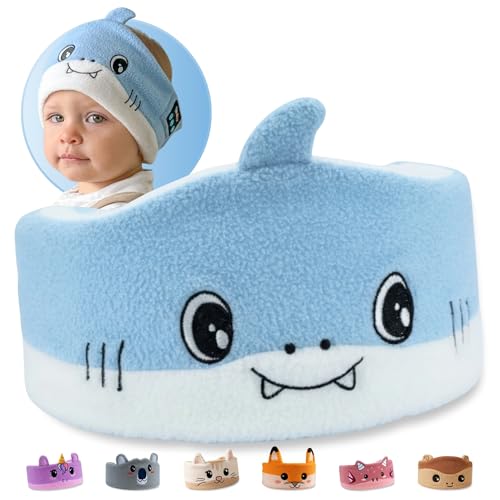
- Alpine Muffy ear protection for engine noise — the soft headband design is made for babies up to 36 months
What does not work: Coloring (they will eat the crayons), sticker books (they will eat the stickers), reasoning with them (they are 14 months old).
18 to 24 Months: Peak Difficulty
The challenges: This is widely considered the hardest age to fly with. They want independence but cannot have it. They are entering the tantrum phase. They are too young to be bribed with screen time effectively but too old to sleep through a flight in your arms. Many are in the "throwing phase" — they will launch toys, cups, and snacks onto the floor and other passengers.
What works:
- Stickers. Endless stickers. Stick them on the tray table, the window, their shirt, your face. The Cupkin sticker book is a lifesaver at this age.
- Busy boards with textures, zippers, and buckles — the Gojmzo busy board keeps this age occupied
- Peekaboo with a blanket or muslin
- Songs and finger plays (Itsy Bitsy Spider, Wheels on the Bus) — you will feel silly, but it works
- Rotating snacks every 15 to 20 minutes
- Accept that this flight will be work. Lower your expectations. Survival is success.
What does not work: Expecting them to watch a full show, sitting still for more than 10 minutes, any toy with pieces they can throw.
2 to 3 Years: The Negotiation Phase
The challenges: They have opinions. Strong ones. They want to do things "by myself" including unbuckle themselves, open the window shade, and press the call button 47 times. They may be potty training, which adds a whole other layer of stress.
What works:
- Tablet time becomes genuinely effective now — download 4 to 5 shows before the flight
- Melissa & Doug Water Wow pads and Color Wonder sets are perfect for this age
- Simple games: "I spy" out the window, counting clouds, finding letters on the safety card
- Giving them controlled choices: "Do you want the crackers or the apple slices?" This satisfies their need for independence
- A potty trip right before boarding, right after takeoff, and right before descent
- Bring a portable potty seat if your child is newly potty-trained — airplane toilets are terrifying to toddlers (giant, loud, with a scary flush)
What does not work: Saying "no" without offering an alternative, power struggles over the seatbelt, expecting them to nap on command.
3 to 4 Years: The Easiest Hard Age
The challenges: They talk. A lot. To everyone. They ask questions constantly. They can unbuckle their own seatbelt. They get bored more easily because they have longer attention spans but higher expectations for entertainment.
What works:
- This is the golden age for the TEKFUN LCD writing tablet — they can draw, practice letters, and play tic-tac-toe
- Card games like Go Fish (the Regal Games kid card set includes six classic games)
- Audiobooks and story podcasts with kid headphones
- The CARES harness instead of a car seat — it is FAA-approved, weighs 1 lb, and gives them more freedom while keeping them safe (22 to 44 lb)
- Detailed airplane explanations — at this age, they are fascinated by how things work. Explain turbulence, what the captain is doing, why the wings have flaps.
- A kid backpack with their own "travel supplies" they packed themselves — ownership makes them engaged
What does not work: Not having enough activities (their attention span is longer but they still need variety), ignoring their bathroom requests (they mean it now), fighting about screen time limits mid-flight.
Connections and Layovers
Sometimes you cannot get a direct flight. Here is how to handle connections without losing your mind — or your child.
The Tight Connection Nightmare
If you are connecting with a toddler, do everything in your power to book a layover of at least 90 minutes. An hour-long connection that seems fine when you are solo is a crisis when you are hauling a stroller, car seat, diaper bag, and a toddler who wants to stop and inspect every floor tile.
If you are stuck with a tight connection:
- Gate-check your stroller at your departure gate so it is waiting at the jet bridge when you land
- Wear your toddler in a carrier rather than relying on the stroller — it is faster through terminals
- Know your gates before you land (check the airline app during descent)
- Ask a flight attendant to let you deplane first — most will accommodate families with tight connections
- If you miss the connection, go directly to the airline's service desk. Do not wait in the rebooking line. Families with small children often get prioritized.
Using Airport Play Areas
Many major airports have play areas for children. They are worth seeking out during longer layovers:
- Denver (DEN): Multiple play areas in different concourses
- Chicago O'Hare (ORD): Kids play area near Terminal 2
- Dallas-Fort Worth (DFW): Play areas in Terminals A, B, and C
- Minneapolis (MSP): Excellent play areas in both terminals
Even without a dedicated play area, airports offer plenty of toddler entertainment: moving walkways, escalators (supervised, obviously), watching planes through the windows, and people-watching. A 30-minute "walk and explore" session before boarding burns energy and makes the next flight easier.
Feeding During Layovers
Airport food is expensive and usually not toddler-friendly. For more strategies on keeping your toddler fed throughout an entire trip, see our feeding your toddler while traveling guide. Here is what works:
- Pack shelf-stable pouches and snacks in your carry-on — these do not need to be bought at airport prices
- If you need hot food, many airports have family-friendly restaurants. Ask at the information desk.
- Fill water bottles and sippy cups at water fountains after security — do not pay $5 for a bottle of water
- If your toddler eats hot food, most coffee shops will give you hot water for free to warm a pouch or baby food container
Arrival: The Part Nobody Talks About
You made it. The flight is over. But the travel is not done yet.
Jet Lag Management for Toddlers
Jet lag is brutal for toddlers because they cannot understand why they feel wrong. For an in-depth breakdown with day-by-day adjustment schedules, see our full toddler jet lag guide. Here is the approach that works:
For eastward travel (losing time):
- Start shifting bedtime 15 to 20 minutes earlier for 3 to 4 days before your trip
- On arrival day, keep your toddler awake until at least 6 PM local time, even if they are exhausted
- Get outside in natural light — sunlight is the fastest way to reset circadian rhythm
- Expect the first 2 nights to be rough. By night 3, most toddlers adjust.
For westward travel (gaining time):
- This direction is easier. Your toddler will naturally stay up later.
- Let them sleep in on the first morning — pushing the schedule later is easier than pulling it earlier
- Avoid a late afternoon nap on arrival day; it will push bedtime to midnight
For any direction, 3+ time zones:
- Bring a portable sound machine — familiar white noise signals "sleep time" even in a new environment
- The SlumberPod blackout tent is worth its weight in gold for hotel rooms that cannot get dark enough
- Maintain your bedtime routine exactly — bath, book, sound machine, sleep. The routine is the anchor.
- Pack portable blackout curtains if you are not bringing the SlumberPod — the Amazon Basics blackout curtains attach with suction cups and work in most hotel windows
First-Night Strategies
The first night in a new place is usually the worst. Your toddler is overtired, in an unfamiliar room, and their schedule is off. Expect at least one wake-up.
- Set up the sleep space immediately upon arrival. Do not wait until bedtime to assemble the travel crib — let your toddler see it and play in it during the day so it is not scary at night.
- Bring a crib sheet from home. The familiar smell helps.
- If your toddler sleeps with a sound machine at home, bring one. If they do not, consider starting one at home a week before your trip — then the sound machine becomes a portable "this is where I sleep" signal.
Rental Car Seats at Your Destination
You have three options, and each has trade-offs:
-
Bring your own car seat. Safest option, familiar to your child, but heavy and bulky to transport. If you are doing this, check our FAA-approved car seats roundup for travel-friendly options.
-
Rent from the car rental company. Convenient but expensive ($10 to $15 per day) and you have no idea about the seat's history. Rental car seats may have been in unreported accidents, missing parts, or expired. Inspect it thoroughly. Our car seat rental car guide walks you through exactly what to check.
-
Buy a cheap car seat at your destination and donate or leave it. A Baby Trend Trooper Slim costs about $96, is FAA-approved in harnessed modes, and weighs about 12 lb. Some parents buy one, use it for the trip, and donate it to a local charity before flying home. This costs about the same as renting for a week but you get a brand-new seat with a known safety history.
Our toddler packing list covers everything else you need to think about for the rest of your trip.
The Quick Reference Checklist
For those who want to skim, here is the condensed version of everything above:
Booking:
- Window seat for the toddler
- Early morning flights for best behavior odds
- At least 90-minute layovers for connections
- Purchase a seat for children under 2 if budget allows
Packing carry-on:
- Lifeline bag under the seat: diapers, wipes, change of clothes, sippy cup, 3 snacks
- Overhead bag: entertainment kit, extra snacks, blanket
- 5 to 7 different snacks in separate bags (rotation system)
- 3 to 5 activities plus loaded tablet with downloaded shows
- Volume-limited headphones
- Portable sound machine
Airport:
- Use family security lanes when available
- Gate-check stroller in a protective bag
- Pre-board if available, otherwise have one parent board early to set up
On the plane:
- Sippy cup or nursing during takeoff and descent for ear pressure
- Rotate activities every 15 to 20 minutes
- Walk the aisle when seatbelt sign is off
- Save the best snacks and newest toys for the last 30 minutes
Disclosure: ToddlerTravelGear is reader-supported. We may earn a commission if you buy through links on our site — at no extra cost to you. Learn more
Frequently Asked Questions
Products Mentioned
AmSafe
CARES Child Airplane Travel Harness, FAA Approved Safety Restraint System
Read review →
Bandou
Bandou 3.0 Toddler Headphones, Kids Bluetooth Headband Headphones
Read review →
Lusso Gear
Lusso Gear Airplane Tray Table Cover with Snack & Toy Pockets, Foldable Tablet Stand
Read review →
Melissa & Doug
Melissa & Doug On The Go Water Wow! Under The Sea, Reusable Water-Reveal Activity Pad
Read review →
Stokke
Stokke YOYO3 Stroller, Lightweight & Compact Travel Stroller
Read review →
J.L. Childress
J.L. Childress Gate Check Bag for Single & Some Double Strollers, Red
Read review →
SAIREIDER
SAIREIDER Travel Neck Pillow, 100% Pure Memory Foam, Soft Adjustable for Plane, Car & Home
Read review →
SkyCradleNap
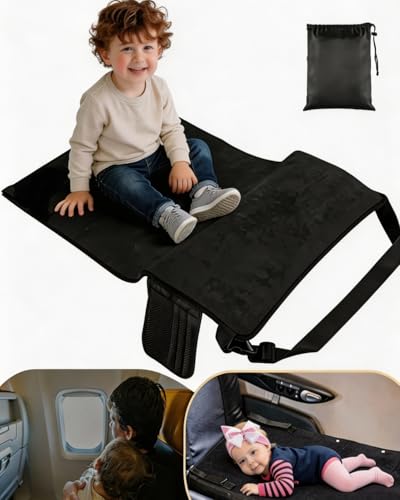
SkyCradleNap Toddler Airplane Bed and Seat Extender
Read review →
Related Content
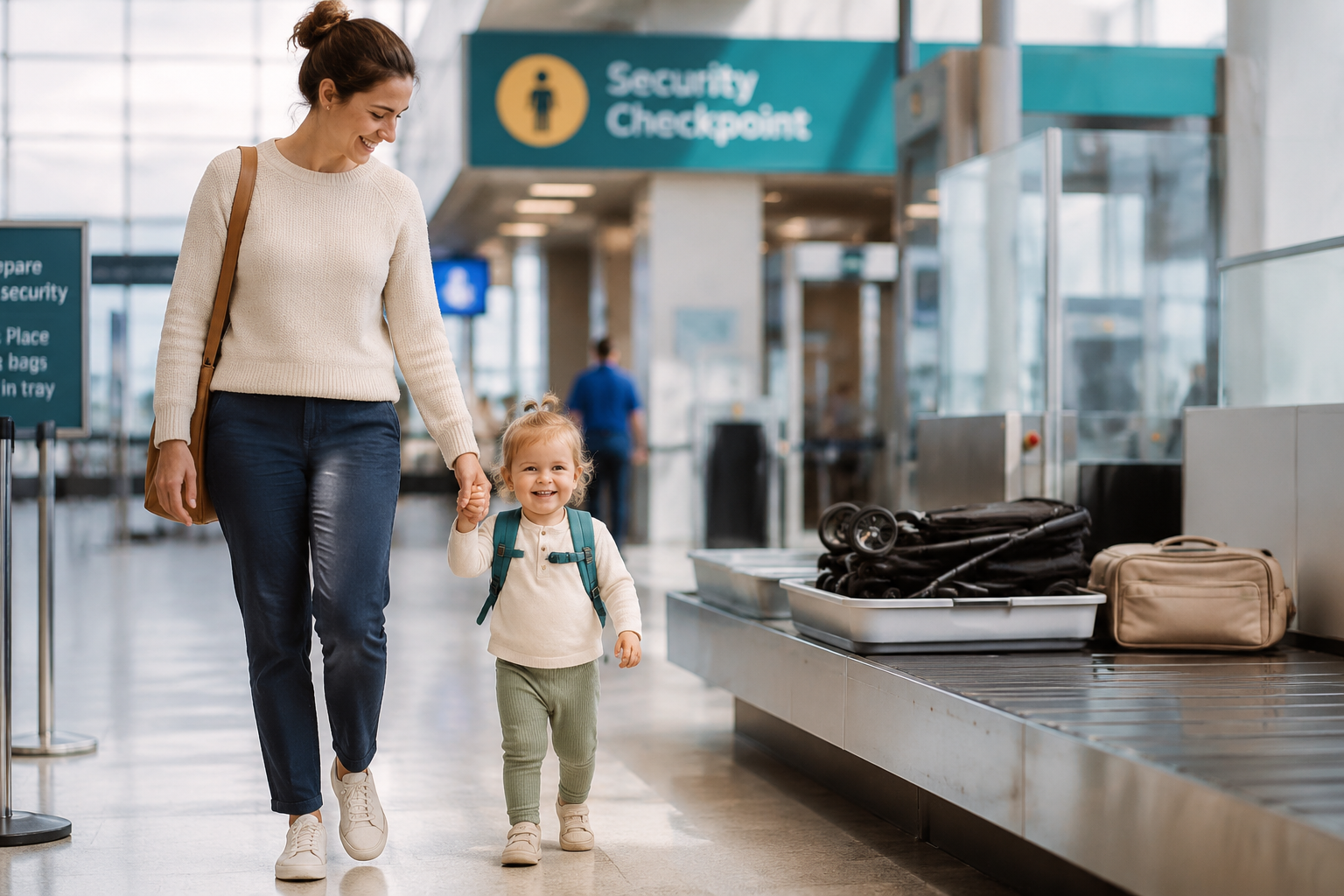
Navigating Airports with a Toddler: A Parent's Step-by-Step Survival Guide (2026)
A real parent's guide to navigating airports with a toddler — from TSA PreCheck and security lines to gate strategy, layovers, and baggage claim.
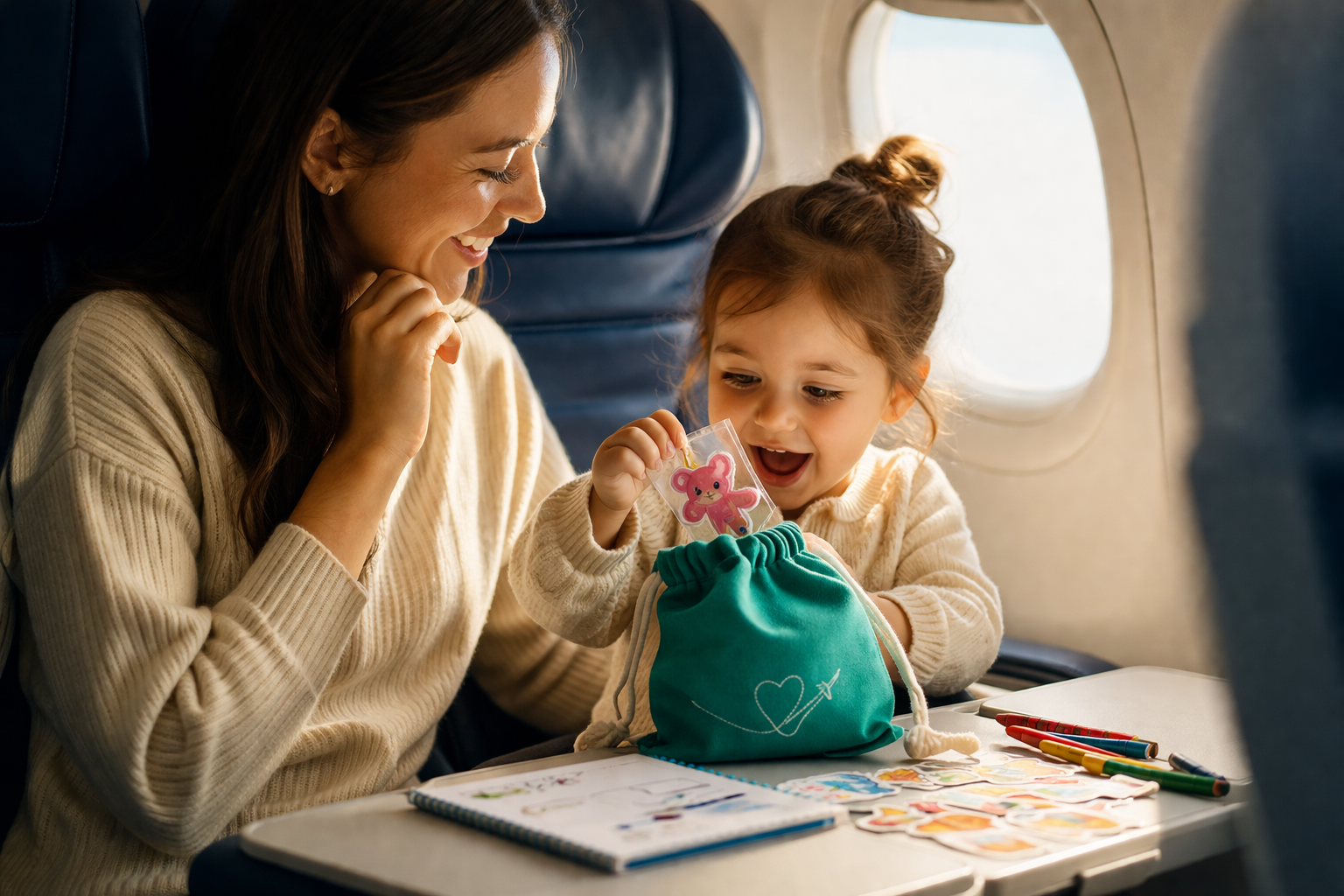
How to Keep a Toddler Entertained on a Plane (2026): Age-by-Age Activity Guide
40+ airplane activities for toddlers organized by age — from mess-free coloring to sensory toys, with a minute-by-minute flight plan that actually works.
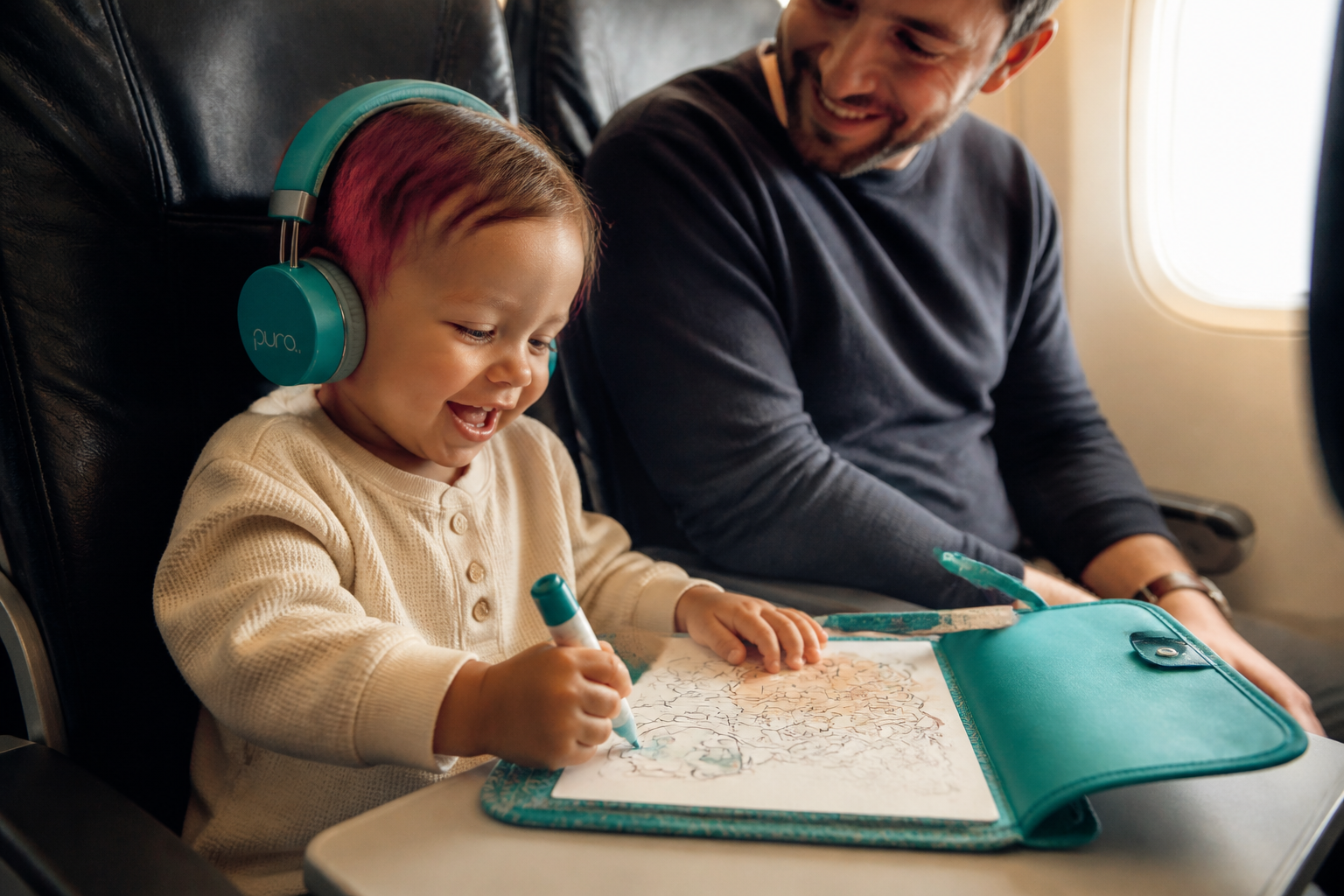
Best Airplane Comfort & Entertainment for Toddlers (2026)
Researched picks for headphones, ear protection, tray setups, busy boards, and safety gear that actually keep toddlers happy on flights. $29.95.