Disclosure: ToddlerTravelGear is reader-supported. We may earn a commission if you buy through links on our site — at no extra cost to you. Learn more
Best FAA-Approved Car Seats for Airplanes (2026)
6 parent-reviewed, FAA-approved car seats for flying with toddlers — from lightweight infant carriers to convertible seats and boosters, with real installation tips and airline rules.
Installing a car seat on an aircraft for the first time is a genuinely awkward experience. The belt path looks nothing like the one you practised in the driveway, you are working in a space the width of an economy seat, and there is a boarding queue behind you. Nine or ten minutes is a realistic first attempt, and knowing that in advance is most of the fix.
The variables that matter are aircraft type and seat width. A Boeing 737 or Airbus A320 economy seat takes most FAA-approved seats without drama. Regional jets are where problems start — some seats are as narrow as 16.5 inches, which rules out a large proportion of convertible car seats outright. And a gate-checked seat is handled like any other piece of baggage, which is exactly why a padded travel bag is not optional.
Through all of it, we learned one non-negotiable truth: flying with a car seat is annoying, but it is the safest way for a young child to fly. The FAA agrees. The AAP agrees. The NTSB has been asking for mandatory child restraints on planes for decades. And once you figure out the logistics — which seat to buy, how to get it through the airport, how to install it in a 17-inch-wide airplane seat — it becomes routine. Not fun. But routine.
This guide covers the 6 car seats we recommend for airplane travel in 2026, organized by the type of seat your child actually needs right now. Every seat here carries the FAA-approval label, which means you can legally and safely use it on any U.S. commercial flight.
Our top picks at a glance
What does "FAA-approved" actually mean?
Before we talk about specific seats, let us clear up the single most confusing thing about flying with a car seat: what "FAA-approved" actually means and how to know if your seat qualifies.
Every car seat sold in the United States that meets Federal Motor Vehicle Safety Standard 213 (FMVSS 213) will carry a label — a physical sticker on the side or back of the seat — that reads: "This restraint is certified for use in motor vehicles and aircraft." That sentence is your golden ticket. If your car seat has that sticker, you can use it on a commercial airplane. Period.
Here is what that label looks like in practice: it is usually a white or yellow sticker on the side of the seat near the base, mixed in with the weight limits, model number, and manufacturing date. On most Graco seats, it is on the right side near the LATCH connectors. On Chicco seats, it is typically on the back. You need to find this label before your trip — not at the gate when a flight attendant asks to see it.
What is NOT approved for airplane use? Booster seats without a harness (including belt-positioning boosters used in booster mode without the harness attached), CARES harness devices (these are a separate FAA-approved product, not a car seat), and any aftermarket car seat accessories that modify the seat's structure. We will get into the nuances of booster seats later in this guide because one of our recommended seats has a booster mode that changes how you can use it on a plane.
Why not just hold your child on your lap?
We hear this constantly: "My baby is under 2, so they can fly free on my lap. Why would I pay for a separate ticket?"
Here is the honest answer: holding a child on your lap during turbulence is not safe. During severe turbulence — the kind that happens without warning — the forces can exceed what your arms can hold. The FAA's own testing shows that a 20-pound child in moderate turbulence effectively weighs 60 pounds. In severe turbulence or a survivable crash, that number jumps to hundreds of pounds. No parent, no matter how determined, can hold that.
Lap-held children also have no protection during a survivable impact. In every other mode of transportation — cars, buses, trains — we require children to be restrained. Airplanes are the one exception, and it is an exception born from economics (airlines do not want to give up the revenue from that seat), not from safety data.
We understand that buying a separate ticket for a baby is expensive, sometimes adding $300 to $600 per flight. If your budget makes that impossible, lap-held is legal and millions of families do it safely every year. But if you can afford the extra ticket, a car seat on the plane is measurably, significantly safer. That is not opinion. That is what the data shows.
Best infant car seat for flying
Graco SnugRide Lite LX
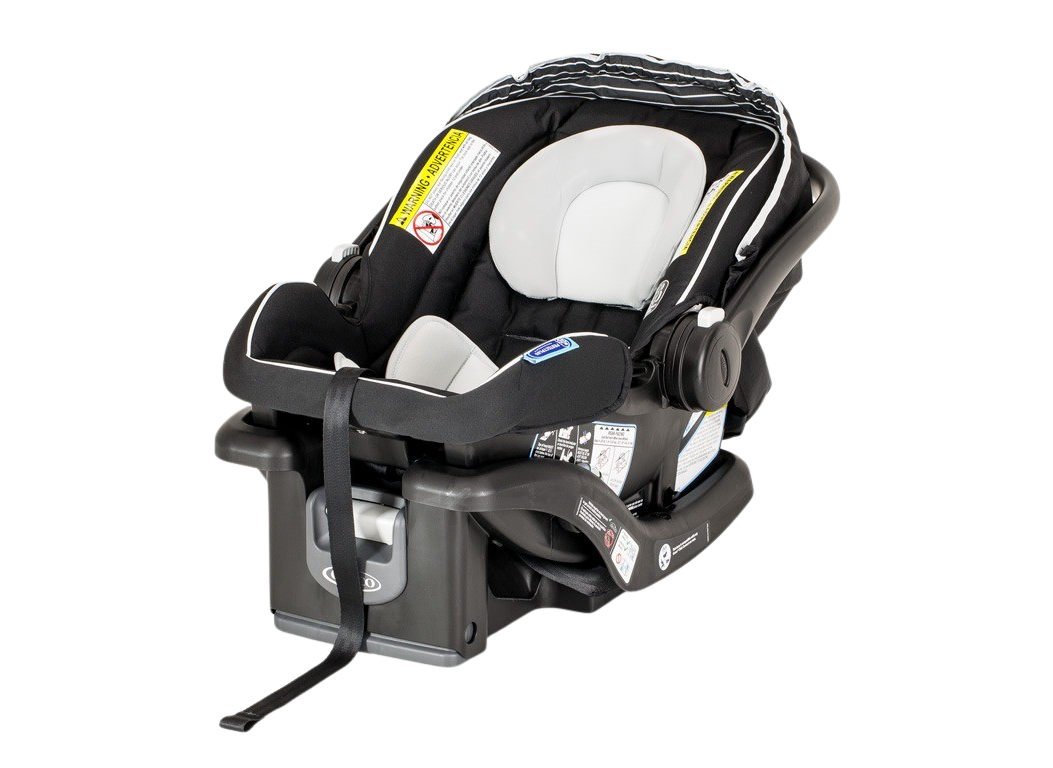
Graco SnugRide Lite LX Infant Car Seat, Lightweight Rear-Facing Seat
Best for InfantsGraco · $139.99
Price last checked August 15, 2026 — see Amazon for current pricing.
At just 7 lbs for the carrier, the lightest way to keep your baby rear-facing and safe on the plane.
Pros
- Ultra-lightweight at 7 lbs
- 4-position adjustable base
- ProtectPlus Engineered safety
- LATCH for easy install
Cons
- Rear-facing only
- Outgrown by 30 lbs
- Base sold separately for second car
If you are flying with an infant — newborn through about 12 months — the Graco SnugRide Lite LX is the seat we recommend. At approximately 7 pounds for just the carrier (no base), it is absurdly light for an infant seat with legitimate safety credentials. Graco's ProtectPlus Engineered system provides side-impact and rollover protection, and the 4-position adjustable base (when you are using it in a car at your destination) gives you flexibility for proper rear-facing angles.
Here is the critical detail for airplane use: you do NOT bring the base on the plane. The carrier installs on the airplane seat using just the airplane seatbelt threaded through the belt path on the bottom of the carrier. This is actually one of the easier car seat installations you will do on a plane because infant carriers are compact and the belt path is straightforward. We practiced it at home on a dining chair (the width is roughly similar to an airplane seat) and had it down to under two minutes.
The SnugRide Lite LX handles babies from 4 to 30 pounds rear-facing, which covers most infants through their first year. The harness is easy to adjust even in the tight confines of an airplane seat, and the canopy folds back completely when you need it out of the way.
One massive advantage of infant carriers for air travel: your baby can stay in the seat the entire time. They ride in it in the car to the airport, you click the carrier out of the base, put it on a stroller frame or carry it through the terminal, set it on the airplane seat and buckle it in, and reverse the whole process on the other end. Your baby barely needs to move.
The weight trade-off: At 7 pounds, the carrier alone is manageable. But add a sleeping 18-pound baby and you are carrying 25 pounds one-handed through the jetbridge. A car seat travel cart or a compatible stroller frame makes this much more bearable. A simple J-hook strap that hangs the carrier from a carry-on roller bag handle is the workaround most often recommended by parents who fly with an infant carrier, and it costs almost nothing.
Who it is best for: Families with infants under 30 pounds who want the lightest possible rear-facing seat for the plane. If your baby is approaching the 30-pound limit, look at the convertible seats below instead.
Best convertible car seats for flying
Convertible seats are the Swiss Army knives of the car seat world. They start rear-facing for infants, convert to forward-facing for toddlers, and some continue into booster territory for older kids. The trade-off is weight — they are heavier than infant carriers because they are built to last years instead of months. But if your child is between roughly 1 and 5 years old, a convertible seat is probably what you need on the plane.
Graco 4Ever DLX 4-in-1 Car Seat
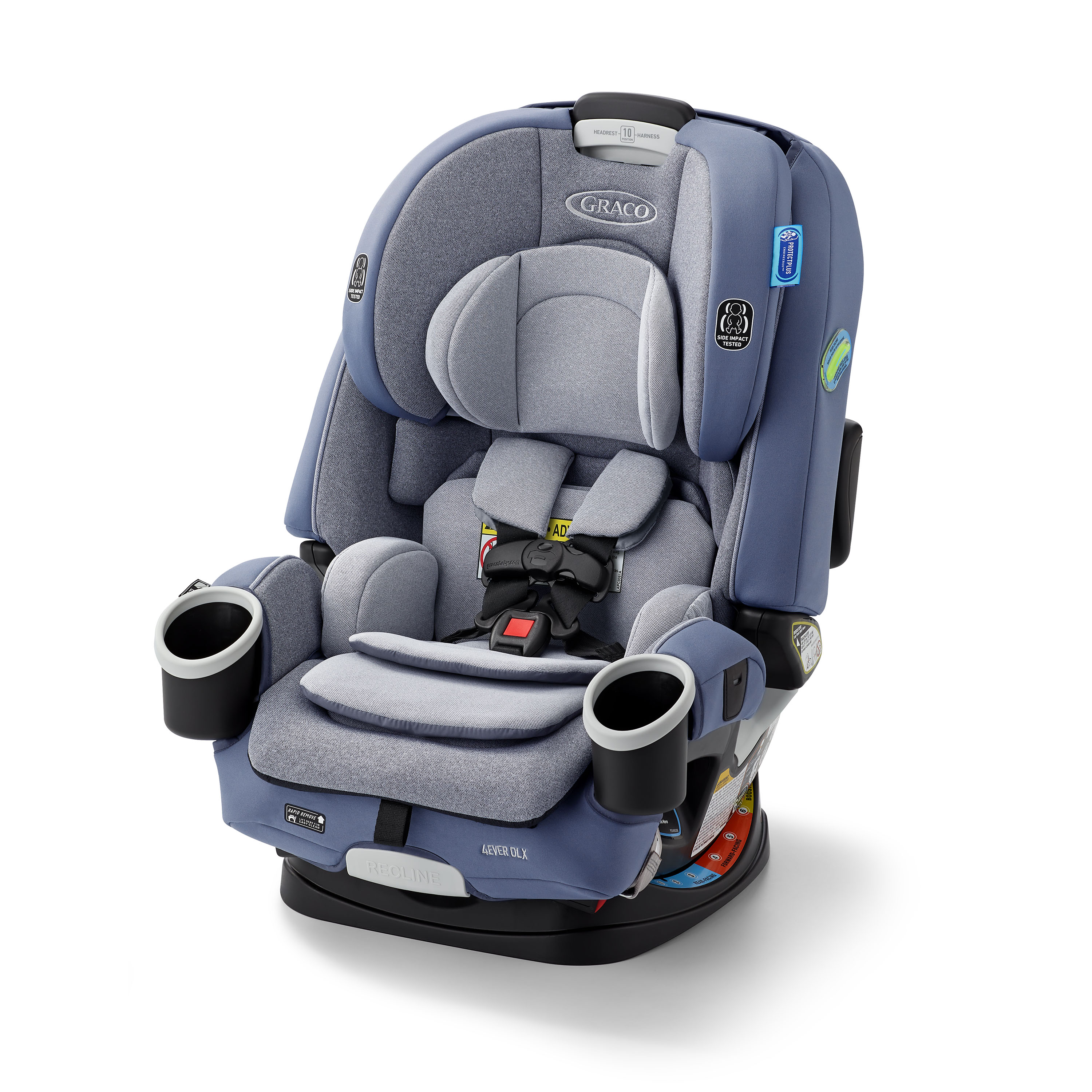
Graco 4Ever DLX 4-in-1 Car Seat, Infant to Toddler
Top PickGraco · $319.99
Price last checked August 15, 2026 — see Amazon for current pricing.
One seat from birth to booster — the 4-in-1 design means you buy once and fly for years.
Pros
- 4-in-1 lasts 10 years
- Excellent safety ratings
- No-rethread harness
- Machine-washable seat pad
Cons
- Heavy at 22 lbs
- Bulky for air travel
- Premium price
The Graco 4Ever DLX is the car seat equivalent of buying the biggest LEGO set: the upfront investment is real, but you are covered for a very long time. This 4-in-1 seat works as a rear-facing seat (4 to 40 lbs), forward-facing harnessed seat (22 to 65 lbs), highback booster (40 to 100 lbs), and backless booster (40 to 120 lbs). That is theoretically 10 years of use from a single seat.
For airplane use, here is what matters: in rear-facing and forward-facing harnessed modes, the 4Ever DLX carries the FAA-approval label and can be used on the plane. It installs using the aircraft seatbelt — there is no LATCH on planes — and the belt routing is clearly marked on the side of the seat. It fits standard economy seats, though snugly. On regional jets with narrower seats, some as tight as 16.5 inches, it is a squeeze or will not fit at all. Check your aircraft's seat width before flying a regional carrier.
The no-rethread harness is a godsend in the airplane context. You can adjust the harness height without unstringing the whole thing, which means quick adjustments when your child is wearing a bulky winter coat (which you should remove for proper harness fit, by the way — more on that in the tips section below).
The elephant in the cabin: This seat weighs 22 pounds. Without a child in it. That is a full carry-on bag worth of weight that you are hauling through the airport one-armed while pushing a stroller with the other hand and somehow also holding a boarding pass and your sanity. We are not going to sugarcoat this — 22 pounds is heavy for airport travel. But the 4Ever DLX is designed to be your one car seat, the seat you install in your car every day, and the same seat you pull out for flights. If you are driving to the airport, you are just moving it from your car to the plane. If you are being dropped off, that is a shorter carry. Where it gets rough is connecting flights and long terminal walks.
Our honest advice: if you already own a 4Ever DLX and use it daily, bring it on the plane. It is FAA-approved, your child is comfortable in it, and you know how to install it. But if you are shopping specifically for an airplane car seat and do not plan to use it as your daily driver, the weight may push you toward the Graco SlimFit below or even a dedicated lightweight travel seat.
Who it is best for: Families who want one seat that does everything — daily driver in the car and FAA-approved for occasional flights. Best for kids currently in the rear-facing or forward-facing harnessed stage who will grow into the booster modes at home.
Graco SlimFit 3-in-1 Convertible Car Seat
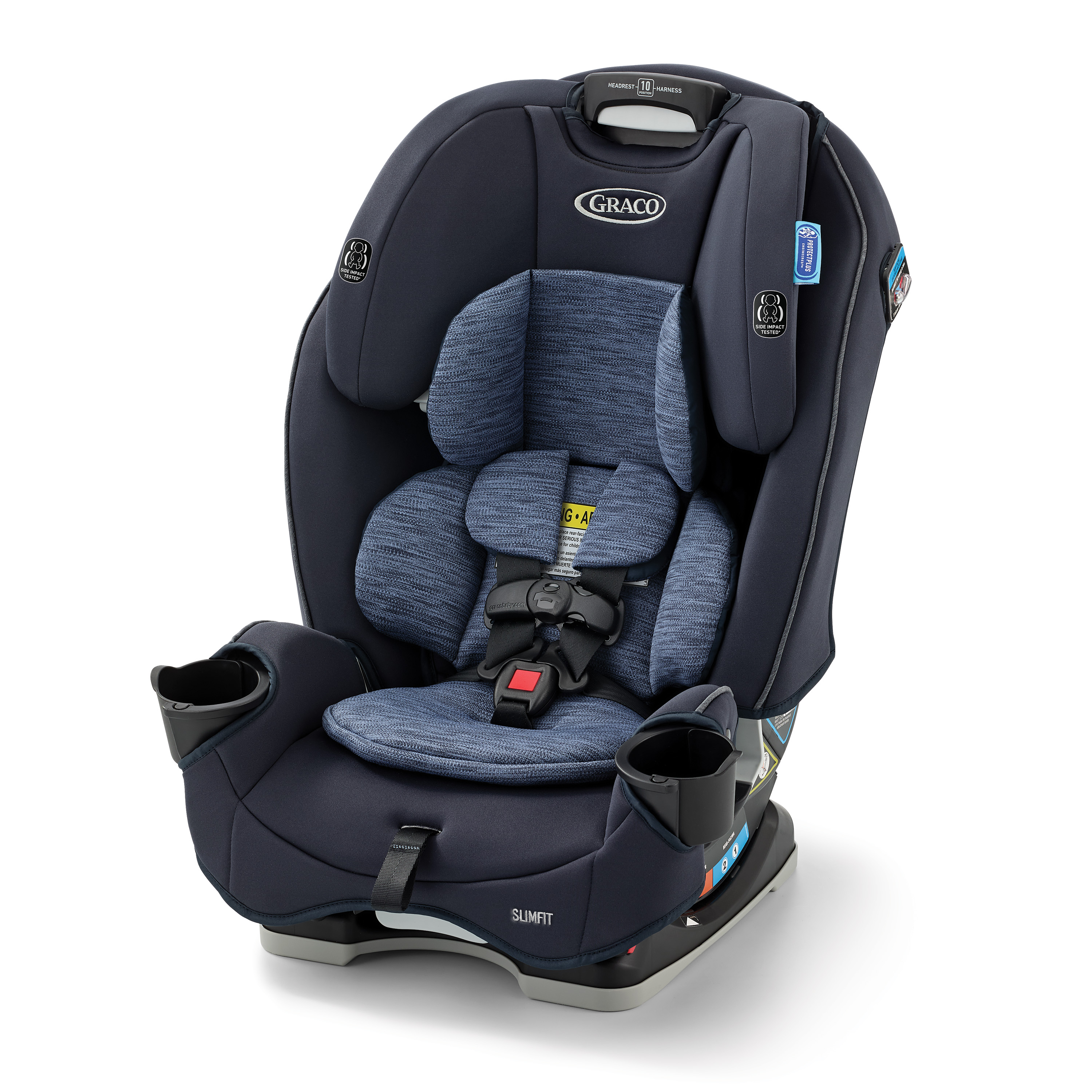
Graco Slimfit 3-in-1 Convertible Car Seat, Space Saving Design
Best for Tight Airplane SeatsGraco · $229.99
Price last checked August 15, 2026 — see Amazon for current pricing.
The slim design gives your row-mate precious extra inches — and you fewer dirty looks.
Pros
- Slim design fits 3-across
- 3-in-1 grows with child
- Rotating cup holder
- Space-saving for smaller cars
Cons
- Heavy at 18 lbs
- Not ideal for air travel
- Cup holder placement can be awkward
The Graco SlimFit 3-in-1 was designed to solve one specific problem: fitting three car seats across the back seat of a sedan. That slim profile translates beautifully to airplane seats. Where the 4Ever DLX fills an airplane seat to the edges, the SlimFit leaves noticeable room on either side, which means the passenger next to you is not spending five hours with a car seat pressing into their arm.
The seat handles three modes: rear-facing (5 to 40 lbs), forward-facing with harness (22 to 65 lbs), and highback booster (40 to 100 lbs). In the rear-facing and forward-facing modes — the ones you will use on a plane — it carries the FAA-approval label.
At 18 pounds, it is 4 pounds lighter than the 4Ever DLX. Four pounds does not sound like much until you are carrying it through Terminal C at O'Hare during a 25-minute connection. Those four pounds feel like forty. The SlimFit's design also makes it slightly easier to maneuver in tight airplane aisles. We once watched a dad try to carry a full-width convertible seat down the aisle of a 737 during boarding and clip every single armrest on the way. The SlimFit's narrower profile helps, though it is still not exactly a svelte device to carry down an airplane aisle.
The rotating cup holder is a nice touch for car use but irrelevant on planes — your child's drink should be in the seatback pocket anyway unless you enjoy cleaning up a turbulence-induced juice explosion.
Who it is best for: Families flying economy on narrow-body aircraft (which is most domestic U.S. flights) who want a convertible seat that will not make their row-mate hate them. Also excellent if you have a smaller vehicle at home and need a seat that fits three-across.
Graco EasyTurn 360 Rotating Car Seat
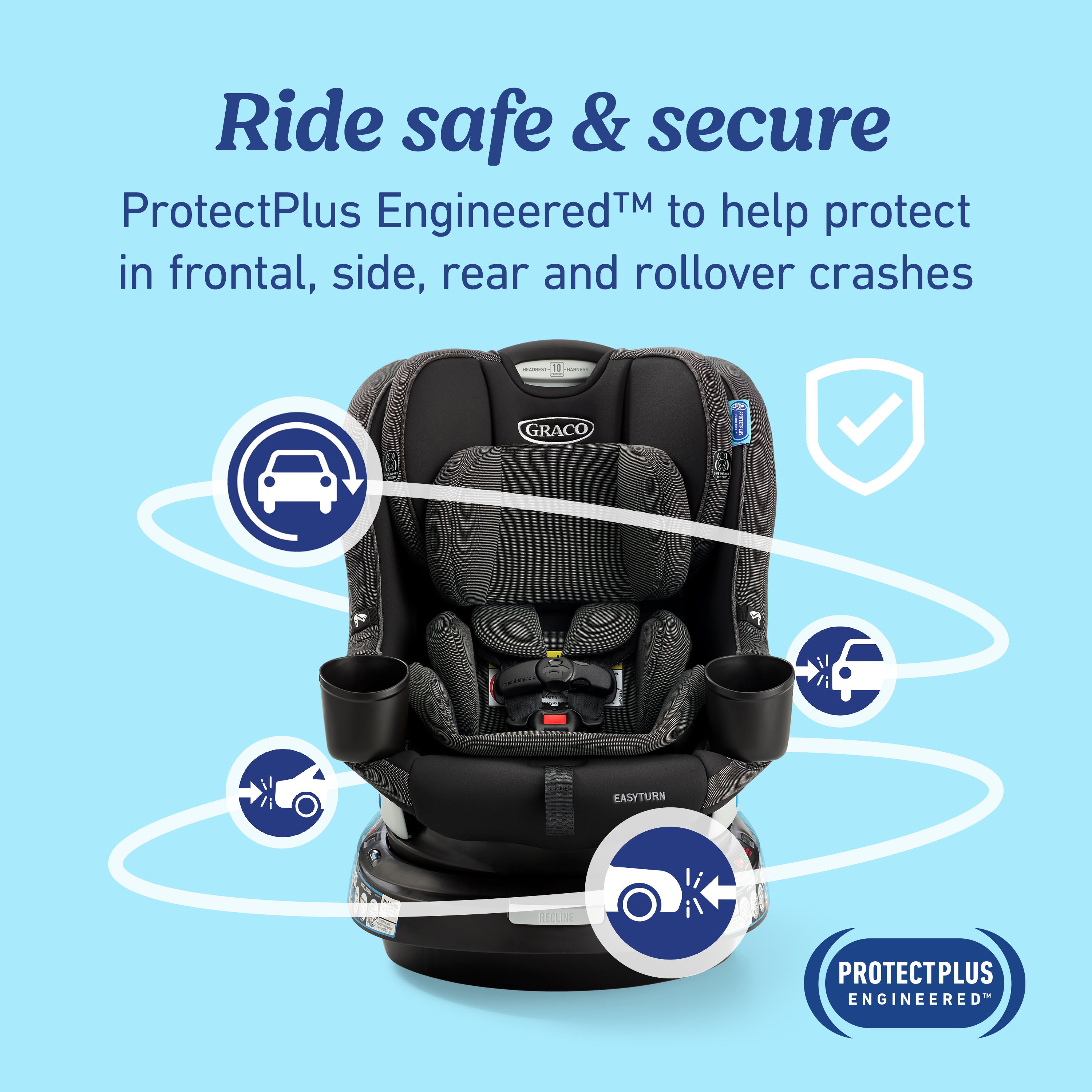
Graco EasyTurn 360 2-in-1 Rotating Convertible Car Seat
Easiest LoadingGraco · $349.99
Price last checked August 15, 2026 — see Amazon for current pricing.
The 360-degree rotation makes loading your child into a tight airplane row dramatically easier.
Pros
- 360-degree rotation for easy access
- Slim design
- Smooth rear-to-forward transition
- No reinstall needed to switch modes
Cons
- Heavy at 25 lbs
- Premium price
- Not for booster stage
Now here is an interesting one. The Graco EasyTurn 360 is a 2-in-1 convertible seat (rear-facing 4 to 40 lbs, forward-facing 22 to 65 lbs) with a 360-degree rotating base. In a car, the rotation lets you swing the seat toward the door for easy loading and unloading. On an airplane, it solves a problem that every parent who has flown with a car seat knows intimately: getting your child INTO the seat when it is already installed in the airplane row.
Think about the geometry. Your car seat is installed in the window seat. You are standing in the aisle with a toddler on your hip. The middle seat is between you and the car seat. With a fixed seat, you have to lean across the middle seat, hold your child at arm's length, and lower them into the car seat while your back screams. With the EasyTurn, you rotate the seat to face the aisle, set your child in, buckle the harness, and rotate back to the flying position. It is genuinely clever.
The important caveat: you must lock the rotation before the aircraft moves. The seat has a clear locking mechanism that prevents rotation during use. Flight attendants may ask about this — just show them the lock indicator. And at 25 pounds, this is the heaviest seat in our roundup. The rotation mechanism adds weight, which is the trade-off for the convenience. Carrying 25 pounds through an airport is no joke, and we strongly recommend a car seat travel bag with wheels or a car seat cart if you are flying with this one.
The 360 rotation also makes this seat one of the smoothest transitions from rear-facing to forward-facing, which is relevant if your child is right at the age where you are switching. You do not need to reinstall the seat — just rotate it and lock it in the new position.
Who it is best for: Families who struggle with the physical logistics of getting a toddler into a car seat in a tight airplane row. The rotation is a legitimate quality-of-life upgrade, especially for parents with back issues or for solo parents who do not have a second set of hands to help. Just be prepared for the weight.
Best booster and transitional seats for flying
Once your child outgrows their convertible seat's harness mode, you enter booster territory. This is where airplane rules get nuanced. Belt-positioning booster seats — the kind where the airplane seatbelt goes directly across your child — are technically NOT approved for aircraft use in booster mode. The FAA-approval label applies to the harnessed modes of these seats. However, several seats in this category offer harness modes that ARE approved, giving you a bridge between the full convertible stage and independent seatbelt use.
Graco Tranzitions 3-in-1 Harness Booster
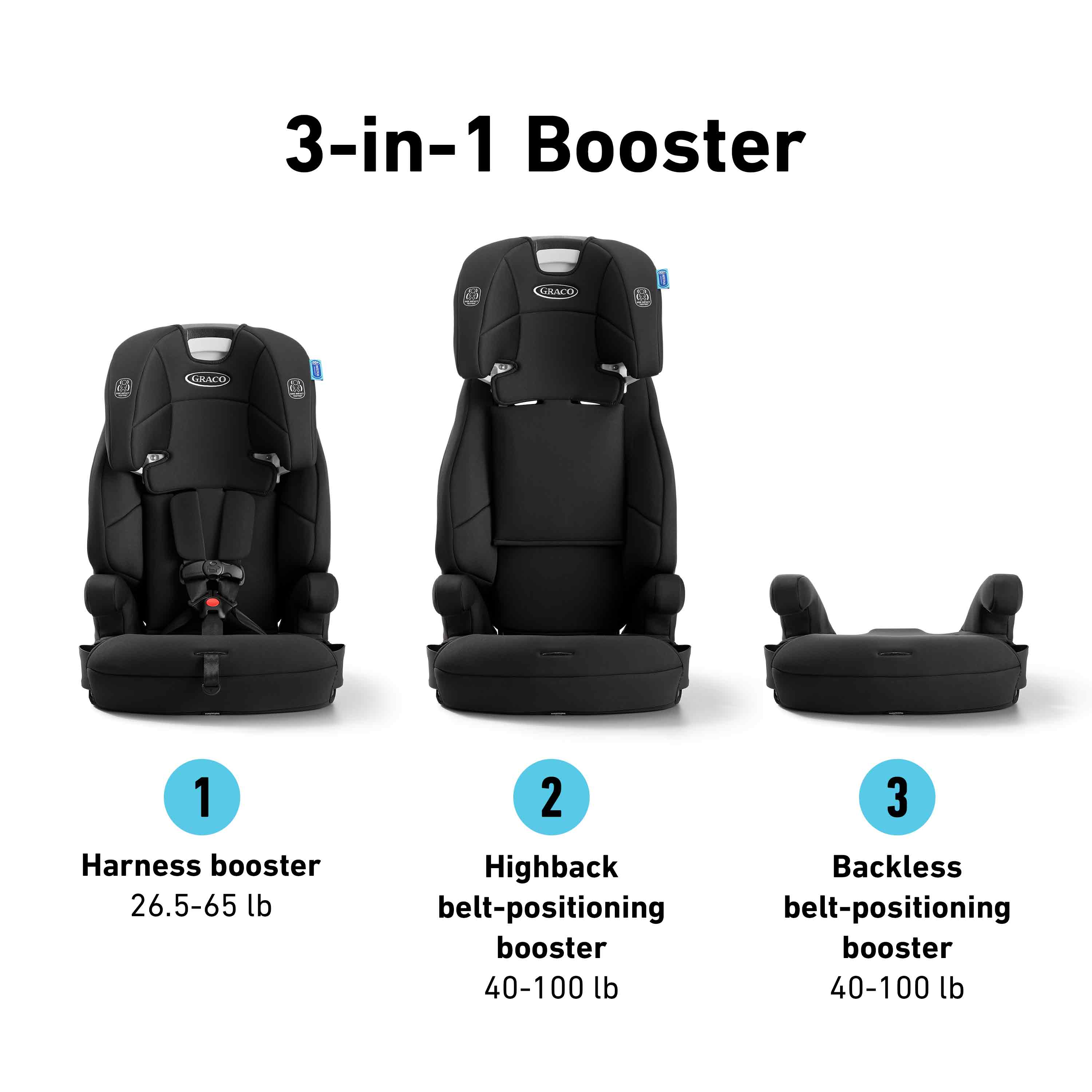
Graco Tranzitions 3-in-1 Harness Booster Car Seat
Best ValueGraco · $139.99
Price last checked August 15, 2026 — see Amazon for current pricing.
A forward-facing harness seat that transitions to a booster — FAA-approved in harness mode at a budget-friendly price.
Pros
- 3-in-1 grows with child
- Lightweight at 12 lbs
- Harness for younger kids
- Dual cup holders
Cons
- Forward-facing only (no rear-facing)
- Basic padding
- Harness mode limited to 65 lbs
The Graco Tranzitions 3-in-1 is the seat we recommend for kids who are too big for a rear-facing convertible but not yet ready for a belt-positioning booster. It operates in three modes: forward-facing with a 5-point harness (22 to 65 lbs), highback booster (40 to 100 lbs), and backless booster (40 to 100 lbs).
For airplane use, here is the critical detail: the Tranzitions is FAA-approved in its forward-facing harness mode only. When your child is in the harness (up to 65 lbs), you can install this seat on an airplane using the airplane seatbelt. In booster mode, where the airplane seatbelt goes directly across your child, it is NOT approved for aircraft use. This distinction matters — if your child has transitioned to booster mode at home, you would need to reconfigure the seat back to harness mode for the flight, assuming your child still meets the harness weight and height requirements.
At 12 pounds, the Tranzitions is remarkably light for a seat with this much range. Twelve pounds is half the weight of the 4Ever DLX and easily manageable for a one-armed airport carry. The dual cup holders are useful in the car but again irrelevant on a plane.
The padding is basic — this is not a luxury seat. For a 3-hour domestic flight, basic padding is fine. For a 12-hour international haul, your child might get uncomfortable.
Who it is best for: Families with kids in the 22 to 65 lb range who want a lightweight, affordable, FAA-approved harness seat for flying. Especially good for families who need a dedicated travel seat that lives in a closet between trips — the low price and light weight make it ideal for that purpose.
Chicco KidFit ClearTex Plus 2-in-1 Booster
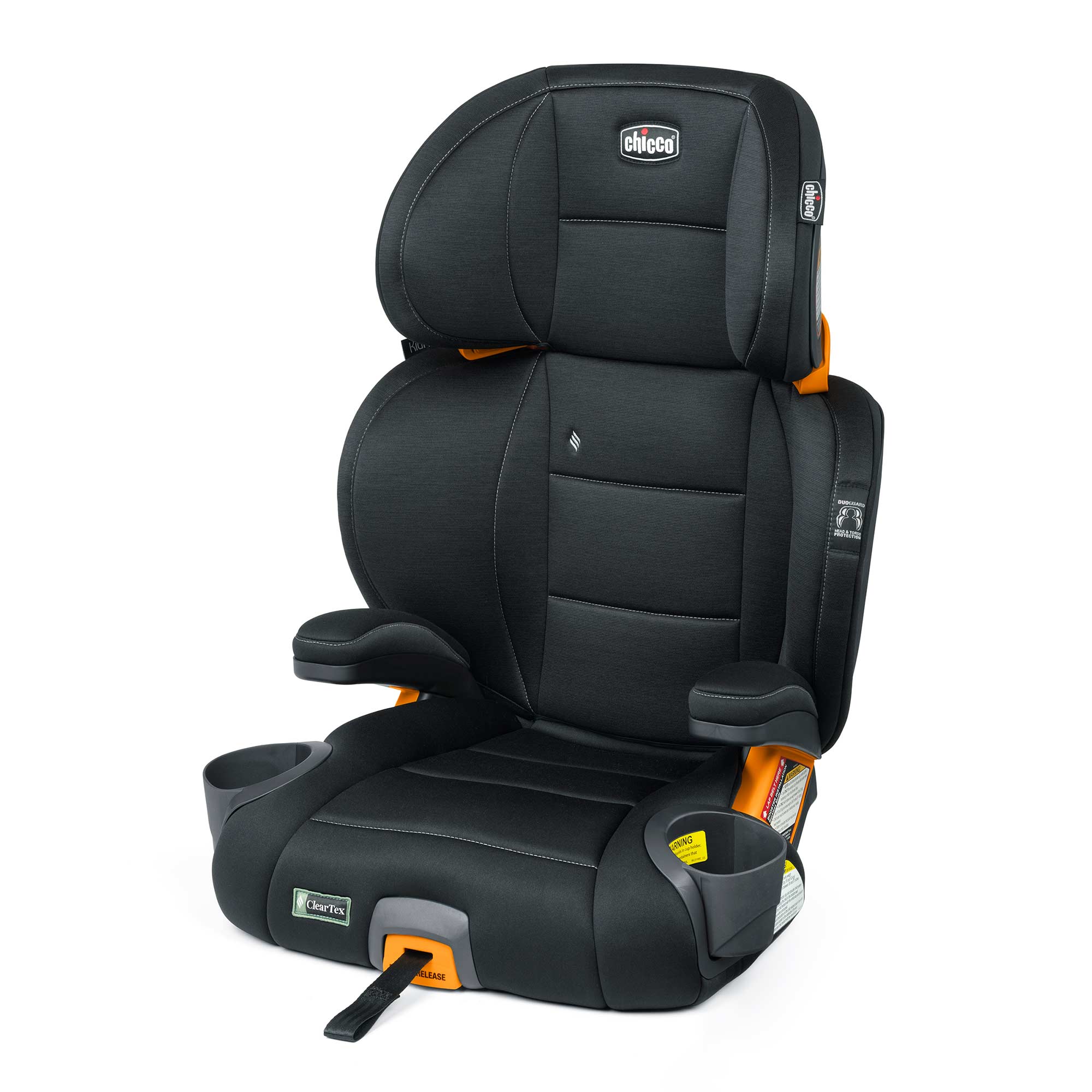
Chicco KidFit ClearTex Plus 2-in-1 Belt-Positioning Booster Car Seat
Best Booster for TravelChicco · $109.99
Price last checked August 15, 2026 — see Amazon for current pricing.
At just 10 lbs with premium ClearTex fabric, the lightest way to keep a bigger kid safe at the destination.
Pros
- Lightweight at 10 lbs
- ClearTex breathable fabric
- Converts to backless booster
- Easy to move between vehicles
Cons
- No harness (belt-positioning only)
- For ages 4+ only
- Not for younger toddlers
Let us be upfront about the Chicco KidFit ClearTex Plus: this is a belt-positioning booster seat, which means it is NOT approved for use on the airplane itself. There is no harness mode. In both its highback and backless configurations, the vehicle seatbelt (or airplane seatbelt) goes directly across your child, and the FAA does not approve belt-positioning-only boosters for aircraft use.
So why is it in this roundup? Because a huge number of families flying with kids ages 4 and up need a booster seat at their destination — for rental cars, taxis, rideshares, and borrowed vehicles. The KidFit ClearTex Plus is our pick for the seat you check at the gate, stow in the overhead bin (it does fit in most overhead compartments at 10 lbs), or check with your luggage, and then use extensively once you land.
The ClearTex breathable fabric is a genuine differentiator. If you are flying somewhere warm — and let us be honest, most family vacations involve warm destinations — a breathable car seat fabric means your child is not peeling themselves off a hot, sweaty booster after every car ride. The 2-in-1 design (highback and backless) gives you flexibility as your child grows, and at roughly $110, the price is reasonable for a seat with Chicco's build quality.
We fly with the KidFit ClearTex in a padded car seat travel bag checked at the gate. Gate-checked car seats get handled separately from regular luggage and arrive at the jetbridge when you deplane. In three years of gate-checking this seat, it has arrived undamaged every time.
Who it is best for: Families with kids ages 4+ (40 to 100 lbs) who need a quality booster at their destination. Not for use on the airplane during flight — pair it with the child sitting in their airplane seat with just the airplane seatbelt for the flight itself (legal for children over 2 in their own purchased seat).
Premium all-in-one and rotating seats
If you want a car seat that grows with your child for years and handles everyday driving as beautifully as travel, these premium picks are worth the investment. They are heavier than the budget travel seats above — not the ones you grab just for flights — but families who use one seat for everything appreciate the quality, safety features, and longevity.
Britax One4Life Slim
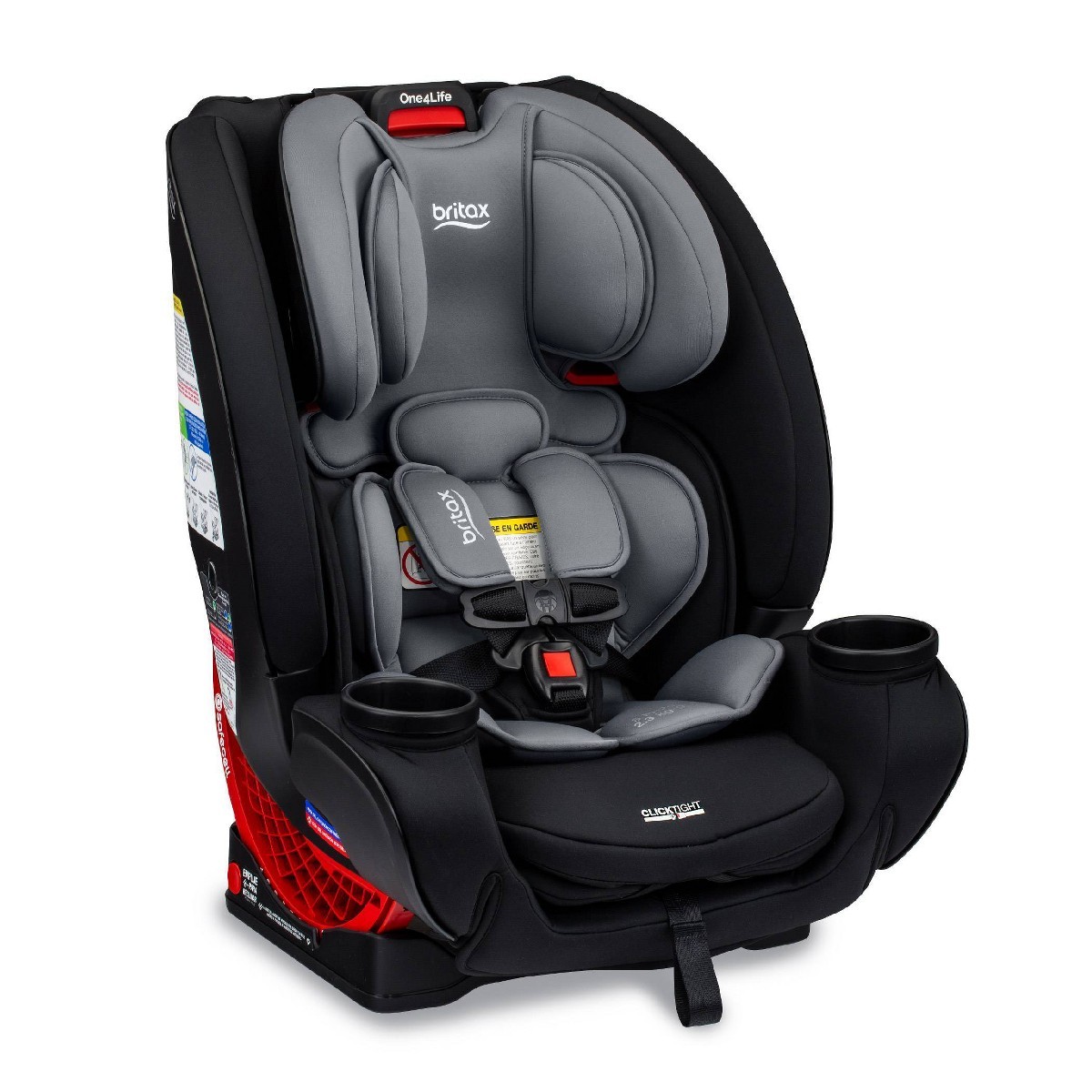
Britax One4Life Slim All-in-One Car Seat, Rear Facing, Forward Facing & Booster, ClickTight Installation, SafeWash — Parchment
Best All-in-OneBritax · $449.99
Price last checked August 15, 2026 — see Amazon for current pricing.
Birth to booster in one slim 17.5-inch seat — ClickTight installation makes setup foolproof every time.
Pros
- Up to 10 years of use across all modes
- 17.5" slim design fits 3-across in many vehicles
- ClickTight installation is nearly foolproof
- SafeWash fabrics are machine washable
Cons
- Premium price at $430
- Heavier than dedicated travel car seats
- Large size makes it less ideal for air travel
The Britax One4Life covers rear-facing, forward-facing, and booster mode in a single seat rated for up to 10 years of use. The real standout is ClickTight installation — you open a panel, route the seatbelt through, and close it. If it clicks, it is installed correctly. No more wrestling with LATCH clips or questioning whether you pulled the belt tight enough. The 17.5-inch slim profile means it fits in tighter back seats and leaves more room for siblings or a second car seat. SafeWash fabrics come off and go straight in the washing machine, which any parent who has dealt with a carsick toddler will deeply appreciate. At $430, it is an investment — but one seat for 10 years makes the per-year cost surprisingly reasonable.
Best for: Families who want one car seat from birth through the booster years, with the easiest installation system on the market.
Chicco Fit360 ClearTex
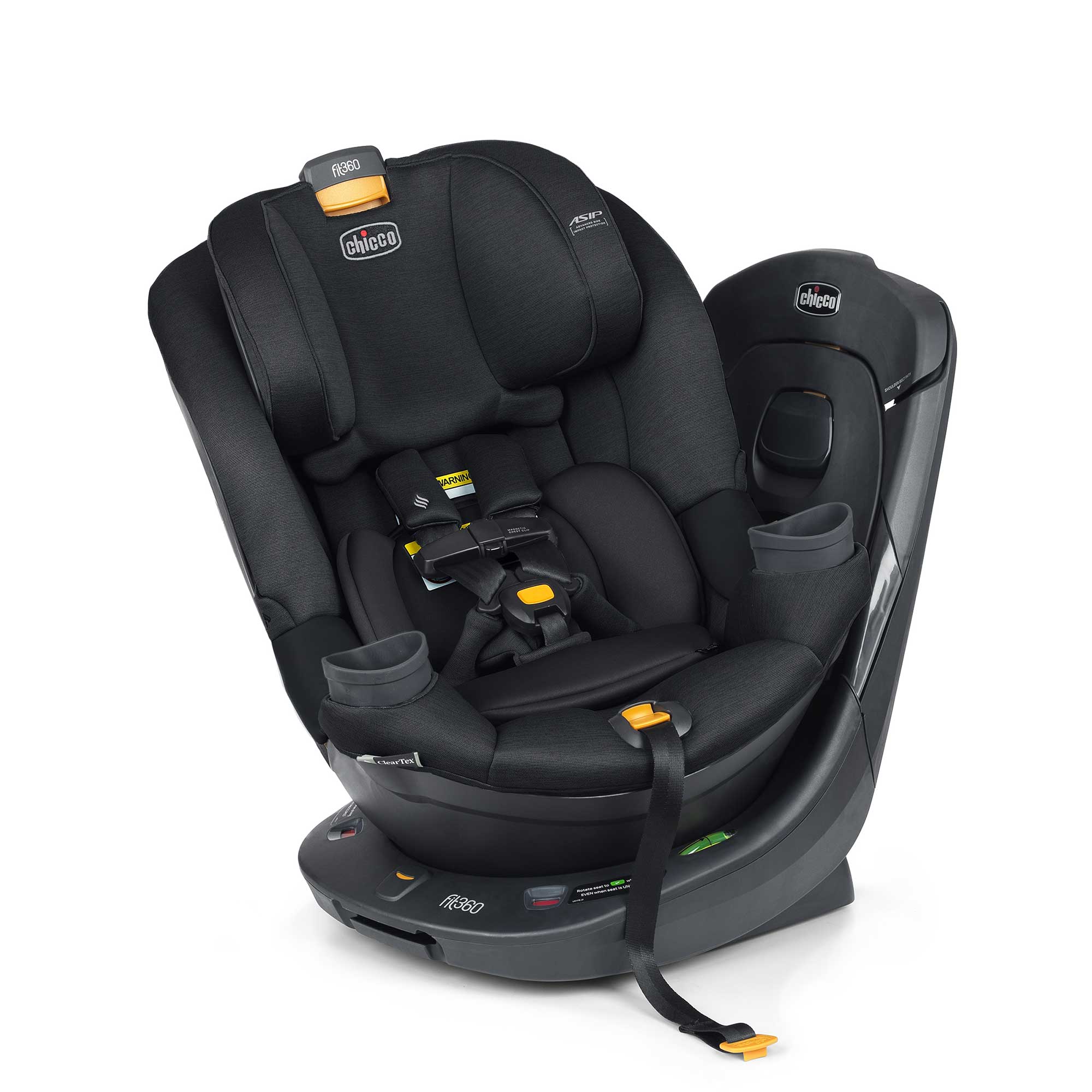
Chicco Fit360 SE ClearTex Rotating Convertible Car Seat, 360 Degree Rotation, LeverLock System
Best Rotating SeatChicco · $399.99
Price last checked August 15, 2026 — see Amazon for current pricing.
360-degree rotation turns the dreaded car seat loading struggle into a one-hand operation.
Pros
- 360-degree rotation makes loading effortless
- LeverLock self-tensioning ensures tight install every time
- ClearTex fabric free from added chemicals
- Trusted Chicco brand quality
Cons
- Premium price at $352
- Heavy — not practical for frequent air travel
- Only rear-facing and forward-facing, no booster mode
Loading a toddler into a rear-facing car seat in a parking garage while they arch their back and scream — every parent knows this battle. The Chicco Fit360 eliminates it. Rotate the seat toward the door, place your child in, buckle the harness, and rotate back into position. The LeverLock self-tensioning system is Chicco's answer to installation anxiety — pull the lever, and the system tensions itself. No guessing, no re-checking. ClearTex fabric means no added chemicals touching your child's skin. It handles rear-facing and forward-facing but does not convert to a booster, so plan on a separate booster seat around age 4-5.
Best for: Parents tired of the rear-facing loading struggle who want a premium rotating seat with chemical-free fabric.
Evenflo Revolve360 Extend
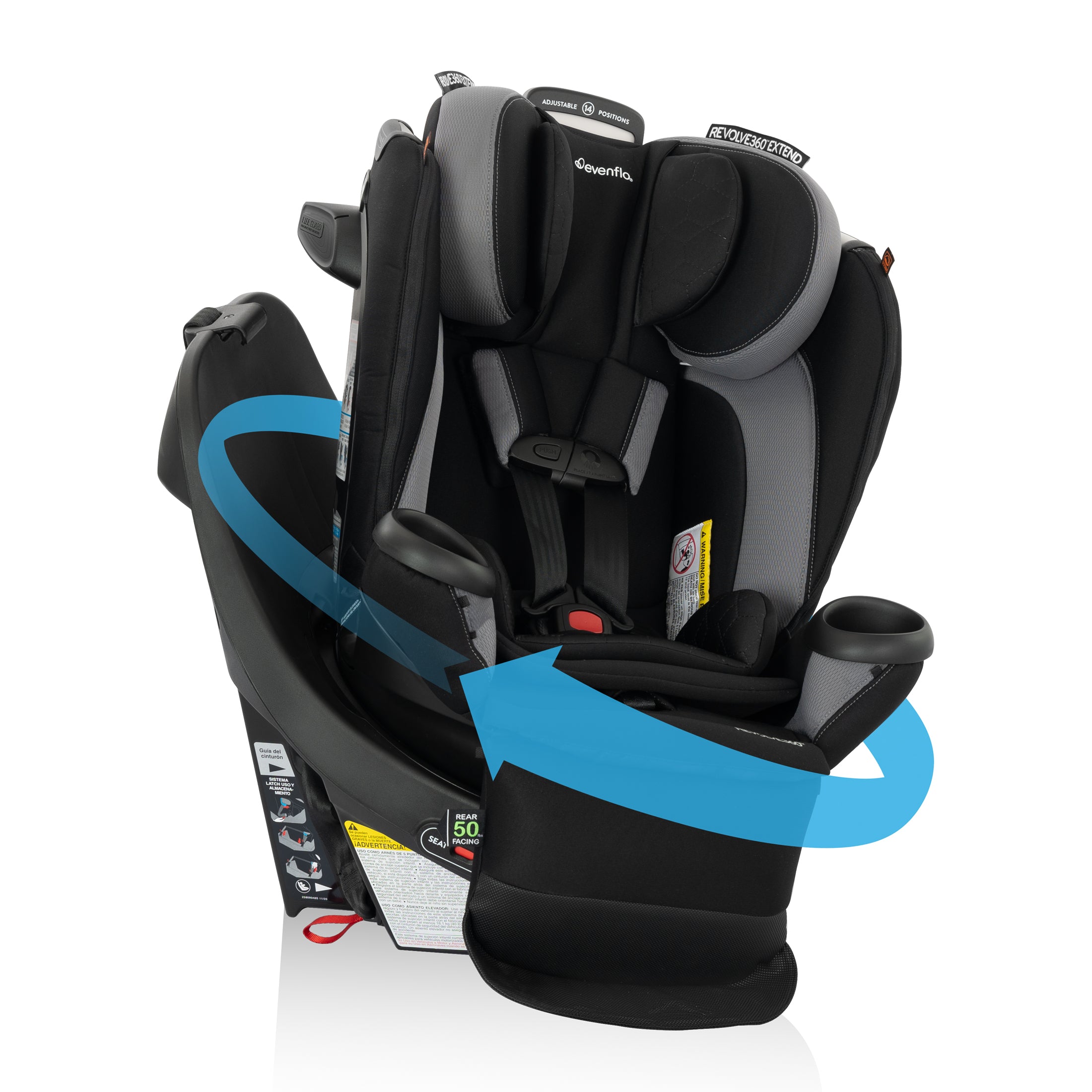
Evenflo Revolve360 Extend Convertible Car Seat, 360 Degree Rotation, Extended Rear-Facing — Revere Gray
Best Value RotatingEvenflo · $439.99
Price last checked August 15, 2026 — see Amazon for current pricing.
360-degree rotation plus extended rear-facing plus booster mode — all for significantly less than competing rotating seats.
Pros
- 360-degree rotation for easy loading
- Extended rear-facing keeps kids safer longer
- Converts from rear-facing through booster mode
- Competitive price for a rotating seat
Cons
- Bulky — takes up significant back seat space
- Not practical for air travel due to weight
- Some parents find rotation mechanism stiff initially
The Evenflo Revolve360 Extend gives you the same 360-degree rotation convenience as the Chicco Fit360 but adds booster mode and extended rear-facing capability — all at a competitive price point. Extended rear-facing is a big deal for safety: the AAP recommends keeping children rear-facing as long as possible, and this seat makes that easier by accommodating larger toddlers in rear-facing position. The rotation mechanism makes the daily load-unload cycle painless, and the conversion to booster mode means it grows with your child. Some parents find the rotation mechanism a bit stiff initially, but it loosens with use.
Best for: Safety-conscious families who want extended rear-facing, 360-degree rotation, and all-in-one versatility at a fair price.
How to install a car seat on an airplane
The installation itself is straightforward once you know the sequence. Here it is step by step.
Step 1: Remove the LATCH connectors. LATCH does not exist on airplanes. Every airplane car seat installation uses the airplane seatbelt, which is a lap belt only (no shoulder belt). If your seat has LATCH hooks hanging off it, tuck them away so they do not get caught on anything.
Step 2: Locate the belt path. Your car seat has a specific belt path for lap-belt-only installation. This is NOT always the same path you use in your car with LATCH. Check your manual — the airplane belt path is usually marked with a blue or red label on the seat. On most Graco convertible seats, the rear-facing airplane belt path runs along the bottom of the seat, while the forward-facing path routes through the back.
Step 3: Thread the airplane seatbelt. Unbuckle the airplane seatbelt, thread it through the belt path on your car seat, and buckle it. Pull the belt tight — as tight as you can get it. The airplane seatbelt works like any lap belt: pull the loose end to tighten, push the buckle lever to release.
Step 4: The one-inch test. Grab the car seat at the belt path and try to move it side to side and front to back. It should not move more than one inch in any direction. If it does, pull the airplane seatbelt tighter. This is the same test you do in your car.
Step 5: Angle check for rear-facing. If your seat is rear-facing, check the level indicator on the side of the seat. Airplane seats have a slight recline that sometimes puts rear-facing seats at the wrong angle. Most seats have a range of acceptable angles — as long as the indicator is in the safe zone, you are good.
Which side of the row?
FAA regulations require car seats to be installed in a window seat so they do not block the aisle during an emergency evacuation. This is not a suggestion — it is a rule, and flight attendants will enforce it. If you book an aisle or middle seat for your child's car seat, you will be asked to move.
For families of three (two parents, one child), the ideal configuration is: car seat in the window, one parent in the middle, one parent in the aisle. This way a parent is always next to the child and the aisle is completely clear.
For families of four with two car seats, you may need to install one car seat in each window seat with both parents in the middles. Some airlines will let you put two car seats next to each other (window and middle), but this depends on the airline and the specific aircraft. Call the airline before your flight to confirm.
Rear-facing vs. forward-facing on the plane
On a plane, rear-facing means the seat faces the back of the aircraft seat in front of you. Your child faces backward relative to the plane's direction of travel. Forward-facing means the seat faces the same direction as the airplane seat.
Rear-facing is generally considered safer and is the appropriate installation for infants and toddlers who are still in the rear-facing weight range of their seat. Rear-facing seats on planes can sometimes conflict with the recline of the seat in front of you — if the passenger ahead reclines fully, it may push against the top of a rear-facing car seat. A polite request usually resolves this, but on a full flight, you may encounter resistance.
Forward-facing installation is simpler on most aircraft and does not have the recline conflict issue. Once your child has outgrown the rear-facing limits of their seat, forward-facing is the correct installation regardless.
Airport logistics: getting the seat to the gate
Carrying a car seat through an airport is, to put it charitably, a workout. Here are the strategies that actually work.
Car seat travel cart. A wheeled cart that your car seat straps onto, turning it into a rollable device. This is our top recommendation for anyone flying with a convertible seat over 15 pounds. Your child can even sit in the car seat on the cart and you wheel them through the terminal like a stroller.
Car seat travel bag. A padded bag with backpack straps or wheels. Best for checking the seat at the gate or with luggage, because it is the only thing standing between the seat and normal baggage handling. Worth it for any seat you are not carrying onto the aircraft.
The one-arm carry. For lightweight seats (the SnugRide at 7 lbs, the Tranzitions at 12 lbs), you can simply carry the seat one-handed by the carry handle or by wedging it on your hip. This works for short terminal walks but becomes miserable on long concourse treks.
Stroller frame for infant carriers. If you are using the SnugRide Lite LX, a compatible stroller frame turns the carrier into a stroller. You wheel through the airport, gate-check the frame, and carry just the carrier onto the plane. This is the most elegant solution for infant travel.
What NOT to buy for airplane travel
We have made mistakes so you do not have to. Here are the car seats and products that seem like good ideas for flying but are not.
Any car seat over 25 pounds. Yes, some car seats weigh 30+ pounds. Yes, they are perfectly safe. No, you do not want to carry one through DFW International Airport during a connection. The physical reality of air travel demands a weight ceiling, and we draw the line at 25 pounds. Every pound over that is a pound your arms, back, and patience will resent.
Car seats with rigid LATCH-only installation. Some seats are designed primarily for LATCH and make belt-path-only installation difficult or unclear. Since airplanes only have lap belts, you need a seat with a clear, easy belt path. All six seats in this roundup have well-marked belt paths.
Aftermarket car seat accessories. Headrest pillows, strap covers, harness pads, and seat protectors that did not come with your car seat are not crash-tested with it. On an airplane — where turbulence can create forces similar to a car crash — aftermarket accessories can interfere with harness fit and seat performance. Use only what came in the box.
Car seats "for travel only" from unknown brands. We have seen no-name car seats marketed as "airplane car seats" on various shopping sites for suspiciously low prices. If a car seat does not have a recognizable manufacturer, a clear FMVSS 213 certification, and the FAA-approval label, do not put your child in it at any altitude.
Umbrella strollers as car seat carriers. We have seen parents try to strap car seats onto umbrella strollers with bungee cords for the terminal walk. This is unsafe. The stroller is not designed for the weight distribution, and a car seat falling off a makeshift carrier in a busy terminal is a hazard. Use a dedicated car seat cart or carry the seat.
Age-by-age airplane seat guide
Not sure which type of seat your child needs for the plane? Here is the breakdown by age and stage.
Newborn to 12 months (infant stage)
Best option: Graco SnugRide Lite LX in rear-facing mode. The infant carrier is lightweight, easy to install rear-facing on the plane, and your baby can stay in the same seat from car to terminal to aircraft. This is the simplest age for flying with a car seat because infant carriers are designed for portability.
1 to 3 years (toddler stage)
Best option: Graco SlimFit 3-in-1 or Graco 4Ever DLX in rear-facing or forward-facing mode, depending on your child's size. This is the hardest age for airplane car seats because the seats are big, the kids are squirmy, and the logistics are maximum effort. The SlimFit's narrow profile helps in tight airplane seats. The 4Ever DLX is the better choice if it is already your daily seat and you do not want to buy a second one.
Also consider: Graco EasyTurn 360 if loading your toddler into a tight airplane row is your biggest frustration. The rotation feature is a genuine problem-solver for this age group.
3 to 5 years (preschooler stage)
Best option: Graco Tranzitions 3-in-1 in harness mode. At 12 pounds, it is light enough to carry easily and the harness keeps your preschooler properly restrained. If your child is still within the harness weight limits, this is the most practical airplane seat for this age — light, affordable, and FAA-approved.
5+ years (booster stage)
For the plane: Children over 5 who have outgrown harness seats typically sit in the airplane seat with just the airplane seatbelt. This is legal and common. A CARES harness (sold separately, not in this roundup) is an FAA-approved alternative that provides additional upper-body restraint.
For the destination: Chicco KidFit ClearTex Plus, checked at the gate or with luggage. You will need a booster for rental cars and taxis at your destination, and the KidFit is light, breathable, and converts between highback and backless modes.
Tips from twenty flights with car seats
These are the things no product listing tells you. They come from experience, mistakes, and one very memorable incident involving grape juice and a forward-facing Graco at cruising altitude.
Remove the winter coat. A puffy winter coat prevents the harness from fitting snugly against your child's body. In a turbulence event, the coat compresses and the harness effectively has several inches of slack. Remove the coat, buckle the harness snugly, and put a blanket over your child if they are cold. This rule applies in cars and on planes equally.
Board early. Most airlines offer family boarding or early boarding for passengers with car seats. Take it. Installing a car seat while 200 people wait behind you in the aisle is stressful for everyone. Early boarding gives you 10 to 15 minutes to install without an audience.
Bring a printed copy of FAA rules. Some flight attendants are not familiar with FAA car seat regulations. We have been told — incorrectly — that car seats are not allowed on planes, that only certain brands are approved, and that we needed to check our seat at the gate. Having a printed page from the FAA website with the relevant regulations saved us arguments on two separate occasions.
Practice the airplane seatbelt installation at home. The airplane seatbelt routes differently than your car's LATCH system or shoulder-plus-lap belt. Find the airplane belt path in your car seat's manual and practice threading a belt through it. Two minutes of practice at home saves nine minutes of fumbling on the plane (we speak from experience).
Protect your seat during checking. If you gate-check or luggage-check your car seat, use a padded travel bag. Baggage handling is rough, and a cracked car seat shell is not always visible but compromises safety. We have a strict rule: if a car seat gets checked without a bag, we inspect it thoroughly before using it, checking the shell for cracks, the harness for fraying, and the buckle for proper function.
Related guides
- Airline Rules for Traveling With Car Seats — the complete guide to TSA, airline policies, and international flight rules
- Best Travel Strollers for Flying — because you need to get through the airport too
- Best Road Trip Gear for Toddlers — if your trip includes driving at the destination
Individual Reviews
We have written in-depth reviews for several products in this roundup. Each one covers the full specification, the safety standards the seat is certified against, and who should choose something else.
Disclosure: ToddlerTravelGear is reader-supported. We may earn a commission if you buy through links on our site — at no extra cost to you. Learn more
Frequently Asked Questions
Products Mentioned
Chicco
Chicco KidFit ClearTex Plus 2-in-1 Belt-Positioning Booster Car Seat
Read review →
Graco
Graco 4Ever DLX 4-in-1 Car Seat, Infant to Toddler
Read review →
Graco
Graco EasyTurn 360 2-in-1 Rotating Convertible Car Seat
Read review →
Graco
Graco Slimfit 3-in-1 Convertible Car Seat, Space Saving Design
Read review →
Graco
Graco SnugRide Lite LX Infant Car Seat, Lightweight Rear-Facing Seat
Read review →
Graco
Graco Tranzitions 3-in-1 Harness Booster Car Seat
Read review →
Britax
Britax One4Life Slim All-in-One Car Seat, Rear Facing, Forward Facing & Booster, ClickTight Installation, SafeWash — Parchment
Read review →
Chicco
Chicco Fit360 SE ClearTex Rotating Convertible Car Seat, 360 Degree Rotation, LeverLock System
Read review →
Evenflo
Evenflo Revolve360 Extend Convertible Car Seat, 360 Degree Rotation, Extended Rear-Facing — Revere Gray
Read review →
Related Content
Airline Rules for Traveling With Car Seats: A Plain-English Guide (2026)
Every FAA car seat rule explained in plain English — which seats are allowed on planes, installation tips, gate-checking, and airline-specific policies for 2026.
Britax One4Life Slim Review: One Car Seat From Birth to Booster in a 17.5-Inch Frame
Honest Britax One4Life Slim review — ClickTight installation, slim 17.5-inch width, all-in-one from newborn through booster. $449.99.
Chicco Fit360 ClearTex Review: The Rotating Car Seat That Ended Our Parking Lot Wrestling Matches
Honest Chicco Fit360 ClearTex review — 360-degree rotation, LeverLock self-tensioning, chemical-free ClearTex fabric, and more. $399.99.