Disclosure: ToddlerTravelGear is reader-supported. We may earn a commission if you buy through links on our site — at no extra cost to you. Learn more
Graco 4Ever DLX Review: The One Car Seat That Actually Lasts a Decade
Honest Graco 4Ever DLX review and flights — 4-in-1 modes, installation on airplanes, real weight at 22 lbs, and more. $319.99.
The Graco 4Ever DLX 4-in-1 Car Seat costs $319.99, ~22 lb, rated 4–120 lbs (10 years of use). This page covers what the specification supports, where the real trade-offs are, and who should choose something else — before you spend the money.
The trade-off worth knowing before you buy: heavy at 22 lbs.
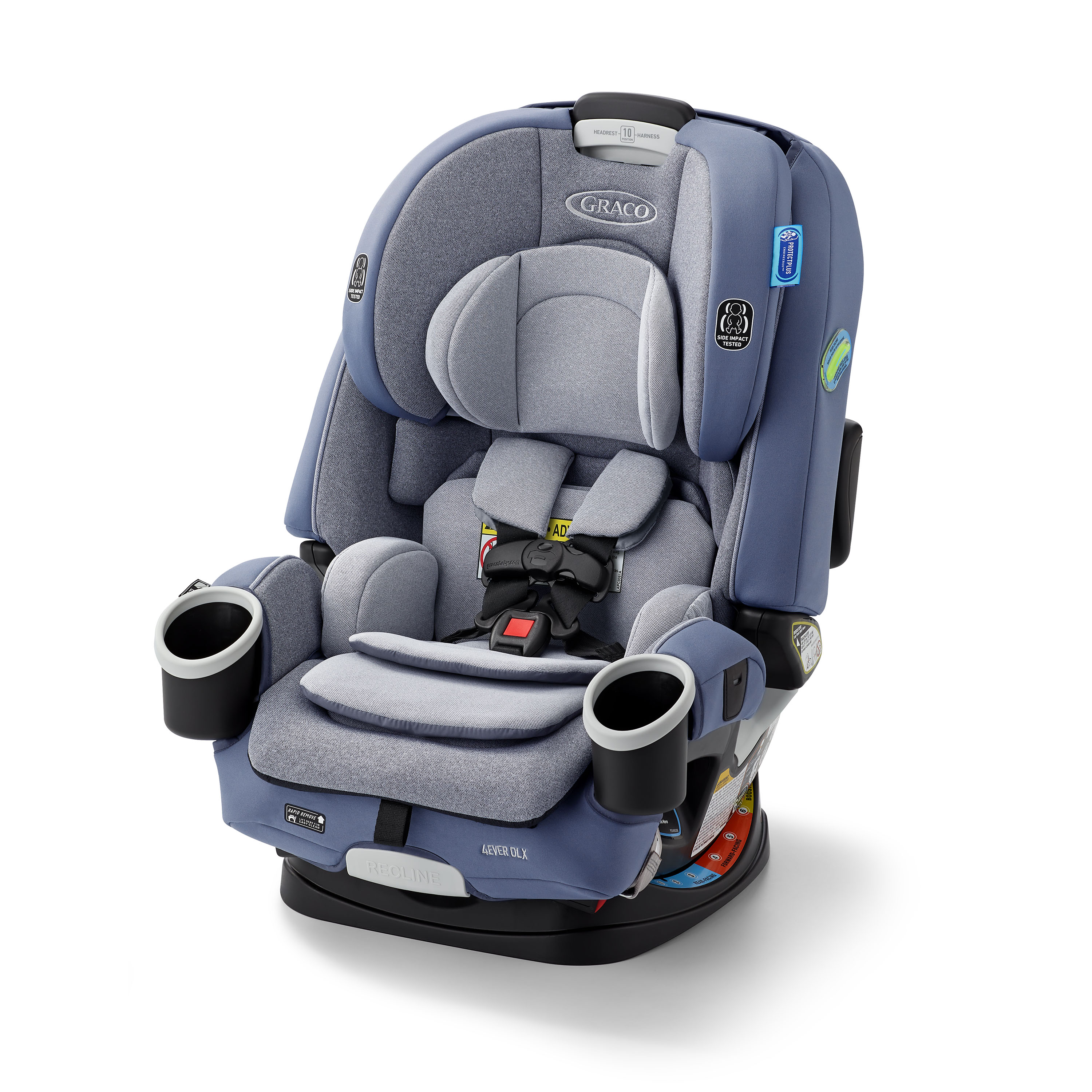
Graco 4Ever DLX 4-in-1 Car Seat, Infant to Toddler
Top PickGraco · $319.99
Price last checked August 15, 2026 — see Amazon for current pricing.
One seat from birth to booster age covers a full decade of use across four modes, with excellent safety ratings and a no-rethread harness that makes adjustments fast.
Pros
- 4-in-1 lasts 10 years
- Excellent safety ratings
- No-rethread harness
- Machine-washable seat pad
Cons
- Heavy at 22 lbs
- Bulky for air travel
- Premium price
This product is featured in our Best FAA-Approved Car Seats roundup.
How we assessed this
We have not personally tested this product. This assessment is built from the manufacturer's published specification, the safety standards the product is certified against, and comparison with the alternatives in its category. Where a question can only be answered by handling the product — how a fabric feels, whether a mechanism stiffens after a year — we say so rather than guess. Full methodology: How We Research.
Quick Verdict
The Graco 4Ever DLX is the best car seat for families who want to buy once and be done with it. Its four modes — rear-facing infant seat, forward-facing harnessed seat, highback booster, and backless booster — cover your child from 4 pounds all the way to 120 pounds, which in practical terms means from the hospital ride home until your kid is arguing about which radio station to listen to. The safety ratings are excellent, the no-rethread harness is one of those features you do not appreciate until you have used a seat without it, and the machine-washable seat pad is an underrated lifesaver when your toddler decides that a road trip is the ideal setting for an explosive blueberry pouch incident.
For travel specifically, the 4Ever DLX is a complicated recommendation. It is FAA-approved in the harnessed modes, it installs confidently using the airplane seatbelt, and your child already knows and trusts the seat because it is the same one they sit in every single day. That familiarity alone is worth something when you are trying to get a toddler settled on a crowded airplane. But at 22 pounds and 20 inches wide, it is heavy to haul through an airport and snug in narrower airplane seats. If you already own this seat and fly a few times a year, absolutely bring it. If you are buying a car seat specifically for travel, lighter options exist.
Bottom line: The 4Ever DLX earns our Top Pick for its unbeatable combination of longevity, safety, and everyday versatility. For travel, it is the best seat to bring if you already own it — but not the best seat to buy if travel is your only reason for shopping.
Who This Is For
The 4Ever DLX is ideal if:
- You want to buy one car seat and never think about car seat shopping again for a decade
- Your child is anywhere from newborn to about 10 years old and you need a seat that grows with them
- You fly occasionally (a few times a year) and want to bring your everyday seat rather than buying a separate travel seat
- You have a second child coming and want a seat that the older child can transition through while the new baby uses the infant carrier
- You value safety ratings and want a seat with a strong track record in crash testing
- You are tired of researching, buying, and installing different car seats every couple of years
This might not be the right seat if:
- You fly frequently and need something lightweight for constant airport hauling — consider the Baby Trend Trooper Slim or WAYB Pico
- You need three car seats across a narrow back seat — the 20-inch width is standard, not slim
- You are buying a seat exclusively for grandparents or occasional use and want something cheaper
- You need the absolute lightest seat possible for any reason
- Your child is already past 65 pounds and only needs a booster — you would be paying for modes you will never use
Who Should Skip
- Frequent flyers who haul car seats through airports regularly — At 22 pounds with no carrying handle, the 4Ever DLX is nearly double the weight of dedicated travel car seats like the Baby Trend Trooper Slim or WAYB Pico, and carrying it one-armed through a long terminal connection is genuinely brutal
- Families flying regional jets — The 20-inch width makes installation on CRJ-200s and similar narrow-seat aircraft a tight struggle, sometimes requiring cup holder removal and armrest gymnastics just to fit
- Parents who need a compact car seat for subcompact rental cars — In rear-facing mode the 4Ever DLX eats so much front-to-back space that the front passenger seat becomes nearly unusable in economy-class rentals like the Nissan Versa or Toyota Yaris
- Families whose child has already outgrown the rear-facing and forward-facing stages — If your child is past 65 pounds and only needs a booster, the $256 price tag pays for modes you will never use when a dedicated booster costs a fraction of the price
Key Features Deep Dive
Four Modes, One Seat: How the Transitions Actually Work
The "4-in-1" label sounds like marketing, but it is genuinely four distinct configurations:
Mode 1 — Rear-Facing (4 to 40 lbs): This is how most families start. The seat reclines for proper rear-facing angle, and the harness adjusts low enough for a newborn. In practice this mode covers the stretch from roughly 5 months, once an infant carrier is outgrown, through about age 2.5. The recline positions are easy to set, and the level indicator on the side takes the guesswork out of getting the angle right. One quirk: in rear-facing mode, the seat eats a significant amount of front passenger legroom. If the driver or front passenger is over about 5 foot 10, expect some negotiation about who sits where.
Mode 2 — Forward-Facing with Harness (22 to 65 lbs): This is where most families spend the most time. The 5-point harness keeps your child restrained up to 65 pounds, which for an average child is roughly age 5 to 7. The no-rethread harness is the standout feature here — raise or lower the harness height with a lever behind the headrest. No unthreading straps through slots, no turning the seat over, no consulting the manual while a toddler tries to escape. Expect to need an adjustment every few months as your child grows, and with this mechanism each one is a five-second job rather than a twenty-minute one.
Mode 3 — Highback Booster (40 to 100 lbs): Remove the harness, and the 4Ever DLX becomes a highback booster that uses the vehicle seatbelt. The headrest adjusts to keep the seatbelt positioned correctly across your child's chest and shoulder. We have not reached this mode yet with our oldest, but the transition looks straightforward from the manual — remove the harness straps and crotch buckle, store them, and switch the belt path guides.
Mode 4 — Backless Booster (40 to 120 lbs): The backrest detaches entirely, leaving a booster cushion that lifts your child high enough for proper vehicle seatbelt fit. At this point, your "car seat" is just a padded platform, and your child will look at it with the mild resentment of a kid who is definitely old enough to not need this thing (they still need it).
The key thing nobody tells you: transitioning between modes is not instant. Going from rear-facing to forward-facing involves removing the seat, detaching and reattaching the LATCH connectors in different anchor points, rerouting the tether strap, and adjusting the recline. Budget 15 to 20 minutes the first time and re-read the manual. It is not hard, but it is not a "press a button" operation either.
The No-Rethread Harness: Underrated Brilliance
If you have never dealt with a traditional car seat harness, here is what you are avoiding: in older or cheaper car seats, adjusting the harness height requires you to unthread the straps from slots in the back of the seat, pull them through, reroute them through a different set of slots, and rethread the splitter plate behind the back panel. This process typically takes 5 to 10 minutes, requires reading the manual, and involves enough frustration that many parents simply do not adjust the harness as their child grows — which means the harness ends up too low and less effective in a crash.
The 4Ever DLX eliminates this entirely. You squeeze a lever behind the headrest and slide it up or down. The harness straps move with it. Done. No tools, no rethreading, no manual. This is the kind of safety feature that works precisely because it is so easy that you actually use it.
On an airplane, the no-rethread harness is especially useful. Your child might be wearing different clothing layers than usual — a puffy coat at the gate, then just a T-shirt after you remove the coat for proper harness fit (you should always remove bulky outerwear before buckling the harness). The quick adjustment means you can dial in the harness fit for whatever your child is wearing in the cabin without holding up the boarding process.
Machine-Washable Seat Pad: Trust Us, You Need This
You will wash the seat pad. Not "if" — when. Toddlers in car seats are crumb-generating, pouch-squeezing, milk-spilling forces of nature, and the 4Ever DLX seat pad comes off and goes in the washing machine. The pad attaches with elastic loops and snaps, and once you have done it twice, removal takes about two minutes.
Here is the detail that matters for travel: after a drive or a flight where your toddler has eaten their body weight in snacks, the pad pulls off and goes into a hotel or laundromat machine, and you have a clean seat for the return leg. Owners report the pad surviving repeated washing without pilling, fading or losing shape. The foam beneath wipes clean with a damp cloth for minor spills.
One note: the pad takes a while to dry. Air drying is recommended, but in a pinch, a low-heat tumble dry works. Just do not wring it out aggressively — the foam inserts can warp.
Safety: The Numbers Behind the Trust
The 4Ever DLX meets all Federal Motor Vehicle Safety Standard (FMVSS) 213 requirements, carries the FAA-approval label for aircraft use in the harnessed modes, and has earned consistently high marks from consumer testing organizations. It features side-impact protection with energy-absorbing foam in the headrest and torso zones, a steel-reinforced frame, and a 5-point harness system with a one-hand front adjustment.
But here is what actually gives us confidence: the LATCH installation with the top tether is rock-solid. When properly installed, the seat does not move. At all. You can push on it with genuine force and it stays put. The seatbelt installation — which is what you use on airplanes — is also secure, though it requires more care to get tight enough. The seatbelt lock-off built into the seat helps, but you need to put body weight into the seat while tightening the belt to eliminate slack. We test the installation by grabbing the seat at the belt path and trying to move it side to side — it should not move more than one inch. If it moves more than that, you need to retighten.
What We Love
- The no-rethread harness saves real time. This is not a marketing gimmick. We adjust the harness every few months as he grows, and it takes five seconds. With our previous car seat, we simply did not adjust as often because it was too annoying. That is a safety issue the DLX solves through design.
- Installation confidence is high. The LATCH system with the clearly marked belt paths and the audible click when the connectors engage gives you real confidence that the seat is installed correctly. The level indicator for rear-facing takes guesswork out of the recline angle.
- The seat pad actually washes well. After 15-plus wash cycles, it still looks and fits like new. The fabric is durable without being scratchy, and it dries faster than you would expect for a car seat pad.
- Two built-in cup holders. They are small but functional. They hold a standard sippy cup or a small water bottle, and they keep drinks from rolling around the back seat during road trips. This sounds trivial until you are driving through unfamiliar streets in a rental car and your toddler is screaming for their water.
- The harness click is satisfying. A specific, audible click when the chest clip locks and when the crotch buckle engages. You know — not think, know — that the harness is latched. In dim parking garages and during nighttime installations, that sound is reassuring.
What We Don't Love
- 22 pounds is genuinely heavy for travel. We are not going to hedge this. Carrying 22 pounds one-armed through a terminal while pushing a stroller, managing a toddler, and hauling a carry-on is an ordeal. By the time we reach the gate, our arm is dead. A Baby Trend Trooper Slim weighs about 12 pounds. A WAYB Pico weighs 8. The DLX weighs more than both of those combined. If you fly frequently, this weight is the single biggest argument for owning a separate travel seat.
- Width makes airplane seats tight. At 20 inches wide, the 4Ever DLX fills a standard 17-to-18-inch economy seat to the edges and slightly beyond. It fits, but it is not comfortable for the adjacent passenger. On regional jets with narrower seats, it can be a genuine struggle to install. We have had flights on CRJ-200s where the armrest had to be fully raised and we still needed to angle the seat in. Narrow-body aircraft (737s, A320s) are workable but snug.
- No carrying handle or strap attachment. Unlike some car seats that have a dedicated carrying handle or strap loops, the 4Ever DLX has to be carried by gripping the frame or hugging it against your body. It is an awkward carry for its weight. A simple built-in handle would have cost Graco almost nothing and saved parents significant airport frustration.
- Mode transitions require reading the manual. Switching from rear-facing to forward-facing is not intuitive. The LATCH anchor points change, the tether strap routing changes, and the recline settings change. You need the manual, and you need about 15 minutes. This is fine at home in your driveway but frustrating if you are trying to switch modes in a rental car parking lot at midnight.
- The recline mechanism is stiff when new. For the first several weeks, adjusting the recline position required more force than expected. It loosened up over time, but the initial stiffness was frustrating during installation.
- It takes up serious back seat real estate. In rear-facing mode especially, the 4Ever DLX extends far forward. In a sedan, the front passenger seat needs to be pushed forward noticeably. In a compact rental car — the kind you often get when you reserve "economy" — this can mean the front passenger is essentially sitting on the dashboard.
- Premium price compared to single-mode seats. At $256, you are paying for the longevity. If your child is already 4 years old and only needs a booster, you are overpaying for modes you will never use.
How It Compares
| Feature | Graco 4Ever DLX | Chicco Fit360 ClearTex | Britax One4Life |
|---|---|---|---|
| Price | ~$256 | ~$350 | ~$380 |
| Weight | ~22 lbs | ~26 lbs | ~25 lbs |
| Modes | 4 (RF, FF, HB, BB) | 4 (RF, FF, HB, BB) | 4 (RF, FF, HB, BB) |
| Rear-facing limit | 4–40 lbs | 4–40 lbs | 5–40 lbs |
| Forward-facing limit | 22–65 lbs | 25–65 lbs | 22–65 lbs |
| Booster limit | 40–120 lbs | 40–100 lbs | 40–120 lbs |
| Width | 20 in | 19.5 in | 20 in |
| No-rethread harness | Yes | Yes | Yes |
| Machine-washable pad | Yes | Yes | Yes |
| FAA approved | Yes (harnessed modes) | Yes (harnessed modes) | Yes (harnessed modes) |
| Rotating base | No | Yes (360-degree) | No |
| Best for | Value and longevity | Easy loading (rotation) | Side-impact safety |
Choose the Graco 4Ever DLX if you want the best value for a 4-in-1 seat. At roughly $100 less than the Chicco and $125 less than the Britax, you get the same essential features and the highest booster weight limit. The DLX is also the lightest of the three, which matters for travel.
Choose the Chicco Fit360 if you value the 360-degree rotation for easy loading and unloading. The rotating base is genuinely helpful in tight parking spots and for parents with back problems — you can spin the seat to face you, buckle your child, and rotate back. But the rotation adds weight (26 lbs), the booster range tops out at 100 lbs instead of 120, and the price is notably higher.
Choose the Britax One4Life if side-impact safety is your top priority. Britax has a strong reputation for impact protection, and the One4Life includes their SafeCell impact-absorbing base. But it is the heaviest of the three at 25 pounds, making it the least travel-friendly, and the highest priced.
For travel specifically: The 4Ever DLX wins this comparison. It is the lightest option (still heavy, but less heavy), the most affordable, and has the widest booster range. If you are hauling one of these three seats through an airport, you want the one that weighs 22 pounds, not 25 or 26.
Final Verdict
The value math on the 4Ever DLX is straightforward and compelling.
The single-seat approach: If you buy the 4Ever DLX when your child is an infant and use it through all four modes until they no longer need a booster, you spend $256 total on car seats for that child. The alternative — buying a separate seat for each stage — typically costs $100 to $150 for an infant seat, $80 to $200 for a convertible seat, $60 to $150 for a highback booster, and $25 to $60 for a backless booster. That is $265 to $560 across four separate purchases, plus the time and hassle of researching and buying each one. The 4Ever DLX costs less than even the low end of buying separately.
The per-year cost: Assuming 10 years of use, the DLX costs about $25.60 per year. That is roughly $2.13 per month for the thing keeping your child safe in a vehicle every single day.
The travel equation: If you use the 4Ever DLX as your travel seat and avoid renting car seats on trips, you save $10 to $15 per day in rental fees. A single week-long trip saves you $70 to $105. Three trips per year saves $210 to $315 — which nearly pays for the entire seat in one year.
The honest counterargument: If your child is already 3 or 4 and you only need the forward-facing and booster modes, you are paying $256 for a seat where you are skipping the first mode entirely. In that case, a dedicated forward-facing seat at $150 and a booster at $40 might be more cost-effective. The 4Ever DLX's value proposition is strongest when you buy it early and use every mode.
Graco 4Ever DLX 4-in-1 Car Seat, Infant to Toddler
$319.99by Graco
Best For
- ✓4-in-1 lasts 10 years
- ✓Excellent safety ratings
- ✓No-rethread harness
Price last checked August 15, 2026and subject to change — see Amazon for current pricing. As an Amazon Associate we earn from qualifying purchases.
Final Verdict
The Graco 4Ever DLX is our Top Pick in the car seat category because it does something no other purchase in the baby gear world manages to do: it genuinely lasts. In a market full of products designed for a 6-to-18-month window, the DLX delivers a decade of daily use from a single purchase. The safety ratings back it up. The no-rethread harness makes it practical to actually use correctly. The machine-washable pad survives the reality of life with young kids. And at $256, the value over its full lifespan is exceptional.
For travel, we need to be direct: 22 pounds is heavy, 20 inches is wide, and hauling this seat through a busy airport is not fun. If you fly every month, buy a Baby Trend Trooper Slim for about $96 and keep the DLX at home. But if you fly a few times a year and want to bring the seat your child already knows and trusts — the seat that is already adjusted, already broken in, already familiar — the 4Ever DLX does that job well. It is FAA-approved, it installs securely on airplanes, and it works in rental cars of every size (well, almost every size — skip the subcompact). The best travel car seat is often the one your kid is already comfortable in, and for millions of families, that seat is the Graco 4Ever DLX.
Frequently Asked Questions
Products Mentioned
Related Content
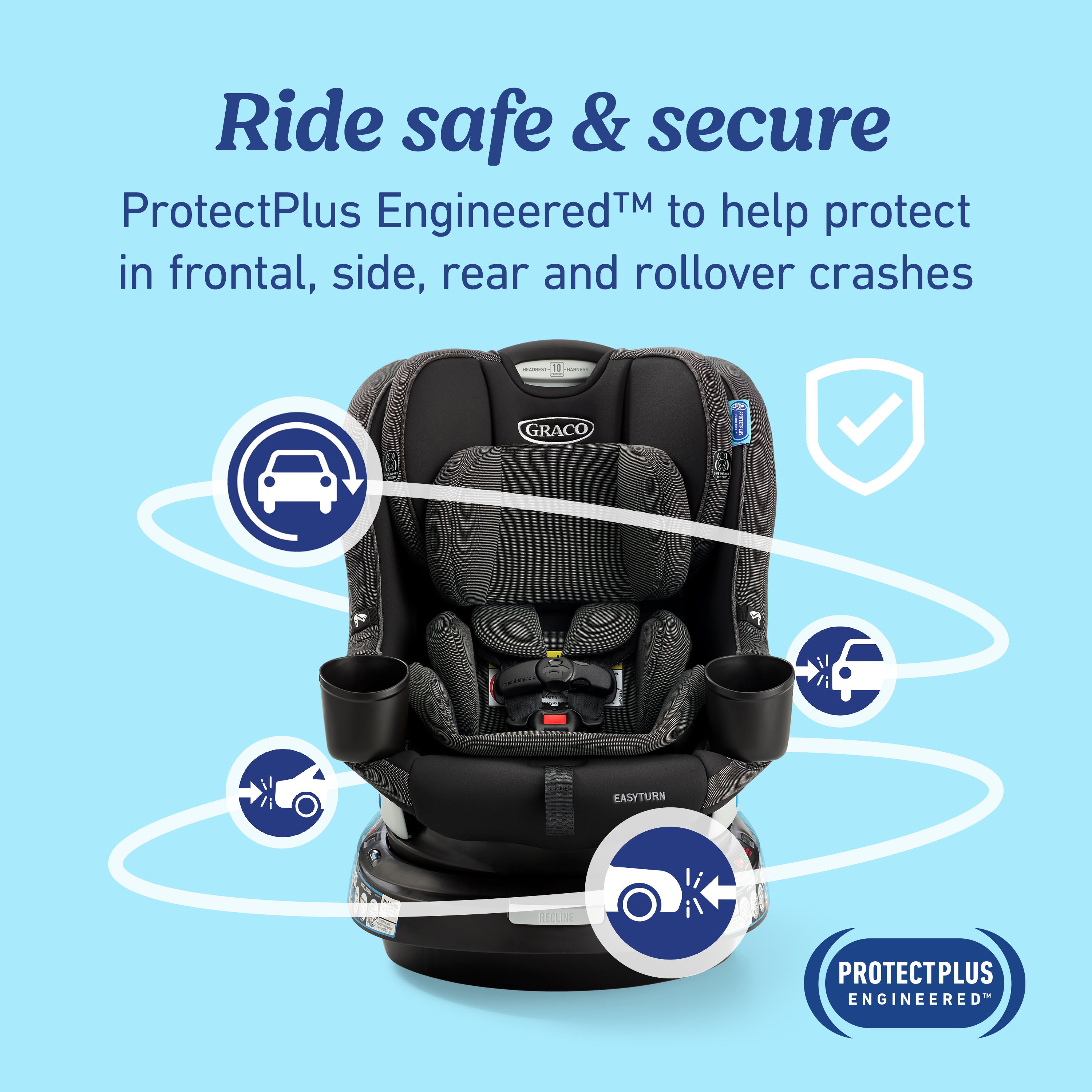
Graco EasyTurn 360 Review: The Rotating Car Seat That Ends the Parking Lot Back Struggle
Honest Graco EasyTurn 360 review — 360-degree rotation, rear to forward transition without reinstalling, real weight and airplane use analysis. $349.99.
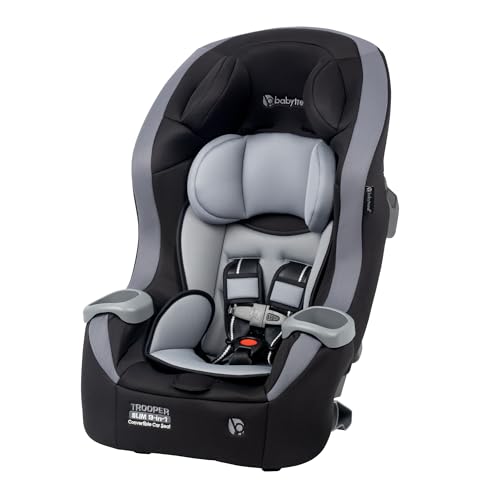
Baby Trend Trooper Slim Review: The Narrow 3-in-1 That Actually Fits on a Plane
Honest Baby Trend Trooper Slim 3-in-1 review — slim 16.75-inch width, FAA approval, airplane installation, 3-across fit, and the real trade-offs of a budget travel seat.
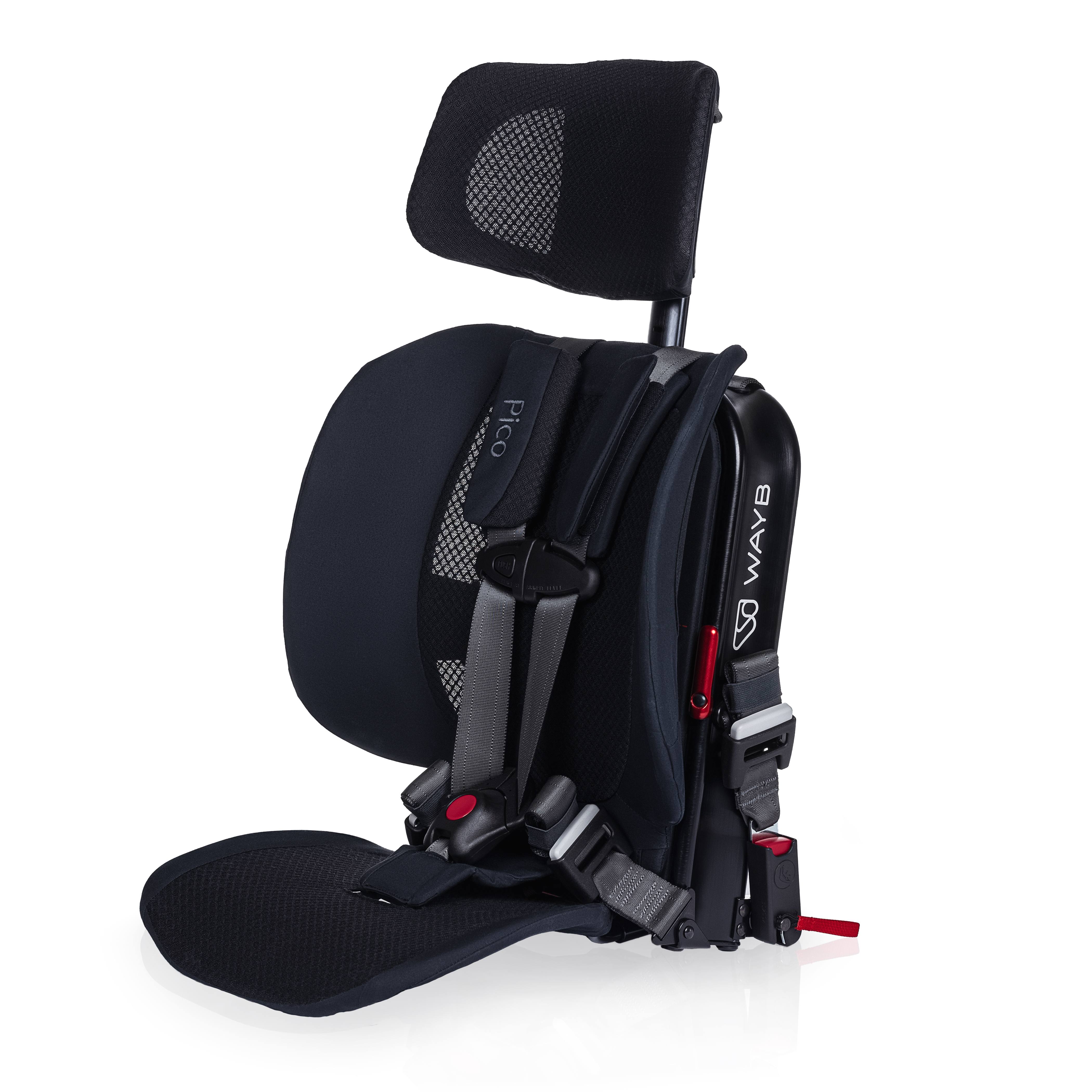
WAYB Pico Travel Car Seat Review: Is $599 Worth It for a Folding Car Seat?
Honest WAYB Pico review travel — 8 lb weight, fold mechanism, FAA approval, rideshare installs, and more. $619.00. Specs, trade-offs, and who should skip it.