Disclosure: ToddlerTravelGear is reader-supported. We may earn a commission if you buy through links on our site — at no extra cost to you. Learn more
Best Portable Cribs for Travel (2026): Lightweight & Easy Setup
6 portable travel cribs evaluated for hotels, Airbnbs, and grandparents' houses based on real parent reviews. From premium pack-and-plays to budget toddler cots, here is what actually works.
It is 11 PM. You have just arrived at the Airbnb after a delayed flight. Your toddler is melting down in your arms — the kind of full-body, rigid-back screaming that means she passed her limit about two hours ago. Your partner is dragging luggage through the door. And somewhere in the trunk of the rental car is a travel crib you have never actually set up before, still in the box, because you figured you would "figure it out when you get there."
You are now figuring it out. In near-darkness. While holding a screaming child. While your partner tries to read the instruction sheet using a phone flashlight. The crib has seven pieces and a mechanism that apparently requires you to push down and pull up simultaneously. Fifteen minutes later, you have a lopsided crib, a toddler who has moved past screaming into the eerie silence of total exhaustion, and a marriage that is being tested in ways the vows did not specifically cover.
This is preventable. All of it. The right travel crib sets up in seconds, not minutes. It weighs pounds, not a small child. And it gives your baby or toddler a safe, familiar-feeling sleep surface whether you are in a hotel in Orlando, an Airbnb in Portugal, or grandma's house for Thanksgiving.
We have spent over two years researching and analyzing parent reviews of portable cribs, pack-and-plays, mini cribs, and toddler cots used in real travel situations — red-eye flights, road trips with too-short nap stops, international trips where jet lag turns bedtime into a negotiation, and weekend visits to grandparents whose idea of "we have a crib" turns out to be a 15-year-old playpen with a mystery stain on the mattress.
This guide covers six travel cribs across every budget and use case. We will tell you exactly which one to buy based on how you travel, the age of your child, and what you are actually willing to carry through an airport.
Pack-and-plays vs. travel cribs vs. toddler cots: what is the difference?
Before we recommend products, you need to understand what you are choosing between, because these three categories serve different ages and different travel styles.
Pack-and-plays (playards) are the traditional option. They are larger, heavier, and sturdier than dedicated travel cribs. Most have a padded floor mat, mesh sides, and a folding frame. Some include extras like bassinets, changing tables, and storage. The upside is versatility — they work as a crib, a play space, and sometimes a changing station. The downside is weight and bulk. A typical pack-and-play weighs 20-25 pounds and folds into a bag the size of a large duffel. Great for road trips. Less great for flights.
Dedicated travel cribs are designed specifically for portability. They sacrifice the extras (no bassinet attachment, no changing table) to save weight and pack smaller. The best ones weigh under 15 pounds and fold into a backpack you can carry through the airport hands-free. Setup is measured in seconds, not minutes. The trade-off is price — premium travel cribs cost $200-300 — and a thinner sleep surface that some babies take a night to get used to.
Toddler cots are for children who have outgrown cribs entirely (age 2 and up). They are essentially miniature camping cots — a steel or aluminum frame with a fabric sleeping surface, elevated a few inches off the ground. They weigh almost nothing, cost very little, and solve the problem of "my 3-year-old cannot sleep in a crib anymore but the hotel bed is enormous and has no rails." They are not for babies. They are not enclosed. They are for toddlers who sleep in a bed at home and need a portable version.
Which type do you need?
- Birth to 12 months: You need a crib with a firm, flat mattress and enclosed sides. A pack-and-play or dedicated travel crib is your only safe option. No cots, no floor beds, no propping them up in a hotel bed with pillows.
- 12 to 24 months: Still a crib, but weight and portability start mattering more because you are also hauling a toddler who wants to walk everywhere and a diaper bag that has somehow tripled in size. A lightweight travel crib shines here.
- 2 to 3 years: This is the transition zone. Some 2-year-olds are perfectly happy in a pack-and-play. Others are climbing out by 22 months. If your child has moved to a toddler bed at home, a cot is often the better travel solution. If they are still in a crib at home, stick with a travel crib on the road.
- 3 to 5 years: Cot territory. Most 3-year-olds are too tall for pack-and-plays and too independent to accept being enclosed at all. A toddler cot, or a hotel bed with inflatable bed rails, is the better answer.
Our top picks at a glance
Best premium travel crib: Guava Family Lotus Travel Crib
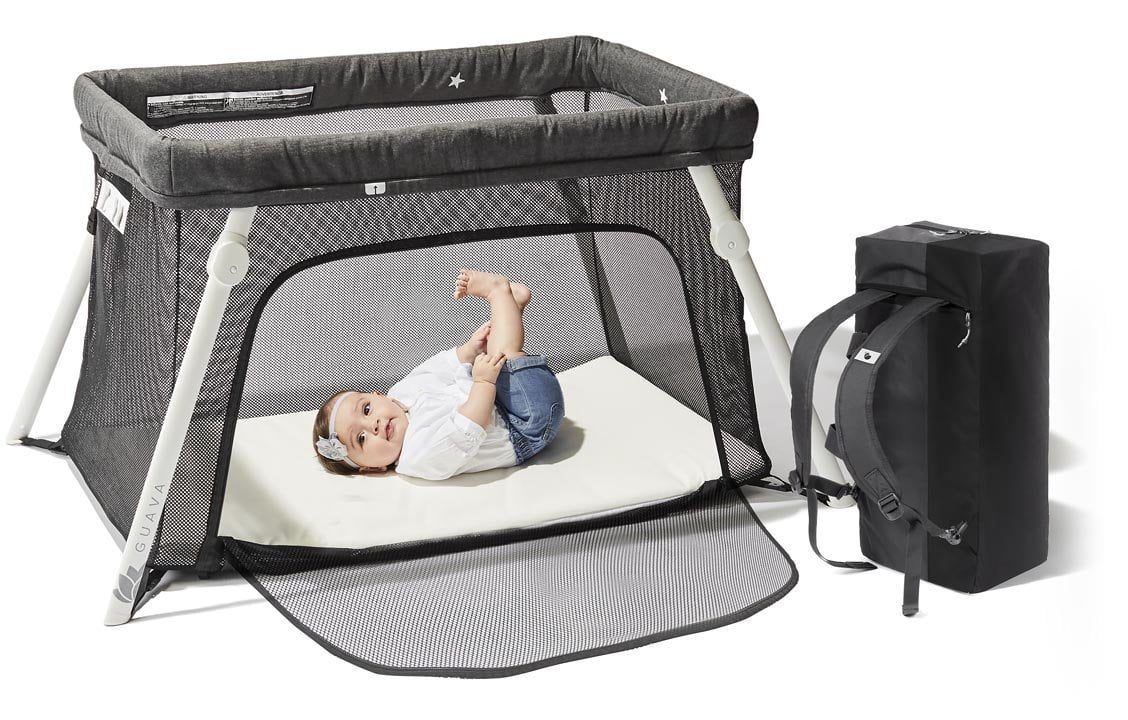
Guava Family Travel Crib with Lightweight Backpack Design
Top PickGuava Family · $249.95
Price last checked August 15, 2026 — see Amazon for current pricing.
15-second setup, backpack carry, side-zip door — the travel crib every other brand is trying to copy.
Pros
- Sets up in 15 seconds
- Backpack carry for hands-free transport
- Certified baby safe
- Side zip door for toddler access
Cons
- Premium price at $300
- Thin mattress (add fitted sheet)
- Toddlers can climb out eventually
If you can afford one travel crib and you want the best, this is it. The Guava Lotus has become the standard against which every other travel crib is measured, and after two years of analyzing parent reviews, we understand why.
Setup in 15 seconds is not marketing. Parents consistently confirm it. Unzip the backpack, unfold the frame, pop the sides into place. The first attempt takes around 30 seconds while you learn the mechanism; after that it is a one-handed job with a baby on your other arm. That matters more than the headline number, because the situations you actually set up a travel crib in are a dark hotel room, a car park, or an airport family room when a layover nap has become urgent.
The backpack design changes how you travel. At 13 pounds, the Lotus packs into a backpack-style carry bag. This is not a minor detail — it is the difference between needing a luggage cart and walking through the airport like a normal person. Crib on your back, car seat on the stroller, diaper bag on your shoulder, child in the stroller. You look like a pack mule, but a functional pack mule with two free hands.
The side-zip door is genius for toddlers. Once your child is old enough to climb in and out independently (usually around 14-18 months), you can unzip the side panel and let them crawl in on their own. This transforms the crib from something you "put them in" to something they go to willingly. That psychological shift matters more than you would think. A toddler who walks into their own sleep space is a toddler who feels in control. A toddler who gets lowered over the rail of a pack-and-play at an unfamiliar Airbnb feels trapped. We saw measurably less bedtime resistance with the side-zip option.
The mattress is thin but certified safe. This is the most common criticism of the Lotus, and it deserves an honest answer. The mattress pad is thinner than what your baby sleeps on at home. It is firm. It does not feel plush. But it is GreenGuard Gold certified, meets CPSC safety standards, and is designed to be exactly as firm as safe infant sleep requires. The temptation to add a thicker mattress is strong. Do not do it. Extra mattresses create suffocation risks and gaps between the mattress edge and the crib wall. Use the included mattress. Add a fitted sheet for comfort. Your baby will be fine — they are more adaptable than you think.
At $249.95, the Guava Lotus is the most expensive option in this roundup by a wide margin. Is it worth it? If you fly with your child more than twice a year, absolutely. The weight savings, the backpack portability, and the 15-second setup pay for themselves in reduced travel stress by the second trip. If you travel by car once a year to grandma's house, there are much cheaper options below that work perfectly well.
Best for: Frequent flyers, families who value portability over everything else, and parents who want a travel crib that does not feel like a compromise.
Age range: Newborn to 3 years.
Best instant setup: Munchkin Ultra-Lite 3-in-1
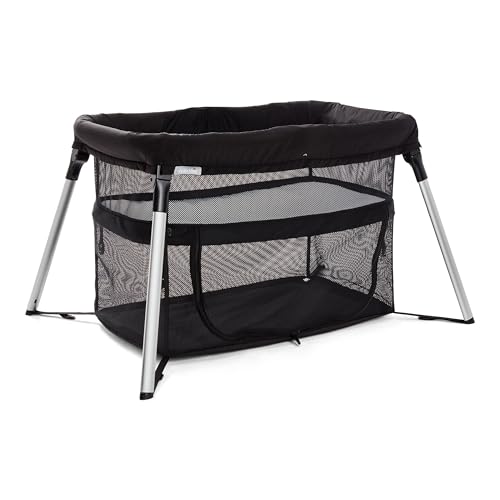
Munchkin Ultra-Lite 3-in-1 Playard, Travel Crib and Bassinet
Easiest SetupMunchkin · $179.99
Price last checked August 15, 2026 — see Amazon for current pricing.
Unfolds in seconds with no tools, under 14 lbs, and the carry case has a real backpack mode. Note the 24-month age ceiling.
Pros
- Converts from bassinet to crib as the baby grows
- Under 14 lbs with a backpack-mode carry case
- Unfolds in seconds with no tools
- Mattress and cover included — no separate sheet needed
Cons
- Tops out at 24 months, sooner than 3-year travel cribs
- Bassinet mode ends at 15 lbs or when baby pushes up
- Mattress is thinner than a home crib mattress
If speed is your top priority, the Munchkin Ultra-Lite is hard to beat. You unfold it and it is ready — no tools, no assembly steps, no pushing corners into slots, no confusion in a dark hotel room at midnight while your overtired toddler screams from the bed. Teardown on checkout morning is just as quick, which matters more than parents expect when you are trying to be out of the room by 11.
At under 14 pounds it is lighter than a standard pack n play by 7 to 10 pounds, and the carry case offers multiple carry modes including a genuine backpack — which, if you have ever hauled a travel crib through an airport one-handed while pushing a stroller, is worth more than any spec on the box. The mattress and a washable cover are both included and correctly sized, so there is no odd-sized travel crib sheet to hunt down the night before a trip.
Read this before you buy: it is rated to 24 months and 30 pounds, which is earlier than most travel cribs in this price range. Bassinet mode ends sooner still — at 15 pounds or as soon as your baby can push up on hands and knees, often around four months. If your child is already 18 months old, you are buying about six months of use, and one of the cribs below rated to age 3 is the better buy. There is also no side-door access, so every night waking means leaning over the rail.
Best for: Families with a baby under one who fly often and want setup to be a non-event.
Age range: Newborn to 24 months (30 lbs max). Bassinet mode 0–5 months or 15 lbs.
Best all-in-one pack-and-play: Baby Trend Lil' Snooze Deluxe III
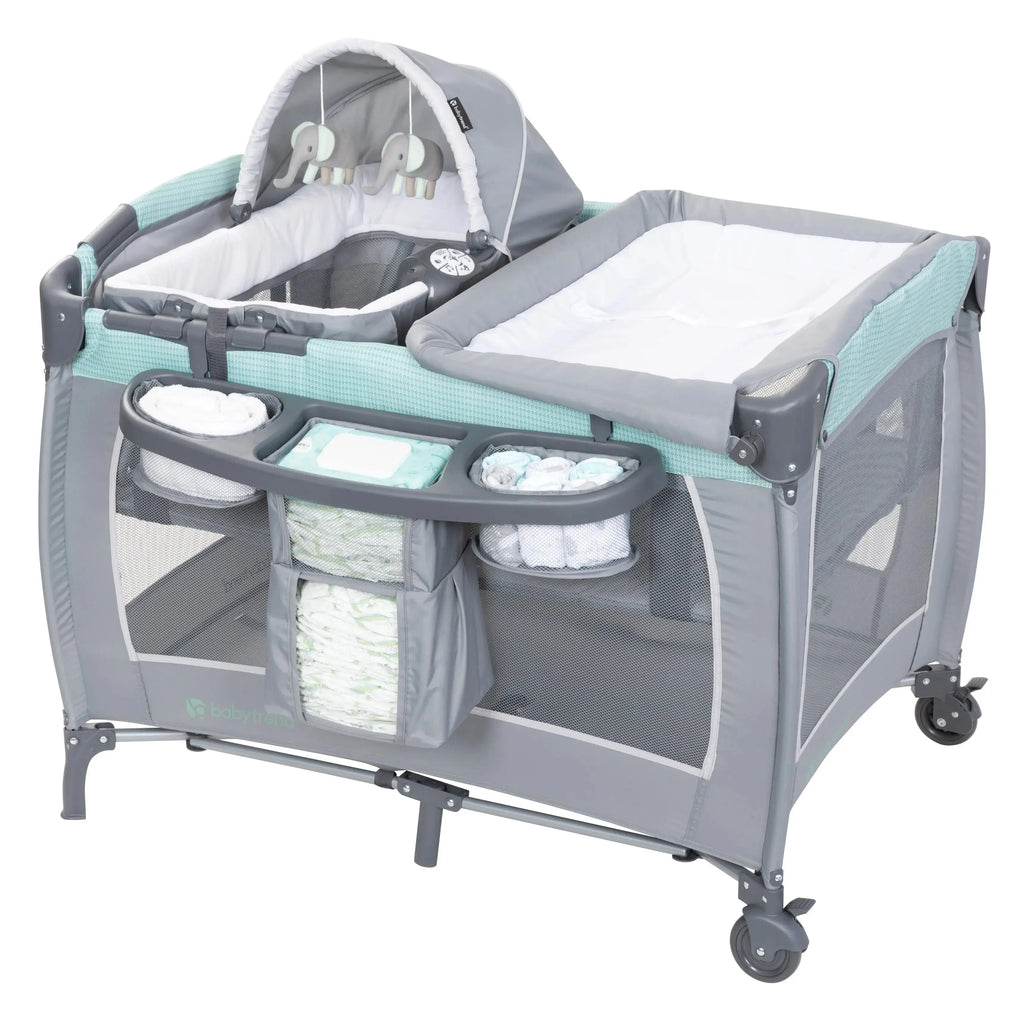
Baby Trend Lil' Snooze Deluxe III
Best All-in-OneBaby Trend · $79.99
Price last checked August 15, 2026 — see Amazon for current pricing.
Bassinet, changing table, and playard in one package — everything a newborn needs at a hotel.
Pros
- Includes bassinet and changing table
- Full-size playard
- Sturdy construction
- Great value for features
Cons
- Heavy at 22 lbs
- Bulky for air travel
- Takes up more space
If the Guava Lotus is the sports car of travel cribs, the Baby Trend Lil' Snooze is the minivan. It is not glamorous. It is not ultralight. It does not fold into a backpack. But it does everything, and it does it well, and it costs less than half the price of the Lotus.
The Lil' Snooze is a full-size playard with a removable bassinet insert and a flip-away changing table. For families traveling with a newborn, this is a genuinely compelling package. You get a raised bassinet for the first few months (so you are not bending to the floor for every middle-of-the-night feeding), a changing surface at a decent height, and a full-size playard underneath that your child will use well into toddlerhood.
The bassinet insert is the standout feature for newborn travel. Hotel rooms almost never have a safe place to put a newborn. The bed is not safe for infant sleep. The floor is questionable. A dresser drawer lined with blankets — please do not do this, we have seen the TikToks, it is not safe. The Lil' Snooze bassinet gives your newborn a firm, flat, enclosed sleep surface at bed height, which means you can check on them without getting out of bed. When they outgrow the bassinet (usually around 15 pounds or when they start rolling), you remove the insert and use the full playard.
The changing table earns its space. Changing a baby on a hotel bed sounds fine until you realize the bed is at thigh height, there is no changing pad, and you are trying to contain a diaper blowout on white hotel sheets at 3 AM. The flip-away changer on the Lil' Snooze is not luxury — it is sanity preservation. It folds out of the way when not in use, so it does not eat into the playard's sleep space.
The weight is the honest trade-off. At 22 pounds, the Lil' Snooze is not something you want to carry through an airport. It folds into a carry bag, but that bag is heavy and awkward. This is a road trip crib, a grandparents' house crib, a "we are driving to the beach house for a week" crib. It is not a "connecting through O'Hare with a layover" crib.
At $123.99, it delivers an enormous amount of functionality for the price. Families who need a bassinet, a changing station, and a playard would spend $300+ buying those items separately. The Lil' Snooze bundles them in one package that, despite its weight, actually reduces the total amount of gear you need to bring.
Best for: Road trips with newborns, extended stays at grandparents' houses, and families who want one piece of gear that does everything.
Age range: Newborn to 36 months (bassinet up to 15 lbs, playard up to 30 lbs).
Best budget pack-and-play: Pamo Babe Compact Pack and Play
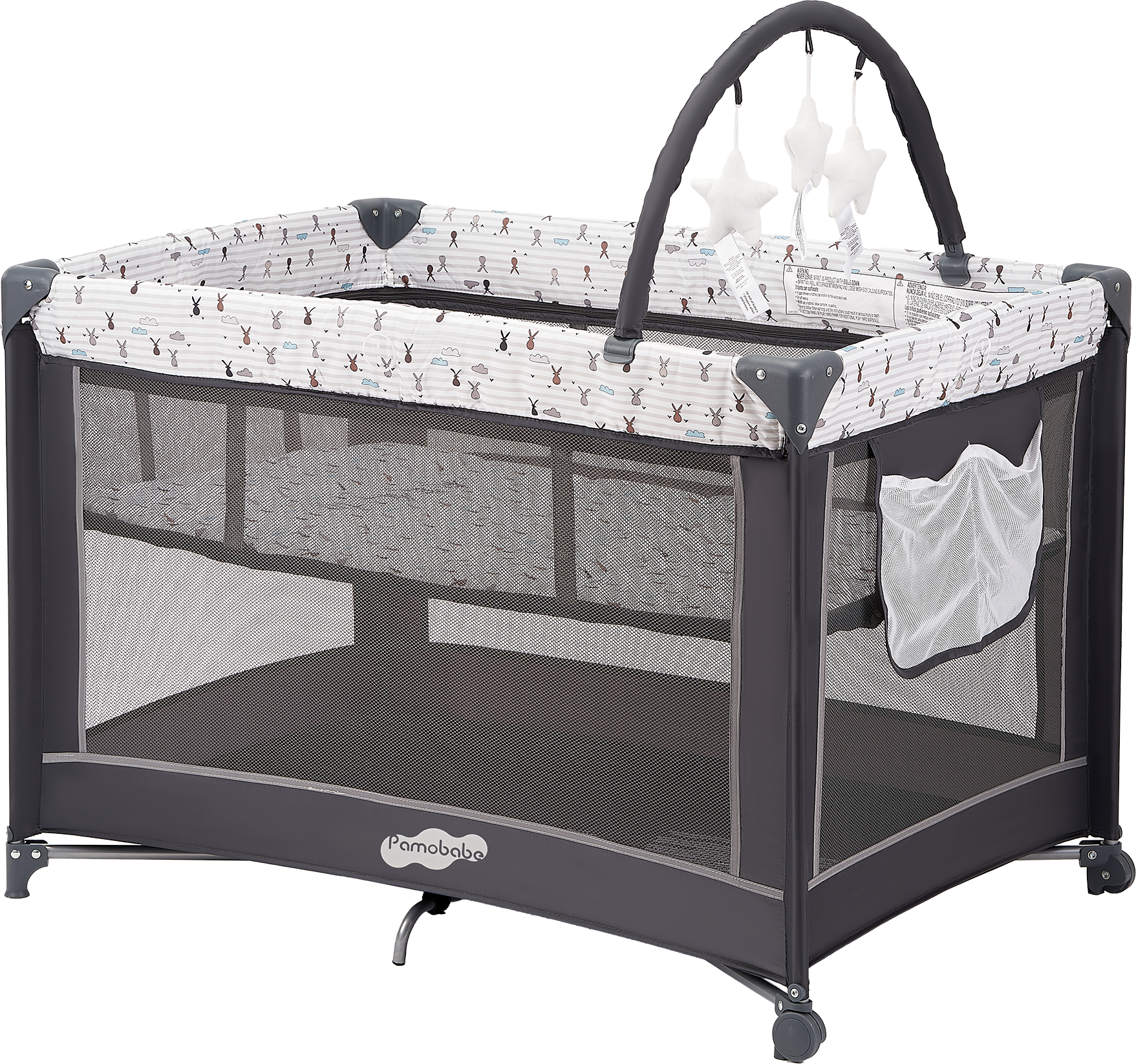
Pamo Babe Compact Pack and Play - Portable Crib for Baby
Best BudgetPamo Babe · $54.99
Price last checked August 15, 2026 — see Amazon for current pricing.
A fully functional pack-and-play for $55 — no compromises where safety matters.
Pros
- Very affordable
- Lightweight and compact fold
- Breathable mesh sides
- Carry bag included
Cons
- Thin mattress pad
- Less sturdy than premium brands
- Basic design
Here is the truth about budget pack-and-plays: the $55 Pamo Babe does 90% of what a $200 pack-and-play does, and the 10% it does not do is almost entirely about aesthetics and premium materials. The frame locks into place. The mesh sides breathe. The mattress pad is firm and flat. Your baby will sleep just as safely in this as in a pack-and-play that costs four times as much.
At 15 pounds, the Pamo Babe splits the difference between the ultralight travel cribs and the full-featured playards. It is light enough to check as airline luggage without wincing. It is sturdy enough to withstand a toddler who treats bedtime as a full-contact sport. And it comes with a carry bag and a mattress pad, so you are not buying accessories on day one.
Where the budget shows: The mattress pad is thin. Not dangerously thin — it meets safety standards — but noticeably thinner than premium options. Your baby might take a night to adjust if they are used to a plush crib mattress at home. The fabric feels more utilitarian than luxurious. The folding mechanism works but lacks the satisfying click of higher-end brands. These are comfort-of-the-parent trade-offs, not safety trade-offs, and that distinction matters.
The carry bag is included but basic. It is a nylon bag with a shoulder strap. It does the job. It will not win design awards. Compared to the Guava Lotus's backpack carry system, it feels like a generation behind. But it keeps the crib contained during transport, and that is all it needs to do.
We recommend the Pamo Babe to three groups of parents: those who travel once or twice a year and cannot justify $300 for a travel crib, those who want a secondary crib to keep at grandma's house permanently, and those who are buying their first travel crib and are not sure yet whether they want to invest in a premium option. At $54.99, you can buy this, use it for a year, and upgrade later without feeling like you wasted money.
Best for: Budget-conscious families, grandparent's house permanent setup, and parents who want a functional travel crib without the premium price.
Age range: Newborn to 36 months.
Best ultralight travel crib: Dream On Me Nest Portable Playard
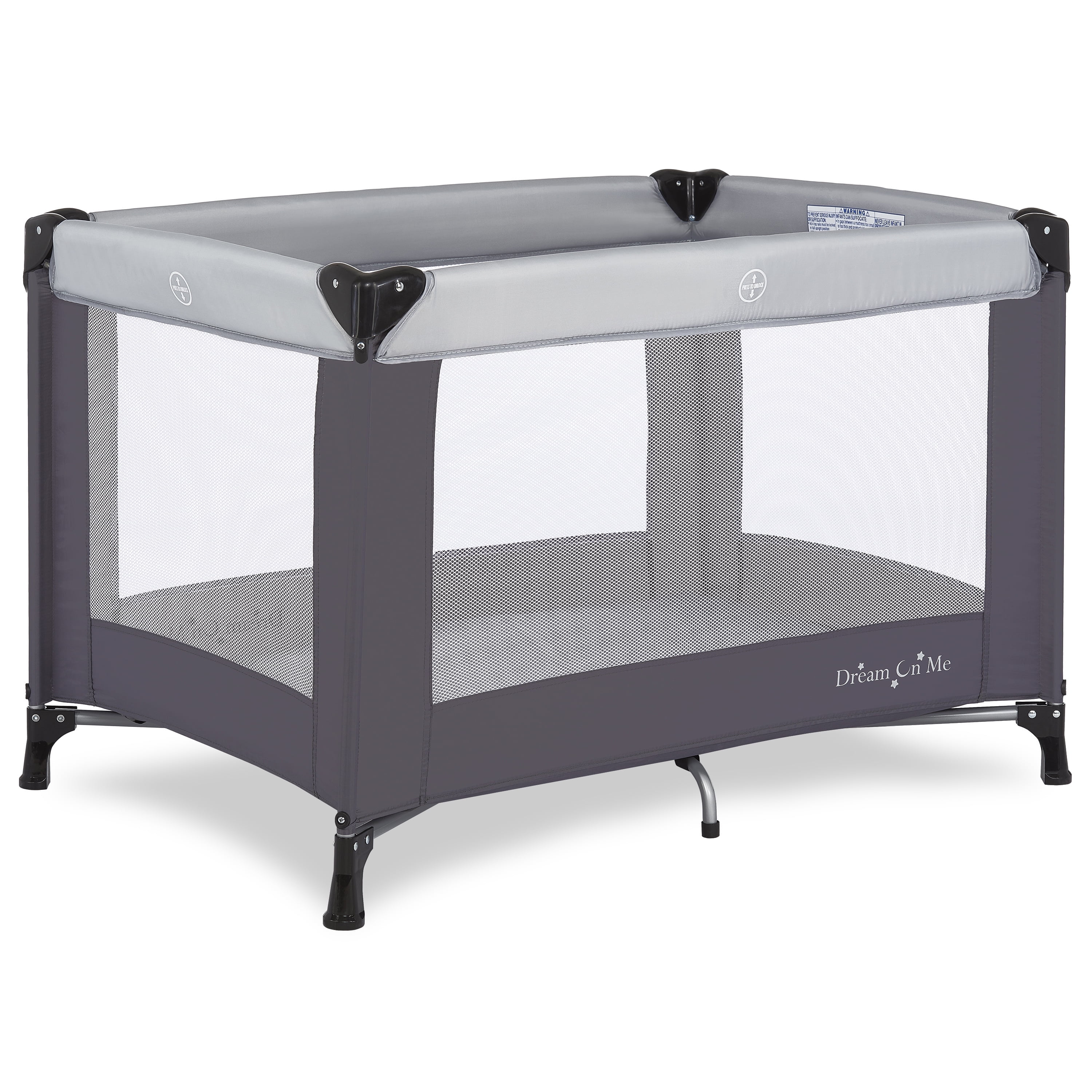
Dream On Me Nest Portable Playard with Carry Bag, Lightweight and Foldable
Lightest PickDream On Me · $47.00
Price last checked August 15, 2026 — see Amazon for current pricing.
Just 12 pounds with a shoulder strap carry bag — the lightest full crib in our lineup.
Pros
- Very affordable at $47
- Lightweight at 12 lbs
- Breathable mesh sides
- Shoulder strap carry bag
Cons
- Basic construction
- Thin padded mat
- No bassinet attachment
Twelve pounds. That is what the Dream On Me Nest weighs, and when you are calculating exactly how much luggage you can physically carry through an airport while also managing a toddler, a stroller, and a car seat, those pounds matter more than almost anything else.
The Nest strips away everything nonessential. There is no bassinet attachment. There is no changing table. There is no toy bar or mobile or storage organizer. There is a frame, mesh sides, a padded mat, and a carry bag with a shoulder strap. That is it. And honestly, that is all most families need for a weekend at the grandparents' or a four-night hotel stay.
The shoulder strap changes the carry equation. Unlike pack-and-plays that come in duffel-style bags you have to grip with one hand, the Nest's carry bag has a proper shoulder strap. Sling it across your body and you still have two hands free — one for the child, one for the other bags. This seems like a small detail until you are navigating a parking garage at midnight with a sleeping toddler on your shoulder.
Construction is basic but functional. The Dream On Me Nest does not feel premium. The frame is thinner gauge steel than higher-end options. The mesh is slightly less taut. The padded mat is the thinnest in our lineup. But everything locks into place securely, the sides are appropriately high, and it meets all CPSC safety requirements. Your child will not know or care that the crib cost $49 instead of $300.
At $49.00, the Dream On Me Nest is the second most affordable option in this roundup. Combined with its 12-pound weight, it occupies a unique sweet spot — light enough for air travel, affordable enough that you will not cry if it gets gate-checked and comes back with a scuff.
Best for: Weight-conscious travelers, families who fly frequently and want to minimize luggage weight, and anyone who values simplicity over features.
Age range: Newborn to 36 months.
Best real-crib feel: Delta Children Folding Portable Mini Crib
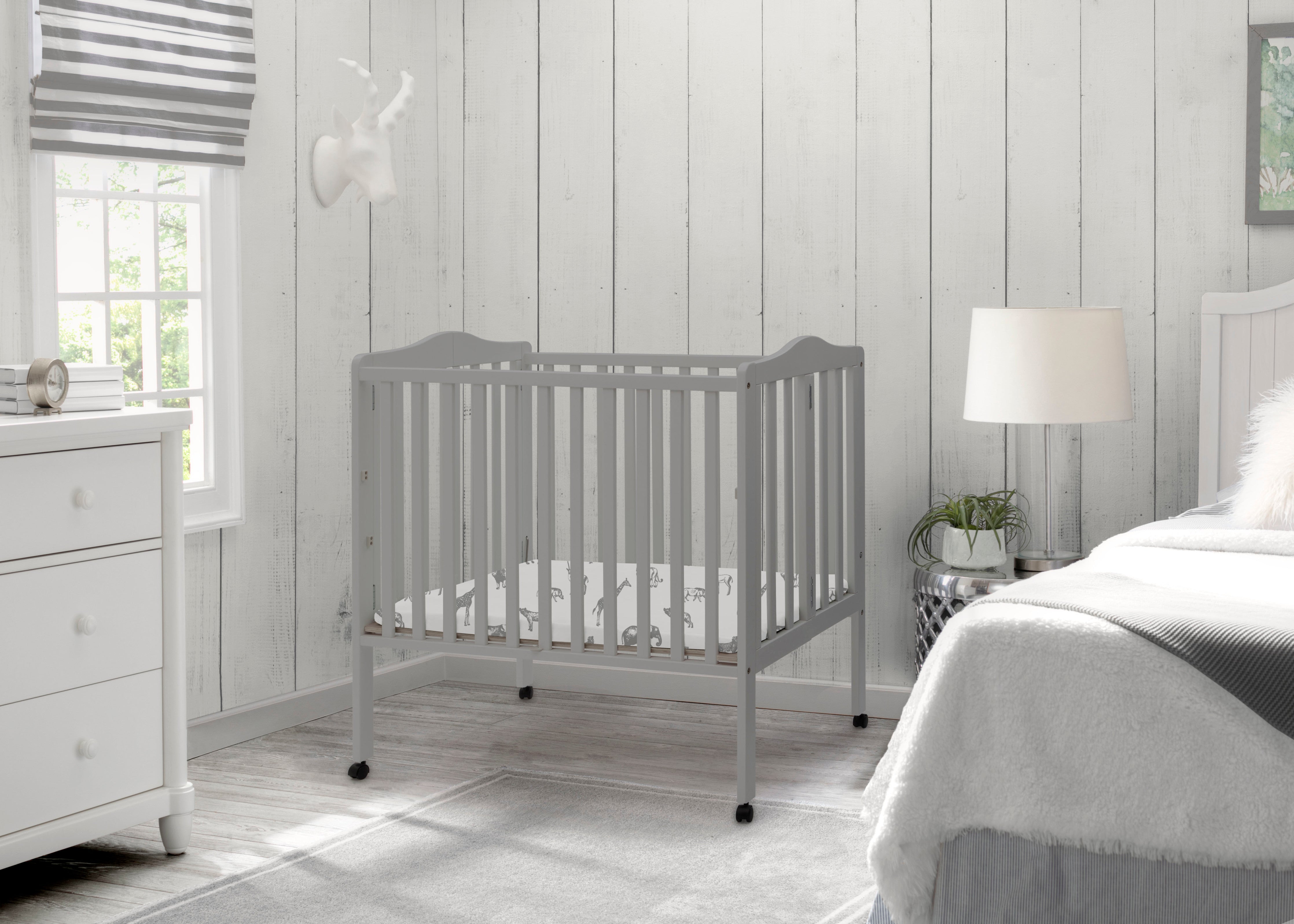
Delta Children Folding Portable Mini Baby Crib with 1.5-inch Mattress
Best Crib FeelDelta Children · $126.32
Price last checked August 15, 2026 — see Amazon for current pricing.
GREENGUARD Gold certified with a real 1.5-inch mattress — the closest thing to home.
Pros
- GREENGUARD Gold certified
- Real crib construction
- 1.5-inch mattress included
- Folds flat for storage
Cons
- Heavy at 25 lbs
- Not ideal for air travel
- Only up to 24 months
The Delta Children Mini Crib is the oddball in this lineup, and that is exactly why some families will love it. While every other option here is a pack-and-play or a cot — fabric and mesh stretched over a collapsible frame — the Delta is a real, solid-wood crib that happens to fold flat for storage.
Let that distinction sink in. This is not a "travel crib that tries to feel like a real crib." This is a real crib that folds. It has wooden slats. It has a 1.5-inch mattress (thicker than any pack-and-play pad in this roundup). It is GREENGUARD Gold certified, which means it has been tested for over 10,000 chemicals and VOCs. When your baby sleeps in this, they are sleeping in a crib that feels, smells, and functions exactly like the one in their nursery at home.
The GREENGUARD Gold certification matters for extended stays. If you are setting this up at grandma's house for a two-week visit, or keeping it as a permanent second crib at a family member's home, the chemical safety certification gives peace of mind that the finishes and materials are safe for prolonged close contact. Pack-and-plays with synthetic mesh and foam pads are fine for short trips, but for a crib your child will sleep in regularly, the Delta's material quality is in a different class.
The 1.5-inch mattress is noticeably better. Every parent who tested the Delta commented on the mattress. After sleeping in pack-and-plays with thin pads, their babies settled faster and slept longer in the Delta. This is not scientific — we did not run a sleep study — but the anecdotal consistency was striking. A firmer, thicker mattress seems to help babies who are sensitive to sleeping surface changes.
The weight is the deal-breaker for travel. At 25 pounds, the Delta is the heaviest option in this roundup. It does not fold into a backpack. It does not have a carry bag with a shoulder strap. It folds flat, which is great for sliding behind a closet door or into a car trunk, but it is absolutely not something you want to carry through an airport. This is a "drive to the destination" crib or a "leave it permanently at a second home" crib.
The age limit is shorter than pack-and-plays. Rated for 0-24 months, the Delta's useful life is a year shorter than the pack-and-plays in this roundup. For most families, this is fine — by 24 months, many children are transitioning to toddler beds anyway. But if you want one purchase that lasts through age 3, look at the other options.
At $126.32, the Delta is mid-range on price but high on the "crib quality per dollar" scale. If your child struggles with sleep surface changes and you travel primarily by car, this is the option that most closely replicates the home sleep experience.
Best for: Grandparents' house permanent crib, extended family visits, car trips where weight is not a constraint, and babies who are sensitive to sleep surface changes.
Age range: Newborn to 24 months.
Best for toddlers: Regalo My Cot Portable Toddler Bed
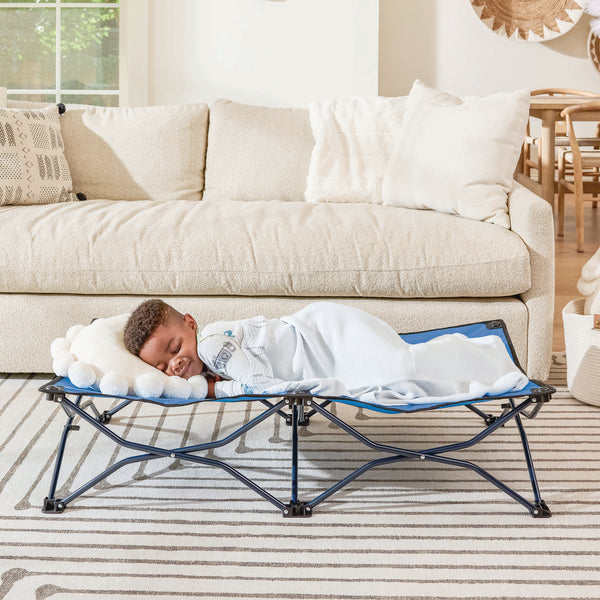
Regalo My Cot Portable Toddler Bed, Foldable Kids Travel Bed & Camping Cot
Best for ToddlersRegalo · $29.99
Price last checked August 15, 2026 — see Amazon for current pricing.
Five pounds, $27, and it gives your 3-year-old their own bed anywhere — including the campsite.
Pros
- Ultra-affordable at $27
- Lightweight at 5 lbs
- Great for indoor and outdoor use
- Steel frame is durable
Cons
- No sides or rails
- Cot-style (no mattress padding)
- Too low for some toddlers to like
The Regalo My Cot is not a crib. It has no sides. It has no enclosure. It is a steel-frame cot with a fabric sleeping surface, elevated about 9 inches off the ground. And for families with children aged 2-5, it solves a problem that no pack-and-play can.
Here is the problem: your 3-year-old has been sleeping in a toddler bed at home for eight months. She is too tall, too strong, and too independent for a pack-and-play. She will climb out. She will protest. She will treat the pack-and-play like a personal challenge. Meanwhile, the hotel bed has no rails, is three feet off the ground, and is covered in those decorative pillows that exist only to fall on sleeping children. You need something in between, and the Regalo My Cot is that something.
Five pounds is almost nothing. The My Cot weighs less than a bag of flour. It folds into a carry bag that fits inside a suitcase. You will forget you are carrying it, which is the highest compliment you can pay a piece of travel gear. At 5 pounds, there is zero reason not to throw it in the car for any trip, even if you think you might not need it. Having a backup sleep surface for a toddler has saved more vacations than any other piece of gear we recommend.
The cot-style sleep surface takes adjustment. The fabric is taut, not cushioned. It is more like a camping cot than a mattress. Most toddlers adapt within one nap, but some kids who are used to a soft mattress find it uncomfortable the first night. Our tip: bring a fitted cot sheet (Regalo sells one) and put a thin blanket underneath for slight padding. Do not use a full-size pillow — a small, flat travel pillow is fine for children over 2.
No sides means placement matters. Set the cot on the floor between the hotel bed and the wall. The wall handles one side. The hotel bed blocks the other. Even if your toddler rolls off (the drop is 9 inches, about the same as a standard toddler bed), they land on carpet or a hotel room floor, not a multi-foot fall. At home, practice a few nights before the trip so the cot is familiar before you add the stress of a new environment.
The steel frame is more solid than the price suggests. At under $30 you would expect flimsy, and it is not. The steel legs lock firmly into place and the fabric holds taut rather than sagging in the middle, which is the failure mode on cheaper cots. It is rated to 75 pounds, so the frame will outlast the years your child actually needs it for travel.
At $27.42, the Regalo My Cot is the most affordable sleep solution in this roundup and one of the best values in all of travel gear. For the price of a mediocre airport lunch, you get a portable bed that your toddler can use for three years. Buy one.
Best for: Toddlers aged 2-5 who have outgrown cribs, camping trips, sleepovers at grandparents' houses, and families who need a secondary sleep surface that packs to nothing.
Age range: 2 to 5 years (up to 75 lbs). Not safe for infants or babies under 2.
The hotel crib problem: why you should bring your own
We need to talk about hotel cribs, because this is the elephant in every family travel room.
Hotel cribs range from perfectly acceptable to actively unsafe, and you cannot tell which you will get until you are in the room. At the good end it is a modern, clean pack-and-play meeting current standards. At the bad end it is a wooden relic with slats spaced wider than the 2 3/8 inch limit, or a mattress that does not fit its frame and leaves gaps at the sides. Both of those are entrapment hazards, not cosmetic complaints, which is the reason to bring your own.
The problems with hotel cribs:
You cannot inspect them before arrival. You can call ahead and ask what model they provide. You might get an answer. It might even be accurate. But you will not know the actual condition until you are standing in the room, exhausted, with a child who needs to sleep now.
Availability is not guaranteed. "Yes, we have cribs available" from the reservation desk does not mean "Yes, there will be a crib in your room when you arrive." Hotel cribs are shared inventory. If the family who checked in at 2 PM took the last one, your 8 PM arrival gets an apology and a suggestion to call housekeeping. Housekeeping closes at 10 PM. You arrive at 11 PM.
Cleanliness is inconsistent. Most hotels wipe down cribs between guests. Some do not. The mattress pad may or may not have been washed. The last child who slept in it may or may not have had a stomach bug. You will never know, and that uncertainty is worse than the reality.
Safety standards are not enforced. Hotels are not required to provide cribs that meet current CPSC standards. Some still have cribs manufactured before the 2011 safety regulation update. If you are unsure about a hotel crib's safety, check the model number against the CPSC recall database before putting your child in it.
The solution is simple: bring your own. Even the Dream On Me Nest at 12 pounds and $49 eliminates all of these worries. You know the crib is clean. You know it meets safety standards. You know it will be there when you arrive. And you know your child has already slept in it (because you practiced at home), so you are not adding "unfamiliar sleep surface" to the list of first-night challenges.
What NOT to buy: travel sleep products that waste your money or risk your child's safety
Not everything marketed as a "travel crib" or "portable sleep solution" deserves your money or your trust. Here is what to avoid.
Inflatable travel cribs. They look clever in the Instagram ads. A crib that inflates like an air mattress? So packable! The problems: they deflate slowly overnight (your baby sinks into a U-shape), they are not CPSC certified, the seams can fail, and the surface is not firm enough for safe infant sleep. We have seen three brands. We recommend none.
Travel bassinets without a solid frame. Soft-sided fabric bassinets that rely on your mattress or a table surface for structure are not safe for unsupervised sleep. If you cannot walk away from the baby while they sleep in it, it is not a crib — it is a lounger, and it belongs in the "awake and supervised" category only.
Secondhand or hand-me-down pack-and-plays. We love secondhand gear. We do not love secondhand cribs. Pack-and-plays manufactured before 2013 may not meet current safety standards. Mesh can weaken and tear. Hinges can loosen. Mattress pads can develop mold inside the foam. If a family member offers you their "barely used" pack-and-play from 2015, check the manufacture date, inspect every component, and verify it has not been recalled. When in doubt, spend $49-55 on a new Pamo Babe or Dream On Me.
Bed-sharing accessories for hotels. In-bed sleepers and co-sleeping nests are not substitutes for a crib, and using them for the first time in an unfamiliar hotel bed (which is often softer and larger than your bed at home) adds risk. The American Academy of Pediatrics recommends room-sharing without bed-sharing for the first year, and a portable crib makes room-sharing easy and safe.
DIY solutions. Dresser drawers. Laundry baskets. Couch cushion corrals. We have seen them all suggested on parenting forums. None of them are safe sleep environments. A $27 Regalo My Cot or a $49 Dream On Me Nest costs less than the ER copay from the sleep solution you improvised.
Setup tips: practice before the trip
The fastest-setting-up crib in the world is still slow if you have never done it before. Here is our pre-trip protocol.
Practice setup and teardown three times at home. Not once. Three times. The first time you are learning. The second time you are remembering. The third time you are building muscle memory. By the third repetition, you should be able to set up the crib without looking at instructions, in low light, in under a minute.
Practice in the dark. This sounds silly until your flight lands at midnight. Turn off the lights, use only your phone flashlight, and set up the crib. Identify every latch, lever, and locking mechanism by feel. Know which direction the frame unfolds. Know where to push and where to pull. Hotel room arrivals happen in the dark more often than you would expect.
Let your child sleep in the travel crib at home for two or three nights before the trip. Set it up in their room next to their regular crib. Put them down for naps in it first, then try an overnight. This eliminates the "unfamiliar sleep surface" variable entirely. On the first night of your trip, the crib is something they have already slept in — it is just in a different room.
Know the teardown. Packing up is where most parents struggle. Pack-and-plays especially have a specific sequence — you cannot just fold them randomly. Learn the teardown while you are calm and rested, not while you are rushing to make checkout time with a toddler demanding breakfast.
Pack a fitted sheet. Most travel cribs come with a mattress pad but not a fitted sheet. The bare mattress pad surface is waterproof (necessary) and slippery (unfortunate). A fitted sheet adds comfort and warmth and makes the sleep surface feel more like home. Buy one designed for your specific crib model — standard crib sheets do not fit pack-and-plays, and the bunching creates a hazard.
Choosing the right crib by travel style
Frequent flyers (4+ trips per year): The Guava Lotus. The backpack carry and 13-pound weight make it the only option that does not make flying worse than it already is with a toddler. The premium price is justified by per-trip cost when you divide it across a dozen trips.
Road trip families: The Baby Trend Lil' Snooze. Weight does not matter when the car is doing the carrying. The bassinet and changing table extras earn their bulk on long road trips where you are living out of the car for a week.
Budget travelers: The Pamo Babe at $55 or the Dream On Me Nest at $49. Both are functional, safe, and light enough for occasional air travel. The Dream On Me is 3 pounds lighter. The Pamo Babe feels slightly sturdier. Either works. Do not overthink it.
Grandparent's house regulars: The Delta Children Mini Crib. Set it up once, fold it flat behind the closet door between visits. The real-crib feel and GREENGUARD certification are worth the weight penalty when you are not actually carrying it through airports.
Toddler families (age 2+): The Regalo My Cot. At 5 pounds and $27, there is no reason not to own one. Throw it in the trunk permanently. You will use it more than you expect — not just for trips, but for playdates, camping, sleepovers, and the night your toddler decides she wants to sleep "in the big girl bed" on the living room floor.
Mattress safety: the rules that never bend
This section is not fun. It is not colorful. It is the most important section in this article.
Rule 1: Use only the mattress that came with the crib. Not a thicker one from Amazon. Not the one your friend recommended. Not the one that "fits perfectly." Aftermarket mattresses can leave gaps between the mattress edge and the crib wall. Gaps are where babies get trapped. Use the manufacturer's mattress. Period.
Rule 2: The mattress must be firm. Press your hand into the center. When you remove your hand, the surface should spring back immediately. If it holds the impression of your hand, it is too soft. Soft sleep surfaces increase the risk of SIDS.
Rule 3: Nothing else in the crib. No pillows. No blankets (for babies under 12 months). No stuffed animals (for babies under 12 months). No bumpers. No positioners. The crib contains a mattress, a fitted sheet, and your baby. That is the complete list.
Rule 4: Fitted sheets must fit. A sheet that pops off the corner of a travel crib mattress becomes a loose fabric hazard. Buy fitted sheets designed for your specific crib model. If you cannot find the right size, use the mattress pad without a sheet rather than using a sheet that does not fit properly.
Rule 5: Always place baby on their back. This applies at home, at the hotel, at grandma's house, and everywhere else. Back sleeping is the single most effective SIDS prevention measure. Yes, even if "she sleeps better on her tummy." Back to sleep. Every time.
Age-specific travel sleep advice
Newborns (0-4 months): This is the easiest age for travel sleep, believe it or not. Newborns sleep anywhere. They do not have strong environmental preferences yet. A safe, flat crib surface, darkness, and white noise are all you need. The challenge is you, not them — you will be anxious, checking on them constantly, and struggling with your own sleep in a new place. Use a crib with a bassinet insert so you can see and hear them easily without getting up.
4-12 months: Sleep regressions live here. The 4-month regression, the 6-month regression, the 8-month regression — your baby is cycling through developmental leaps that disrupt sleep at home, and travel amplifies every one of them. Time your trips between regressions if possible. If you cannot, bring everything that makes sleep easier: blackout solutions, sound machines, and the exact sleep sack they use at home. Do not experiment with new sleep strategies on vacation.
12-24 months: The climbing age. Watch for signs that your toddler is attempting to climb out of the pack-and-play. If they can get one leg over the rail, the pack-and-play is no longer safe — the fall from the rail height can cause injury. The SlumberPod blackout tent actually helps here by removing the visual motivation to climb (there is nothing interesting to see outside the tent). If climbing has started, it may be time to transition to the Regalo My Cot on future trips.
2-5 years: Verbal preparation is your superpower now. Talk about the sleeping arrangement before you arrive. Show them a picture of the cot or hotel room. Let them help set up their sleep space. Give them ownership: "This is YOUR special travel bed." Toddlers who feel involved in the process resist sleep less than toddlers who are ambushed with a new sleeping situation at bedtime.
Related guides
- Best Travel Sleep Accessories — sound machines, blackout solutions, and sleep sacks for the road
- Renting vs. Bringing Baby Gear — when to pack it and when to rent it
- Toddler Packing List by Age — the complete checklist so you do not forget the sleep essentials
Individual Reviews
We have written in-depth reviews for several products in this roundup. Each one covers the full specification, the safety standards involved, and who should choose something else.
Disclosure: ToddlerTravelGear is reader-supported. We may earn a commission if you buy through links on our site — at no extra cost to you. Learn more
Frequently Asked Questions
Products Mentioned
Baby Trend
Baby Trend Lil' Snooze Deluxe III
Read review →
Delta Children
Delta Children Folding Portable Mini Baby Crib with 1.5-inch Mattress
Read review →
Dream On Me
Dream On Me Nest Portable Playard with Carry Bag, Lightweight and Foldable
Read review →
Guava Family
Guava Family Travel Crib with Lightweight Backpack Design
Read review →
Pamo Babe
Pamo Babe Compact Pack and Play - Portable Crib for Baby
Read review →
Regalo
Regalo My Cot Portable Toddler Bed, Foldable Kids Travel Bed & Camping Cot
Read review →
Munchkin
Munchkin Ultra-Lite 3-in-1 Playard, Travel Crib and Bassinet
Read review →
Related Content
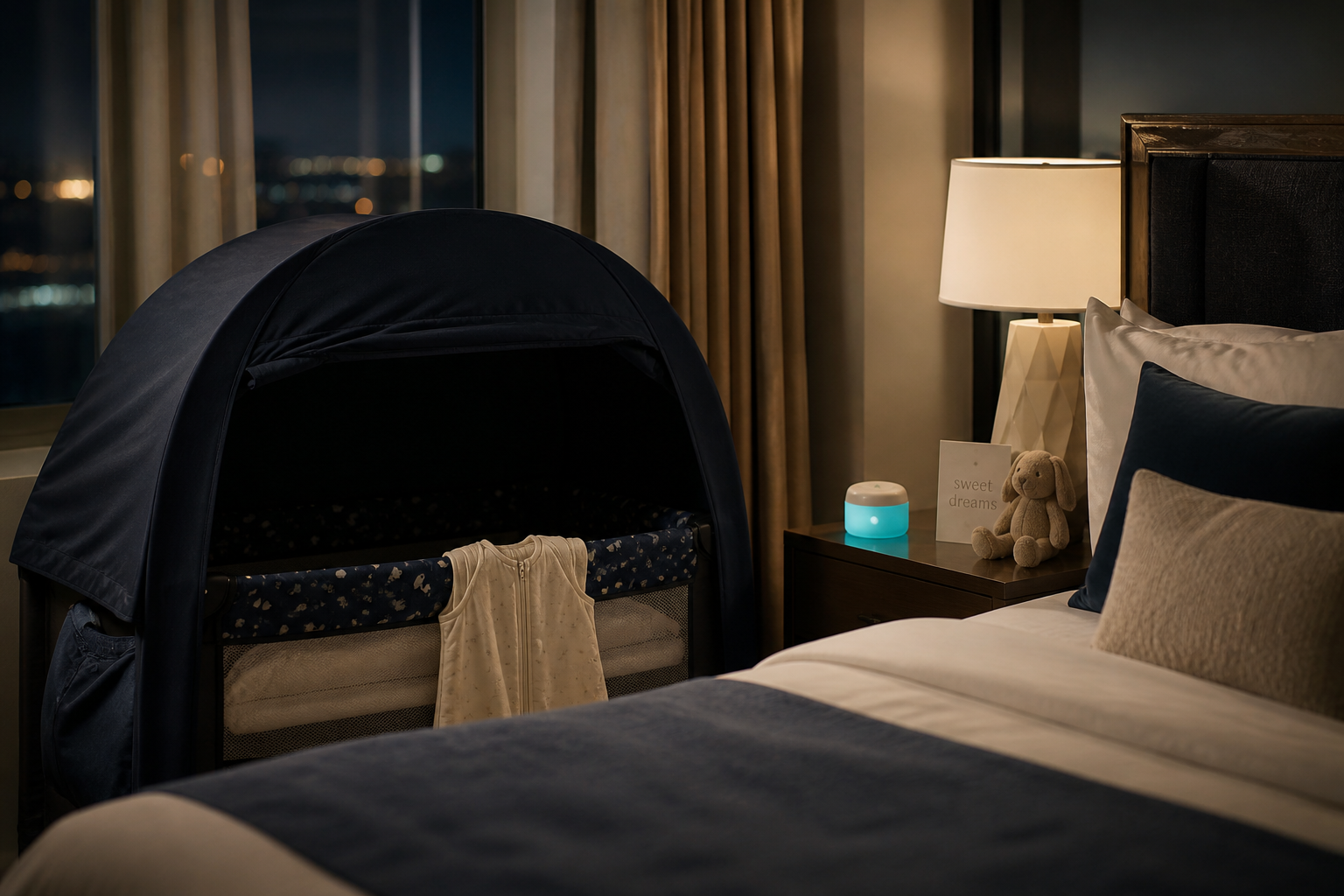
Best Travel Sleep Accessories for Toddlers (2026): Sound Machines, Blackout Solutions & More
Sound machines, blackout tents, portable beds, and sleep sacks compared for hotels and rentals — everything you need so your toddler actually sleeps on vacation.
Regalo My Cot Review: The $27 Portable Toddler Bed That Goes Everywhere
Honest Regalo My Cot review hotel stays, grandma's house sleepovers, and camping trips. $29.99. Specs, trade-offs, and who should skip it.
Hatch Go Sound Machine Review: The Travel Sleep Weapon Every Parent Needs
Honest Hatch Go portable sound machine review, road trips, and flights — real battery life, sound quality, and more. $39.99.