Disclosure: ToddlerTravelGear is reader-supported. We may earn a commission if you buy through links on our site — at no extra cost to you. Learn more
Best Travel Sleep Accessories for Toddlers (2026): Sound Machines, Blackout Solutions & More
Sound machines, blackout tents, portable beds, and sleep sacks compared for hotels and rentals — everything you need so your toddler actually sleeps on vacation.
It is 11pm in a hotel room you are sharing with your toddler. The streetlight outside is blasting through the curtains — because hotel curtains never actually close all the way. Down the hall, someone slams a door. Your 18-month-old who normally sleeps in pitch black with a white noise machine is standing in the pack-n-play, screaming. Your partner is sitting on the edge of the bed whispering "I told you we should have done Airbnb." You have four more nights of this ahead of you.
This is the scene that plays out thousands of times every night in hotels around the world. And it is entirely preventable.
Sleep disruption is the number one fear parents have about traveling with a toddler — more than flight meltdowns, more than packing logistics, more than car seat headaches. Because a toddler who does not sleep means nobody sleeps. And nobody sleeping means nobody has fun. Your entire vacation can unravel because of a gap in the curtains and a hallway ice machine.
We have spent over two years testing travel sleep gear in hotel rooms, Airbnbs, grandparents' houses, and even a tent. This guide covers every category of sleep accessory — from sound machines to blackout solutions to portable sleeping surfaces — with real-world recommendations for what actually works and what is a waste of money.
Why toddlers do not sleep on vacation (and what actually works)
Before we recommend products, you need to understand why your toddler struggles to sleep in new places. It is not just because they are being difficult.
The "first night effect" is real neuroscience. Research from Brown University found that when humans sleep in an unfamiliar environment, one hemisphere of the brain stays partially alert — a survival mechanism inherited from ancestors who needed to watch for threats in new places. Adults experience this mildly. Toddlers, whose brains are still developing sleep regulation, experience it dramatically.
Light is the most powerful sleep disruptor. Melatonin production begins when the brain detects darkness. Even small amounts of light — a bathroom nightlight reflecting off tile, a hallway glow under the door, that blasted streetlight — can suppress melatonin and make it physically harder for your toddler to fall asleep. This is not a preference issue. It is biology.
Unfamiliar sounds trigger arousal responses. Your toddler's brain at home has learned to filter out known sounds — the furnace, the neighbor's dog, the creaky staircase. In a hotel, every sound is new: elevator dings, ice machines, footsteps overhead, other guests' TVs through thin walls. Each sound triggers a micro-arousal that can fragment sleep even when it does not fully wake them.
What actually moves the needle:
- Darkness — recreating the blackout conditions of their nursery (the single biggest factor)
- Consistent white noise — masking unfamiliar sounds so the brain stops reacting
- Familiar sleep cues — same sleep sack, same bedtime routine, same lovey
- A sleep surface they accept — this varies dramatically by age
What does not work: hoping they will "just adjust," skipping naps to tire them out (this backfires spectacularly), or co-sleeping for the first time on vacation if they have never done it at home.
Sound machines: your first line of defense
A portable sound machine is the single cheapest and most effective piece of travel sleep gear you can buy. It masks the unfamiliar hotel noises that trigger wake-ups, and it provides a familiar auditory cue that signals "sleep time" regardless of where you are. Start using one at home weeks before your trip so your toddler associates it with sleep.
1. Best overall sound machine: Dreamegg Portable Sound Machine
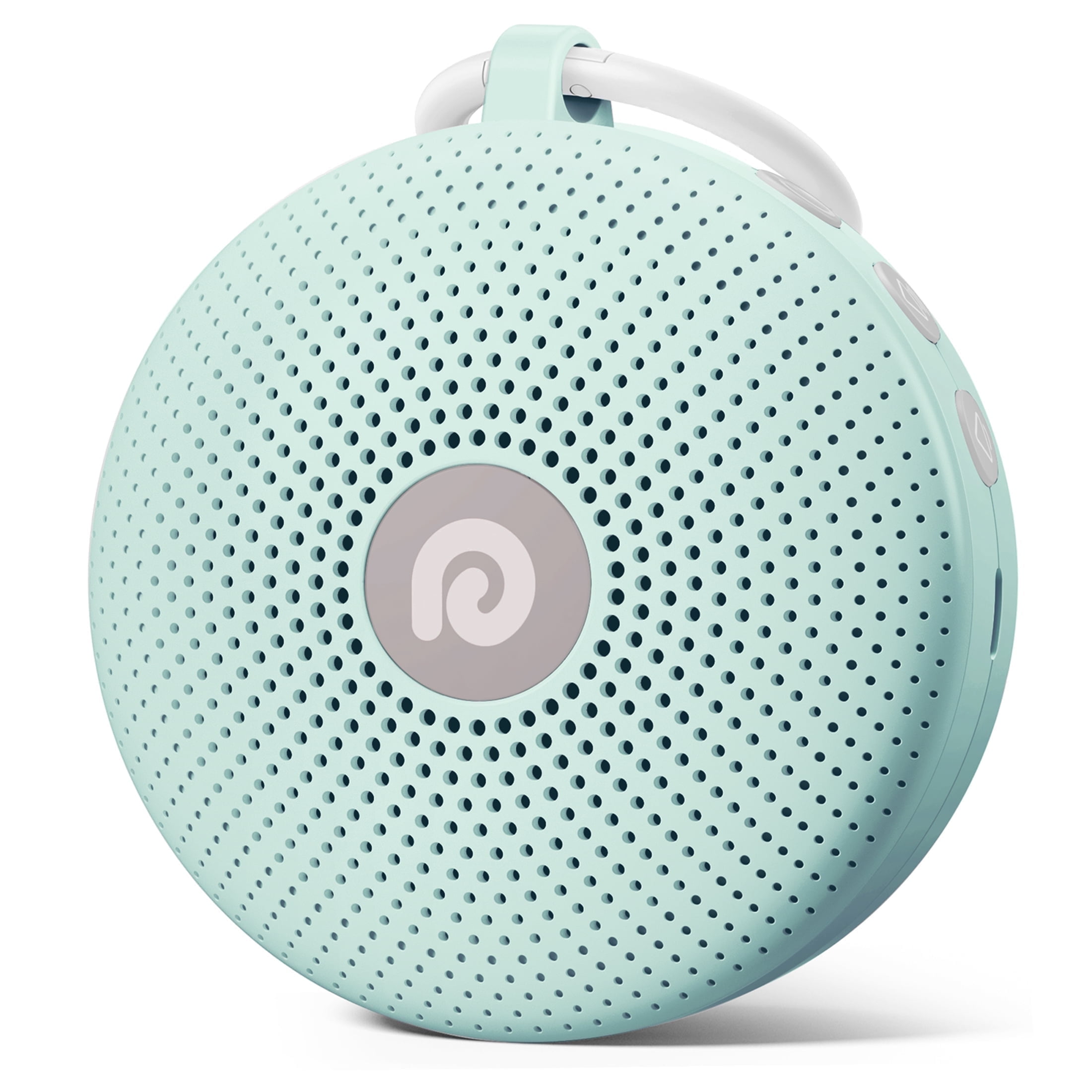
Dreamegg Portable Noise Machine for Baby Adult, 21 Soothing Sounds
Top PickDreamegg · $19.99
Price last checked August 15, 2026 — see Amazon for current pricing.
21 high-fidelity sounds, USB-C rechargeable, and compact enough to clip on a diaper bag.
Pros
- 21 sound options—huge variety
- Compact and portable
- Long battery life
- Works for babies and adults
Cons
- Speaker quality is basic
- No clip attachment
- Timer limited options
The Dreamegg has become the travel sound machine we recommend most, and it is not close. Twenty-one sound options might sound like overkill, but it matters — some toddlers respond better to deep brown noise than classic white noise, and having fan, rain, ocean, and shushing options means you can find what works without buying multiple devices.
The rechargeable battery lasts through the night on a single charge, which is critical. You do not want to discover at 2am that your AA batteries died. USB-C charging means you use the same cable as most modern phones — one less cord to pack.
At $17.99, this is the easiest recommendation in this entire article. Even if you never travel, having a backup sound machine for power outages or overnight stays at grandma's house is worth it.
Best scenario: Hotel rooms where you cannot control noise from hallways, elevators, or adjoining rooms. Place it between your toddler's sleeping area and the door. The Dreamegg produces enough volume to mask a hallway conversation without being dangerously loud near the crib.
Age range: Newborn through preschool and beyond. You will use this for years.
2. Best clip-on sound machine: Portable Baby Sound Machine Clip
Portable Baby Sound Machine, 12 Soothing Sounds, 15 Hours Battery, Clips on Stroller
Best for On-the-Gojaroco · $15.99
Price last checked August 15, 2026 — see Amazon for current pricing.
Clips directly onto strollers, car seats, and cribs — 15-hour battery outlasts any travel day.
Pros
- 15-hour battery life
- Clips to stroller or car seat
- 12 sound options
- Very affordable
Cons
- Generic brand
- Basic build quality
- Limited volume range
The clip-on design is what sets this apart. During travel days, it clips onto the stroller canopy or car seat handle to help your toddler nap in motion. At the hotel, it clips onto the pack-n-play rail inches from your child's ears. That proximity matters — it means you can run the volume lower while still effectively masking sounds, which is safer for developing ears.
The 15-hour battery life is the best in this category. A full charge easily covers a red-eye flight plus the first night in the hotel without needing to plug in. Twelve sound options is fewer than the Dreamegg, but it covers the essentials: white noise, brown noise, rain, ocean, lullaby, and heartbeat.
At $15.99, many families buy both this and the Dreamegg — one stays clipped to the stroller for transit naps and one lives by the crib for nighttime. That $34 total investment will save you more vacation sanity than anything else in this guide.
Best scenario: Long travel days where you need nap continuity between the car, the stroller, and the hotel. Clip it on in the morning and forget about it until bedtime.
Age range: Newborn through age 3. The clip mechanism also works on travel high chairs for restaurant white noise during fussy dinners.
Blackout solutions: recreating darkness anywhere
If you take only one thing from this article, make it this: darkness is not optional for toddler travel sleep. It is the foundation everything else is built on. A sound machine in a bright room will not work. A familiar sleep sack in a bright room will not work. But darkness alone, even without other accessories, often works.
The problem is that hotel rooms are never dark enough. Curtains have gaps. Bathroom lights leak around the door. Hallway light seeps under the entry door. The smoke detector has a blinking LED. The alarm clock glows. And streetlights or parking lot lights punch through thin curtain fabric.
You have three approaches, and which one works best depends on your child's age and sleeping arrangement.
3. Best blackout solution overall: SlumberPod Portable Blackout Tent
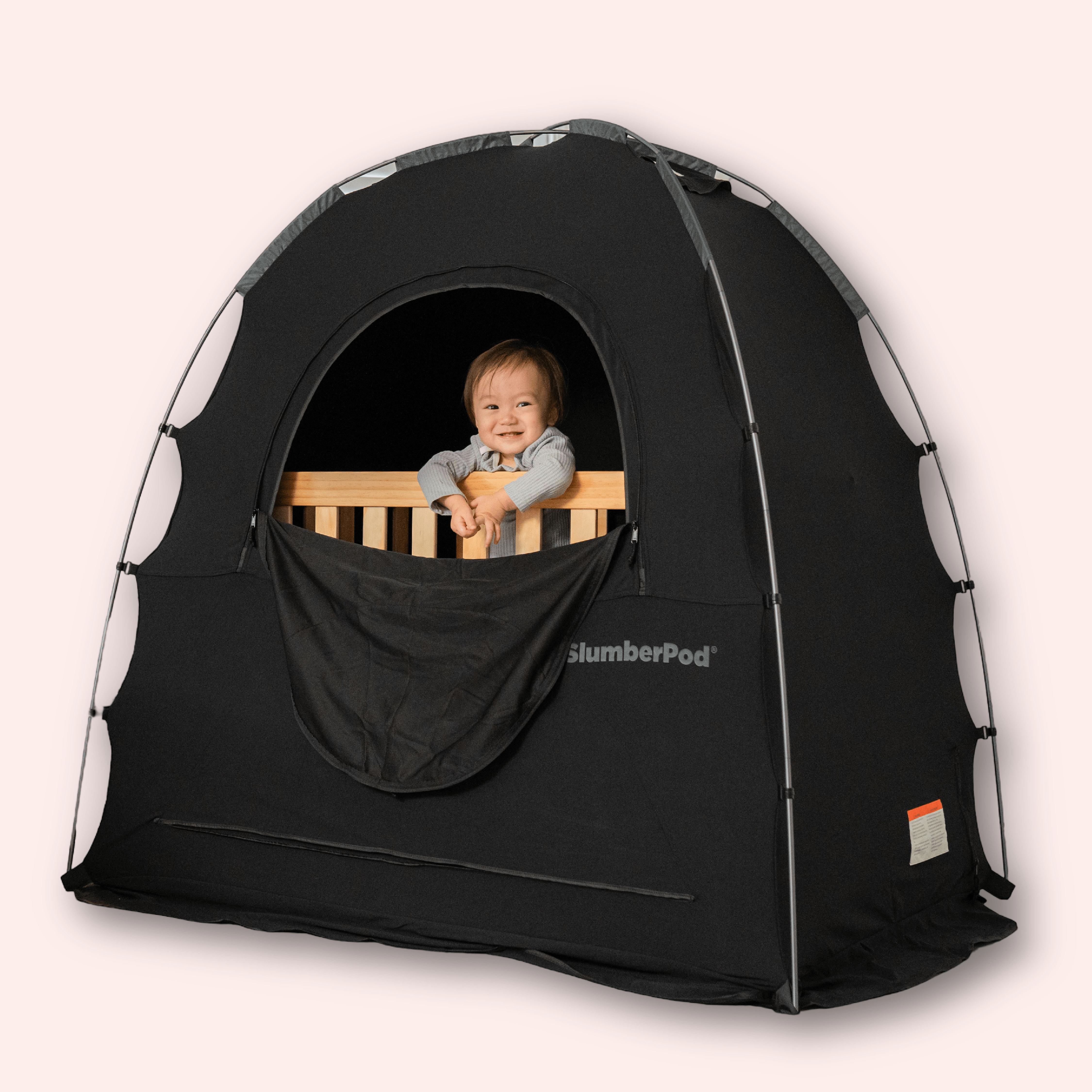
SlumberPod Original Blackout Sleep Tent for Babies and Toddlers, Blocks 95%+ Light
Top PickSlumberPod · $199.99
Price last checked August 15, 2026 — see Amazon for current pricing.
Blocks 95%+ of light and creates a private sleep space inside your hotel room — a game-changer for room-sharing.
Pros
- Blocks 95%+ light for dark sleep environment
- Fits over most pack-n-plays
- Monitor and fan pouches built in
- Shark Tank featured
Cons
- Expensive at $200
- Can trap heat without fan
- Bulky to pack
- Setup takes practice
The SlumberPod is the single product that has done more for family travel sleep than anything else on the market. It is a pop-up blackout canopy that fits over a pack-n-play, mini crib, or toddler cot, creating a dark, enclosed sleep space inside the room you are sharing with your child.
This solves two problems at once. First, it blocks light — not 80%, not 90%, but 95%+ of ambient light. Your toddler's sleep space is genuinely dark even if you have the hotel room lights on. Second, and this is the part parents underestimate — it provides visual separation. When you are sharing a room with a toddler, they can see you. And if they can see you, they want you. The SlumberPod means they cannot see you moving around the room, checking your phone, or getting ready for bed. That visual barrier alone prevents countless wake-ups.
Yes, $199.99 is a lot of money, and it is the objection every parent raises before the first trip rather than after it. The arithmetic that changes minds is simple: if you travel even twice a year, the alternative is either sitting in the dark from 7 PM or paying for a second room.
Setup: About 30 seconds once you have done it a few times. It pops up over the pack-n-play and secures with elastic straps around the base. Practice at home before your trip.
Ventilation: This is the concern every parent has, and it is the right one to have. The SlumberPod has two mesh ventilation windows and is designed to maintain airflow; SlumberPod's own guidance is that the interior stays within a couple of degrees of the room. The manufacturer is explicit that it should not be used in rooms above 75 degrees Fahrenheit without air conditioning, and that instruction should be followed rather than judged by eye.
Best scenario: Any hotel room where you are sharing the space with your toddler. Also excellent at grandparents' houses where the "guest room" has no blackout curtains and a streetlight outside.
Age range: 4 months through age 5, depending on the sleep surface underneath. Fits standard pack-n-plays, the Lotus Travel Crib, and most toddler cots.
4. Best budget blackout tent: Hiccapop DayDreamer Blackout Tent
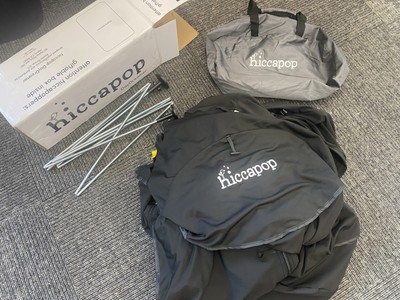
Hiccapop Daydreamer Blackout Tent for Pack and Play, Portable Crib Tent
Budget Pickhiccapop · $89.99
Price last checked August 15, 2026 — see Amazon for current pricing.
Half the price of the SlumberPod with 90%+ light blocking — excellent value for occasional travelers.
Pros
- Half the price of SlumberPod
- Patented blackout design
- Fits standard pack-n-plays
- Easy to set up
Cons
- Less ventilation than SlumberPod
- May not fit all crib sizes
- Can be warm without airflow
The Hiccapop DayDreamer does about 90% of what the SlumberPod does for half the price. It fits over standard pack-n-plays and blocks the vast majority of ambient light. The fabric is slightly thinner than the SlumberPod, so in very bright conditions (direct morning sun, for example) you might see a faint glow. But for hotel room lighting and streetlights, it works well.
The main trade-off is build quality. The SlumberPod feels like a product in its sixth generation — refined, well-fitted, elegant. The Hiccapop feels like a solid first effort — functional, occasionally fiddly, but effective. The elastic straps are less refined, and the fit on some pack-n-play models is not as snug.
At $99.99, this is our recommendation for families who travel once or twice a year and do not want to spend $200 on a blackout tent. It is also a good choice if you are not sure whether a blackout tent is "your thing" — try the concept at this price point before upgrading.
Best scenario: Occasional travel with a child under 3 who sleeps in a pack-n-play. Also works well at home when you need to create a dark nap environment in a bright room.
Age range: 4 months through age 3 (pack-n-play dependent).
5. Best for windows: Amazon Basics Portable Blackout Curtain
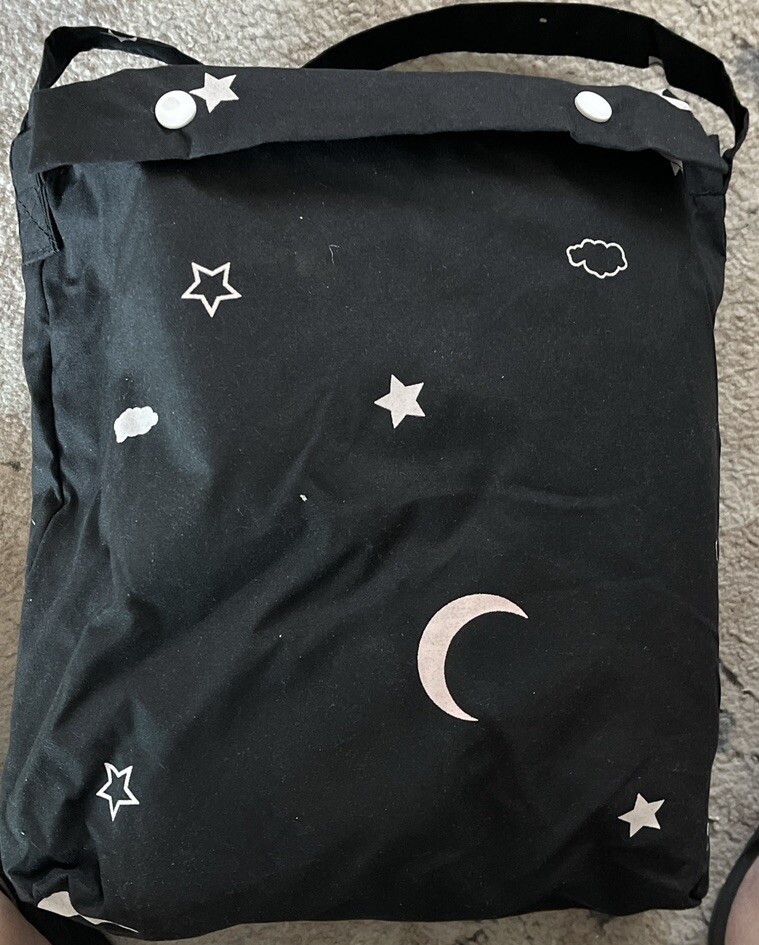
Amazon Basics Portable Blackout Curtain Shade with Suction Cups, 50"x78", Moon and Stars
Best for WindowsAmazon Basics · $27.49
Price last checked August 15, 2026 — see Amazon for current pricing.
Suction-cup curtain that actually sticks — covers most hotel windows for under $20.
Pros
- Very affordable at $20
- Suction cups—no tools needed
- Noise reduction properties
- Fun moon and stars design
Cons
- Suction cups may not stick to all windows
- Can fall down in heat
- Doesn't cover very large windows
When your child sleeps in a hotel bed or floor bed (not a pack-n-play), a blackout tent is not an option. You need to darken the window itself. The Amazon Basics blackout curtain uses industrial-strength suction cups to stick directly to hotel windows, covering a 50"x78" area with light-blocking fabric.
Will it create perfect darkness? No. Light will leak around the edges and through any gaps in suction cup coverage. But it takes a hotel room from "why is there a streetlight aimed directly at my child's face" to "reasonably dark," which is often enough to make the difference.
The suction cups work best on smooth glass. Textured windows, window screens, and very cold glass (winter travel) can cause adhesion issues. Our tip: wipe the glass with a damp cloth before applying, press each suction cup firmly for 10 seconds, and apply them higher than you think you need to — they slowly slide down overnight.
At $19.99, bring one even if you are also bringing a SlumberPod. You will use the curtain for your own sleep, if nothing else. Hotel curtains have humbled better people than you.
Best scenario: Hotel rooms with large windows and inadequate curtains (which is most hotel rooms). Airbnbs with sheer curtains. Grandma's sunny guest room. Also useful at home if your nursery curtains are not cutting it.
Age range: Any age — this is about the room, not the child.
Blackout solutions compared
The right choice depends on your child's sleeping arrangement. If they sleep in a pack-n-play or travel crib, the SlumberPod (or Hiccapop for budget-conscious families) is the clear winner — it provides both darkness and visual separation. If they sleep in a bed, you need the curtain to darken the window, and possibly both if you are also setting up a pack-n-play for a younger sibling.
Sleep surfaces: where your toddler actually sleeps
Your child's sleeping arrangement is the most age-dependent decision in this guide. A 9-month-old in a portable crib has vastly different needs than a 2.5-year-old who has been in a toddler bed for six months. And the 3-year-old who keeps climbing out of the hotel crib is a different problem entirely.
6. Best toddler floor bed: Toddler Travel Bed Sandwich
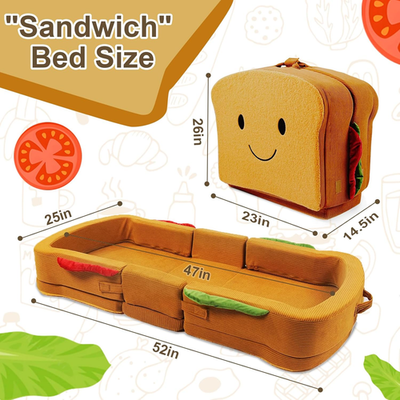
liftoza Toddler Travel Bed Sandwich Style, Portable Foldable Soft Foam with Safety Rail (Medium)
Best Floor Bedliftoza · $84.99
Price last checked August 15, 2026 — see Amazon for current pricing.
Foam floor bed with built-in safety rails — no inflation needed, unfolds and ready to use.
Pros
- Soft foam is comfortable
- Safety rails prevent rolling off
- Washable cover
- Folds compact for packing
Cons
- Bulky even when folded
- Foam can be thin
- Heavy for air travel
The "Sandwich" design is clever: two foam side rails fold up around the mattress surface for travel (like a sandwich closing), then unfold flat to create a floor bed with 4-inch bumper rails on each side. No inflation, no assembly, no fumbling with a pump at midnight.
This is the solution for toddlers aged 2 and up who have transitioned out of a crib at home but are too big (or too escape-prone) for a hotel pack-n-play. The foam is firm enough for safe sleep and soft enough that a roll against the side rail does not wake them.
At $84.99, it is significantly cheaper than buying a toddler-specific travel crib, and it packs smaller too. The foam rolls up into a carry bag that fits in a large suitcase or can be carried separately.
Best scenario: Hotels that do not offer toddler beds, Airbnbs with only adult beds, and any situation where your 2-4-year-old needs a safe, independent sleep surface on the floor. Also works great for sleepovers at grandma's.
Where to place it: On the floor between the hotel bed and the wall. This creates a natural barrier on one side (the wall), the foam rails handle the other side, and even if they roll completely out, they are already on the floor — the fall is zero inches.
Age range: 2 to 5 years old. Below 2, use a portable crib instead.
7. Best bed rail solution: Hiccapop Inflatable Bed Rail (2-Pack)
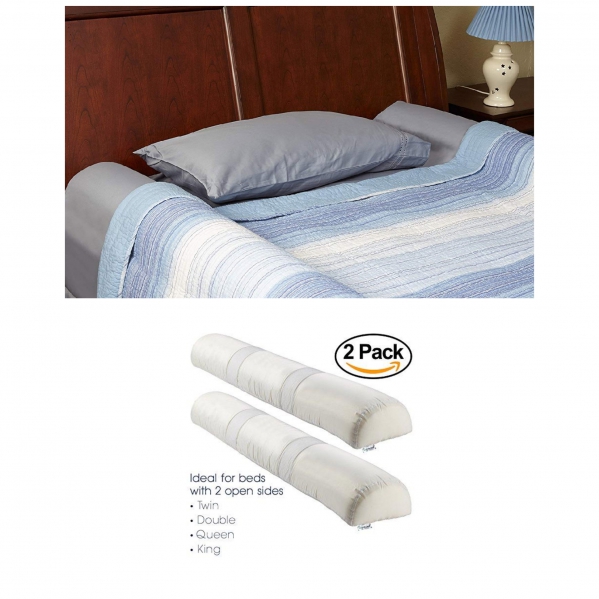
Hiccapop Inflatable Bed Rail for Toddlers (2-Pack), Portable Blow-Up Bed Bumper
Best Bed Railshiccapop · $58.99
Price last checked August 15, 2026 — see Amazon for current pricing.
Inflatable bumpers that fit under the fitted sheet — invisible, effective, and packable.
Pros
- Inflates quickly—no pump needed
- Fits under any fitted sheet
- Non-slip washable covers
- 2-pack covers both sides
Cons
- Can deflate overnight
- Takes up bed space
- Not for very small toddlers
If your toddler is going to sleep in the hotel bed (which is the reality for many families with children over 2), you need a way to keep them from rolling off the edge. Metal bed rails are great at home but impossible to travel with. The Hiccapop inflatable rails solve this brilliantly — they tuck under the fitted sheet on each side of the bed, creating a subtle bump that prevents rolling without requiring any hardware.
Each rail inflates in about 30 seconds with the included pump. They are 48 inches long, which covers the area from pillow to mid-bed — the zone where a sleeping toddler is most likely to roll. Deflated, both rails fit in a stuff sack smaller than a water bottle.
The $49.97 for the 2-pack (one for each side) is worth it if your child will sleep in a regular bed for even one night. They also work at grandparents' houses, vacation rentals, and any situation with an unrailed bed.
Important note: These are not a substitute for supervision with very young toddlers. They prevent rolling during sleep — they do not prevent a determined 18-month-old from climbing over them while awake. For children under 2, a pack-n-play or travel crib is still the safest option.
Best scenario: Hotel stays where your 2-4-year-old sleeps in the hotel bed (either the second bed or sharing with a parent). Also saves you on vacation rentals that do not have toddler beds.
Age range: 2 to 5 years old. Not recommended for children under 2.
Wearable blankets: the familiar sleep cue you can pack
Hotel bedding is wrong for toddlers in every way — too heavy, too hot, too loose, and a suffocation risk for younger children. A sleep sack from home is a familiar texture, a familiar routine signal, and the right warmth for your child's age and the destination climate.
8. Best value sleep sack: Yoofoss Baby Sleep Sack (3-Pack)
Yoofoss Baby Sleep Sack 0-6 Months, 100% Organic Cotton, TOG 0.5, 3 Pack
Best ValueYoofoss · $25.19
Price last checked August 15, 2026 — see Amazon for current pricing.
Three organic cotton sleep sacks for the price of one premium brand — TOG 0.5 perfect for warm-weather travel.
Pros
- 3-pack great value
- 100% organic cotton
- 2-way zipper for easy changes
- Lightweight TOG 0.5 for warm travel
Cons
- Only 0–6 month size
- Thin for cold climates
- Basic design
The Yoofoss 3-pack at $23.79 is the smartest travel sleep sack purchase you can make. Having three means you always have a clean one — critical during travel when laundry access is limited and diaper blowouts or middle-of-the-night spit-ups are more stressful than usual.
At TOG 0.5, these are lightweight and ideal for warm-weather destinations, air-conditioned hotel rooms, and summer travel. The organic cotton is soft and breathable. The two-way zipper makes diaper changes easier in the dark.
These are not the fanciest sleep sacks on the market. The fabric is thinner than premium brands, and they will not last as long through repeated washes. But at under $8 per sack, you can buy them specifically for travel and not worry about wear.
Best scenario: Beach vacations, tropical destinations, and well-heated hotel rooms. Pack all three — one on the baby, one in the diaper bag, one in the suitcase as backup.
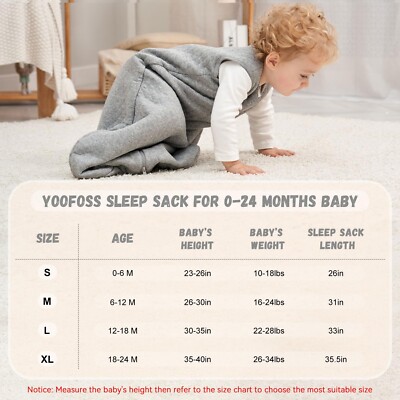
Age range: Sizes available from newborn to 24 months. Check the sizing chart carefully — a too-large sleep sack bunches around the face, and a too-small one is uncomfortable.
9. Best transition sleep sack: Halo Easy Transition SleepSack
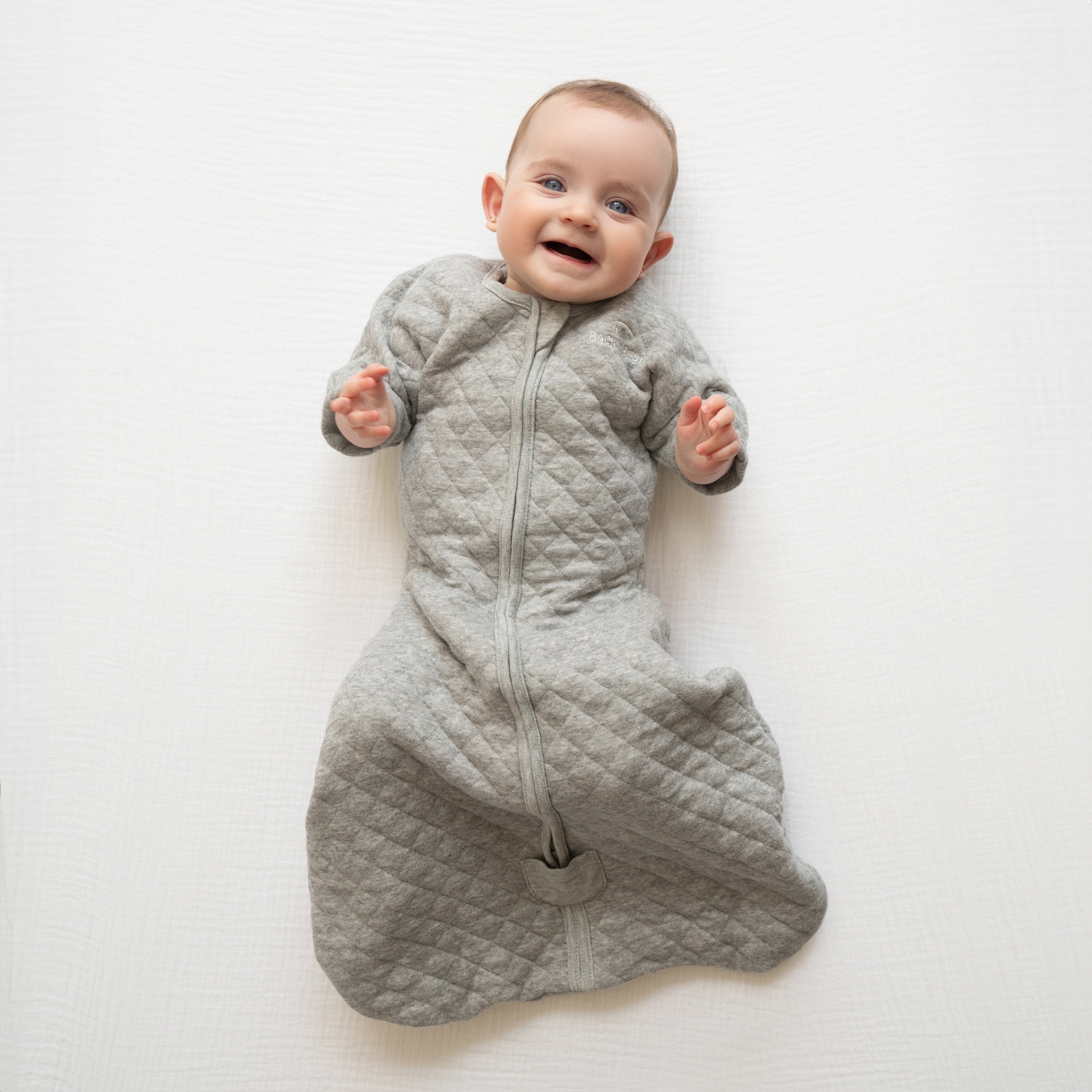
HALO Easy Transition SleepSack Wearable Blanket, 100% Cotton, 1.0 TOG
Best for TransitionHALO · $39.95
Price last checked August 15, 2026 — see Amazon for current pricing.
100% cotton with removable swaddle wings — adapts as your baby outgrows the swaddle.
Pros
- Helps transition from swaddle smoothly
- 100% cotton and breathable
- Trusted HALO brand
- Maintains familiar sleep cues while traveling
Cons
- Pricier than budget options
- Single pack
- Sizing can be tricky
If your baby is between 3-6 months and in the middle of the swaddle transition, traveling adds an extra layer of difficulty. The Halo Easy Transition SleepSack is specifically designed for this awkward phase — it has removable swaddle wings that let your baby's arms be partially wrapped or fully free, so you can match wherever they are in the transition process.
The 100% cotton construction handles a wide range of temperatures, and the inverted zipper is a small detail that matters at 3am in a dark hotel bathroom. At $39.95, it is more expensive than the Yoofoss per unit, but the Halo's build quality and transition features justify the premium for babies in this specific developmental window.
Why this matters for travel: Babies in the swaddle transition are already sleeping inconsistently at home. Adding a new environment on top of that is a recipe for disaster unless you maintain absolute consistency in their wearable blanket. Using the same Halo at home and on the road keeps one variable constant.
Best scenario: Trips with a 3-6 month old who is rolling but not yet comfortable arms-free. Also useful for babies who sleep better with light arm containment but are too old for a full swaddle.
Age range: 3 to 6 months, during the swaddle transition period.
The first-night hotel survival plan
The first night in a new place is always the hardest. Here is a step-by-step plan that minimizes the damage. Do not wing this. Have a plan, execute it, and adjust on night two.
Step 1: Set up the sleep environment before your child sees the room. If possible, have one parent take the toddler to the hotel lobby, pool area, or for a walk while the other parent sets up. Install the blackout curtain. Set up the pack-n-play or floor bed. Pop up the SlumberPod. Position the sound machine. Close every curtain, cover every LED light (use band-aids or tape from your packing list), and check for light leaks. When your toddler walks into the room, the sleep zone should already look like nighttime.
Step 2: Replicate the bedtime routine exactly. Same bath (if your routine includes one), same pajamas, same books, same songs, same sleep sack. The more identical this is to home, the more your toddler's brain receives the signal: "This is normal. This is safe. It is time to sleep." Do not cut the routine short because you are tired from traveling. Tonight is the worst possible night to rush.
Step 3: Turn on the sound machine 10 minutes before the routine starts. Let it become part of the background before you put them down. Set it to the same sound you use at home. If you do not use one at home yet, start at least two weeks before your trip.
Step 4: Put them down awake. This matters more in a new environment than at home. If you rock or nurse them fully to sleep and then transfer them, they will wake up confused and disoriented in an unfamiliar place. Putting them down drowsy but awake means they fall asleep aware of where they are, so they are not startled when they briefly wake between sleep cycles.
Step 5: Leave the sleep zone. If you are using a SlumberPod, step away. If the room layout allows, go into the bathroom and close the door. If you are in the room, be boring. No phones (screen light), no talking, no making eye contact. Pretend to be asleep.
Step 6: Expect protest. Ten to twenty minutes of fussing on the first night is normal. This is not a sign that your setup failed — it is the first night effect. Resist the urge to pick them up and start over. Check in briefly with your voice if needed: "Night-night, I'm right here." Then be quiet again.
Step 7: Have a plan for when you go to bed. This is the part nobody talks about. You need to get yourself ready for bed — brush teeth, change clothes, plug in phones — without waking your toddler. Lay out your pajamas before the bedtime routine. Charge your phone in the bathroom. Use the phone flashlight on its dimmest setting. Move like a spy. The SlumberPod helps enormously here because your toddler cannot see you.
Step 8: If it all falls apart, do not catastrophize. Even with perfect preparation, some first nights are rough. One bad night does not ruin the trip. Toddlers adjust faster than adults. Night two is almost always better. Night three is usually back to normal.
Jet lag and time zone tips for toddlers
Crossing time zones with a toddler requires strategy. Their circadian rhythm is less flexible than yours, but it is also more malleable if you approach it correctly.
For 1-3 hour time changes: Do not adjust the schedule beforehand. Just shift naturally once you arrive. Move bedtime by 30 minutes each night until you are on local time. Most toddlers adapt within two nights.
For 4-6 hour time changes (transatlantic flights): Start shifting 3-4 days before departure. Move bedtime and wake-up by 30 minutes per day toward the destination time. On arrival, get outside in morning sunlight immediately — light exposure is the strongest circadian signal. Expect 2-3 rough days before things normalize.
For 7+ hour changes (transpacific flights): The full shift is brutal for toddlers. Some pediatric sleep consultants recommend not fully adjusting if your trip is under 7 days — just let your child split the difference and run slightly off-schedule in both directions. For longer trips, commit to destination time immediately on arrival, use light exposure aggressively, and accept 3-5 days of difficult sleep.
Critical jet lag rules:
- Do not let them nap past 4pm local time on arrival day, no matter how tired they are. A late nap pushes bedtime to midnight and sets a pattern that is hard to break.
- Offer food on the new schedule, even if they are not hungry. Meal timing helps reset the circadian clock.
- Get morning light. Take them outside within an hour of the local wake-up time, even if that means a very early or very late start to your day.
- One parent stays on night duty. Pre-assign this. The on-duty parent handles all night wake-ups. The off-duty parent sleeps. Switch roles the next night. Trying to share duty results in both parents being exhausted and neither sleeping.
- Keep the sound machine running all night. During jet lag adjustment, toddlers wake more frequently between sleep cycles. Consistent white noise helps them self-settle back to sleep instead of fully waking.
What did not work for us
Not every popular recommendation holds up in practice. Here is what we tried and abandoned:
Playing white noise from a phone. The speaker quality is poor, the volume is inconsistent, notifications interrupt the audio, and you cannot use your phone while it is playing sleep sounds next to your toddler. A $16-18 dedicated sound machine is not a luxury — it is a necessity.
Garbage bags taped over windows. Yes, this is a real tip from parent forums. It sort of works, but tape damages hotel walls and the bags slip down overnight. The Amazon Basics blackout curtain does the same job better, looks less alarming to housekeeping, and costs $20.
Melatonin for jet lag. We are not doctors, and we are not making medical recommendations. But pediatric research on melatonin for toddler jet lag is thin, and most pediatricians we spoke with recommended behavioral strategies (light exposure, schedule shifting) over supplementation for children under 3. Talk to your pediatrician before your trip.
Keeping them up late to tire them out. This is the most common mistake. Overtired toddlers do not sleep better — they sleep worse. Their cortisol spikes, making it harder to fall asleep and harder to stay asleep. Stick to age-appropriate wake windows even on vacation. A 2-year-old who skips their nap and stays up until 10pm will not "crash hard" — they will melt down, fight sleep, and wake up multiple times overnight.
Hotel-provided cribs. The quality ranges from acceptable to horrifying. We have seen hotel cribs with sagging mattresses, broken slats, expired safety standards, and mystery stains. Even the decent ones rarely come with fitted sheets that actually fit. If sleep matters to you on this trip, bring your own portable crib or at minimum bring your own fitted sheet and inspect the hotel crib carefully before use.
Choosing the right setup by age
6-12 months: Portable crib + SlumberPod + sound machine + familiar sleep sack. This is the golden age for travel sleep — they are immobile enough to stay in the crib and young enough to adapt quickly. Do not overthink it.
12-18 months: Same as above, but start watching for the crib-escape phase. If your toddler is attempting to climb at home, the pack-n-play on the road has the same risk. The SlumberPod's enclosed design actually discourages climbing because there is nowhere interesting to go.
18-24 months: The hardest age for travel sleep. They are too big for some pack-n-plays, too young for a bed, and fully aware that you are in the room with them. Maximum blackout, maximum white noise, maximum routine consistency. Consider whether your portable crib still has the height to contain them safely.
2-3 years: Transition to the floor bed or hotel bed with inflatable rails. This is when the blackout curtain becomes more important than the blackout tent, because they are no longer in an enclosed sleep space. Familiar bedding and the sound machine remain essential.
3-4 years: Most children this age can handle a hotel bed with rails and some verbal preparation. Talk about the sleeping arrangement before you arrive: "You are going to sleep in a special hotel bed. Mommy and Daddy will be right next to you." Predictability reduces anxiety.
Related guides
- Best Portable Cribs for Travel — lightweight options that set up in seconds
- Toddler Packing List by Age — so you do not forget the sleep essentials
- Renting vs Bringing Baby Gear — when to pack it and when to rent it
Individual Reviews
We have written in-depth reviews for several products in this roundup. Each review includes detailed testing, comparisons, and our honest take after months of real-world use.
Disclosure: ToddlerTravelGear is reader-supported. We may earn a commission if you buy through links on our site — at no extra cost to you. Learn more
Frequently Asked Questions
Products Mentioned
Dreamegg
Dreamegg Portable Noise Machine for Baby Adult, 21 Soothing Sounds
Read review →
jaroco
Portable Baby Sound Machine, 12 Soothing Sounds, 15 Hours Battery, Clips on Stroller
Read review →
SlumberPod
SlumberPod Original Blackout Sleep Tent for Babies and Toddlers, Blocks 95%+ Light
Read review →
hiccapop
Hiccapop Daydreamer Blackout Tent for Pack and Play, Portable Crib Tent
Read review →
Amazon Basics
Amazon Basics Portable Blackout Curtain Shade with Suction Cups, 50"x78", Moon and Stars
Read review →
liftoza
liftoza Toddler Travel Bed Sandwich Style, Portable Foldable Soft Foam with Safety Rail (Medium)
Read review →
hiccapop
Hiccapop Inflatable Bed Rail for Toddlers (2-Pack), Portable Blow-Up Bed Bumper
Read review →
Yoofoss
Yoofoss Baby Sleep Sack 0-6 Months, 100% Organic Cotton, TOG 0.5, 3 Pack
Read review →
HALO
HALO Easy Transition SleepSack Wearable Blanket, 100% Cotton, 1.0 TOG
Read review →
Related Content
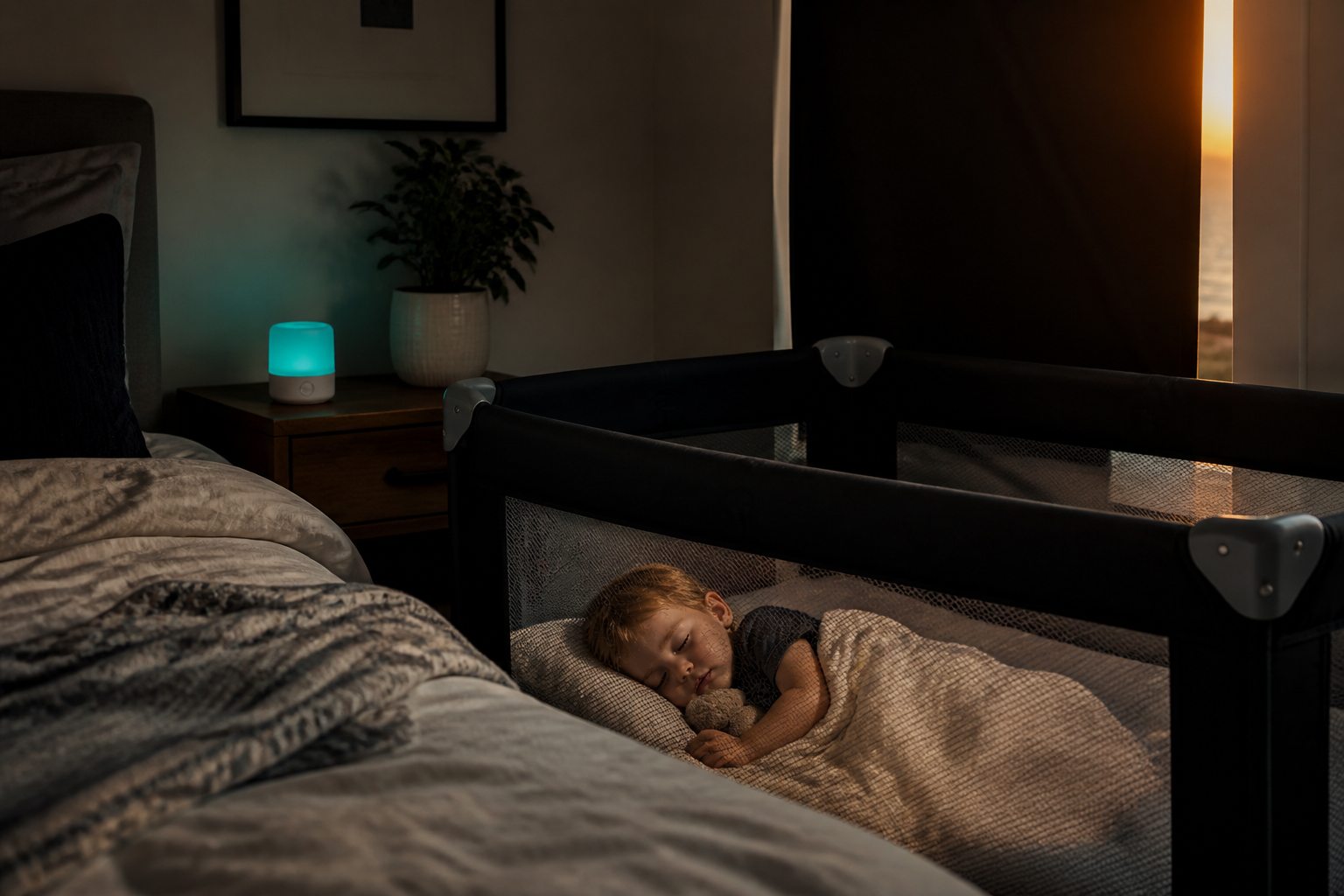
Toddler Sleep on Vacation: The Complete Survival Guide (2026)
How to get your toddler to sleep on vacation — jet lag strategies, hotel room setups, nap schedules, and the gear that makes it possible. Based on real parent experiences.
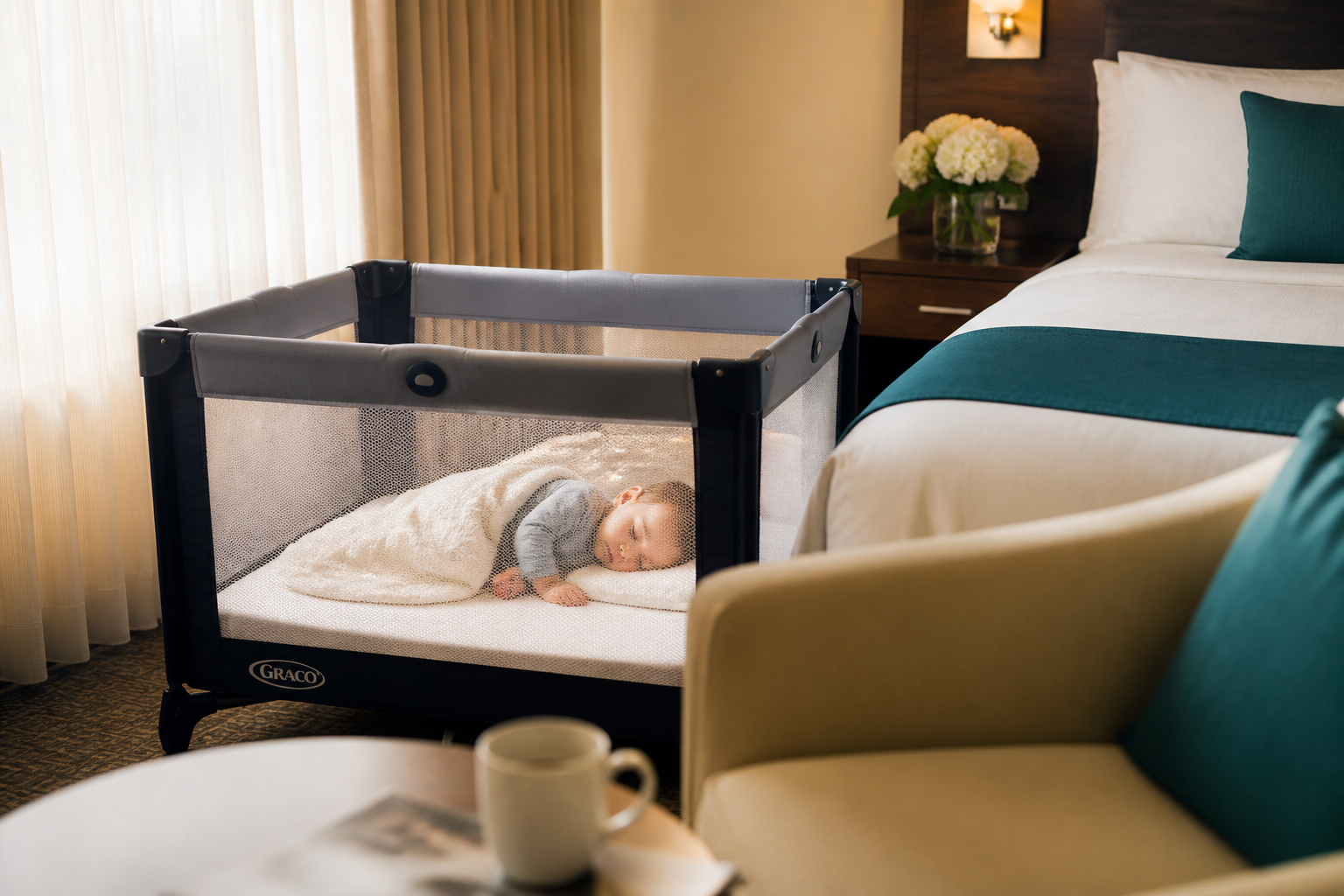
Best Portable Cribs for Travel (2026): Lightweight & Easy Setup
6 portable travel cribs evaluated for hotels, Airbnbs, and grandparents' houses based on real parent reviews. From premium pack-and-plays to budget toddler cots, here is what actually works.
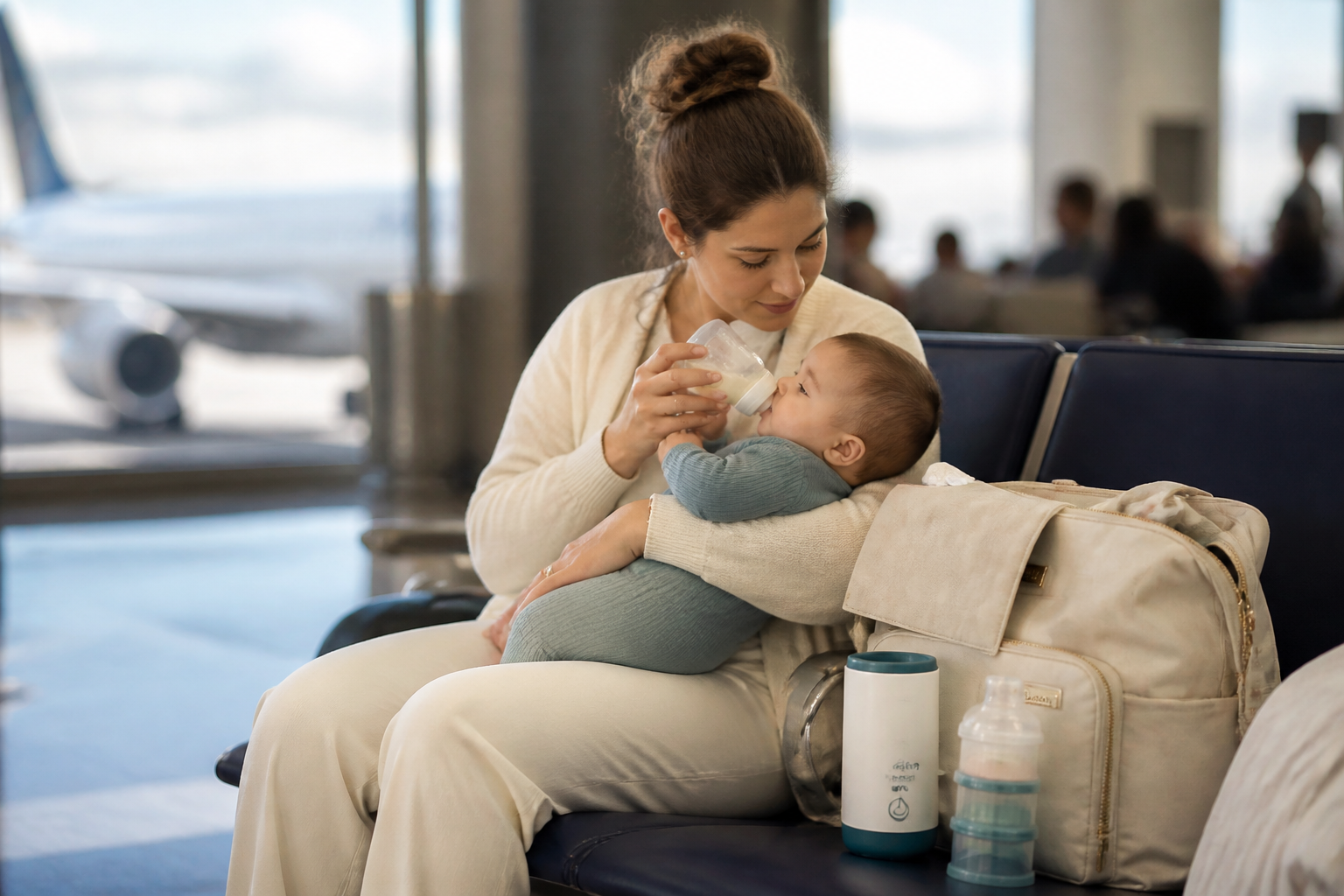
Best Travel Feeding & Bottle Essentials for Toddlers (2026)
Researched picks for bottles, formula dispensers, bottle warmers, breastmilk storage, sippy cups, and travel bowls that make feeding on the go stress-free from TSA to the hotel room.