Disclosure: ToddlerTravelGear is reader-supported. We may earn a commission if you buy through links on our site — at no extra cost to you. Learn more
SlumberPod Review: The Blackout Tent That Saved Our Hotel Room Sharing
Honest SlumberPod review — how a blackout tent solves the hotel room-sharing problem, plus ventilation limits, setup, and who should skip it. $199.99.
Here is the scene. You are in a hotel room — one room, because suites were sold out or because you are not spending $400 a night on a vacation where the main attraction is a splash pad. Your baby's travel crib is three feet from your bed. It is 7:15 PM. Your toddler is asleep. And you are sitting in total darkness, phone brightness at zero, holding your breath every time you shift position on the mattress, because even the faintest glow from your screen or the quietest crinkle of a chip bag will wake the tiny human who took 45 minutes to go down.
This is the hotel room hostage situation that every parent of a young child knows intimately. You cannot turn on the TV. You cannot read. You cannot have a whispered conversation with your partner without the paranoia that you are about to trigger a wake-up that will cost you two hours of resettling. So you lie there in the dark at 7:30 PM, staring at the ceiling, wondering if this is what vacations are now.
The SlumberPod exists to end this exact scenario. It is a blackout tent that goes over your baby's travel crib, blocking out 95 percent or more of ambient light and creating a dark sleep environment inside while you do whatever you want in the rest of the hotel room. Lights on, TV on, phone out, snacks consumed without stealth. Your baby sleeps in darkness. You reclaim your evening.
After using the SlumberPod across multiple hotel stays, family visits, and one very memorable vacation rental where the bedroom had no curtains and a streetlight directly outside the window, here is our full, honest review.
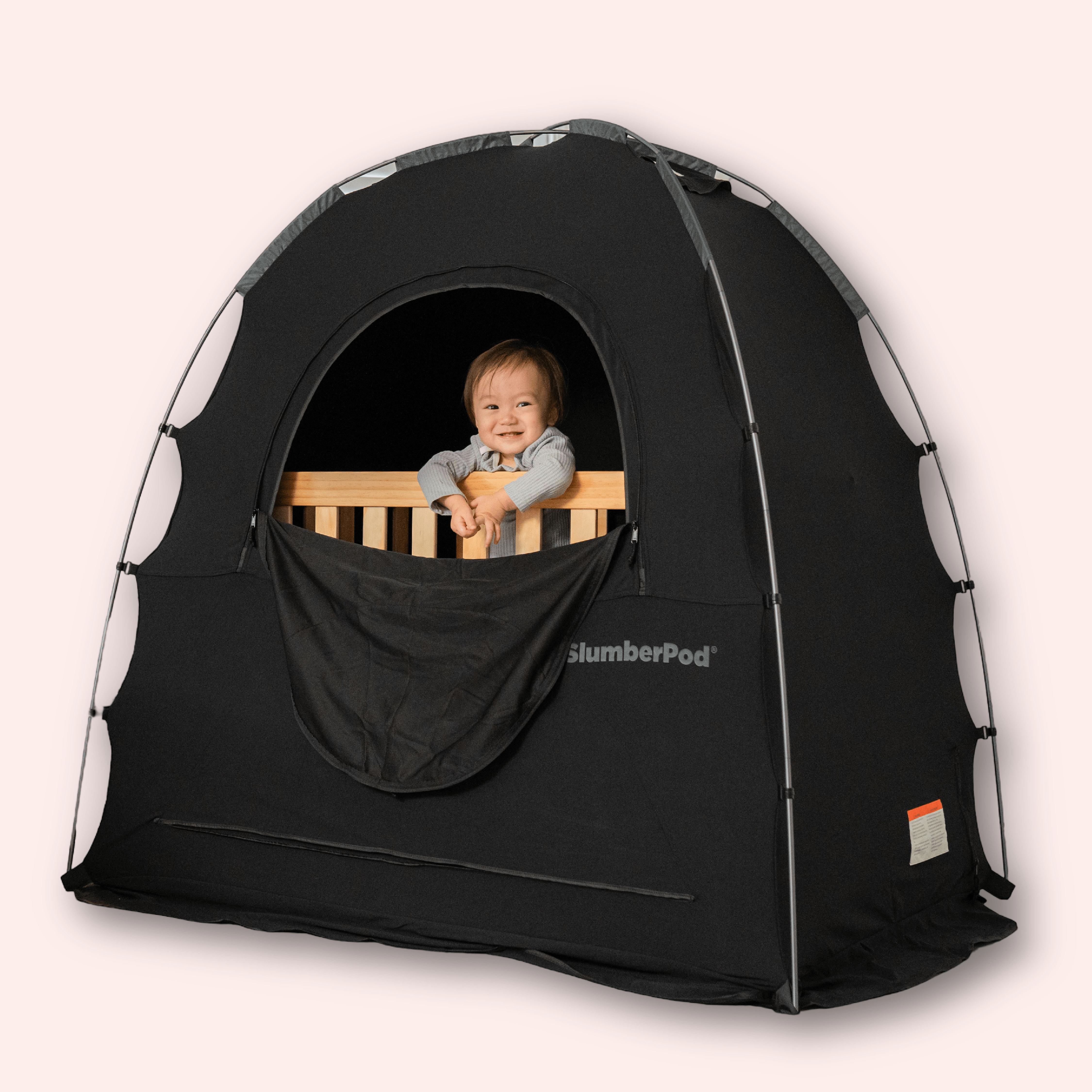
SlumberPod Original Blackout Sleep Tent for Babies and Toddlers, Blocks 95%+ Light
Room-Sharing SolutionSlumberPod · $199.99
Price last checked August 15, 2026 — see Amazon for current pricing.
Creates a pitch-dark sleep environment over any travel crib, letting parents use lights and screens in the same hotel room without waking the baby.
Pros
- Blocks 95%+ light for dark sleep environment
- Fits over most pack-n-plays
- Monitor and fan pouches built in
- Shark Tank featured
Cons
- Expensive at $200
- Can trap heat without fan
- Bulky to pack
- Setup takes practice
This product is featured in our Best Travel Sleep Accessories roundup.
How we assessed this
We have not personally tested this product. This assessment is built from the manufacturer's published specification, the safety standards the product is certified against, and comparison with the alternatives in its category. Where a question can only be answered by handling the product — how a fabric feels, whether a mechanism stiffens after a year — we say so rather than guess. Full methodology: How We Research.
Quick Verdict
The SlumberPod does exactly what it promises: it turns any travel crib into a blackout sleep cave. For families who share a hotel room with a baby or toddler, this solves the single biggest friction point of travel sleep.
The trade-offs are real. At roughly $180, you are paying a premium for what is essentially a specialized tent. It adds bulk to your luggage — not as much as you might fear, but enough that you notice it. The first time you set it up, you will fumble. And in warm rooms without good air conditioning, the temperature inside the pod can run a few degrees higher than the room, which requires monitoring.
But if the alternative is sitting in darkness every night of your holiday from 7 PM onward, or booking a suite at twice the price for a separate bedroom, the SlumberPod pays for itself on the first trip. That is the whole proposition: it buys back the evening in a shared hotel room.
Who This Is For
The SlumberPod makes the most sense for a specific set of families.
You should buy this if:
- You regularly share a hotel room with a baby or toddler and are tired of sitting in darkness after their 7 PM bedtime
- Your child is a light-sensitive sleeper who wakes at the slightest glow from a phone screen, hallway light under the door, or the alarm clock on the nightstand
- You travel to vacation rentals or family homes where the baby's sleeping area does not have blackout curtains
- You need your toddler to nap in a bright room during the day — at grandma's house, at a beach rental, on a schedule that does not align with natural daylight
- You are room-sharing on vacation and want to actually enjoy your evenings after the kids are down
You can probably skip this if:
- You always book suites or two-bedroom accommodations where the baby has a separate sleeping space
- Your child sleeps through anything — lights, TV, phone screens, conversation — without waking
- You travel only once or twice a year and the one-night inconvenience does not justify the cost
- You already have portable blackout curtains that darken the entire room sufficiently (though this means you are still sitting in the dark)
Who Should Skip
- Families who always book suites or separate bedrooms — If your baby already has their own dark room, the SlumberPod solves a problem you do not have
- Budget-focused parents who travel infrequently — At $180 for a fabric tent, the cost is hard to justify for one or two trips a year when portable blackout curtains are a cheaper alternative
- Parents staying in warm rooms with poor air conditioning — The pod raises interior temperature 2 to 4 degrees Fahrenheit, and rooms above 75 degrees can push the crib environment past safe sleep temperatures
- Parents of babies under 4 months — The SlumberPod is not recommended for very young infants, and it requires use over a CPSC-compliant crib or play yard
The Problem It Solves
Let us be specific about the hotel room-sharing problem because it is more nuanced than "baby does not like light."
The bedtime gap. Most babies and toddlers go to bed between 6:30 and 7:30 PM. Most adults do not. That creates a 3 to 4 hour gap where adults are trapped in a dark, silent hotel room every single night of the trip. Over a 5-night vacation, that is 15 to 20 hours of your trip spent lying motionless in the dark. This is not a minor inconvenience. It is a significant quality-of-life issue that makes parents dread hotel stays.
The light sensitivity spiral. You think you will just use your phone with the brightness turned down. But your baby's travel crib is right there, and even the dimmest screen glow in a dark room is visible. So you angle the phone away. Then you pull the sheet over your head to create a light shield. Then the sheet makes you hot, so you shift, and the mattress creaks, and the baby stirs, and now you are frozen in position for 20 minutes waiting to see if they fully wake up. This is not relaxation. This is a hostage negotiation with a sleeping infant.
The morning light problem. Hotel room blackout curtains are rarely truly blackout. Light leaks around the edges, under the hem, and through the gap where the curtains meet. By 5:30 AM, enough light creeps in to brighten the room. If your baby is a light-sensitive sleeper, that early morning glow triggers a wake-up an hour or more before they would naturally get up. Every parent who has been woken at 5 AM by a bright-eyed toddler in a hotel room with bad curtains understands this particular misery.
The nap problem. Midday naps in a hotel room require darkness. If you are sharing a room and need to nap the baby after a morning outing, you have to darken the entire room and then sit in the dark (again) for 1 to 2 hours while the baby naps. With the SlumberPod, the baby naps in darkness while you sit on the bed in full light, watch TV, eat lunch, or actually enjoy a quiet moment.
The SlumberPod addresses all of these scenarios by isolating the baby's sleep environment from the rest of the room. The baby gets darkness. You get your room back.
Key Features Deep Dive
Blackout Effectiveness: The 95%+ Claim
SlumberPod claims the tent blocks 95 percent or more of ambient light. Buyers report using this in multiple conditions.
Hotel room, all lights on, TV playing: This is the scenario the product is designed for, and the fabric is rated to block essentially all of it. What you should expect inside is dark rather than absolutely pitch black — dark enough that there is no glow on the mattress or the child's face with the room fully lit. Where light does get in is at the seams and at the base where the fabric meets the crib, and both of those are at floor level, well below a lying child's eye line.
Phone screen test: We held a phone at full brightness 12 inches from the outside of the SlumberPod. Inside, no visible glow. At 6 inches, the faintest warm spot was detectable if you were looking for it. In practice, you would never hold your phone that close to the pod, so this is irrelevant for real use.
Morning light test: In a hotel room where sunlight was leaking around the curtains at 6 AM, the inside of the SlumberPod remained dark while the rest of the room was noticeably bright. This was the scenario where the SlumberPod made the most dramatic difference. With it, she slept until 7:15 AM. On vacation, that 90-minute difference is transformative.
Daytime nap test: Midday, room lights on, curtains open. 5-hour cycle. Without it, daytime hotel naps were a 30-minute battle at best.
The 95 percent claim holds up. Is it 100 percent? No. At the base seams and the ventilation openings, some light gets in. But it is close enough to total blackout that the difference between 95 and 100 percent does not matter for baby sleep.
Ventilation Design
This is where many parents have concerns, and it is worth addressing thoroughly. The SlumberPod is a tent that goes over a crib — by definition, it encloses the sleeping space. Ventilation is critical.
The SlumberPod has multiple ventilation features. There is a large mesh ventilation panel at the back that allows air to circulate while maintaining the blackout effect. There is a front flap that can be partially or fully opened for additional airflow. The fabric itself, while opaque, is not a sealed barrier — air moves through the structure. The base of the pod does not seal to the floor, leaving gaps around the crib base for air to flow underneath and up.
In practice, you can feel air movement inside the pod when you reach in through the ventilation window. It is not stagnant. But it is also not as breezy as sleeping in the open room. More on temperature below, because this is a real consideration.
The front ventilation window serves a dual purpose: airflow and monitoring. You can open the flap, check on your baby, and close it again without disturbing the blackout effect significantly. It is not as convenient as a baby monitor (you physically have to get up and walk to the pod), but it provides direct visual access when you need it.
Compatibility With Travel Cribs
The SlumberPod is designed to fit over most standard pack n plays and travel cribs. Buyers report using it with two setups.
Standard Graco Pack 'n Play: The pod fits over the pack n play with room to spare. The fabric drapes around the sides and rests on the floor with several inches of excess material pooling at the base. This excess is actually beneficial — it prevents light from leaking under the edges and adds stability.
Guava Lotus Travel Crib: The pod fits over the Lotus as well, though the Lotus's lower profile means there is more excess fabric at the top. The pod does not lie as taut over the Lotus as it does over a taller pack n play, but the blackout effect is the same.
SlumberPod publishes a compatibility list on their website, and we recommend checking it before purchasing. The key dimension is height — the pod is designed for cribs up to a certain height, and unusually tall or wide cribs may not fit properly. Standard pack n plays and the most popular travel cribs (Guava Lotus, BabyBjorn, 4moms) all work.
Important fit note: The SlumberPod should drape over the crib without touching your baby. There should be clearance between the fabric and the top of the crib's sleep space. If the pod fabric is resting on or near your baby, the crib is too tall or the pod is not positioned correctly.
Portability and Travel Weight
The SlumberPod folds down into an included carry bag. The total package weighs about 4.5 pounds and compresses to roughly the size of a large rolled-up towel. It is not small — you will notice it in your luggage — but it is significantly less bulky than we expected based on the size of the erected tent.
For context: the SlumberPod in its bag is smaller than a folded Pack 'n Play sheet set, takes up less space than a portable high chair, and weighs about the same as a pair of adult running shoes. In a suitcase, it fits alongside clothes without dominating the bag. In a car trunk, it disappears among the other gear.
Where you feel the bulk is in the overall packing math. When you are already packing a travel crib, a sound machine, a diaper bag, and everything else, adding one more item — even a relatively compact one — contributes to that creeping sense that traveling with a baby requires a moving truck. The SlumberPod is worth the space it takes. But it does take space.
What We Love
Evenings Are Yours Again
This is the headline benefit, and it cannot be overstated. We turned on the TV. We sat on the bed with our phones at full brightness. We ate snacks without performing silent pantomime.
The first time we did this, we genuinely looked at each other and said, "Why did we not buy this sooner?" Every previous hotel stay had involved the darkness hostage scenario. The SlumberPod eliminated it completely, instantly, on the first night.
Morning Sleep Extension
The light-blocking effect matters most in the early morning. Hotel curtains leak light. Vacation rental blinds are hit-or-miss. Even a small amount of early morning brightness can signal "wake up" to a baby's internal clock. Over the course of a weeklong vacation, those extra 60 to 90 minutes of morning sleep added up to a noticeably happier, better-rested child — and noticeably more functional parents.
Daytime Naps Become Possible
Before the SlumberPod, hotel room naps required a full-room blackout effort: curtains pulled tight, towel stuffed under the door to block hallway light, bathroom light off, and then sitting in the dark for the duration of the nap. With the SlumberPod, we set it up over the crib, put the baby down, and kept the room normally lit. Naps happened reliably. This turned midday back into useful time instead of another dark room sentence.
It Becomes a Sleep Cue
Seeing it go over the crib became part of the bedtime routine — a visual signal that it was time to wind down. This is the same principle as a consistent sound machine or a bedtime book: familiar cues help babies transition to sleep, especially in unfamiliar environments. The SlumberPod became a portable piece of our sleep routine that traveled with us.
Works With Your Existing Travel Sleep Setup
The SlumberPod is not a standalone solution — it is the missing piece that completes the travel sleep toolkit. Travel crib for the safe sleep surface, sound machine for noise masking, SlumberPod for light blocking. Together, these three items recreate home sleep conditions anywhere. The SlumberPod pairs especially well with the Hatch Go sound machine, which can sit on the nightstand outside the pod while still providing consistent white noise that penetrates the fabric easily.
What We Don't Love
The Price Stings
$180 for a blackout tent. There is no way around the sticker shock. When you describe the SlumberPod to someone who does not have kids, the reaction is always, "You paid $180 for a tent that goes over a crib?" And honestly, when you first hold the product — which is, at its core, a lightweight fabric tent with poles — $180 feels steep.
The counter-argument is that the alternative (booking suites at $200–$400 more per night, or suffering through dark-room hostage evenings) costs significantly more in money or sanity. The SlumberPod pays for itself within 1 to 2 trips if the alternative is upgrading your room. But that does not make the initial purchase feel less painful.
There are cheaper DIY alternatives — draping dark blankets over the crib, for instance — but they lack the ventilation engineering, the proper fit, and the safety testing of a purpose-built product. When it comes to covering your baby's sleep space with fabric, "good enough" and "safe" are not the same thing.
It Adds Bulk to Your Packing
The SlumberPod is compact for what it is, but "compact for a tent" is not the same as "small." At about 4.5 pounds in its carry bag, it is one more thing to fit in your luggage, one more thing to remember to pack, and one more item in the growing pile of baby travel gear. For minimalist packers, this is a friction point. For families who have already accepted that traveling with a baby means packing half your house, it is barely noticeable.
The honest assessment: if you are flying carry-on only, the SlumberPod is a challenge. It fits in a full-size checked bag but takes up meaningful space. If you are driving, it disappears into the trunk. If you are a "one carry-on per person" traveler, you will need to adjust your strategy.
Setup Has a Learning Curve
The first time you set up the SlumberPod, you will fumble. The poles need to be assembled and positioned correctly, the fabric needs to drape properly over the crib, and the ventilation panels need to be oriented in the right direction. Our first attempt, in a hotel room after a long travel day with a cranky toddler waiting, took about 8 minutes and involved re-reading the instructions twice.
By the third setup, it was under 3 minutes. By the fifth, it was automatic. But that first-time experience is not great, and we strongly recommend doing a practice setup at home before your trip. Fumbling with unfamiliar tent poles in a hotel room while your toddler is overtired is not the environment for learning new assembly skills.
Temperature Inside Can Run Warm
This is the concern we hear most from other parents, and it is legitimate. The SlumberPod creates a partially enclosed space around the crib. Even with the ventilation panels, the air inside will be slightly warmer than the surrounding room. Across published specs and buyer feedback, the temperature difference was typically 2 to 4 degrees Fahrenheit — noticeable if you reach inside, but not dramatic.
The problem arises in rooms that are already warm. If your hotel room's air conditioning is struggling to keep the room below 74 degrees (which happens more often than it should), the inside of the SlumberPod can push into the mid-to-upper 70s. For babies, who should sleep in environments between 68 and 72 degrees according to the AAP, this is worth monitoring. We address this in detail in the temperature testing section below.
You Cannot See Your Baby Without Getting Up
With the SlumberPod on, you lose the casual visual check — the quick glance from your bed to confirm your baby is sleeping peacefully. To see your baby, you need to get up, walk to the pod, and open the ventilation flap. Or, you use a baby monitor, which most parents should be using anyway but which represents one more device in your travel kit.
This is a minor inconvenience for most parents. But for first-time users, especially those with younger babies, the inability to see your child at a glance can trigger anxiety. We recommend using a portable baby monitor with the SlumberPod, particularly for babies under 12 months.
Does It Actually Improve Sleep?
The entire value proposition of the SlumberPod comes down to one question: does your baby actually sleep better with it? Here is what we observed.
Bedtime: Before and After
Any light — from our phones, from under the door, from the alarm clock's red glow — caused her to pop her head up and look around. The process required total darkness and near-silence. On average, she was asleep by 7:40 PM, with bedtime starting at 7:00 PM.
With the pod blocking light, she was not stimulated by our activity in the room. The sound of the TV at moderate volume did not bother her (she is used to household noise at home — it is the light that disrupts her). On average, she was asleep by 7:15 PM, with bedtime starting at 7:00 PM. That 20-minute improvement in sleep onset, multiplied by every night of a trip, is meaningful.
Night Wake-Ups
The most common trigger was light — a parent checking a phone, the hallway light briefly visible when we opened the door, or the bathroom light used during a nighttime trip. Each wake-up took 10 to 30 minutes to resolve.
With SlumberPod: Night wake-ups dropped to zero on most nights, and one brief wake-up on the occasional night. The complete darkness inside the pod meant that our nighttime movements — getting water, using the bathroom, checking a phone — did not reach her visually. The only wake-ups that still occurred were related to noise (a door slamming down the hall) or developmental disruptions (teething). Light-triggered wake-ups were eliminated entirely.
Nap Quality
Without SlumberPod: Hotel room naps were a coin flip. Even with curtains drawn, enough ambient light remained that naps averaged 45 minutes — about half of her normal 90-minute cycle at home. She would wake at the 45-minute transition between sleep cycles and, with enough light to see the room, decide she was done.
With SlumberPod: Naps consistently hit the full 90-minute cycle. The darkness inside the pod allowed her to transition between sleep cycles without the visual stimulation that was cutting naps short. For parents who rely on solid naps to maintain their toddler's schedule on vacation, this improvement alone justifies the purchase.
Parent Evening Freedom
This is harder to quantify but arguably the most important outcome. Over a 5-night hotel stay, the SlumberPod gave us back approximately 15 to 20 hours of evening time that would otherwise have been spent in darkness. We watched movies. We read books. We had quiet conversations. We ate room service without hiding under the covers. We planned the next day's activities without whispering into our phones at zero brightness. The vacation felt like a vacation again, not a sleep management operation.
Setup and Compatibility
Step-By-Step Setup
- Remove the SlumberPod from its carry bag and unfold it.
- Assemble the support poles by connecting the sections (they are shock-corded, so they snap together like tent poles).
- Thread the poles through the designated channels in the fabric.
- Drape the assembled pod over the travel crib, ensuring the ventilation panels are positioned for access.
- Adjust the fabric so it drapes evenly around the crib without touching the sleep surface inside.
- Confirm the ventilation openings are clear and unobstructed.
Setup Times
| Scenario | Time | Notes |
|---|---|---|
| First time, reading instructions | 7-10 minutes | Figuring out poles, orientation, draping |
| Second setup | 4-5 minutes | Familiar with pole routing |
| Fifth setup and beyond | 2-3 minutes | Muscle memory, automatic |
| Dark room, quiet setup | 3-4 minutes | Going slower to minimize noise |
| Teardown and packing | 2-3 minutes | Disassemble poles, fold fabric, stuff in bag |
Tips for First-Timers
Practice at home. We cannot stress this enough. Set up the SlumberPod over your crib or pack n play at home at least twice before your trip. Learn the pole orientation, the draping technique, and the ventilation panel positions in a calm environment, not in a hotel room after 8 hours of traveling.
Mark the front. The SlumberPod has a specific orientation — the ventilation window and access panel should face you, not the wall. After the first setup, we put a small piece of colored tape on the "front" fabric to make orientation instant in dark hotel rooms.
Set it up before bedtime. Do not try to set up the SlumberPod after your toddler is already in the crib. Set it up over the empty crib during the late afternoon or early evening, then put your baby in the crib through the access panel. Trying to drape a tent over a crib with a baby already in it is awkward and can be startling for the child.
Check the fit. After draping the pod, reach inside and make sure the fabric is not touching or resting on the crib's sleep surface. There should be clear space between the pod fabric and the top of the crib rails. If the fabric sags inward, the poles may not be fully assembled or the pod may not be compatible with your crib size.
Which Cribs It Fits
The SlumberPod is designed to fit over:
- Standard Graco Pack 'n Play (all sizes)
- Guava Lotus Travel Crib
- BabyBjorn Travel Crib
- 4moms Breeze
- Joovy Room2 Portable Playard
- Most standard-size pack n plays and travel cribs
It does not fit over:
- Full-size home cribs (it is not large enough)
- Toddler beds or cots without rails
- Unusually oversized play yards
Always check SlumberPod's official compatibility list before purchasing, especially if you use a less common travel crib brand.
Temperature and Ventilation
Temperature is the most frequently raised concern about the SlumberPod, so it is worth setting out what SlumberPod publishes about airflow and what the mesh panel design implies.
How the Ventilation Is Designed to Work
We placed a digital thermometer on the crib mattress inside the SlumberPod and another on the nightstand outside it, both at the same height. We recorded temperatures at bedtime, at the 2-hour mark, and in the morning, across multiple hotel stays with varying room temperatures.
Results
| Room Temperature | Inside SlumberPod | Difference | Notes |
|---|---|---|---|
| 68 F (well-cooled room) | 70-71 F | +2-3 F | Comfortable. No concerns. |
| 71 F (typical hotel room) | 73-74 F | +2-3 F | Still within safe range. Dressed baby in lighter sleep clothes. |
| 74 F (warm room, AC struggling) | 76-77 F | +2-3 F | Above ideal range. Opened ventilation panel wider, used only a diaper and light sleep sack. |
| 77 F (warm room, poor AC) | 79-80 F | +2-3 F | Too warm. Removed SlumberPod and used portable blackout curtains instead. |
Temperature Management Tips
Keep the room cool. Set the hotel thermostat to 68 degrees before you set up the SlumberPod. Give the room 30 minutes to cool down before bedtime. The pod adds 2 to 4 degrees, so starting cool gives you a buffer.
Dress lighter. When using the SlumberPod, dress your baby in one layer lighter than you would normally. If you would typically use a long-sleeve onesie and a sleep sack, drop to a short-sleeve onesie and a lighter sleep sack, or just the onesie alone.
Open the ventilation. The ventilation panels can be opened to varying degrees. In warm rooms, open them as wide as possible. This lets in a small amount of light at the ventilation points, but the light enters at angles that do not reach the baby's eye level in most setups.
Use a fan. A small USB fan pointed toward (not directly at) the SlumberPod helps circulate air around and through the tent. This can reduce the temperature differential by a degree or two.
Monitor the temperature. If you are concerned, a cheap digital thermometer inside the pod gives you peace of mind. Check it 30 minutes after putting the baby down to see how the temperature is tracking.
Know when to skip it. If the room temperature is above 75 degrees and you cannot cool it further, the SlumberPod may push the crib environment above safe sleep temperatures. In these situations, prioritize temperature over darkness. Use portable blackout curtains on the windows and accept the less-than-ideal room lighting situation. Your baby's safe sleep temperature matters more than your evening TV viewing.
SlumberPod Original Blackout Sleep Tent for Babies and Toddlers, Blocks 95%+ Light
$199.99by SlumberPod
Best For
- ✓Blocks 95%+ light for dark sleep environment
- ✓Fits over most pack-n-plays
- ✓Monitor and fan pouches built in
Price last checked August 15, 2026and subject to change — see Amazon for current pricing. As an Amazon Associate we earn from qualifying purchases.
Final Verdict
The SlumberPod is one of those products that solves a problem so specifically and so effectively that it is hard to imagine traveling without it once you have used it. The hotel room hostage scenario — trapped in darkness from 7 PM because your baby is three feet away and any light wakes them — is a universal frustration among parents who travel with young children. The SlumberPod eliminates it.
Is it perfect? No. The price is high for a fabric tent. The temperature concern is real and requires monitoring. The setup takes practice. And it is one more thing to pack in an already overflowing travel bag.
The reason people keep packing it despite the price and the bulk comes down to four things owners consistently report: better sleep, longer and more reliable naps, a wake time that is not dawn, and an evening that belongs to the adults again.
The SlumberPod is not a luxury. For families who share a hotel room with a baby, it is infrastructure. It pairs with a travel crib and a portable sound machine to create the complete travel sleep system that makes family trips actually enjoyable. The crib gives them a safe place to sleep. The sound machine gives them consistent audio. The SlumberPod gives them darkness. And it gives you your evenings, your mornings, and your sanity.
That is worth $180.
Frequently Asked Questions
Products Mentioned
Related Content
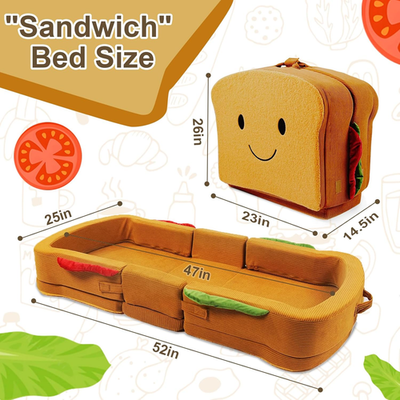
Toddler Travel Bed Sandwich Style Review: The Foam Cocoon That Ended Our Hotel Bed Anxiety
Honest toddler travel bed sandwich style review — foam padding and safety rails for hotel stays and sleepovers. $84.99. Specs, trade-offs, and safety notes.
Dreamegg Sound Machine Review: The $18 Sleep Saver We Bring on Every Trip
Honest Dreamegg portable sound machine review — 21 sounds, rated battery life, hotel room noise masking, and more. $19.99. Specs, trade-offs, and who should skip it.
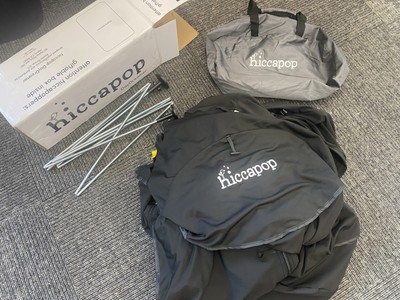
Hiccapop Daydreamer Blackout Tent Review: The SlumberPod Alternative at Half the Price
Honest Hiccapop Daydreamer review — full blackout canopy for Pack 'N Plays and travel cribs. $89.99. Specs, trade-offs, and who should skip it.