How to Keep a Toddler Entertained on a Plane (2026): Age-by-Age Activity Guide
40+ airplane activities for toddlers organized by age — from mess-free coloring to sensory toys, with a minute-by-minute flight plan that actually works.
One parent tells the story of the worst flight of her life. Her daughter was 20 months old. She packed the regular daycare toys — the same stacking cups, the same board books her daughter sees every day, the same stuffed bunny. The toddler looked at everything for approximately 45 seconds each, threw the bunny into the aisle, and screamed for the remaining two hours and eleven minutes. A man in 14C sighed audibly. Her shirt had applesauce on it. She considered never flying again.
That was two years and seventeen flights ago. Since then, parents in this community have figured out the system. Not a perfect system — there is no such thing with a toddler — but a system that turns a potential three-hour nightmare into something survivable, and sometimes even enjoyable.
This guide is everything that experienced traveling parents have learned and shared — and everything that actually works. Not "might work in theory." Actually works, on actual planes, with actual toddlers.
The Golden Rule of Airplane Entertainment
Here it is, the single most important thing in this entire guide: novelty wins.
Your toddler's regular toys are boring to them. They see those toys every day. They have already explored every aspect of those toys. Bringing them on a plane is like handing an adult a magazine they have already read — sure, they might flip through it for a minute, but it is not going to hold their attention for three hours.
Everything you bring on the plane should be either brand new or rotated out of their toy collection for at least two weeks before the trip. That magnetic drawing board they have not seen since last month? It is basically a new toy now. That sticker book you bought at the dollar store? Brand new, never opened, full of novelty.
This is the hill every experienced traveling parent will die on. Parents consistently report packing a carry-on full of toys their kid plays with every single day, and then wondering why their toddler is bored 20 minutes into the flight. The answer is always the same: those toys have no novelty left.
Practical tip: Two weeks before your trip, quietly remove 5-6 toys from your toddler's rotation. Hide them. On the day of the flight, those toys are "new" again. Combine them with 3-4 genuinely new, inexpensive items and you have a solid entertainment arsenal without spending a fortune.
The Activity Rotation System
The second most important concept: do not reveal everything at once.
This is the "reveal bag" strategy, and it is the difference between a toddler who is entertained for 20 minutes and one who is entertained for the whole flight.
How It Works
Pack all your entertainment items in a bag your toddler cannot see into. A canvas tote, a large zippered pouch, a backpack — whatever works. The key is that your child does not know what is inside.
Then, reveal one item at a time. Every 15-20 minutes, when the current activity is losing its magic, reach into the bag and pull out something new. The act of revealing is itself entertaining — your toddler will start looking forward to "what is next" from the mystery bag.
The Gift-Wrapping Hack
This sounds excessive. It is not. Wrap each small toy or activity in tissue paper, a paper bag, or even aluminum foil. The act of unwrapping adds 2-5 minutes of entertainment per item. For a toddler, unwrapping is as exciting as the toy itself.
One mom in the community wraps each item in a different color tissue paper and lets her 2-year-old pick which color to open next. She gets an extra 3 minutes per item from the choosing alone. Over 8-10 items on a three-hour flight, that is an extra 30 minutes of entertainment. From tissue paper.
The Pacing Math
A typical domestic flight is about 3 hours gate to gate. Subtract 30 minutes for boarding/taxiing (when your child is somewhat distracted by the novelty of the plane itself), and 20 minutes for descent and landing (when they are either asleep or you have deployed the emergency arsenal). That leaves about 2 hours and 10 minutes of active entertainment.
At 15-20 minutes per activity, you need approximately 7-9 different activities. That is the magic number. Not 3, not 15. Seven to nine distinct things, revealed one at a time.
Age-by-Age Activity Guide
Not all activities work for all toddler ages. A 13-month-old and a 3-year-old are basically different species in terms of what holds their attention. Here is what actually works at each stage.
12-18 Months: The Explorers
At this age, your child is fascinated by textures, sounds, and the act of putting things in and taking things out. Attention spans are short — expect 5-10 minutes per activity, which means you need more items in your rotation.
Sticker play. Get large stickers (the chunky kind designed for this age) and let them stick them to things. Their own hand. A piece of paper. Your arm. The airplane tray table (they peel off easily). Giant stickers are one of the most underrated airplane activities for this age group.
Board books with textures. Touch-and-feel books like "That's Not My..." series are perfect. The textures give them something to explore beyond just looking. Bring 2-3 small ones and rotate them.
Finger puppets. A set of 5-10 small finger puppets costs almost nothing and provides surprisingly long entertainment. Put them on your fingers, put them on their fingers, make them "talk," hide them and find them. The peekaboo element is endlessly entertaining at this age.
Snack play. More on this in the snacks section, but at 12-18 months, the act of picking up small foods (Cheerios, puffs) is itself an activity. Put a few on the tray table and let them practice their pincer grasp. Yes, some will end up on the floor. That is okay.
Window pointing games. If you have a window seat, this age group is fascinated by looking outside. Clouds, the ground getting smaller, other planes. You can narrate what you see for a surprisingly long time. "Look! A cloud! A big cloud! Another cloud!" They do not care that your commentary is repetitive.
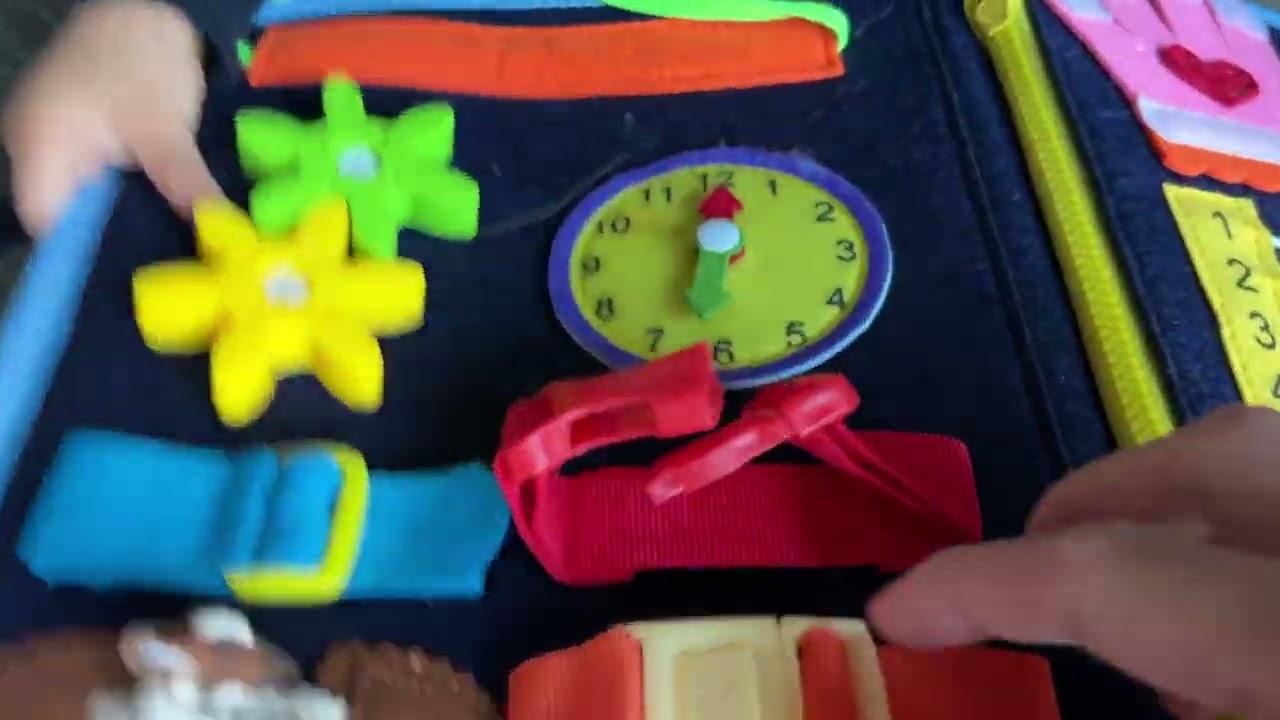
Busy boards. A sensory busy board with buckles, zippers, and buttons is gold at this age. The Gojmzo Busy Board is specifically designed for 1-4 year olds with zippers, buckles, buttons, and velcro — all the things toddlers are desperate to touch. It is silent, compact enough for a seat pocket, and develops fine motor skills while keeping little hands occupied.
18-24 Months: The Doers
This age group wants to do things. They are past pure exploration and into purposeful action — drawing, stacking, matching, and sorting.
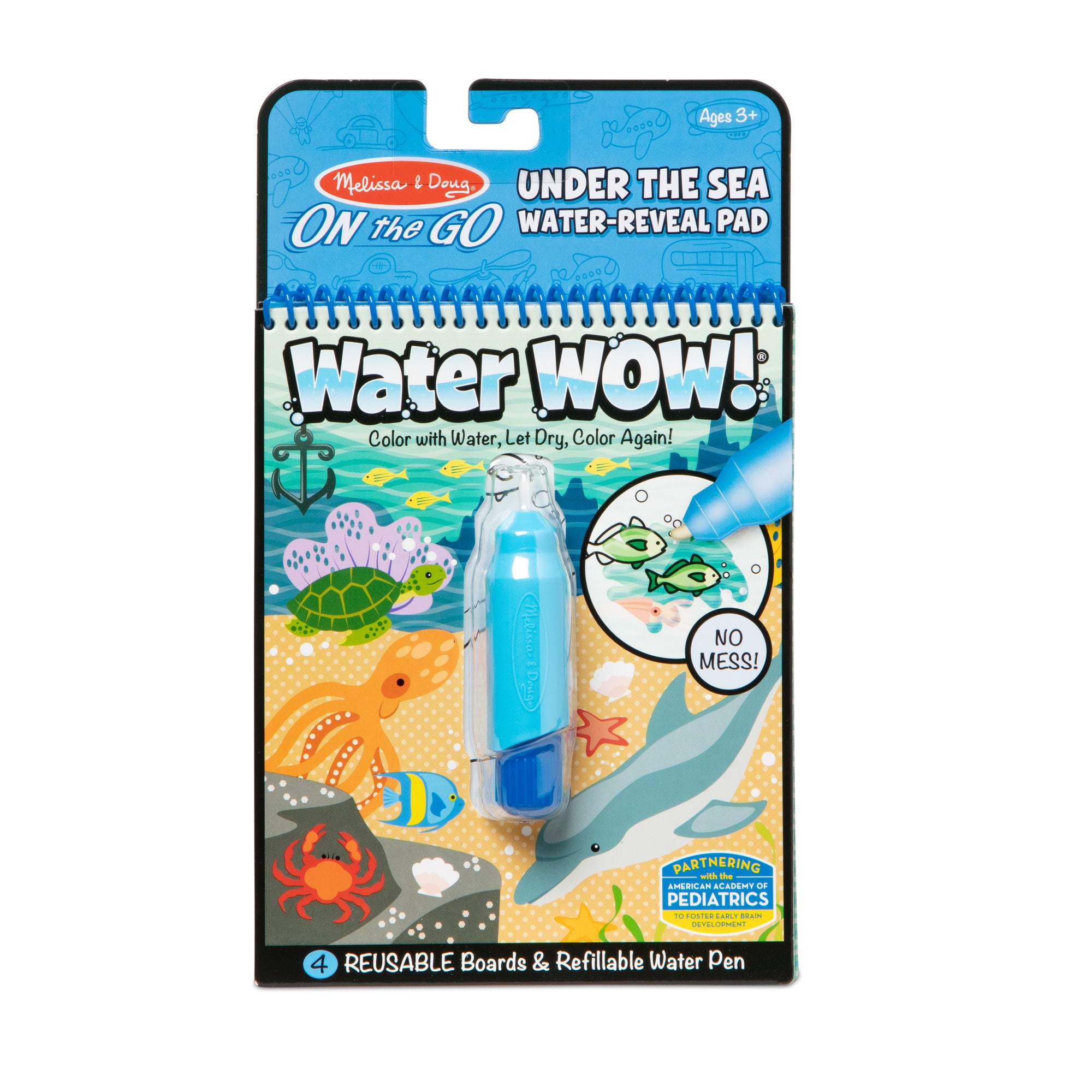
Water Wow pads. The Melissa & Doug Water Wow pads are genuinely one of the best airplane activities ever invented. Your child draws with a water-filled pen and colors appear on the page. When it dries, the colors disappear and they can do it again. Completely mess-free — the only liquid involved is water.
A few tips: fill the pen before you get on the plane (not in the tiny airplane bathroom), bring a small water bottle for refills, and empty the pen before you put it back in your bag (it can leak). Bring 2-3 different pads so you have fresh themes to rotate through. The Under the Sea version is a good complement to the Vehicles one.
Magnetic drawing boards. The Kikidex Magnetic Drawing Board is designed for ages 1-3 and comes with stamps and a magnetic pen. Your toddler draws, you slide the eraser, they draw again. No batteries, no mess, no end to the activity. The pen is attached by a string so it will not roll under seat 22B.
Busy books. The hahaland Busy Book is a Montessori-style activity book with multiple velcro-based activities — matching shapes, sorting colors, and other quiet learning activities. It is one book with a dozen different things to do, which makes it extremely space-efficient for travel. Check the velcro pieces before the flight to make sure they are all securely attached, and keep an eye on younger toddlers who still put things in their mouths.
Simple stacking and nesting. Bring a set of 5-6 small stacking cups. They can stack them, nest them, hide things under them, drum on them. The versatility is the point — there is no wrong way to play.
Paper and chunky crayons. Bring a few sheets of paper and some oversized crayons or a crayon rock. At this age they are scribbling, not drawing, and the airplane tray table is a perfectly functional desk. Stick with chunky crayons — they do not roll off the tray table like regular ones do.
2-3 Years: The Creators
Now we are talking. At 2-3 years old, your toddler has the attention span for real activities. 15-20 minutes per item is very achievable, and some activities can hold them for 30+ minutes.
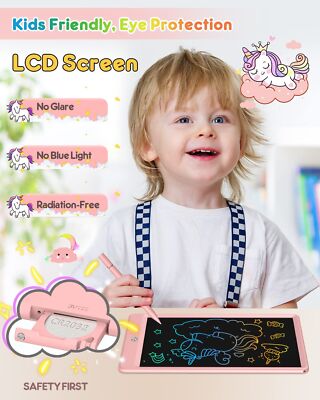
LCD drawing tablets. These are game-changers for flights. The TEKFUN LCD Writing Tablet has a 10-inch colorful screen, weighs almost nothing, and fits in a seat pocket. Your child draws with a stylus, presses a button to erase, and starts over. No paper, no markers, no mess. It runs on a button battery that lasts months. Parents consistently call this their single best airplane purchase.
The FLUESTON LCD Writing Tablet is another excellent option at an even lower price point, with an erase lock feature that prevents your toddler from accidentally deleting their masterpiece by pressing the wrong button.
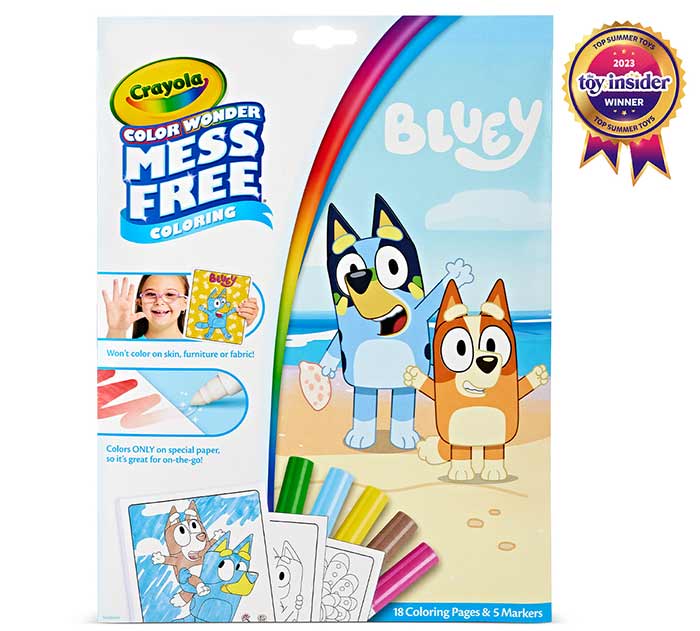
Color Wonder. The Crayola Bluey Color Wonder set is designed for mess-free coloring — the markers only show color on the special Color Wonder paper. They are invisible on everything else (skin, clothes, tray tables, the seat in front of you). This sounds like marketing magic, and the reality of "mess-free" claims is addressed later in this guide, but Color Wonder is one product that genuinely delivers according to parent reviews. The Bluey theme is a bonus if your kid is a fan.
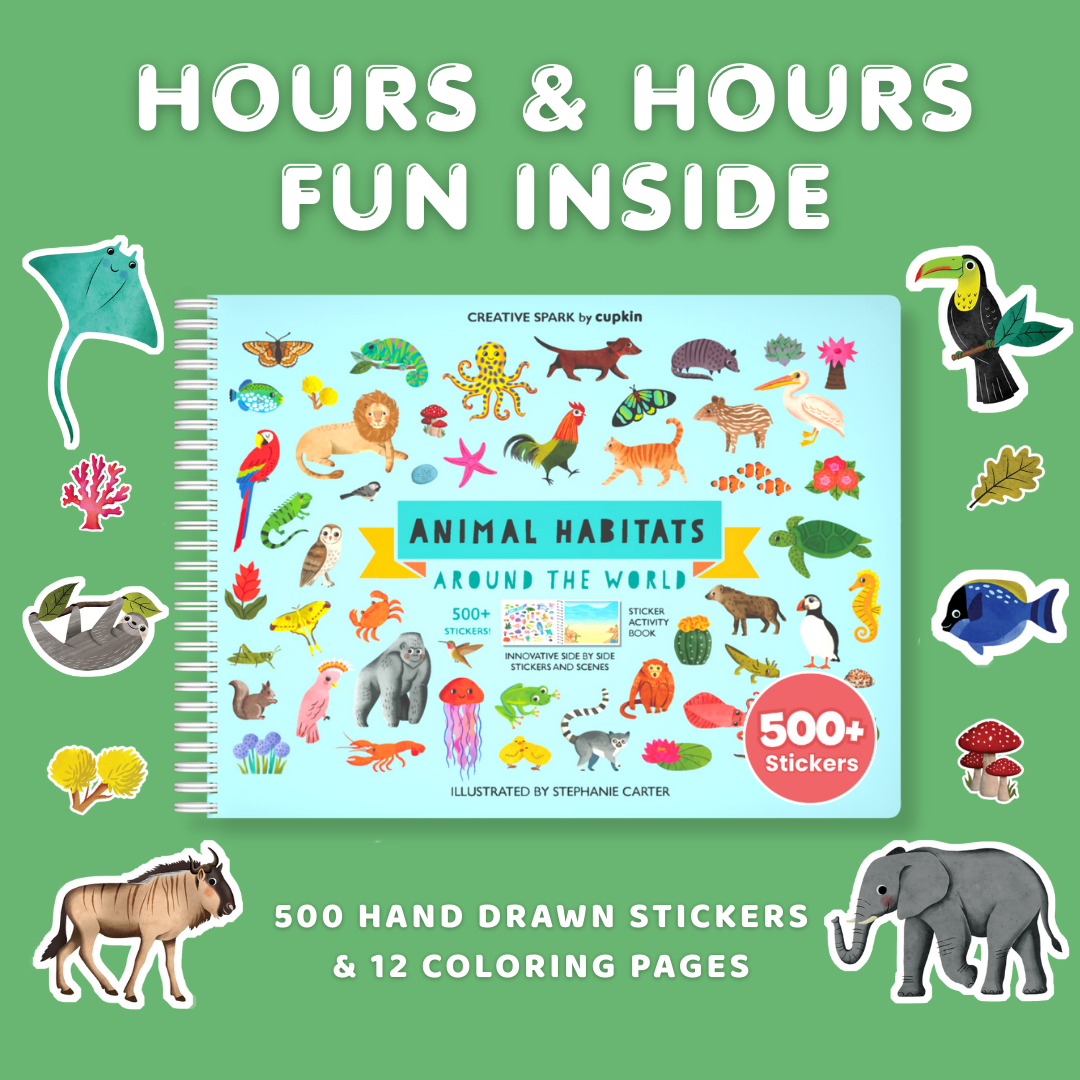
Sticker books. At 2-3, your child can handle more complex sticker activities. The Cupkin Sticker Book comes with 500+ reusable stickers and 12 scenes to place them in. Five hundred stickers. On a single flight. That is roughly 167 stickers per hour. Your child will not run out, and the reusable aspect means they can rearrange scenes multiple times. It also includes coloring pages as a backup activity. It is bulkier than a single pad, but the sheer volume of activities makes it worth the space.
Card games (simple). At 2.5-3 years, toddlers can start to grasp very simple matching and sorting games using cards. You do not need a formal game — just a small deck of animal cards or color cards for matching. Go Fish is possible with a patient parent and a 3-year-old.
Play dough (yes, really). This is addressed more in the "mess" section, but a small container of Play-Doh on the tray table is absolutely a viable airplane activity. Bring a single small can and nothing else — no tools, no molds. They will roll it, squish it, poke it, and be happily occupied. Contain it to the tray table and pick up any fallen bits before landing. It is far less messy than you think.
3-4 Years: The Builders and Storytellers
At this age, your child can engage with structured activities, follow simple games, and entertain themselves for longer stretches. You need fewer items but more complex ones.
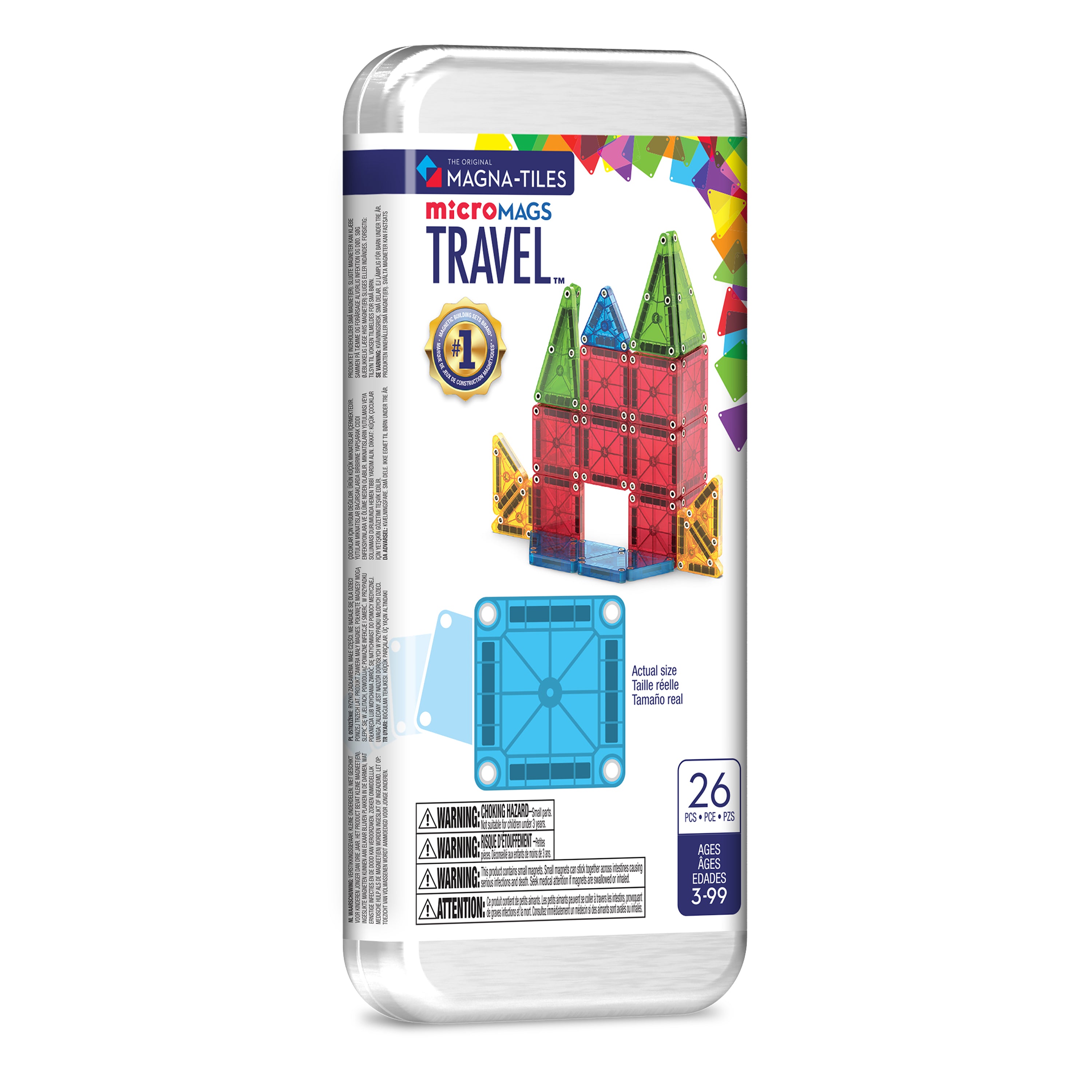
Magna-Tiles travel set. The Magna-Tiles microMAGS is a 26-piece travel-sized magnetic building set. Your child can build structures right on the tray table, and the magnets keep pieces from sliding around. This is a STEM toy that is legitimately fun, not just "educational." At 3-4 years, kids will build towers, houses, and increasingly creative structures. The pieces are smaller than regular Magna-Tiles, specifically designed for travel.
Activity books. At 3-4, kids can do mazes, dot-to-dots, simple puzzles, and tracing activities. Pick up a few age-appropriate activity books from the dollar store. They are lightweight, disposable (leave them on the plane if you want), and each page is a fresh activity.
Card games. The Regal Games Kids Card Set includes 6 classic games — Go Fish, Crazy 8's, Old Maid, Slap Jack, and War — all with kid-friendly illustrations. At 3-4 years, most children can play simplified versions of Go Fish and Old Maid. Card games are brilliant for planes because they require zero setup, fit in a pocket, and involve parent-child interaction, which is inherently more engaging than solo play.
Audiobooks and podcasts. At 3-4, kids can follow a story purely through audio. Download a few kids' audiobooks or podcasts (Wow in the World, Story Pirates, Circle Round) and pair them with volume-limited headphones. The Kidrox Toddler Headphones are limited to 85dB and designed for ages 1-7 — they fit small heads without squeezing. This is a genuinely hands-free activity for you, which is rare and precious. Start with short audiobooks (under 15 minutes) and work up.
The Screen Time Plan
Let's be honest. On a flight with a toddler, screen time is not the enemy. Screen time is a tool, and like any tool, it works best when you use it strategically.
Download Everything Before the Flight
This is non-negotiable. Airplane wifi is unreliable, expensive, and not fast enough for streaming. Before you leave home, download:
- 3-4 episodes of their favorite show on your tablet or phone
- 1-2 movies appropriate for their age
- 2-3 interactive apps or games (drawing apps, simple puzzle games)
- A playlist of kids' music
Do this the night before, not at the gate. Apps need wifi to fully download, and airport wifi is spotty.
Headphone Training at Home
If your child has never worn headphones, the airplane is a terrible place to introduce them. Start 1-2 weeks before the flight. Put the headphones on for 5 minutes during a show at home. Increase to 10 minutes, then 15. By flight day, headphones should be familiar, not foreign.
The Kidrox Wired Toddler Headphones are limited to 85dB, which is the maximum safe volume recommended by the World Health Organization for children. This matters — airplane cabin noise is around 85dB itself, which means kids crank up unprotected volume to unsafe levels. Volume-limited headphones are not optional. They are necessary.
For babies and younger toddlers who will not tolerate headphones, the Alpine Muffy Baby Ear Protection earmuffs reduce ambient noise without playing audio. They are CE and ANSI certified and use a soft elastic headband instead of a rigid frame, so they will not squeeze your baby's head. These are great for takeoff, landing, and helping little ones nap.
When to Deploy the Screen
Here is the most important screen time tip: save it.
Do not hand your child the tablet the moment you sit down. That is burning your best card first. The tablet is your second-half-of-the-flight tool, your meltdown-prevention tool, your emergency tool. Use physical activities and toys for the first half of the flight, then introduce the screen when everything else is losing its magic — usually about 60-90 minutes in.
The one exception: use a short video during takeoff if your child is anxious about the noise and sensation. A familiar show provides comfort during an unfamiliar experience. Once you are at cruising altitude, turn it off and switch to physical activities. Save the screen for later.
Screen Setup That Works
- Use a case with a stand so the tablet sits on the tray table hands-free
- Bring a headphone splitter if two kids are sharing a screen
- Put the tablet in airplane mode but keep it powered on (downloaded content does not need wifi)
- Charge it fully the night before and bring a portable battery pack as backup
- The PILLANI Travel Tray has a built-in tablet holder, which doubles as an activity and snack surface the rest of the time
Snacks as Entertainment
Snacks on an airplane with a toddler are not just food. They are an activity, a distraction, a comfort mechanism, and a negotiation tool. How you manage snacks is almost as important as what toys you bring.
Snack Necklaces
Thread Cheerios or Fruit Loops onto a piece of string or a pipe cleaner. Your toddler wears the snack necklace and eats it one piece at a time. This is simultaneously a fine motor activity, a wearable accessory, and a slow-release food delivery system. A single snack necklace can provide 15+ minutes of eating entertainment.
Sorting Games with Goldfish
Bring two or three varieties of Goldfish crackers (original, colors, pretzel) and let your toddler sort them by type on the tray table before eating them. "Can you put all the orange ones here? Now eat the orange ones." Sorting and then eating is twice the activity of just eating.
The Slow-Reveal Snack Bag
Invest in good snack containers that are spill-proof and easy for small hands — our travel feeding and bottles roundup covers the best options for on-the-go snacking and hydration. Same concept as the toy reveal bag. Pack 8-10 different snacks in individual small bags or containers. Your toddler does not get to see all the options at once. Every 20-30 minutes, they get to pick one bag from the snack collection. The choosing is part of the entertainment.
Foods That Take Time to Eat
Choose snacks that are slow by design:
- Freeze-dried fruit (crunchy and takes a while to eat)
- String cheese (peeling it apart is half the fun)
- Applesauce pouches (slow squeezing)
- Mini muffins (small bites, one at a time)
- Dry cereal (individual pieces, picked up one by one)
- Graham crackers (crumbly but slow)
- Raisins (tiny, require pincer grasp, naturally slow)
Avoid anything that can be consumed in one bite and anything that gets messy fast. No chocolate, no yogurt, no berries. Save those for the hotel. For a complete strategy on feeding your toddler throughout your trip — not just the flight — see our feeding your toddler while traveling guide.
Mess-Free vs. Mess-Possible: The Reality Check
Every travel toy marketed to parents claims to be "mess-free." Some actually are. Some are not. Here is the honest breakdown.
Genuinely Mess-Free
- LCD drawing tablets (the TEKFUN and FLUESTON) — No ink, no paper, no anything. These are truly zero-mess. The closest thing to a perfect airplane toy.
- Water Wow pads — The only liquid is water. If it spills, it dries. If it gets on clothes, it dries. Genuinely mess-free with one caveat: the water pen can drip in your bag if you do not empty it after use.
- Magnetic drawing boards — No ink, just a magnetic pen and a screen. Slide to erase. Nothing to spill, smear, or stain.
- Busy boards and busy books — Velcro, zippers, and buckles. No art supplies involved.
- Stickers — The stickers themselves are mess-free. The backing paper your child peels off will end up on the floor, but that is litter, not mess.
The Color Wonder Reality
Crayola Color Wonder markers genuinely only show color on Color Wonder paper. On skin, clothes, and tray tables, they are invisible. This is real, and it works. However:
- The markers dry out quickly if left uncapped. You will spend part of the flight re-capping markers.
- Young toddlers sometimes press so hard they bend the marker tips, making them unusable.
- The special paper is one-time-use, so once a page is colored, it is done. Bring more pages than you think you need.
- The markers do leave a very faint mark on some fabrics if rubbed aggressively. It washes out, but it is not truly invisible.
Overall verdict: Color Wonder is genuinely one of the best "mess-free" options and worth bringing. Just manage your expectations — it is "minimal mess," not "zero mess."
Mess-Possible but Worth It
- Play-Doh — Yes, crumbs will happen. Small bits will fall on the seat and floor. But a single small can on a tray table, with your active supervision, is manageable. Pick up the bits before landing. The entertainment value far outweighs the mess risk.
- Sticker books with 500+ stickers — Sticker backing paper everywhere. Stickers on the armrest. Stickers on your sleeve. But your child was quiet for 30 minutes, so it was worth it.
- Crayons and paper — Crayons can break, roll off the tray table, and end up wedged between seats. Use chunky crayons or crayon rocks that do not roll, and bring only 3-4 colors (not the whole box).
Not Worth the Mess
- Markers (regular) — One uncapped marker on an airplane seat and you are leaving a $200 cleaning bill. Do not risk it.
- Glitter anything — No. Absolutely not. No glitter glue, no glitter stickers, no glitter paper. Not on a plane.
- Stamps with ink pads — Ink on tiny hands means ink on everything.
- Paint dots, watercolors, or anything liquid-based — The tray table has no lip. Everything runs off.
The Minute-by-Minute Flight Plan
Here is a sample timeline for a 3-hour domestic flight with a 2-year-old. Adjust the pacing for your child's age and temperament.
Pre-Boarding (30 Minutes Before)
Let your toddler burn energy at the gate. Walk them up and down the terminal. Let them run (if the gate area allows it). Our guide to navigating airports with a toddler has more tips on making the most of gate time and burning energy before boarding. A tired toddler on a plane is better than a restless one. Use the Lusso Gear Airplane Tray Cover as your setup tool once you board — it creates a clean surface over the germy tray table and has built-in snack and toy pockets so everything has a place.
Minutes 0-15: Boarding and Taxi
The plane itself is new and interesting. Let them look around. Talk about what is happening: "The plane is going to move! Hear the engines? We are going to fly in the sky!" Window seat is ideal — they can watch the ground crew, other planes, and the takeoff.
If your child is nervous about engine noise during takeoff, this is a good time for a short video on the tablet or the Alpine Muffy earmuffs to dampen the sound.
Minutes 15-30: First Activity — Sticker Book
Once the seatbelt sign turns off, pull out the first activity. A sticker book is great for the opening act because it is novel, hands-on, and does not require parent involvement. Let them stick, peel, rearrange. You can use this time to organize your bag and get settled.
Minutes 30-45: Snack Round 1
Pull out the first snack bag. Make it an event: "Let's see what snack you get!" Slow foods work best here — Cheerios to pick up one at a time, a string cheese to peel apart, freeze-dried strawberries.
Minutes 45-65: Activity 2 — Water Wow or Magnetic Drawing Board
Time for a longer activity. Water Wow pads and magnetic drawing boards both work well here because they are reusable — your child can do them over and over without running out of pages.
Minutes 65-80: Activity 3 — Busy Book or Busy Board
Switch to a different type of activity to keep things fresh. If the last activity was art-based, go tactile. The busy book or busy board gives their hands something different to do.
Minutes 80-95: Snack Round 2 + Window Games
Mid-flight snack break combined with looking out the window. "Can you see the clouds? Are we above the clouds or below them? Look how tiny the houses are!" Even a middle-seat parent can lean toward the window for this.
Minutes 95-115: Activity 4 — LCD Drawing Tablet
Pull out the LCD drawing tablet. This is a strong mid-flight activity because it feels different from paper-based activities. The glowing screen and stylus feel special. Draw things together — "Can you draw a circle? Let me draw a dog!"
Minutes 115-130: Snack Round 3 + Card Game or Finger Puppets
Another snack round paired with an interactive activity. Finger puppets are great here because they involve you and the child, which is more engaging than solo play at this point in the flight.
Minutes 130-155: Screen Time
This is your sweet spot for the tablet. Your child has been physically active with toys for nearly two hours. They are ready to zone out for 20-25 minutes. Put on a downloaded show, hand them the headphones, and take a breath. You have earned it.
Minutes 155-170: Final Descent and Landing
The seatbelt sign is back on. Tray table up. Pack everything away except one small item they can hold — a finger puppet, a small book, a snack. The novelty of landing (the plane going down, the ground getting bigger, the bump of the wheels) is usually enough to get you through the last 15 minutes.
If This Plan Falls Apart
It will, sometimes. That is why you have an emergency arsenal. More on that in a moment.
What NOT to Bring on the Plane
After dozens of flights and conversations with other parents, here is what to leave at home.
Glitter anything. This bears repeating. No glitter. Not even "contained" glitter like glitter crayons. Glitter spreads. Glitter gets everywhere. Glitter will be found in your bag six months later.
Small ball toys. Any ball smaller than a softball will roll under the seats and be gone forever. Your toddler will scream for the lost ball for the rest of the flight. This is worse than not bringing it at all.
Noisy toys. Anything that beeps, sings, talks, or makes electronic sounds. Even at low volume, these are annoying to every passenger within five rows. The LED busy board with clicking switches is borderline — the switches make a physical click sound. Use your judgment and the mood of your fellow passengers.
Toys with many small pieces. Lego sets, puzzle pieces, tiny figurine sets with accessories. Small pieces fall between seats on an airplane and are impossible to retrieve. Your child's meltdown over the lost piece will be worse than the boredom the toy was supposed to prevent. Magna-Tiles are the exception because the magnets keep pieces together and the travel set has only 26 pieces — manageable.
Anything you cannot afford to lose. Favorite stuffed animals, irreplaceable comfort objects, that one specific toy they sleep with. If it falls under the seat and cannot be recovered, or gets left on the plane, the consequences are catastrophic. Bring a backup comfort object, not the original.
Play-Doh (just kidding — bring it). I listed Play-Doh in the title of this section to make a point. Many guides say "no Play-Doh on planes." I disagree. A single small can, used on the tray table, cleaned up before landing, is one of the most effective airplane activities for 2-4 year olds. The key is: one small can, not the 12-pack. And do not bring the tools. Hands only.
The Emergency Arsenal
When everything else has failed — the toys are boring, the snacks are gone, the busy book is on the floor, and your child is entering meltdown territory — you need the emergency arsenal. This is the collection of last-resort items you save for the crisis moment.
Phone Games and Videos
Your phone, loaded with a few kid-appropriate games and some downloaded YouTube Kids episodes, is the ultimate emergency tool. This is separate from your planned screen time on the tablet. The phone is the "everything has gone wrong" device. Keep it charged and ready.
The "New Toy" Moment
Before the flight, buy one small toy that your child has never seen. Something exciting — a new figurine, a small set of vehicles, a pop-it, whatever your child is into right now. Do not reveal it until the meltdown begins. The shock of something completely new can interrupt even an advanced tantrum. This is your "break glass in case of emergency" toy. Guard it.
Sucker Candy and Lollipops
For children over 3 who can safely have hard candy, a lollipop is an extraordinary emergency tool. It takes a long time to eat, occupies their mouth (which reduces screaming), and feels like a special treat. It also helps with ear pressure during descent. For younger toddlers, a frozen applesauce pouch serves a similar purpose.
The Negotiation Snack
Every child has a food they love but rarely get. Fruit snacks, cookies, a juice box. Whatever yours is, bring it and save it for the emergency moment. "I know you are upset. Would you like a special cookie?" This is not bribery. This is crisis management.
The Physical Reset
Sometimes, the best emergency move is physical. If the seatbelt sign is off, take your toddler for a walk to the bathroom. The change of scenery and the act of standing up can reset their emotional state. You do not even need to use the bathroom. Walk to the back of the plane, look at the flight attendant area, walk back. The 2-minute break can buy you another 20 minutes.
Involving Other Passengers
This is the section nobody talks about, but every parent thinks about: the other passengers.
Peekaboo With the Person Behind You
Here is a secret: most people like babies and toddlers. They just do not like screaming babies and toddlers. If your child peeks over the seat at the person behind you, and that person smiles back, you have just gained an entertainment ally. Peekaboo with a friendly stranger can last 5-10 minutes. Let it happen. Most people are happy to engage.
If the person behind you is clearly not interested (headphones in, laptop out, avoiding eye contact), redirect your child away. Read the room.
Friendly Flight Attendants
Many flight attendants love interacting with toddlers. They will wave, bring extra snacks, show your child the wings badge pin, or just chat for a moment. A quick, friendly interaction with a flight attendant can break up the monotony and make your child feel special. Do not force it, but do not prevent it either.
Managing Judgment
Some passengers will judge you. The person who sighs. The person who gives you a look when your child makes noise. Here is the truth: you cannot control their reaction, and you do not owe them a perfect flight. You paid for your seats. Your child has every right to be on that plane.
That said, a few things help:
- Acknowledge the people around you. A quick "Hi, we have a toddler with us, sorry in advance if it gets noisy" goes a long way. Most people soften immediately.
- Show that you are trying. Passengers are far more tolerant of a noisy toddler when they can see the parent actively working to manage the situation. It is the parent who is ignoring a screaming child that draws ire.
- Do not apologize for normal toddler behavior. Talking, laughing, kicking the seat occasionally (redirect, but do not panic) — these are normal. You do not need to constantly apologize for your child existing in a public space.
- Accept help if offered. Sometimes a passenger will offer to play peekaboo, hand you something you dropped, or hold your bag while you wrestle your child into the car seat. Accept the help. It takes a village, even at 35,000 feet.
Putting It All Together: The Packing List
Here is what to put in your airplane entertainment bag for a 3-hour flight with a toddler:
- 2-3 sticker books or pads (age-appropriate size)
- 1 LCD drawing tablet (TEKFUN or FLUESTON)
- 1 Water Wow pad or magnetic drawing board
- 1 busy book or busy board
- 1 Color Wonder set
- 1 small container of Play-Doh (ages 2+)
- 1 set of finger puppets or small figurines
- 8-10 individually bagged snacks
- 1 tablet or phone with downloaded content
- Volume-limited headphones (Kidrox or similar)
- 1 "emergency" new toy (hidden and saved)
- Tissue paper or small bags for gift-wrapping activities
That is 12-15 items, most of which are flat, light, and fit in a single tote bag. The total cost of the non-electronic items is under $80 if you are buying everything new, and much less if you are rotating toys from home.
For the complete setup — tray covers, travel trays, headphones, ear protection, and comfort items — check our full airplane comfort and entertainment roundup.
And for the rest of your travel gear needs, our toddler packing list covers everything from clothes to medications to documents.
More Resources
If this is your first time flying with a toddler, start with our complete guide to flying with a toddler, which covers booking, seat selection, car seats on planes, airport strategy, and everything beyond entertainment.
Our travel toys and activities roundup has detailed reviews and comparisons of every toy mentioned in this guide, with age recommendations and honest pros and cons.
And if your flight is just one leg of a bigger trip, the road trip survival guide has the same level of tactical detail for keeping toddlers entertained in the car.
Disclosure: ToddlerTravelGear is reader-supported. We may earn a commission if you buy through links on our site — at no extra cost to you. Learn more
Frequently Asked Questions
Products Mentioned
Melissa & Doug
Melissa & Doug On The Go Water Wow! Under The Sea, Reusable Water-Reveal Activity Pad
Read review →
Magna-Tiles
Magna-Tiles microMAGS 26-Piece Travel Magnetic Construction Set
Read review →
FLUESTON
FLUESTON LCD Writing Tablet for Kids, 10 Inch Doodle Board
Read review →
Crayola
Crayola Bluey Color Wonder Coloring Set, 18 Mess Free Pages & 5 Markers
Read review →
Bandou
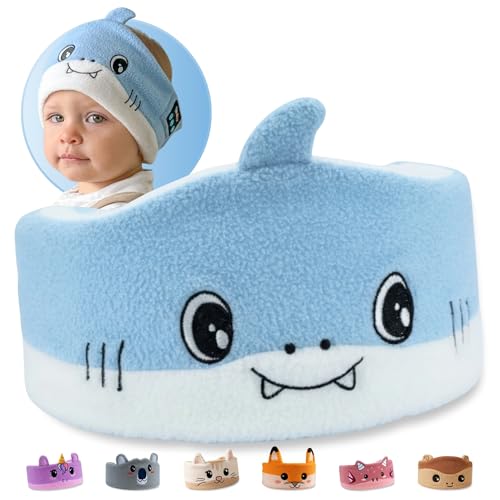
Bandou 3.0 Toddler Headphones, Kids Bluetooth Headband Headphones
Read review →
Gojmzo
Gojmzo Busy Board Montessori Toys for Toddlers, Busy Book Sensory Toys
Read review →
Cupkin
Animals Habitat 500+ Kids Sticker Book by Cupkin, Toddler Airplane Travel Activity
Read review →
Related Content
Flying with a Toddler: The Complete Parent's Guide (2026)
Complete guide to flying with a toddler — booking seats, packing carry-ons, and surviving meltdowns at 35,000 feet. Real parent advice.
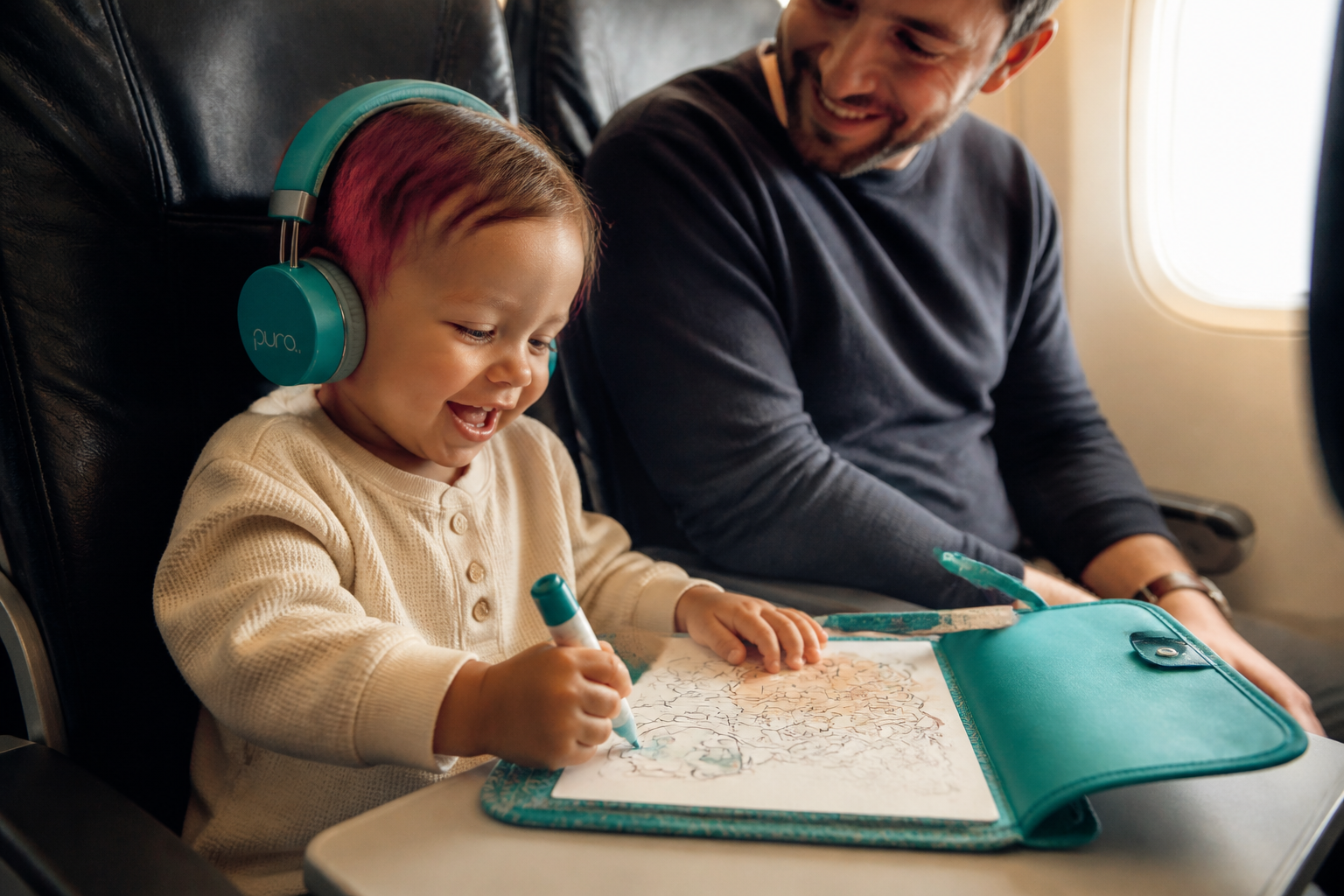
Best Airplane Comfort & Entertainment for Toddlers (2026)
Researched picks for headphones, ear protection, tray setups, busy boards, and safety gear that actually keep toddlers happy on flights. $29.95.
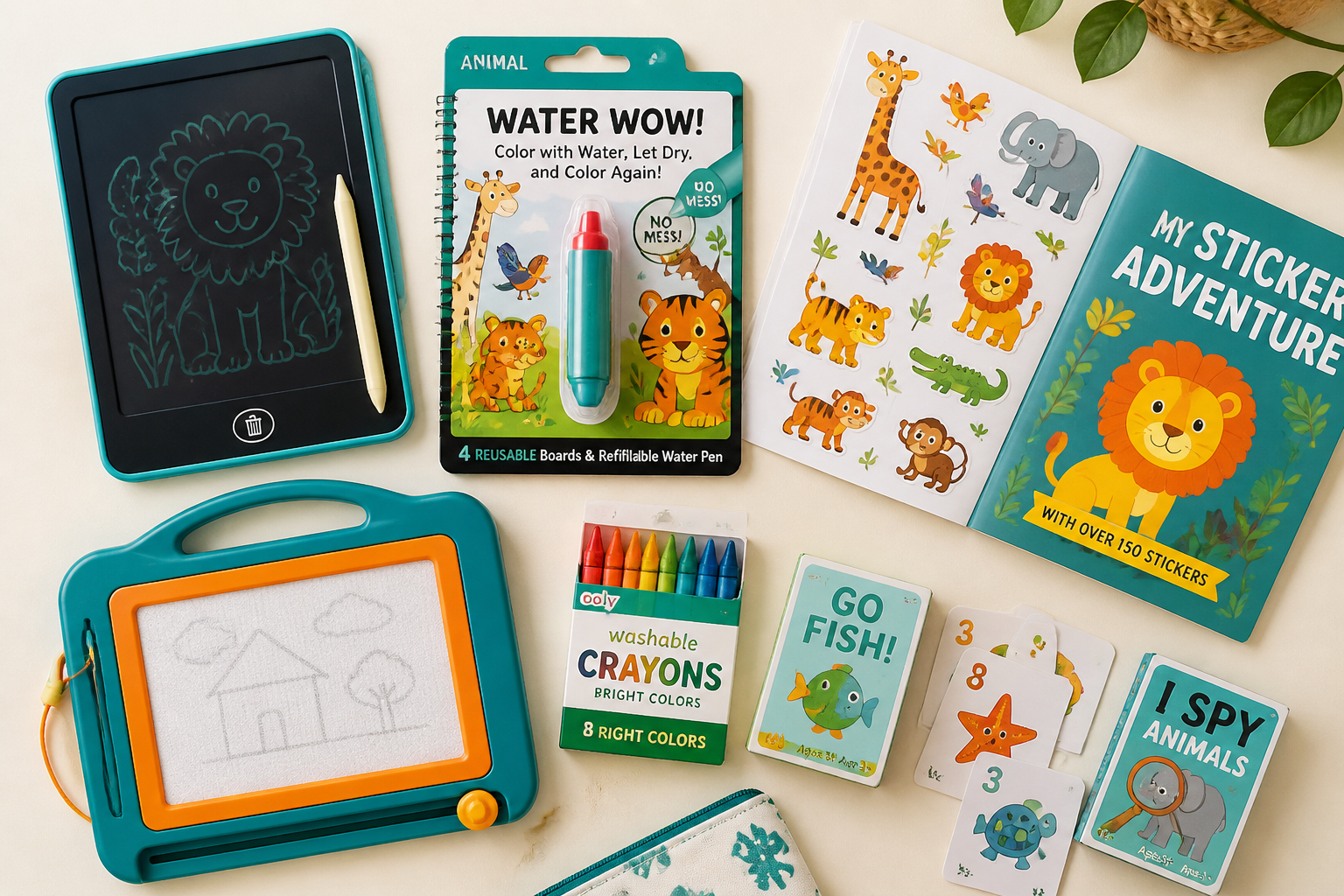
Best Travel Toys & Activities for Toddlers (2026): Screen-Free Picks That Actually Work
Screen-free travel toys and activities for toddlers that actually hold attention — drawing boards, busy books, card games, and building sets, compared on age fit and packed size.