Disclosure: ToddlerTravelGear is reader-supported. We may earn a commission if you buy through links on our site — at no extra cost to you. Learn more
Best Travel Feeding & Bottle Essentials for Toddlers (2026)
Researched picks for bottles, formula dispensers, bottle warmers, breastmilk storage, sippy cups, and travel bowls that make feeding on the go stress-free from TSA to the hotel room.
It is 5:45 AM. You are standing in the TSA line at O'Hare with a diaper bag slung over one shoulder, a stroller folded under the other arm, and a 10-month-old who has decided this exact moment is the time to eat. The agent calls you forward. You hoist your carry-on onto the belt, pull out the formula container, separate the ice packs from the breastmilk bags, and the person behind you sighs because your stuff is taking up three bins. The agent picks up your bottle of premixed formula, calls for a supervisor, and everything stops while you stand there explaining that yes, formula is allowed through security in quantities greater than 3.4 ounces.
This has happened to us. More than once.
Feeding a baby or toddler while traveling is one of those challenges that sounds manageable in theory and turns into a logistical obstacle course in practice. The TSA rules around formula and breastmilk are more permissive than most parents realize, but the execution at the checkpoint depends entirely on whether the individual agent has been trained on those rules. Warming a bottle without a microwave in a hotel room requires planning. Keeping breastmilk cold during a six-hour travel day means having the right cooler, not just any cooler. And feeding solids to a toddler on an airplane tray table that was last wiped down sometime during the previous administration — that takes the right gear too.
We researched feeding gear across road trips, cross-country flights, international travel, and one memorable Amtrak ride where we had to warm a bottle using hot water from the cafe car. This guide covers the bottles, formula dispensers, warmers, storage solutions, sippy cups, and travel bowls that actually work when you are far from your kitchen.
How we chose these products
We evaluated over 25 travel feeding products based on what matters when you are feeding a child away from home:
- TSA friendliness — Can you get this through security without a hassle? Does it require separate screening? Does it leak when jostled in a bag?
- Portability — Weight, bulk, and how well it packs alongside everything else you are already carrying.
- Temperature management — Can it keep things cold that need to be cold and warm things that need to be warm, reliably, for the duration of a real travel day?
- Leak resistance — A bottle that leaks in a diaper bag ruins the entire bag's contents. Parent reviews confirm each product performs in multiple orientations and with varying levels of fullness.
- Ease of cleaning — Access to a dishwasher is a luxury when traveling. Everything here needs to be cleanable with hot water and soap in a hotel sink.
- Age range — Products that serve a wider age window scored higher because travel gear that works for only three months is a poor investment.
We also drew heavily on verified parent reviews, paying attention to comments specifically about travel use rather than general at-home impressions. A bottle that performs perfectly on a kitchen counter may fail completely in a turbulent airplane or a bouncing car seat.
Our top picks at a glance
TSA Rules Every Feeding Parent Needs to Know
Before we get into the products, let us clear up the rules that cause the most confusion and delays at security checkpoints. Getting this wrong can mean dumping out pumped breastmilk or missing your flight while a supervisor gets called over.
Formula, breastmilk, and juice for infants and toddlers are exempt from the 3.4-ounce liquid rule. You can bring these in quantities greater than 3.4 ounces through TSA security. This applies to:
- Premixed formula in bottles
- Powdered formula (any amount)
- Breastmilk (fresh or frozen)
- Juice and water for infants and toddlers
- Gel ice packs, frozen ice packs, and freezer packs used to keep the above cold
What actually happens at the checkpoint: You must declare these items to the TSA officer before screening begins. Remove them from your bag and place them separately so they can be inspected. Formula and breastmilk may be tested using non-invasive X-ray or a small test strip. You do not have to taste it, and you do not have to open sealed containers. Officers may swab the outside of bottles for trace testing.
The catch: Your child does not need to be present for you to carry breastmilk or formula through TSA. This is official TSA policy, but some agents do not know this. We carry a screenshot of the TSA website's formula/breastmilk page on our phones for exactly this reason.
Ice packs: Frozen gel packs and ice packs are allowed through TSA when they are used to keep breastmilk or formula cold. They must be frozen solid at the time of screening. If they have started to melt, the agent has discretion to allow or disallow them. Freeze your ice packs overnight and pack them right before you leave for the airport.
Bottles
A good travel bottle needs to survive being tossed in a diaper bag, resist leaking in any orientation, and be easy to clean without specialized equipment. These two take different approaches — glass for durability and purity, and plastic for lightweight convenience — and both excel for travel.
1. Dr. Brown's Anti-Colic Options+ Glass Bottle (2-Pack)
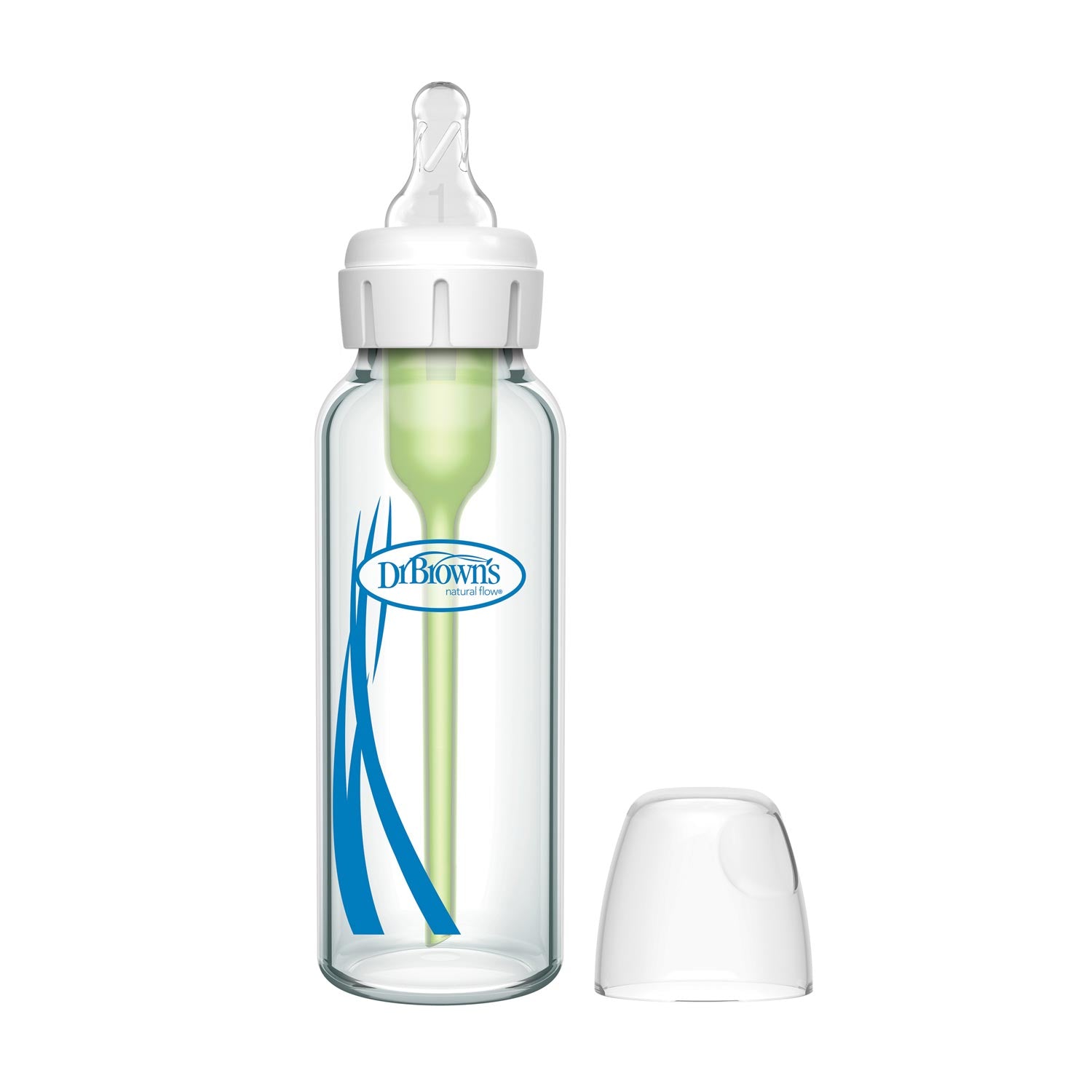
Dr. Brown's Anti-Colic Options+ Narrow Glass Baby Bottle, Level 1 Slow Flow, 8 oz, 2-Pack
Best Glass BottleDr. Brown's · $15.08
Price last checked August 15, 2026 — see Amazon for current pricing.
Borosilicate glass construction with proven anti-colic internal vent system. Dishwasher safe and easy to clean on the road.
Pros
- Anti-colic internal vent system
- Glass is chemical-free and durable
- Level 1 nipple for newborns
- Easy to clean
Cons
- Glass is heavier than plastic
- Can break if dropped
- Narrow neck harder to fill
Glass bottles seem counterintuitive for travel — heavier, breakable, one more thing to worry about. But Dr. Brown's uses borosilicate glass, the same material as laboratory glassware, which resists both thermal shock and impact far better than ordinary glass. Owners routinely report survived drops onto hard floors. It is not unbreakable, and it should not be treated as such, but it is a long way from a standard glass bottle.
The anti-colic internal vent system is the reason Dr. Brown's bottles have a cult following, and it matters even more during travel. Babies who swallow excess air during feeding get gassy and fussy. On an airplane, where the pressure changes are already stressing a baby's digestive system, reducing air intake during feeding is a genuine quality-of-life improvement for everyone within three rows of your seat.
The glass construction has a practical travel advantage that plastic cannot match: it does not absorb odors or stains. After a week of travel with formula, plastic bottles start to smell. Glass rinses clean. In a hotel sink with hot water and soap, these bottles come out ready for the next feeding in about two minutes. No bottle brush needed for a quick clean, though bringing a small travel brush is still a good idea for the vent components.
At $15.98 for a two-pack, the price per bottle is reasonable for glass. We travel with two bottles and wash them in rotation — one is always clean and ready while the other is being used or drying.
Best for: Parents who prioritize clean feeding and want bottles that stay odor-free through a week of travel. The glass adds weight, so these are better for car travel and short flights than ultralight backpacking-style trips.
2. Lansinoh Anti-Colic Bottles (3-Pack)
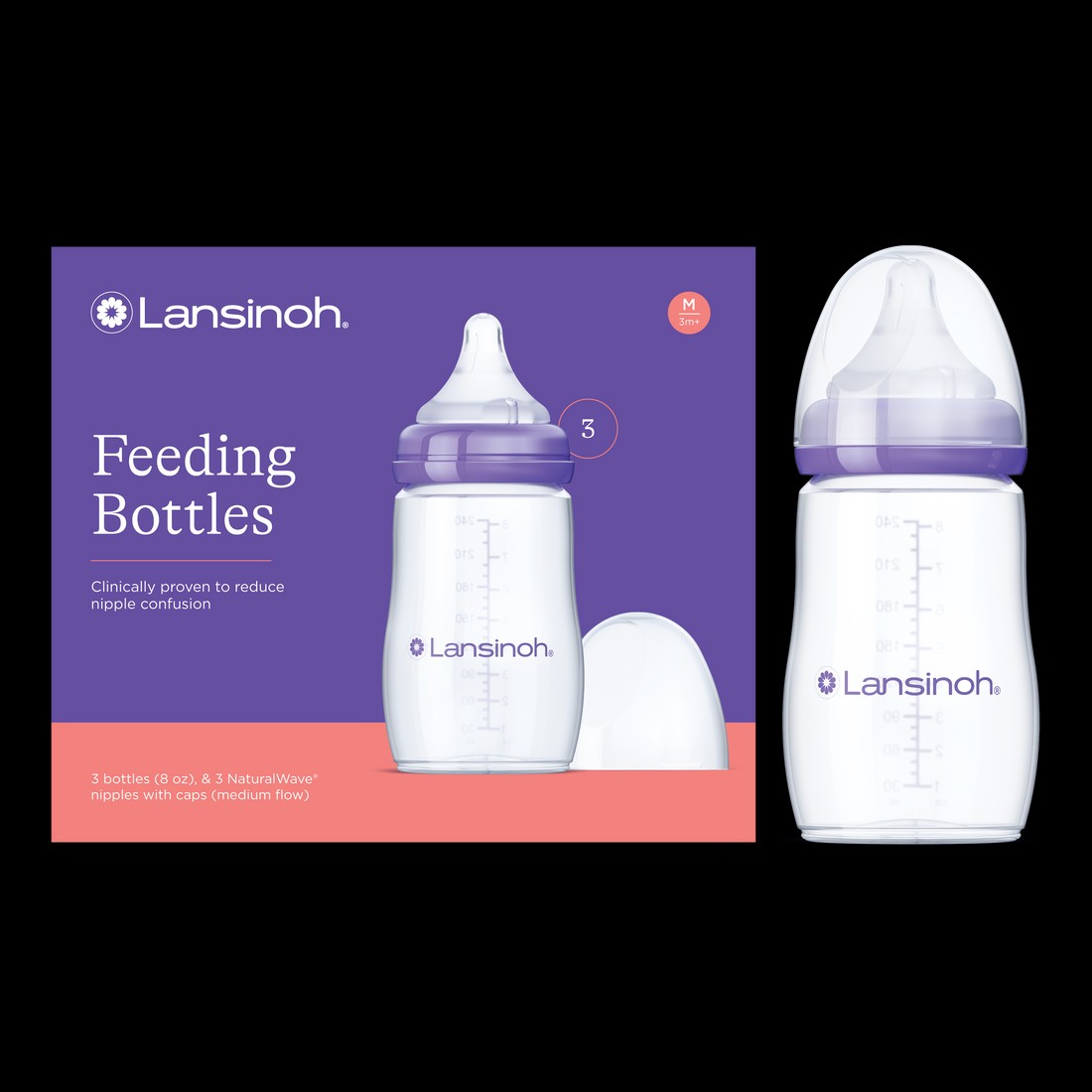
Lansinoh Anti-Colic Baby Bottles, BPA-Free, 8 oz, 3 Count, Medium Flow NaturalWave Nipple
Best for Breastfed BabiesLansinoh · $18.69
Price last checked August 15, 2026 — see Amazon for current pricing.
NaturalWave nipple mimics breastfeeding latch, making bottle-to-breast transitions smoother during travel.
Pros
- NaturalWave nipple mimics breastfeeding
- Anti-colic air ventilation system
- 3-pack great value
- Wide neck for easy filling
Cons
- Nipple shape not for all babies
- Can leak if not assembled correctly
- Plastic scratches over time
If you are breastfeeding and supplementing with bottles during travel — which is extremely common, because nursing in airports and airplanes is not always practical or comfortable — the Lansinoh bottles solve the biggest problem: nipple confusion. The NaturalWave nipple is designed to require the same latch and sucking motion as breastfeeding, which means your baby is less likely to develop a preference for the bottle and refuse the breast afterward.
This matters enormously during travel because many breastfeeding parents rely on bottles more during trips than they do at home. Maybe you are pumping and bottle-feeding in the airport because finding a nursing room at your departure gate is impossible. Maybe your partner is doing a feeding while you sleep on the plane. Whatever the reason, a bottle that does not disrupt the breastfeeding relationship is worth its weight in gold during a trip.
The anti-colic valve is built into the nipple rather than using a separate internal vent like Dr. Brown's. That means fewer parts to wash, assemble, and lose in a hotel room. For travel, fewer parts is almost always better. Assembling a multi-piece vent system on a moving aircraft, one-handed, is exactly the scenario where a simpler bottle wins regardless of how the two perform at home.
At $18.69 for a three-pack, you get three bottles for roughly the price of two Dr. Brown's glass bottles. The plastic construction makes them lighter for flying, and the wide neck makes them easy to fill from a formula dispenser without spilling.
Best for: Breastfeeding parents who supplement with bottles during travel. The NaturalWave nipple preserves the breast-bottle transition better than any other bottle in this roundup. Also excellent for daycare-to-travel transitions.
Formula Dispensing
Traveling with premixed formula means dealing with liquids at TSA and keeping them cold. Traveling with powder and mixing on the go is simpler from a logistics standpoint, but you need a way to carry pre-measured portions without spilling powder everywhere. These two dispensers take the hassle out of formula prep on the road.
3. Termichy Formula Dispenser (2-Pack)
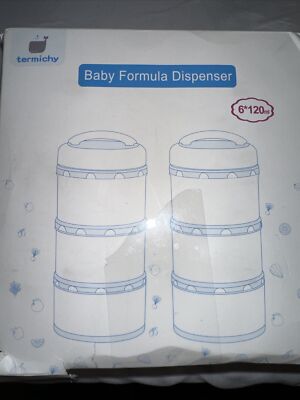
Termichy Stackable Formula Dispenser Portable Milk Powder Container, 2 Pack
Best Formula DispenserTermichy · $12.99
Price last checked August 15, 2026 — see Amazon for current pricing.
Stackable compartments with a built-in funnel for no-spill pouring. Two containers included.
Pros
- Stackable compartments for multiple feedings
- 2-pack for day and night bag
- Portable and compact
- Easy-pour spout
Cons
- Small capacity per section
- Can be fiddly to stack
- Lid can loosen in bag
The Termichy dispenser is the one we reach for every time. Each container has multiple stackable compartments that hold pre-measured scoops of formula, and the built-in funnel means you can pour directly into a bottle without spilling powder on an airplane tray table or a rest stop counter.
The two-pack is ideal for travel because you can prep an entire day's worth of feedings across both containers. We pre-measure formula at home the night before travel: four compartments per container, eight total feedings, ready to go. At feeding time, you twist open a compartment, pour into the bottle, add water, shake, done. The whole process takes less than a minute, even one-handed.
The containers seal tightly enough that we have had them rattling around in the bottom of a diaper bag on a bumpy road trip without any powder leaking. That said, we still put each one inside a zip-lock bag as insurance, because formula powder in the lining of a diaper bag is a cleaning nightmare you only experience once before you start taking precautions.
Best for: Formula-feeding families who travel frequently. The two-pack handles a full day of feedings. Pre-measure at home and feeding on the go becomes nearly as easy as feeding at home.
4. Munchkin Formula Dispenser
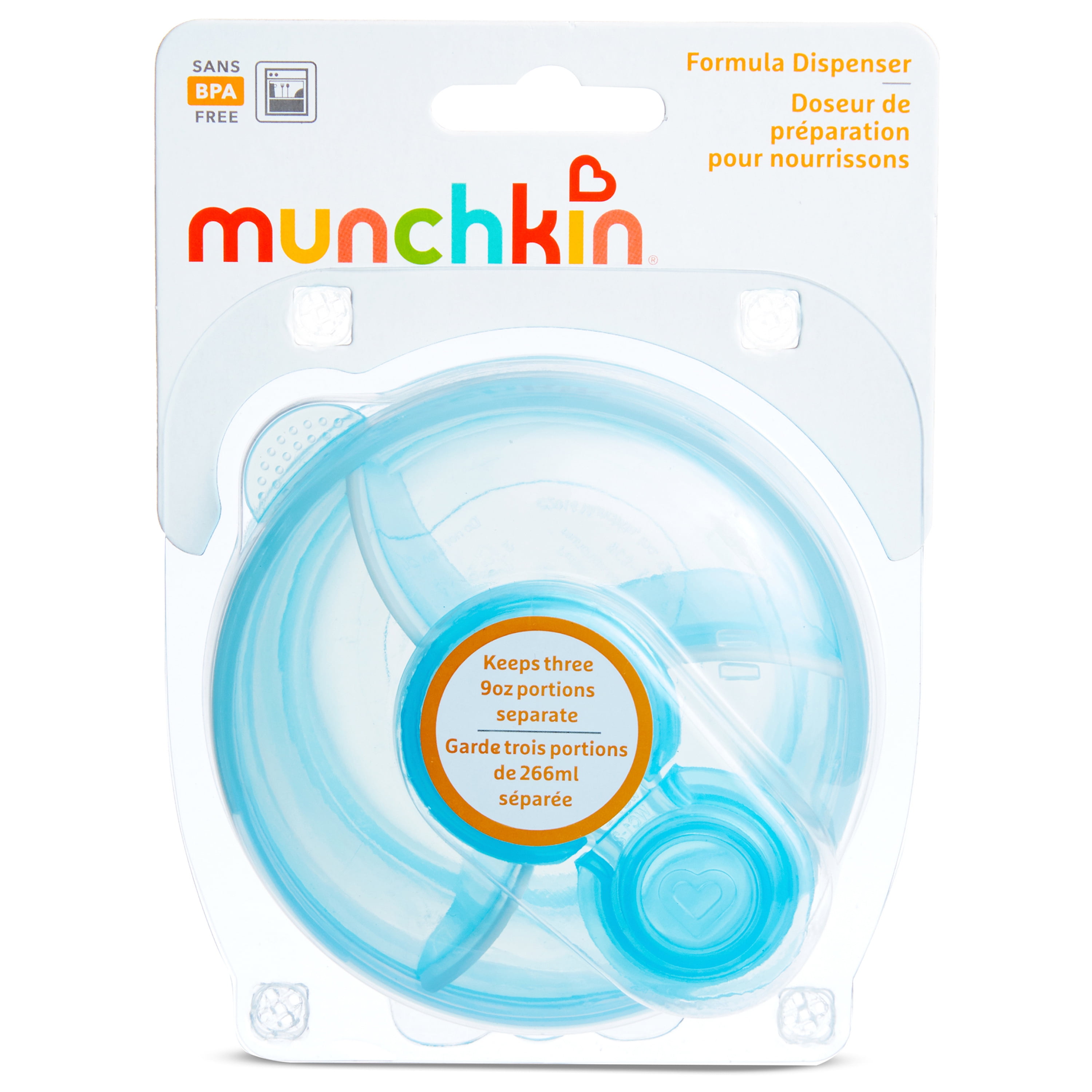
Munchkin Formula Dispenser (2-Pack), BPA Free, 3 Sections 9oz Each
Ultra-Budget PickMunchkin · $9.98
Price last checked August 15, 2026 — see Amazon for current pricing.
Three-section twist-apart dispenser, now a two-pack for about $10 (roughly $5 each). A cheap, reliable formula travel solution.
Pros
- Incredibly affordable under $5
- 3 sections hold 3 feedings
- Twist-apart design is simple
- BPA-free
Cons
- Can leak if not twisted tight
- Basic design
- No pour spout
At about $10 for a two-pack (roughly $5 each), the Munchkin is the formula dispenser for parents who want a no-frills solution and do not want to overthink it. Three sections twist apart, each holds a pre-measured portion, and a flip-top lid lets you pour into a bottle. It is not as elegant as the Termichy, but it works and it costs a fraction of the price.
The three-compartment design means each dispenser holds fewer feedings than the Termichy two-pack, so for a full day of travel, you may need to refill during the trip. For a short flight or a half-day outing, three servings is plenty. Since it now comes as a two-pack, you already have a spare — prep six feedings across both dispensers for longer travel days.
The main trade-off is the pouring mechanism. The Munchkin does not have a built-in funnel, so pouring from the compartment into a narrow-neck bottle requires slightly more care. Wide-neck bottles like the Lansinoh make this a non-issue. With narrow-neck bottles, you may want to bring a small funnel or pour slowly over a sink.
Best for: Budget-conscious parents who need a simple formula carrier for occasional travel. At this price, buy two and keep one in the diaper bag permanently so you never forget it.
Temperature Management
Warming a bottle in a hotel room without a microwave (you should not microwave breastmilk anyway — it destroys nutrients and creates hot spots) and keeping breastmilk cold during a travel day are two of the biggest feeding challenges on the road. These products solve both.
5. Momcozy Portable Bottle Warmer
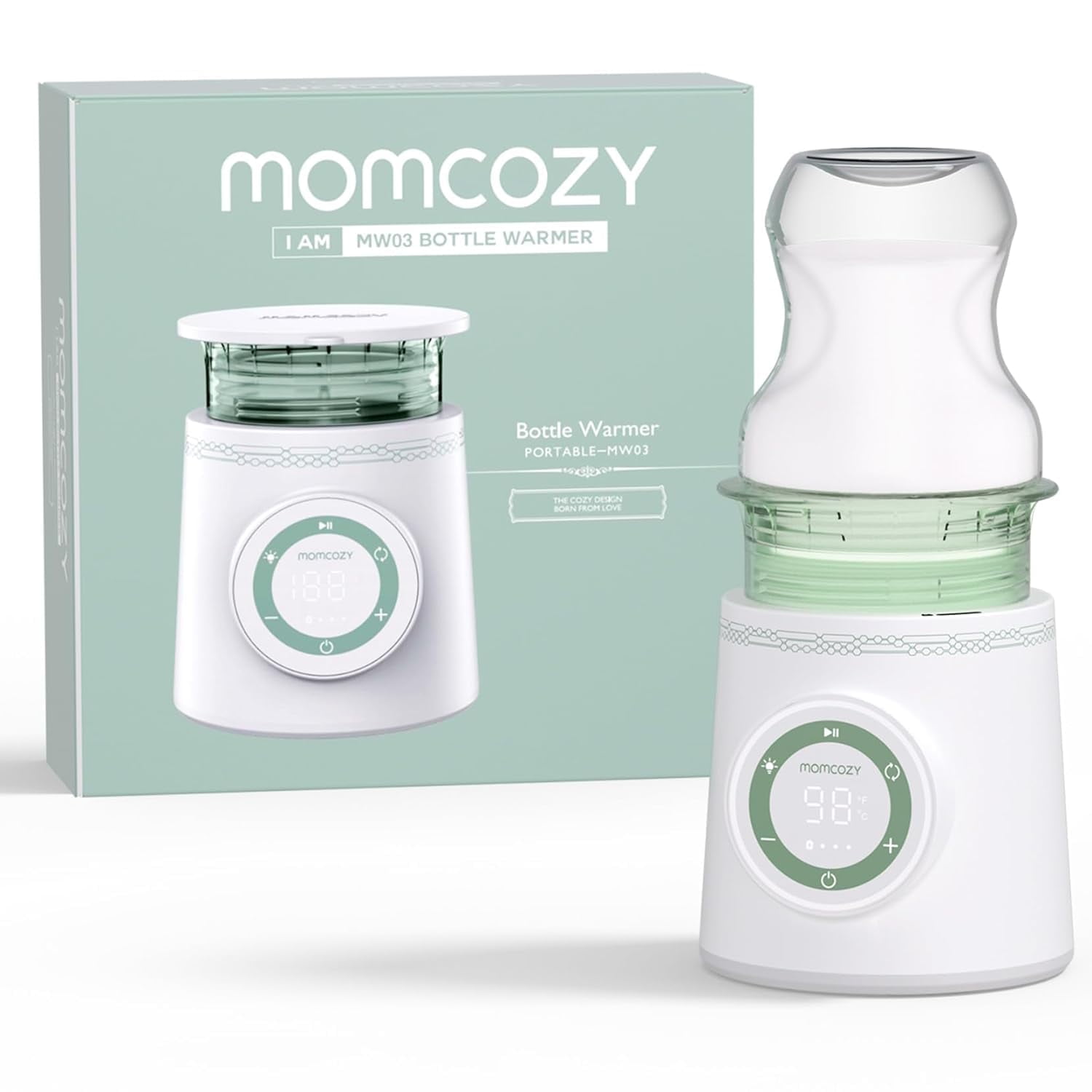
Momcozy Portable Bottle Warmer for Travel, Dual Heating Modes, 17 oz Capacity
Best Bottle WarmerMomcozy · $79.99
Price last checked August 15, 2026 — see Amazon for current pricing.
Rechargeable 17oz warmer with dual heating modes. Warms a bottle in minutes without needing a plug.
Pros
- Dual heating modes for milk and water
- Large 17 oz capacity
- Long battery for all-day use
- Fast heating
Cons
- Expensive at $80
- Bulky for diaper bag
- Takes time to reach temperature
The Momcozy portable warmer changed our travel feeding game more than any other single product. Before this, warming a bottle during travel meant one of these terrible options: asking a restaurant for hot water, running hot water over the bottle in a hotel sink for ten minutes, or packing a travel kettle (heavy, bulky, requires an outlet). The Momcozy eliminates all of that.
It is rechargeable, holds 17 ounces (more than enough water to warm any standard bottle), and offers dual heating modes — a fast warm for when the baby is screaming and a gentle warm for when you have time to heat more gradually. On a full charge, we get about four to five warming cycles, which covers a full day of travel. It heats water to the right temperature in roughly three to five minutes, depending on the starting temperature and the mode you choose.
The form factor is essentially a large travel mug. It fits in a car cup holder, slides into the side pocket of most diaper bags, and does not look like baby gear. Parents praise it in airports, hotel rooms, rental cars, and at a rest stop picnic table on I-95. It works everywhere because it does not need a plug, a microwave, or anyone else's hot water.
At $79.99, this is the most expensive single item on this list. For families who travel more than two or three times a year with a bottle-fed baby, it is worth every penny. For a single annual trip, the hotel-sink-hot-water method is free and functional, even if it is slow and annoying.
Best for: Any family that bottle-feeds and travels more than occasionally. Eliminates the "how do we warm this bottle" problem entirely. Especially valuable for road trips where access to hot water is unpredictable.
6. Lansinoh Breastmilk Storage Bags (100-Count)
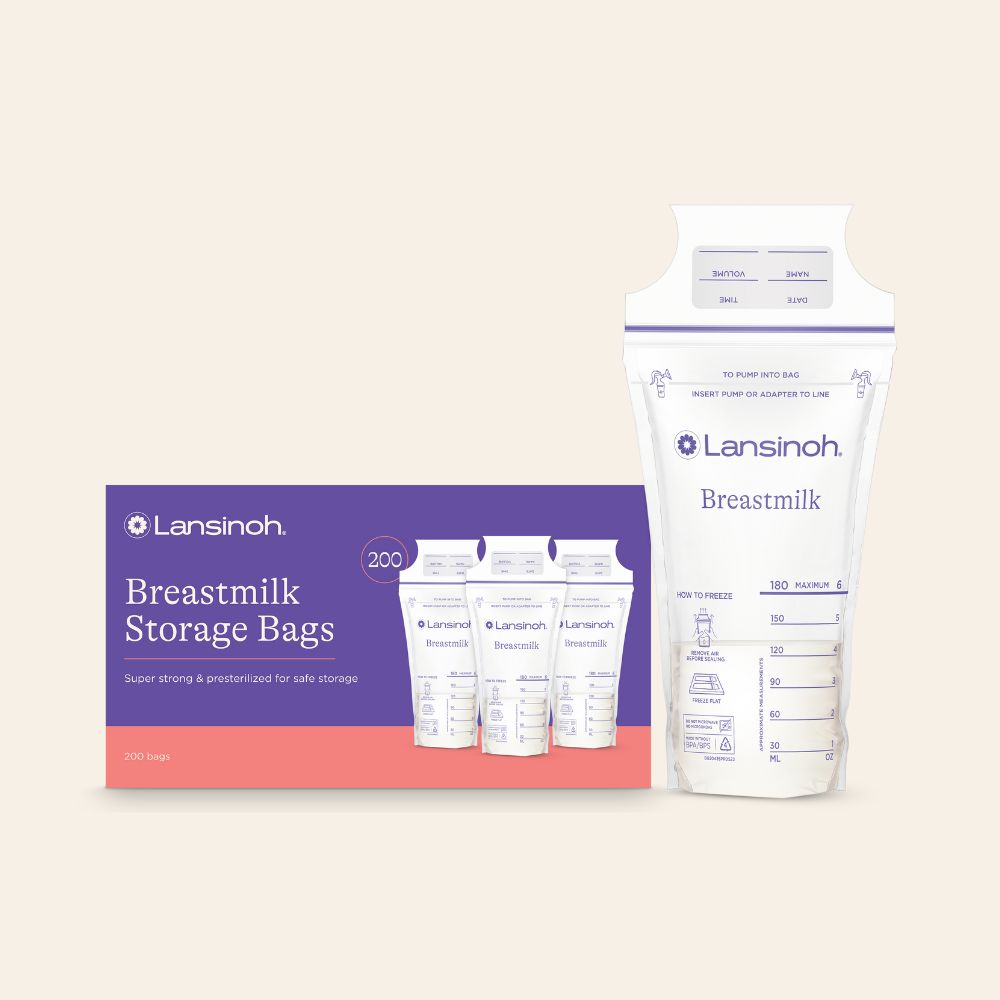
Lansinoh Breastmilk Storage Bags, 100 Count, Fast Freeze & Thaw, 6 oz
Best Storage BagsLansinoh · $14.44
Price last checked August 15, 2026 — see Amazon for current pricing.
100-count pre-sterilized bags with double zipper seal. Freeze flat for efficient packing.
Pros
- 100-count great value
- Fast freeze and thaw design
- Double-sealed to prevent leaks
- Pre-sterilized for safety
Cons
- Single-use bags
- 6 oz may be small for older babies
- Can be hard to pour from
Lansinoh storage bags are the standard for a reason: the double zipper seal does not leak. When you are carrying pumped breastmilk in a cooler bag through an airport, "does not leak" is not a nice-to-have — it is a requirement. A leaking breastmilk bag inside a cooler inside a diaper bag will ruin your travel day in ways you do not want to imagine.
For travel, the key feature is that these bags freeze flat. Flat frozen bags stack efficiently in a cooler and thaw faster than round containers when you need to prep a feeding. We lay them flat in the freezer the night before a trip, and the next morning they stack like playing cards inside the cooler. This maximizes the cooling capacity of your cooler bag — round bottles and containers waste space and leave air gaps that warm up faster.
The 100-count box is far more than a single trip needs, but the per-bag cost at that quantity is excellent and a surplus means never running out mid-trip. Keeping a dozen permanently in the pump kit is the sensible arrangement. The bags are pre-sterilised and ready to use straight from the box, which is what matters when you are pumping in an airport nursing room with no access to sterilising equipment.
One travel-specific tip: write the date AND time on each bag, not just the date. When you are drawing from a cooler with multiple bags, you want to use the oldest milk first, and during a travel day you may pump two or three times before you have a chance to use any of it.
Best for: Breastfeeding parents who pump during travel. The flat-freeze design is specifically advantageous for travel packing. Pair with the Momcozy cooler for a complete cold chain.
7. Momcozy Breastmilk Cooler
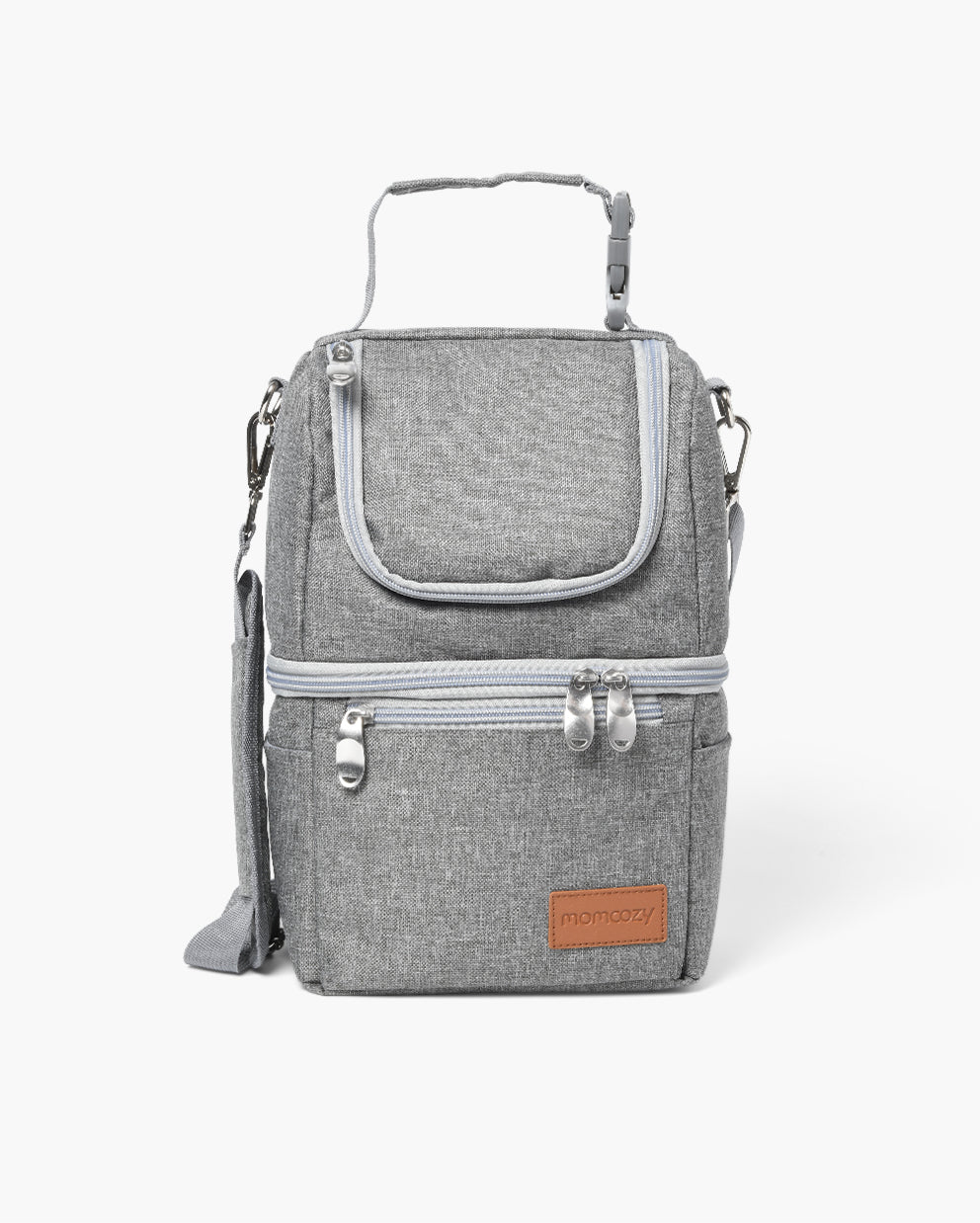
Momcozy 22oz Portable Breast Milk Cooler, 360° Cooling for 24 Hours, with 2 Baby Bottles
Best CoolerMomcozy · $71.99
Price last checked August 15, 2026 — see Amazon for current pricing.
22oz capacity with 360-degree cooling for 24 hours. Includes two bottles. Maintains safe temperature all day.
Pros
- Keeps milk cold for 24 hours
- 360° total cooling coverage
- Includes 2 baby bottles
- Large 22 oz capacity
Cons
- Expensive at $90
- Bulky for casual outings
- Battery needs regular charging
Keeping breastmilk at a safe temperature during a full travel day — getting to the airport, waiting at the gate, flying, picking up a rental car, driving to the hotel — requires a cooler that actually holds temperature for the duration. The Momcozy cooler is the first one in our research that genuinely maintains safe temperature for a full 24 hours, which covers even the longest domestic travel days and most international itineraries.
The 360-degree cooling design means the entire interior stays uniformly cold, not just the area directly touching the ice pack. This matters because breastmilk in a conventional cooler bag can warm unevenly — the bag closest to the ice pack stays cold while the one at the edge reaches unsafe temperatures. With the Momcozy, parent reviews confirm temperatures across the interior and the variation is minimal.
The included two bottles are a nice bonus. They fit the cooler perfectly and can be used for direct feeding, eliminating the need to transfer milk from storage bags to bottles when you are in transit. For parents who pump into the Momcozy bottles, the workflow is: pump, cap the bottle, place it in the cooler, and the milk stays cold until you are ready to warm it.
At $89.99, this is a significant investment, but the alternative — worrying all day about whether your pumped milk has gone bad — has a cost too. We have thrown out milk that we suspected had gotten too warm in an inadequate cooler. At roughly $1 to $2 per ounce of breastmilk (based on the time and caloric cost of producing it), a few ruined bags quickly exceed the cost of a proper cooler.
Best for: Breastfeeding parents on travel days longer than four hours. The 24-hour cold chain means you never have to wonder if the milk is still safe. Essential for travel days that involve multiple legs or long layovers.
Sippy Cups and Self-Feeding
Once your child is past the bottle stage — or transitioning out of it — you need cups and bowls that survive airplane turbulence, car seat jostling, and the inevitable moment when your toddler deliberately turns the cup upside down to test whether it really is spill-proof. (They do this. Every single time.)
8. Munchkin Miracle 360 Cup (2-Pack)
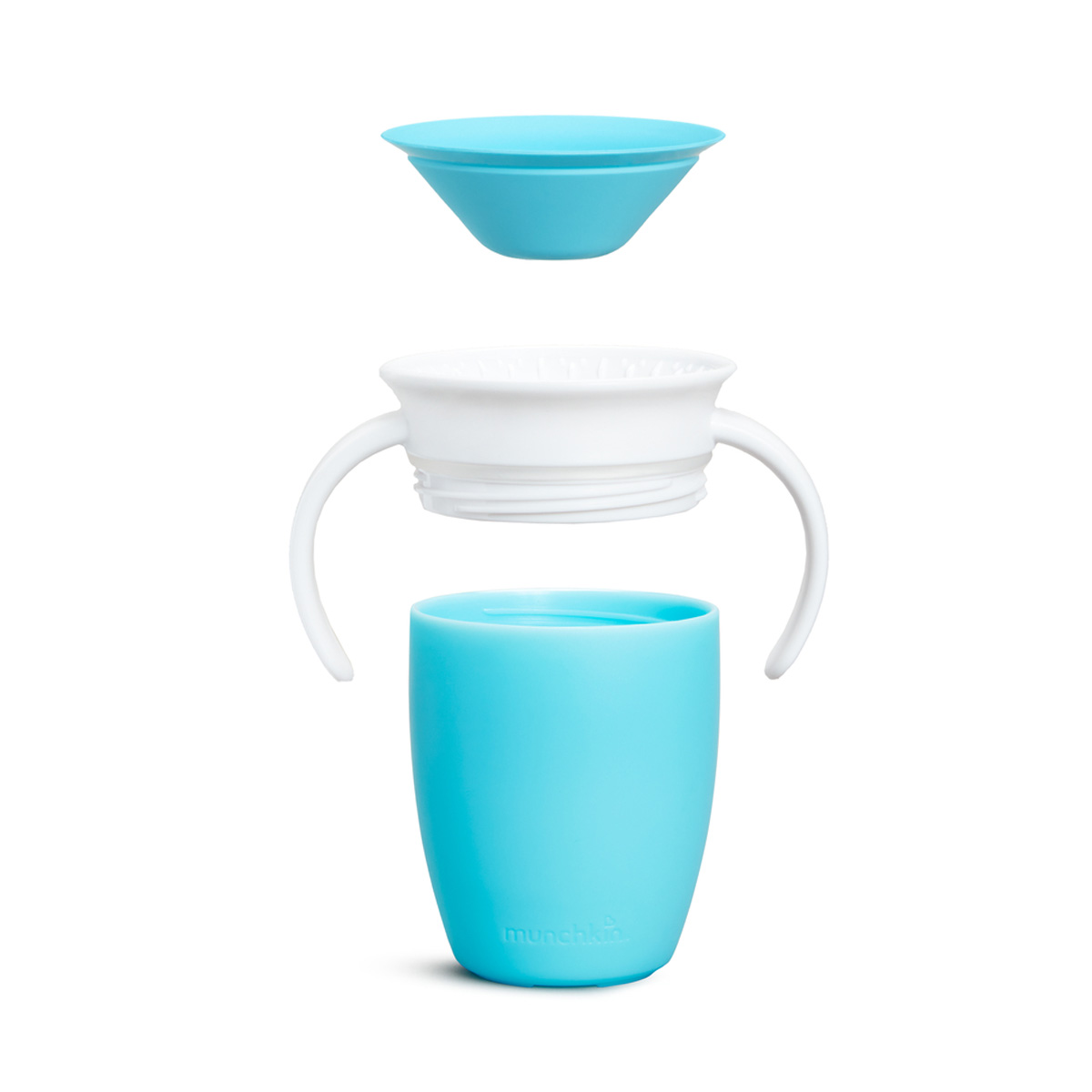
Munchkin Miracle 360 Sippy Cups, 10 oz, 2 Pack, Spill Proof
Best Sippy CupMunchkin · $9.99
Price last checked August 15, 2026 — see Amazon for current pricing.
Spill-proof 360-degree drinking edge with no spout to chew on. Dentist recommended for oral development.
Pros
- 360-degree edge—drink from anywhere
- Completely spill-proof
- Easy to clean
- BPA-free with handles
Cons
- Can be hard for some toddlers to figure out
- Valve needs regular cleaning
- 7 oz may be small for older toddlers
The Miracle 360 is the sippy cup that finally made us stop carrying backup outfits for liquid spills. The entire rim is a drinking edge — your toddler can sip from any point around the cup — and the silicone valve seals automatically when they stop drinking. Tip it, shake it, throw it on the airplane floor, and nothing comes out. Parents report filling it, tossing it in a diaper bag, and checking an hour later. Bone dry bag.
The spout-free design is recommended by pediatric dentists because traditional spouted sippy cups can affect how teeth come in and how the tongue develops. This is one of those products where the healthier option is also the more practical option — no spout means no spout for your toddler to chew through, which is a failure mode we have experienced with other cups.
For travel, the 360-degree drinking edge means you do not have to orient the cup before handing it to your toddler. On a plane, in a dark car, half-asleep in a hotel bed — just hand them the cup and it works no matter which way they grab it. The two-pack means one is always clean or at least available when the other has rolled under the seat in front of you.
Best for: Toddlers 6 months and up transitioning from bottles or for daily use. The best all-around travel cup. Pack one in your carry-on and one in checked luggage as a backup.
9. NUK Active Sippy Cup — Disney Cars
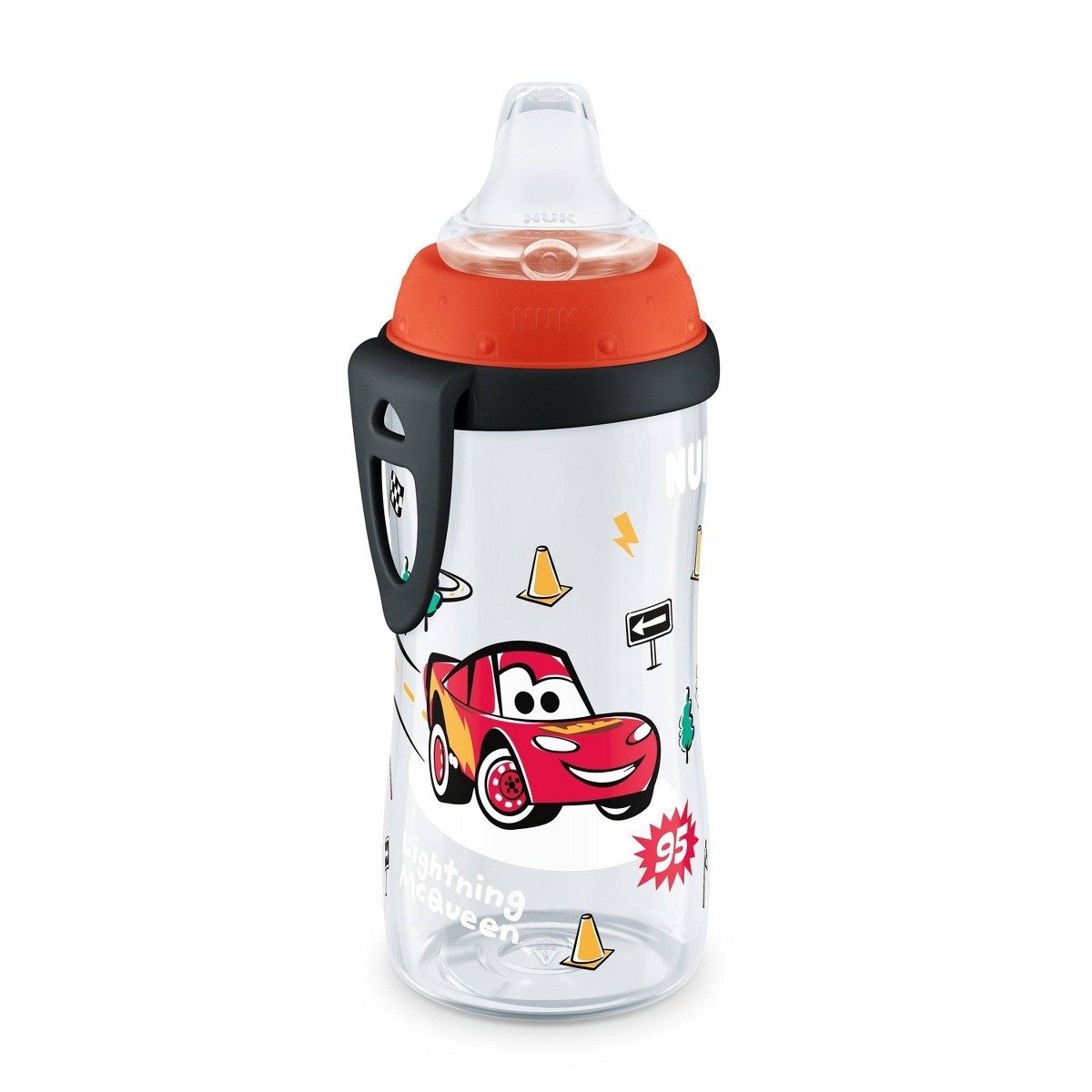
NUK Active Sippy Cup, 10 oz, 2 Pack, Disney's Cars Lightning McQueen, Spill-Proof
Best for Older ToddlersNUK · $14.08
Price last checked August 15, 2026 — see Amazon for current pricing.
10oz spill-proof cup with Disney Cars design. Clip-on cover keeps the spout clean during travel.
Pros
- Fun Lightning McQueen design
- 10 oz larger capacity
- Spill-proof for travel
- BPA-free
Cons
- Character theme may not appeal to all
- Spout can be chewed through
- Hand wash recommended
For older toddlers (2 and up) who have graduated from the 360 cup and want something more "big kid," the NUK Active is our pick. The 10-ounce capacity holds more than most sippy cups, which means fewer refills during a travel day. The clip-on cover keeps the spout clean when the cup is tossed in a bag, which is a feature you do not appreciate until you have handed your child a sippy cup with lint and granola crumbs stuck to the spout.
The Disney Cars design earns this cup something that no plain sippy cup can offer: your toddler actually wants to use it. On a flight to Orlando, our 3-year-old refused water from the airline cup but happily drank from "Lightning McQueen's cup." Character licensing is manipulative and it works perfectly when you need your child hydrated.
The spill-proof claim generally holds up, with one caveat buyers raise repeatedly: the spout valve needs to be fully seated after washing. If it is slightly out of position, the cup will drip. After washing, press the valve firmly until you hear a click, and it seals properly. This is a minor annoyance that becomes second nature after the first couple of washes.
Best for: Toddlers 2 years and up who are motivated by characters and need a larger capacity cup for travel days. The clip-on spout cover makes it the cleanest option for tossing in a bag.
Travel Feeding Gear
10. Dr. Brown's Travel Fresh Bowl
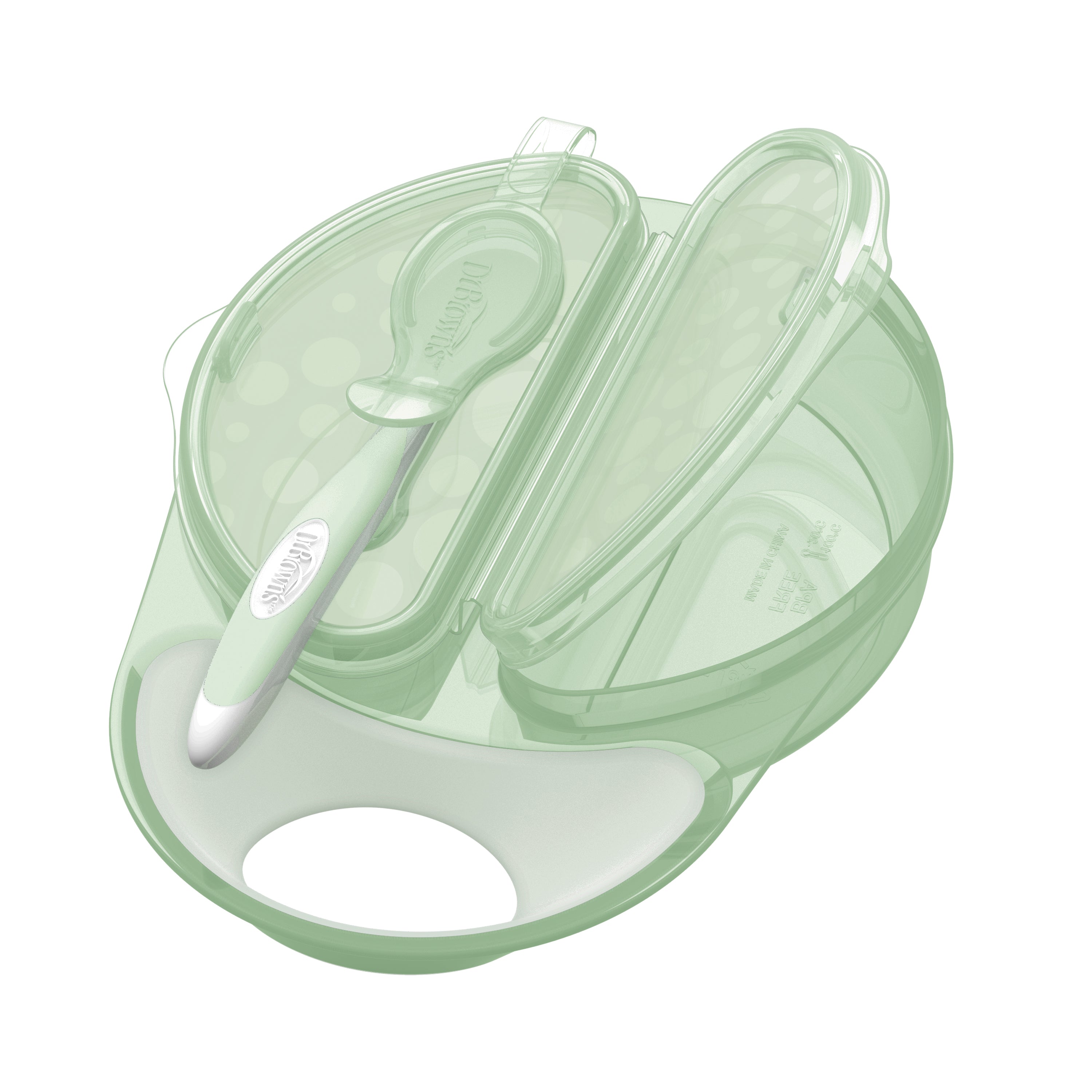
Dr. Brown's Travel Fresh Bowl and Snap-in Spoon for Toddler Feeding On the Go, BPA-Free
Best Travel BowlDr. Brown's · $5.99
Price last checked August 15, 2026 — see Amazon for current pricing.
Compact travel bowl with snap-in spoon stored in the lid. No-spill seal for packing prepared food.
Pros
- Spoon snaps into lid—nothing to lose
- Sealed lid prevents spills
- Very affordable
- Compact and lightweight
Cons
- Small bowl capacity
- Spoon is basic
- Lid can pop off if squeezed
Feeding a toddler solids during travel requires a container that holds food, includes a utensil, seals well enough to carry in a bag, and is small enough to not take up precious packing space. The Dr. Brown's Travel Fresh bowl does all four. The spoon snaps into the lid, so you never lose it and you never have to dig through a bag looking for a utensil while your toddler melts down because the food is right there but they cannot eat it.
The seal is good enough to pack prepared food — cut fruit, pasta, small pieces of cheese — and carry it in a diaper bag without leaking, which is the real test given how much juice diced fruit releases over a long layover. For aircraft feeding, the compact footprint fits a tray table alongside a sippy cup and still leaves room for an activity or a napkin.
At $5.99, this is an impulse buy. Get two. Keep one loaded with snacks in the diaper bag and one available for meals. The snap-in spoon is sized for toddler mouths and hands, and the short handle prevents the spoon from being used as a catapult (a failure mode we have experienced with full-length spoons on airplanes).
Best for: Toddlers 6 months and up eating solids. Essential for airplane meals and on-the-go feeding. The snap-in spoon makes this complete — no separate utensil to pack or lose.
Age-by-Age Travel Feeding Guide
Feeding needs change dramatically in the first three years. Here is what to pack for each stage:
0 to 6 Months: Liquid Only
At this age, feeding is exclusively breastmilk or formula. Your travel feeding kit is straightforward:
- Bottles — Dr. Brown's glass for car travel, Lansinoh for flying (lighter)
- Formula dispenser — Termichy or Munchkin with pre-measured portions
- Bottle warmer — Momcozy portable warmer for travel days longer than four hours
- Breastmilk storage — Lansinoh bags plus Momcozy cooler for pumping parents
- Bottled water for mixing formula (do not use airplane lavatory water)
- A small bottle brush and travel-sized dish soap
6 to 12 Months: Introducing Solids on the Go
This is when feeding gets complicated during travel. You are adding solid food while still doing bottles, which doubles the gear.
- Everything from the 0–6 month list, plus:
- Dr. Brown's Travel Fresh bowl — for pureed or soft foods
- Munchkin Miracle 360 cup — for water with meals
- Squeeze pouches of baby food (shelf-stable, TSA-friendly, no prep needed)
- A silicone bib that wipes clean (you will not have access to laundry for bib rotation)
- A portable travel high chair for restaurant meals
The squeeze pouch is the unsung hero of travel feeding at this age. No prep, no refrigeration needed until opened, no utensils required, and TSA treats them the same as formula — exempt from the 3.4-ounce rule for infant food. We pack six to eight pouches for a weekend trip.
12 to 36 Months: Toddler Self-Feeding
Toddlers want to feed themselves, and on a trip, that desire collides with limited space, unfamiliar foods, and zero access to a high chair during transit.
- Munchkin Miracle 360 cup or NUK Active sippy — depending on age and preference
- Dr. Brown's Travel Fresh bowl — for meals and snacks
- Individually wrapped snacks that double as entertainment (see our airplane comfort guide)
- A silicone placemat that rolls up for packing (protects restaurant tables and airplane trays)
- Familiar foods from home — travel is not the time to push culinary boundaries
At this age, most toddlers are done with bottles or transitioning off them. The sippy cup becomes your primary liquid gear, and the bottle warmer becomes less critical. If your toddler is still on bottles at bedtime, bring exactly what you use at home — travel is the wrong time to change routines.
Hotel Room Feeding Setup
After a travel day, you arrive at the hotel and need to set up a functional feeding station in a room that has none of the conveniences of your kitchen. Here is how we do it:
Bottle washing station: Use the bathroom sink. Bring a travel-sized bottle of dish soap (decant from your regular bottle into a 2-ounce travel container) and a small bottle brush. Wash bottles immediately after use — do not let formula or breastmilk sit in bottles overnight, especially in warm hotel rooms. If you need to sterilize, many hotels will provide a microwave or you can request boiling water from room service.
Formula prep area: Clear the desk or dresser surface. Set up your formula dispenser, bottled water (buy at the airport or hotel gift shop — do not use bathroom tap water for formula in unfamiliar cities), and clean bottles. Having a designated prep area prevents the frantic "where did I put the formula?" moment at 2 AM.
Breastmilk storage: Request a mini-fridge if your room does not have one. Most hotels provide them for free when you mention it is for baby food or medication. Transfer milk from your travel cooler to the fridge as soon as you arrive. If no fridge is available, keep milk in the Momcozy cooler and replenish ice from the hallway ice machine.
Warming bottles: The Momcozy portable warmer handles this without needing the hotel's microwave. If you do not have the warmer, run hot water from the bathroom tap into a cup or the ice bucket, and place the bottle in the hot water for five to seven minutes. Test the temperature on your wrist before feeding.
Solid food storage: If your child is eating solids, the mini-fridge becomes critical. Prepared foods from dinner — cut-up fruit, rice, pasta — can be stored in the Dr. Brown's Travel Fresh bowl in the fridge for the next day's meals. Label anything you store with the date.
Highchair alternative: Most hotels do not have highchairs in rooms. A portable travel high chair that attaches to a table or desk chair is essential for hotel room feeding. Without one, you end up feeding your toddler on the bed, which creates crumbs in the sheets and is a choking risk because the child is not sitting upright.
What We Learned the Hard Way
Every tip in this section comes from a real mistake we made while feeding a child during travel. Learn from our suffering.
Do not mix formula with airplane lavatory water. The water in airplane lavatories is not potable. The tanks are cleaned infrequently and have been found to contain bacteria in FAA testing. Buy bottled water before boarding or ask the flight attendant for sealed bottled water. This applies to any water your baby will consume — including water used to rinse bottles.
Pre-measure everything the night before. At 4 AM on travel day, you are not at your sharpest. Formula scoops get miscounted, storage bags get left in the freezer, ice packs do not get frozen because you forgot to put them in. Do all of this the night before while you are still thinking clearly. Set out the loaded formula dispenser, packed cooler, and filled bottles on the kitchen counter so you can grab and go.
Bring twice the formula you think you need. Flights get delayed. Layovers extend. Rental car lines take two hours. That one extra bottle of formula you almost left behind is the one you will need at 11 PM in a hotel lobby while your room key is not working. We bring 150% of our calculated need for any trip.
Hot water from coffee shops works for bottle warming in a pinch. Every airport has a Starbucks or coffee shop. Ask for a cup of hot water (most give it to you for free when they see you have a baby). Place the bottle in the hot water for a few minutes. This is our backup method when the Momcozy warmer is dead or buried in a checked bag.
Your toddler will refuse food they love at home. Travel disrupts routines, and toddlers express their displeasure with disrupted routines by refusing to eat. Do not panic. Pack familiar comfort foods — the specific brand of crackers, the exact flavor of pouch, the one type of cheese they will eat. This is not the time to introduce quinoa salad.
Always pack an extra outfit for milk-related explosions. Spit-up, spilled bottles, enthusiastic sippy cup shaking that dislodges a valve — liquid events happen on every trip. A full change of clothes for the child (and a spare shirt for you) in a zip-lock bag in the carry-on is not optional. Check out our toddler packing list for the complete travel wardrobe strategy.
Never put a bottle in a checked bag. Checked luggage gets lost, delayed, and temperature-abused. Every bottle, every ounce of formula, every piece of feeding gear your child needs should be in your carry-on. Checked bags should only contain backup supplies.
Feeding on an Airplane: A Practical Walkthrough
Here is how we actually manage feedings during a flight, step by step:
Before boarding: Mix one bottle if using formula (or have a breastmilk bottle ready from the cooler). Have it ready to go so you can feed during takeoff if needed — the sucking helps equalize ear pressure.
During takeoff and landing: Feed the baby or have the toddler drink from a sippy cup. The swallowing motion helps with ear pressure. If your child is not hungry, a pacifier works too, but a feeding is more effective.
Mid-flight bottle feeding: For formula, use pre-measured powder from your dispenser and bottled water. Ask the flight attendant for warm water if you need to heat formula and do not have your portable warmer. For breastmilk from the cooler, the Momcozy warmer handles this in a few minutes. Never microwave breastmilk — it destroys antibodies and creates dangerous hot spots.
Mid-flight solid feeding: Set up the Dr. Brown's Travel Fresh bowl with pre-cut food. Use the snap-in spoon for parent-led feeding or let older toddlers self-feed. Place a napkin or small bib under the bowl area. Prepare for mess — it is inevitable. Have wipes ready.
Cleanup: Use wet wipes for the tray table, the child, the seat, and your dignity. Pack used bottles in a zip-lock bag for washing later. Do not try to wash bottles in the airplane lavatory — the sinks are tiny, the water is not potable, and the turbulence will guarantee a disaster.
Individual Reviews
We have written in-depth reviews for several products in this roundup. Each review includes detailed testing, comparisons, and our honest take after months of real-world use.
Disclosure: ToddlerTravelGear is reader-supported. We may earn a commission if you buy through links on our site — at no extra cost to you. Learn more
Frequently Asked Questions
Products Mentioned
Dr. Brown's
Dr. Brown's Anti-Colic Options+ Narrow Glass Baby Bottle, Level 1 Slow Flow, 8 oz, 2-Pack
Read review →
Lansinoh
Lansinoh Anti-Colic Baby Bottles, BPA-Free, 8 oz, 3 Count, Medium Flow NaturalWave Nipple
Read review →
Termichy
Termichy Stackable Formula Dispenser Portable Milk Powder Container, 2 Pack
Read review →
Munchkin
Munchkin Formula Dispenser (2-Pack), BPA Free, 3 Sections 9oz Each
Read review →
Momcozy
Momcozy Portable Bottle Warmer for Travel, Dual Heating Modes, 17 oz Capacity
Read review →
Lansinoh
Lansinoh Breastmilk Storage Bags, 100 Count, Fast Freeze & Thaw, 6 oz
Read review →
Momcozy
Momcozy 22oz Portable Breast Milk Cooler, 360° Cooling for 24 Hours, with 2 Baby Bottles
Read review →
Munchkin
Munchkin Miracle 360 Sippy Cups, 10 oz, 2 Pack, Spill Proof
Read review →
NUK
NUK Active Sippy Cup, 10 oz, 2 Pack, Disney's Cars Lightning McQueen, Spill-Proof
Read review →
Dr. Brown's
Dr. Brown's Travel Fresh Bowl and Snap-in Spoon for Toddler Feeding On the Go, BPA-Free
Read review →
Related Content
Munchkin Formula Dispenser Review: The Two-Pack Travel Hack Every Formula Parent Needs
Honest Munchkin Formula Dispenser review after flights, road trips, and hotel stays — pre-measured formula storage, TSA experience, cleaning tips, and more.
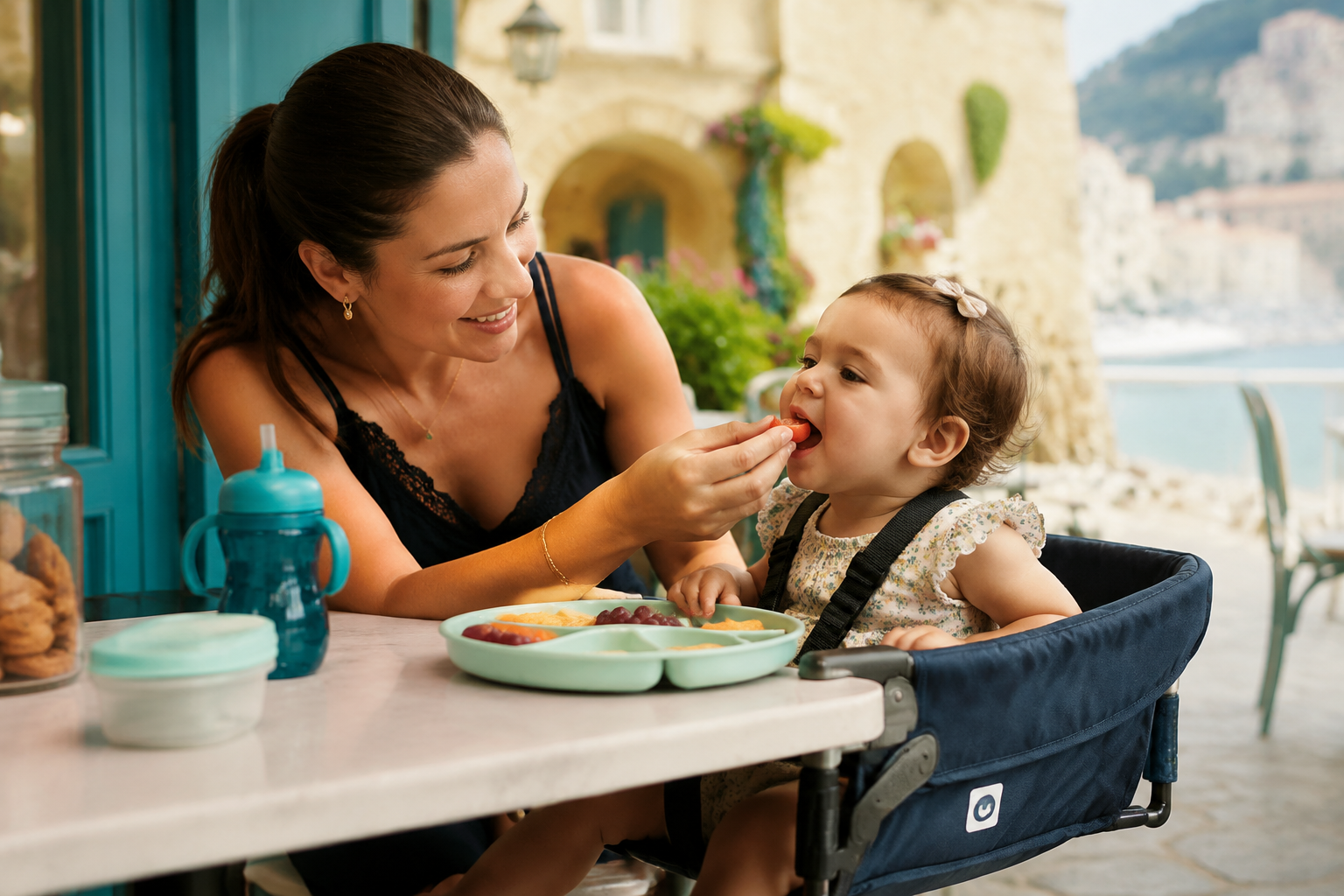
Feeding Your Toddler While Traveling: The Complete Parent's Guide (2026)
How to feed your baby or toddler on the road — snack packing strategy, restaurant survival tips, formula logistics, TSA rules for baby food, and picky eater tactics.
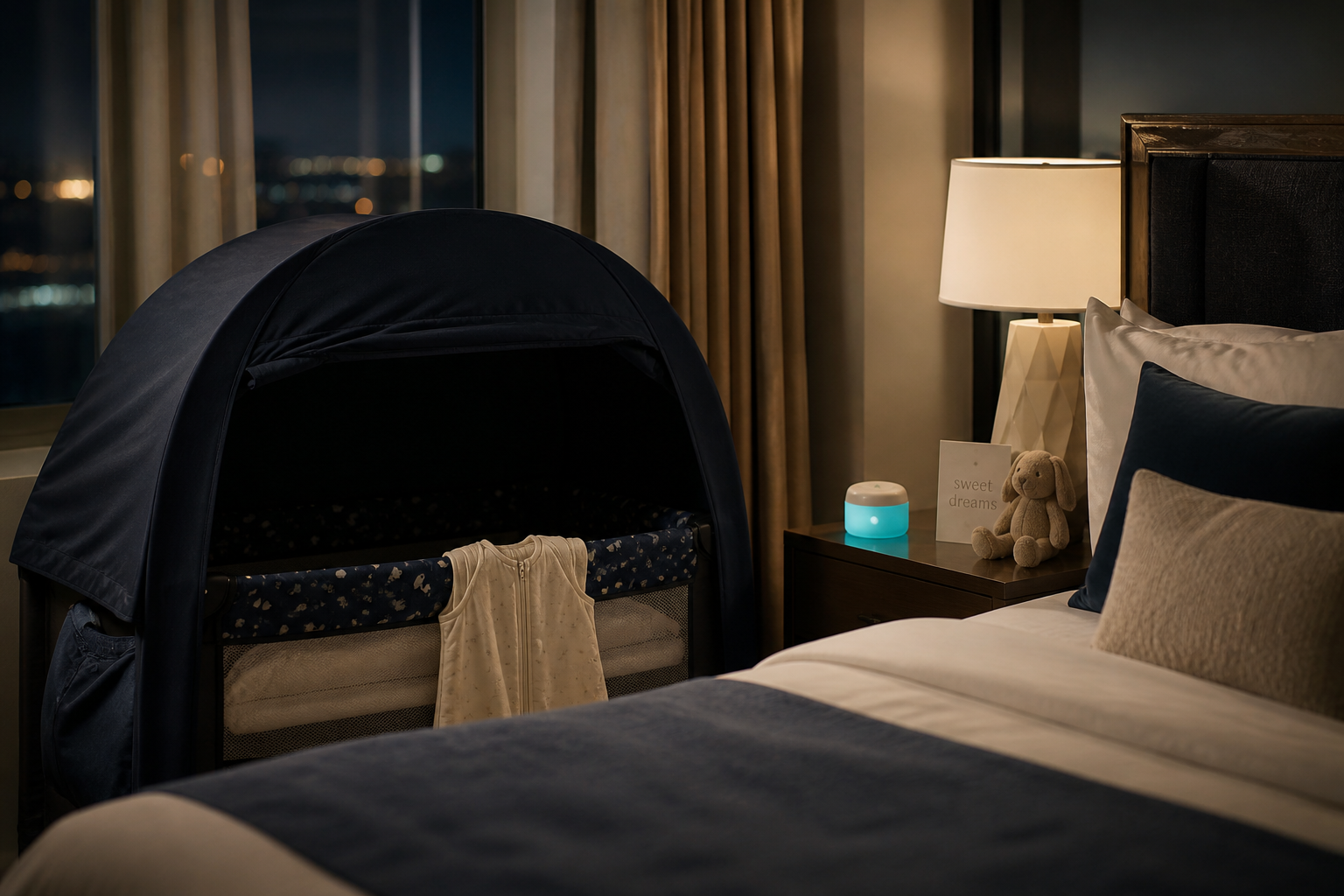
Best Travel Sleep Accessories for Toddlers (2026): Sound Machines, Blackout Solutions & More
Sound machines, blackout tents, portable beds, and sleep sacks compared for hotels and rentals — everything you need so your toddler actually sleeps on vacation.