Toddler Jet Lag: The Complete Parent's Guide to Time Zone Travel (2026)
How jet lag affects babies and toddlers differently, plus day-by-day strategies for adjusting sleep schedules when traveling across time zones with young kids.
A toddler standing up in a travel crib at 3 AM local time, wide awake and ready to start the day, is the defining experience of crossing time zones with a small child. Their body clock has not moved, and no amount of explaining will move it.
That was night one. Night two was marginally better. By night four, she was sleeping until 5:30 AM, and by night six, she was basically on local time.
Jet lag with a toddler is one of the most universally dreaded parts of international travel with young kids. It is also one of the most misunderstood. Parents either panic about it and avoid crossing time zones entirely, or they underestimate it and are blindsided when their perfectly sleep-trained child suddenly has no concept of night and day.
The truth is somewhere in the middle. Jet lag with a toddler is real, it is uncomfortable, and it will disrupt your first few days. But it is also temporary, manageable, and absolutely not a reason to skip international travel with your family. This guide covers everything — how jet lag actually works in young children, why babies and toddlers experience it differently, specific day-by-day strategies, eastbound versus westbound differences, and how to handle the return home.
How Jet Lag Actually Works in Young Children
To manage jet lag effectively, you need to understand what is happening biologically. It is not just tiredness — it is a full circadian rhythm disruption.
The Circadian Clock
Every human has an internal clock regulated by the suprachiasmatic nucleus (a small structure in the brain) that runs on roughly a 24-hour cycle. This clock controls when we feel awake and when we feel sleepy, and it is synchronized primarily by light exposure. When we cross time zones, our internal clock is suddenly out of sync with the local light-dark cycle. The result is jet lag — feeling awake when it is dark and sleepy when it is light.
Adults can reason through this. We understand we are in a different time zone, we drink coffee, we force ourselves to stay up. Toddlers cannot do any of this. Their bodies simply dictate their state, and there is no negotiating with biology.
Why Toddlers Are Different From Adults
Toddlers experience jet lag differently than adults for several reasons:
Their circadian rhythm is still developing. Before about 3 months of age, babies do not have a fully established circadian rhythm at all — which is partly why newborns have no concept of day and night. By the toddler years, the circadian clock is functional but not as robust or flexible as an adult's. This means it takes longer to shift and is more easily disrupted.
They need more sleep. A toddler needs 11 to 14 hours of total sleep per day. When jet lag cuts into that, the sleep debt accumulates faster and the consequences — crankiness, meltdowns, appetite changes, immune suppression — are more dramatic.
They cannot compensate. Adults who are jet-lagged can push through with caffeine, willpower, and the understanding that it is temporary. A toddler who is exhausted but whose body says "awake" will be miserable and will make sure you know about it.
Their nap needs complicate things. Adults only need to shift their nighttime sleep. Toddlers also have naps to contend with, and nap timing directly affects nighttime sleep. A poorly timed nap on day one of jet lag can cascade into a terrible night, which cascades into the next day.
Babies vs Toddlers: Different Challenges
Babies under 12 months often adjust to new time zones faster than toddlers, sometimes within 2 to 3 days. This is partly because their circadian rhythm is more malleable and partly because they sleep more overall, giving you more opportunities to shape their schedule. The downside is that their wake windows are shorter, so an overtired baby spirals faster.
Toddlers (12 months to 3 years) typically take 3 to 5 days to fully adjust, sometimes longer for large time zone shifts. They are more set in their routines, more resistant to being put to sleep when they feel awake, and more vocal about their displeasure. The upside is that they can handle longer wake windows, giving you more flexibility with activity timing.
Older toddlers (3 to 4 years) are somewhat easier because you can explain what is happening ("Your body thinks it is nighttime, but it is actually morning here") and they can understand, even if they cannot fully cooperate with their body's signals.
The 3-Day Adjustment Myth
You have probably read that jet lag takes "about one day per time zone crossed" to resolve. This is a rough guideline for adults and is misleading when applied to toddlers.
The reality is more nuanced. Toddlers often show the worst jet lag symptoms on days 2 and 3, not day 1. Day 1 they may power through on adrenaline from the new environment. Days 2 and 3, the accumulated sleep debt hits hard. True adjustment — where your child is sleeping and waking at roughly normal times — typically takes:
- 1 to 3 time zones: 2 to 3 days
- 4 to 6 time zones: 4 to 6 days
- 7 to 12 time zones: 5 to 8 days (sometimes longer)
This means that for a one-week trip crossing 6+ time zones, your child may just be fully adjusted when it is time to fly home. This is a reality you need to accept and plan around, not something you can fully eliminate.
Pre-Trip Preparation: What Actually Helps
Some pre-trip strategies genuinely reduce the severity of jet lag. Others are frequently recommended but impractical. Here is the honest breakdown.
Schedule Shifting Before Departure
Starting 3 to 5 days before your trip, gradually shift your toddler's entire schedule — wake time, nap time, mealtimes, and bedtime — in the direction of your destination's time zone. Move everything by 15 to 30 minutes per day.
Traveling east (time moves forward): Shift everything earlier. Wake your child 15 minutes earlier each morning, move naps earlier, and push bedtime earlier.
Traveling west (time moves backward): Shift everything later. Let your child sleep in a bit longer, push naps later, and delay bedtime by 15 to 30 minutes per night.
The honest truth about pre-shifting: This works well for time zone differences of 2 to 4 hours. You can realistically shift a toddler's schedule by 1 to 2 hours before departure. For larger differences (say, East Coast to Central Europe, a 6-hour shift), you will get maybe halfway there before the trip. That partial shift still helps — going from a 6-hour adjustment to a 4-hour adjustment is meaningful.
For time zone differences of 8+ hours, pre-shifting is largely impractical. You would need to shift your child's schedule so far that daily life becomes impossible (bedtime at 3 PM?). In these cases, focus on the other strategies and accept that the main adjustment will happen at your destination.
Light Exposure Manipulation
Light is the single most powerful tool for resetting the circadian clock. In the days before departure, you can begin using light strategically:
For eastbound travel: Expose your child to bright light in the morning and dim the lights earlier in the evening. This naturally shifts the circadian clock earlier.
For westbound travel: Keep evenings brighter (lights on, curtains open) and allow darker mornings. This shifts the clock later.
In practice, this is simple: for eastbound trips, take your toddler outside for morning sunlight as early as possible for a few days before leaving. For westbound trips, spend time outdoors in the late afternoon and early evening.
Strategic Flight Booking
When possible, book flights that work with your jet lag management:
For eastbound travel: An overnight flight that arrives in the morning is ideal. Your child may sleep some on the plane and arrive somewhat rested when the local day is beginning. Even if they sleep poorly on the flight, arriving in the morning gives you a full day of daylight exposure to start the adjustment.
For westbound travel: A daytime flight works better. You arrive in the evening local time, and your child (whose body thinks it is later than it actually is) may be ready for sleep within a few hours of arrival.
Day-by-Day Adjustment Strategy
Here is the practical, hour-by-hour approach that has worked consistently for us and for the traveling families we have spoken with. This assumes a time zone shift of 5 to 7 hours, which covers most US-to-Europe or US-to-Asia trips.
Day 1: Arrival Day
The priority: Get on local time as much as possible without torturing your child.
If you arrive in the morning (common for eastbound flights), the temptation is to put your exhausted toddler straight to bed. Resist this. Instead:
- Expose your child to as much natural light as possible. Go outside. Walk around. Visit a park. Light is the primary signal that tells the brain "it is daytime."
- Offer a meal on the local schedule, even if your child is not particularly hungry. Mealtimes are secondary circadian cues that help with adjustment.
- Allow one nap, but cap it at 2 hours maximum. Even if your child could sleep for 4 hours, waking them after 2 hours preserves enough sleep pressure for nighttime.
- Aim for a bedtime that is no more than 1 to 1.5 hours earlier than the local norm. If local bedtime would be 7:30 PM, a 6:00 PM bedtime is fine on day 1. Earlier than that, and you risk a 2 AM wake-up.
If you arrive in the afternoon or evening (common for westbound flights):
- Keep your child awake until a reasonable local bedtime. For most toddlers, this means staying up until at least 6:30 or 7:00 PM local time.
- Use light, activity, and snacks to push through. A bath before bed can also help signal sleep time.
- Accept that your child may fall asleep 30 to 60 minutes before their typical bedtime. That is fine for day 1.
Day 2: The Hardest Day
Day 2 is almost universally the worst. The adrenaline of arrival has worn off, and the sleep debt from travel is hitting hard. Your child may:
- Wake very early (3 to 5 AM is common for eastbound travel)
- Be extremely cranky and emotional
- Refuse foods they normally eat
- Have a meltdown that seems completely disproportionate to the trigger
- Fall asleep at odd times
The strategy:
- If your child wakes before 5 AM, keep the room dark and quiet. Do not turn on lights or start the day. Offer quiet comfort — patting, shushing, a small cup of milk — and treat it like a nighttime wake-up. Some kids will go back to sleep; others will not. If they are fully awake after 30 minutes of attempting to settle, accept it and start the day quietly.
- Get outside into sunlight as early as reasonably possible once the sun is up. Morning light exposure is the most powerful circadian signal.
- Offer two naps if your child needs them (even if they are normally on one nap). Jet lag is not the time to fight nap transitions. Cap each nap at 1.5 to 2 hours.
- Do not schedule anything ambitious today. Easy activities, low stress, flexibility.
- Push bedtime 30 minutes later than day 1.
Day 3: The Turn
Most toddlers start to show noticeable improvement on day 3. Sleep stretches at night get longer, and the early wake-ups push later.
- Continue aggressive morning light exposure.
- Begin consolidating naps back to your child's normal pattern (one nap for most toddlers over 14 months).
- Push bedtime another 15 to 30 minutes closer to local time.
- You may notice appetite returning to normal — offer meals on a local schedule.
Days 4 and 5: Settling In
By day 4, most toddlers are sleeping until 5:30 to 6:30 AM and taking a reasonably timed nap. They may still have some early morning restlessness, but the worst is behind you.
- Maintain consistent local meal and sleep times.
- Continue outdoor time and light exposure, especially in the morning.
- Your child's mood should be stabilizing — this is when you can schedule more demanding activities.
Days 6 and 7: Fully Adjusted
Most toddlers are on or very near local time by the end of the first week. Bedtime is normal, wake time is acceptable, and naps are predictable.
Of course, if you are on a 7-day trip, this is about when you get to enjoy exactly one night of good sleep before you fly home and start the whole thing over. More on that shortly.
Eastbound vs Westbound: Why Direction Matters
Not all jet lag is equal. The direction you travel makes a significant difference in how severe the jet lag is and how you should manage it.
Eastbound Travel (Harder)
When you travel east, you lose hours. A 6-hour eastbound trip means your body's 7 PM is the local 1 AM. You need to fall asleep earlier and wake up earlier than your body wants to.
This is harder for humans because our natural circadian cycle is slightly longer than 24 hours — most people's internal clocks run on about a 24.2-hour cycle. This means we naturally tend to drift later, making it easier to stay up late (westbound adjustment) than to go to sleep early (eastbound adjustment).
Eastbound tips specific to toddlers:
- Morning light is critical. Get your child outside within an hour of waking for at least 30 minutes of natural light.
- Avoid afternoon and evening light exposure in the first 2 days — it delays the clock when you need it to advance.
- Use a dark room with blackout conditions for naps and nighttime. Our travel sleep accessories roundup includes portable blackout curtains that attach to hotel windows with suction cups — these are genuinely essential for managing jet lag.
- Offer a carb-heavy evening snack or meal. There is some evidence that a carbohydrate-rich meal promotes sleepiness through tryptophan pathways. Practically, a bowl of pasta or oatmeal before bed will not hurt and may help.
Westbound Travel (Easier, But Still Rough)
When you travel west, you gain hours. A 6-hour westbound trip means your body's 7 PM is only 1 PM local time. You need to stay awake later and sleep later.
This is generally easier because it aligns with the human tendency to drift later. However, with toddlers, "staying up later" is not always achievable — an exhausted toddler will crash when they crash, regardless of your plans.
Westbound tips specific to toddlers:
- Evening light exposure helps delay the clock. Spend late afternoons and early evenings outside.
- Avoid bright morning light in the first 2 days — it advances the clock when you need it to delay.
- Your toddler will likely want to go to bed very early (4 or 5 PM local time). Try to push bedtime by offering activities, a later bath, and light exposure. Even getting to 6:30 PM is a win on day 1.
- The early morning wake-ups that plague eastbound travel are less severe going west, but your child may be very sleepy in the late afternoon.
The "Half-Trip" Exception
For time zone differences of 2 to 3 hours, especially on trips of less than 4 days, consider not adjusting at all. Simply keep your child on home time. This works particularly well for West Coast families visiting the East Coast (or vice versa) for a long weekend. Your child goes to bed at 9 PM instead of 7 PM, sleeps until 8:30 AM instead of 6:30 AM, and naps at 2 PM instead of noon. It is slightly off, but it avoids the adjustment entirely — and the re-adjustment when you return.
Sleep Environment Setup for Jet Lag Management
Your hotel room or rental setup matters enormously when managing jet lag. The right environment can shave a day off the adjustment process.
Darkness Is Everything
When your toddler wakes at 3 AM and the sun is already creeping around the curtain edges, their brain gets a "morning" signal that makes falling back asleep nearly impossible. Total darkness in the sleep space is non-negotiable for jet lag management.
Hotel blackout curtains are often inadequate — light leaks around the edges and through gaps at the top. Solutions that work:
- Portable blackout curtains that cover the entire window frame and attach with suction cups or Velcro. These are bulky to pack but worth every ounce for jet lag trips.
- Black trash bags and painter's tape. Not glamorous, but extremely effective. We have taped black bags over hotel windows on many trips and do not regret it.
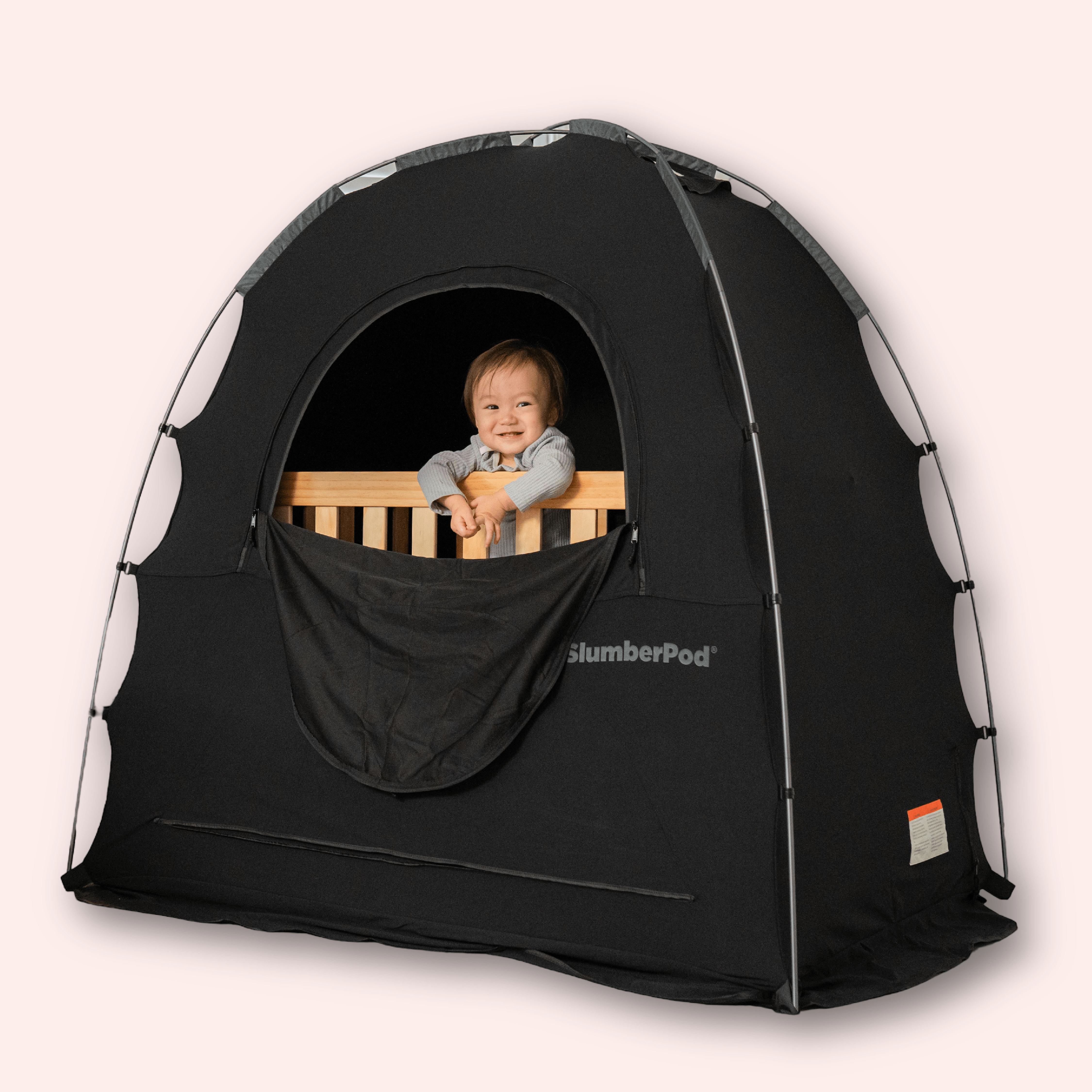
- A SlumberPod or similar sleep canopy if your child is in a travel crib. These go around the crib itself, creating total darkness regardless of room light conditions. This also lets you have a lamp on to read or prep for the day without disturbing your child.
Check our travel sleep accessories roundup for specific blackout solutions that pack well.
White Noise
A white noise machine serves double duty during jet lag: it masks environmental sounds that might wake a lightly sleeping child, and it provides a consistent sleep cue from home. If you use white noise at home, bring the same machine or a portable version. The consistency of the sound helps your child's brain associate it with sleep, even when everything else about the environment is unfamiliar.
Temperature
Hotel rooms in different countries and climates may be warmer or cooler than your child's bedroom at home. Toddlers sleep best in rooms around 68 to 72 degrees Fahrenheit. If the room is too warm, which is common in European hotels without air conditioning during summer, a small clip-on fan can help. Dress your child in lighter sleep clothes and skip the sleep sack on warm nights.
The Crib or Bed Situation
Bring your own travel crib if possible, especially for a jet lag trip. A familiar sleep space is one less variable your child's brain needs to process. If your child has been sleeping in a specific travel crib at home (and we recommend practicing with it before the trip — see our toddler sleep on vacation guide for details), that familiarity becomes even more valuable when jet lag is disrupting everything else.
For more on setting up the entire sleep environment, our vacation sleep guide goes deep on every aspect of getting toddlers to sleep away from home.
Melatonin: What Parents Need to Know
Melatonin is frequently discussed among traveling parents as a jet lag remedy. Here is the evidence-based picture.
What Melatonin Does
Melatonin is a hormone naturally produced by the pineal gland in response to darkness. It signals to the body that it is time for sleep. Supplemental melatonin can help shift the circadian clock when taken at the right time.
Melatonin and Toddlers
This is a conversation for you and your pediatrician, not a decision to make based on an internet guide. We will share what the research says, but we strongly recommend discussing dosage and timing with your child's doctor before using melatonin.
What the evidence shows:
- Low-dose melatonin (0.5 to 1 mg) given 30 to 60 minutes before the desired bedtime can help children fall asleep faster in a new time zone.
- The American Academy of Sleep Medicine notes that short-term melatonin use in children appears safe, but long-term effects are not well studied.
- Melatonin is more effective for falling asleep than for staying asleep — it helps with the "I am wide awake at bedtime" problem but less with the "I woke up at 3 AM" problem.
- Timing matters more than dose. Melatonin taken at the wrong time can actually worsen jet lag by shifting the clock in the wrong direction.
Practical considerations:
- If your pediatrician approves melatonin, use the lowest effective dose. For toddlers, this is typically 0.5 mg.
- Give it 30 to 60 minutes before the desired local bedtime.
- Use it for the first 3 to 4 nights at your destination, then stop. It is a kickstart for adjustment, not an ongoing solution.
- Melatonin is available over the counter in the US but is a prescription medication in many European countries. If traveling to Europe, bring your own supply.
Natural Alternatives
If you prefer to avoid supplemental melatonin, the most effective natural approach is aggressive light management: bright light in the morning, dim light in the evening, and total darkness for sleep. This naturally regulates melatonin production. A warm bath before bed also promotes natural melatonin release.
When to Power Through vs When to Give In
This is the hardest judgment call of jet lag management, and parents face it multiple times per day during the adjustment period.
Power Through When:
- Your toddler is tired but it is mid-morning and a nap now would destroy the schedule
- They want to go to bed at 4 PM and you know a 4 PM bedtime means a 1 AM wake-up
- They are awake at 4 AM but you know that starting the day now sets a bad precedent
- They fell asleep in the stroller at a weird time and need to be woken up
In these situations, use every tool you have — light exposure, outdoor activities, snacks, cold air, water play, novel experiences — to push your child past the sleepy phase. You are not being cruel; you are helping their body adjust.
Give In When:
- Your toddler is so overtired they are melting down and nothing is working
- It is day 1 and they have barely slept in 24 hours
- They are sick or showing signs of illness (jet lag plus illness is too much to fight simultaneously)
- You are so exhausted that your own judgment is compromised
- The schedule deviation is small (30 to 45 minutes off target is not worth a battle)
Sometimes the best thing is a 45-minute emergency nap even if it is not ideal timing. A slightly off schedule with a functional child is better than a perfect schedule with a child in complete meltdown.
The Return Home Adjustment
Here is the part nobody warns you about: coming home is often harder than going.
Why the Return Is Worse
You are exhausted. After a week of vacation with a jet-lagged toddler, you are running on empty. You do not have the energy reserves you had at the start of the trip.
Your child was just getting adjusted. For a 7 to 10 day trip, your toddler may have finally gotten on local time in the last 2 to 3 days. Now you are ripping them out of that new routine and asking them to shift back.
Real life does not wait. On vacation, you could nap when the kid napped and take things slowly. Back home, you have work, responsibilities, and a household to run. There is less margin for rough nights.
The jet lag direction may be harder. If eastbound was harder going out, westbound will be easier coming back — and vice versa. But if you struggled going east, you have already depleted your patience reserves before facing the westbound return adjustment.
Return Home Strategy
Start adjusting 2 days before you fly home. On the last 2 days of your trip, begin shifting your child's schedule back toward home time. Move bedtime and wake time by 30 minutes per day in the direction of home. This gives you a head start.
Use the flight for sleep management. On the return flight, try to align your child's sleep with what nighttime would be at home. This is easier on long overnight flights — encourage sleep during the hours that correspond to home nighttime.
Prioritize the first night home. Put your child to bed at their normal home bedtime, in their own crib or bed, with all their normal sleep cues. The familiarity of the home environment accelerates re-adjustment.
Clear your calendar for 3 days after return. Do not schedule anything demanding for the first few days home. Give everyone time to re-adjust without pressure.
Go back to the exact home routine immediately. Same wake time, same nap time, same meals, same bedtime routine. The more consistent the signals, the faster the clock resets. Do not try to "ease into" the routine — just go back to it fully on day 1.
Quick Reference: Jet Lag Action Plan
Before the trip:
- Shift schedule 15 to 30 minutes per day for 3 to 5 days before departure
- Book flights that arrive in the morning (eastbound) or evening (westbound) when possible
- Pack blackout curtains, white noise machine, and familiar sleep cues
- Practice in the travel crib at home if you are bringing one
- Discuss melatonin with your pediatrician if crossing 5+ time zones
Arrival day:
- Get outside into natural light as soon as possible
- Allow one nap, capped at 2 hours
- Push bedtime to within 1 to 1.5 hours of local time
- Maintain hydration and offer meals on local schedule
Days 2 to 3:
- Morning sunlight within an hour of waking
- Keep the sleep environment dark and cool
- Two naps are okay if needed; cap each at 1.5 to 2 hours
- Push bedtime 30 minutes closer to local time each day
- Keep activities low-key
Days 4 to 7:
- Return to normal nap schedule
- Bedtime at local time
- Full activity schedule resumes
- Continue morning light exposure
Before returning home:
- Begin shifting schedule back 2 days before departure
- Align flight sleep with home nighttime
- Clear calendar for first 3 days home
- Resume home routine immediately upon return
Jet lag with a toddler is a temporary challenge, not a permanent problem. Every family we know who has traveled internationally with young children says the same thing: it was harder than expected for the first 3 days and completely worth it by the end of the trip. Your child will adjust. You will survive. And the memories you make on the other side of that adjustment are worth every bleary-eyed 3 AM wake-up.
For more on getting your toddler to sleep away from home, our complete vacation sleep guide covers everything from travel cribs to bedtime routines. And if you are planning your first international flight with a toddler, our flying guide walks you through every step of the process.
Products Mentioned
SlumberPod
SlumberPod Original Blackout Sleep Tent for Babies and Toddlers, Blocks 95%+ Light
Read review →

Amazon Basics
Amazon Basics Portable Blackout Curtain Shade with Suction Cups, 50"x78", Moon and Stars
Read review →

Dreamegg
Dreamegg Portable Noise Machine for Baby Adult, 21 Soothing Sounds
Read review →
Yoofoss
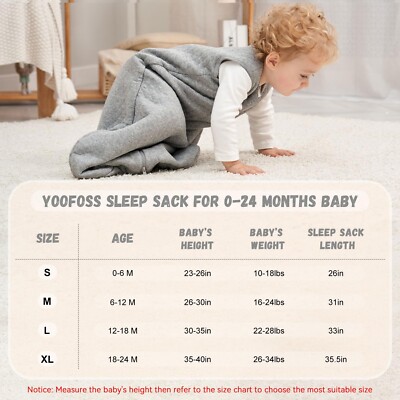
Yoofoss Baby Sleep Sack 0-6 Months, 100% Organic Cotton, TOG 0.5, 3 Pack
Read review →
HALO
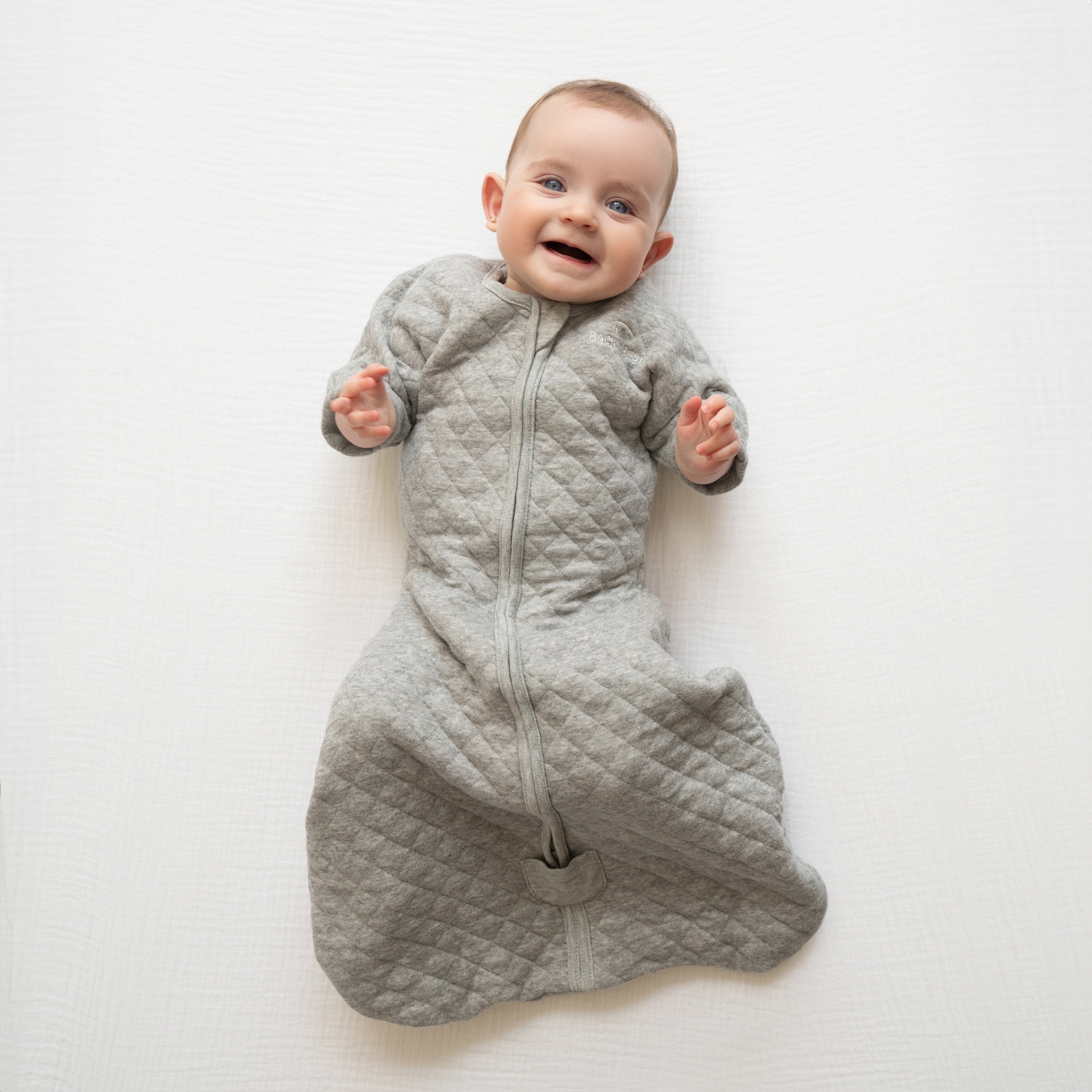
HALO Easy Transition SleepSack Wearable Blanket, 100% Cotton, 1.0 TOG
Read review →

hiccapop
Hiccapop Daydreamer Blackout Tent for Pack and Play, Portable Crib Tent
Read review →

Sleep Trainer
Toddler Sleep Training Clock, Ok-to-Wake with Red and Green Light
Read review →
Related Content

Toddler Sleep on Vacation: The Complete Survival Guide (2026)
How to get your toddler to sleep on vacation — jet lag strategies, hotel room setups, nap schedules, and the gear that makes it possible. Based on real parent experiences.

Camping with a Toddler: The Complete Parent's Guide (2026)
Complete guide to camping with a toddler — campsite selection, sleep setup, safety, gear lists, meal planning, and outdoor entertainment.
International Travel with a Toddler: The Complete Parent's Guide (2026)
Everything parents need for international travel with a toddler — passports, vaccinations, car seats abroad, food safety, time zones, packing, and emergency planning.