Disclosure: ToddlerTravelGear is reader-supported. We may earn a commission if you buy through links on our site — at no extra cost to you. Learn more
PILLANI Kids Travel Tray Review: The Road Trip Activity Station That Actually Works
Honest PILLANI Kids Travel Tray review road trips and flights — activity sheets, snack surface, car seat fit, airplane use, and more. $20.89.
There is a moment on every road trip — usually about 45 minutes in — when the snacks are gone, the tablet has lost its magic, and your toddler is making a sound somewhere between a whine and a fire alarm. What you need is a surface: flat, reachable, and stable enough to turn the back seat into a workstation. The PILLANI Kids Travel Tray promises to be that surface. This page covers exactly where it delivers and where it falls short.
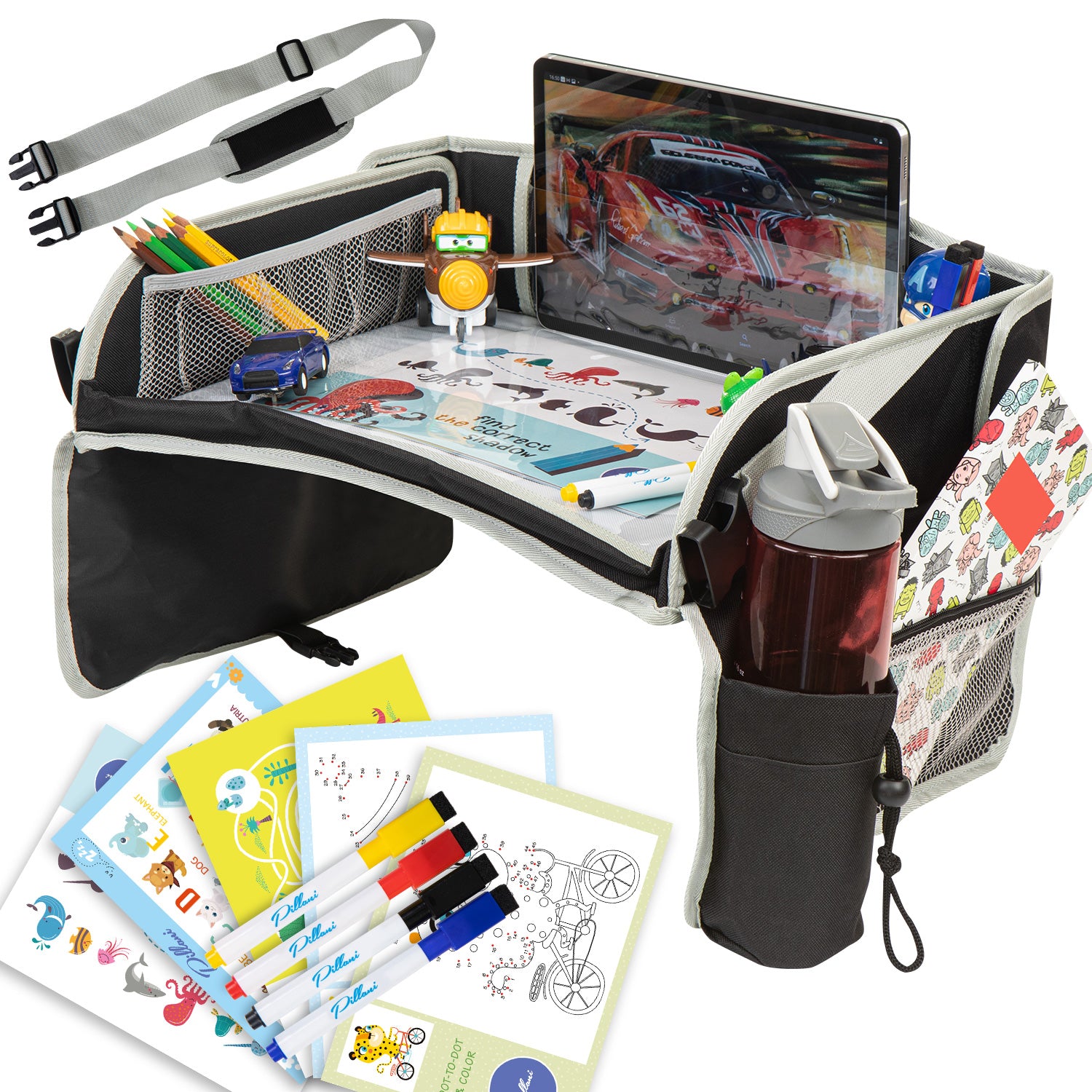
PILLANI Kids Travel Tray for Car with Activity Sheets & Pens, Toddler Lap Desk
Best Activity TrayPILLANI · $20.89
Price last checked August 15, 2026 — see Amazon for current pricing.
Includes activity sheets and pens out of the box, fits most car seats and airplane tray tables, and doubles as a solid snack surface for under $27.
Pros
- Includes activity sheets and pens
- Built-in tablet holder
- Side pockets for toys and snacks
- Works in car and airplane
Cons
- Can slide off toddler's lap
- Activity sheets are single-use
- Bulky when not collapsed
This product is featured in our Best Road Trip Gear for Toddlers roundup.
How we assessed this
We have not personally tested this product. This assessment is built from the manufacturer's published specification, the safety standards the product is certified against, and comparison with the alternatives in its category. Where a question can only be answered by handling the product — how a fabric feels, whether a mechanism stiffens after a year — we say so rather than guess. Full methodology: How We Research.
Quick Verdict
The PILLANI travel tray is a genuinely useful piece of road trip gear that earns its place in the car. The roughly 16 by 12 inch surface is large enough for coloring, snacking, and building with small toys. The included activity sheets and pens give you entertainment out of the box without scrambling for supplies. The side pockets keep crayons and snacks within reach. And at $26.95, the price is right.
But it is not perfect. The tray can slide around on smaller toddler laps, the activity sheets are single-use and you will blow through them faster than you expect, and the collapsible design — while great for storage — means the surface is not as rigid as a solid tray. On airplanes, it works but feels oversized for economy tray tables. And the tablet holder, while a nice thought, fits a narrower range of devices than you would hope.
Bottom line: If you do more than two road trips a year with a toddler aged 2 to 5, this tray pays for itself in preserved sanity on the first long drive. It is not a luxury item — it is a tool that solves a real problem.
Who This Is For
This tray makes the most sense for a specific type of family. Here is the honest breakdown.
You will love this tray if:
- You take road trips with a rear-facing or forward-facing toddler who needs something to do with their hands
- Your child is between about 2.5 and 5 years old (the sweet spot)
- You want an all-in-one solution instead of juggling separate trays, activity books, and pencil cases
- You fly occasionally and want something that pulls double duty between car and airplane
You might want to skip it if:
- Your child is under 2 — the tray is too large for most rear-facing infant setups and small laps
- You only need a snack surface — the Munchkin car seat tray does that job for $10
- Your child is over 6 — they will outgrow the activity sheets quickly and find the tray babyish
- You drive a very compact car where back seat space is already tight
Who Should Skip
- Parents of children under 2 — The tray is too large for small laps, and rear-facing car seat angles cause it to slide off constantly
- Parents of kids over 6 — The included activity sheets are too easy, the tray surface feels small, and school-age children will find it babyish
- Families who only take short drives — For trips under 30 minutes, the tray barely comes out before you arrive; the setup and cleanup are not worth it
- Parents looking for a rigid, stable surface — The collapsible design means the tray flexes when pressed, which frustrates kids who draw with heavy pressure or build with small toys
Key Features Deep Dive
The Tray Surface
The main playing surface measures approximately 16 by 12 inches, which translates to roughly the size of an open magazine. In practice, this is enough room for a coloring page and a small pile of crayons, or a plate of snacks with a sippy cup to one side. It is not enough room for a full puzzle or a board game, but that is not what you are doing in a car seat.
The surface itself has a slight texture to it — not completely smooth, not rough. This is intentional. A totally smooth surface means crayons slide, snack cups tip, and everything ends up on the floor the first time you take a curve. The PILLANI's surface has just enough grip that items stay put during normal driving. Hard braking and sharp turns are another story, but no lap tray can defeat physics.
The edges are raised slightly — maybe a quarter inch — which acts as a lip to catch rolling crayons and escaping Goldfish crackers. This is one of those small design choices that shows someone who makes this product actually watched a toddler use a flat surface in a moving vehicle. Without that lip, you would be fishing crayons out from under the car seat at every stop.
The collapsible design means the surface has some flex to it. If your child presses hard while drawing, the surface gives slightly. This is not a problem for coloring or snacking, but if your child likes to press hard with markers or build tall structures, the flex can be annoying. It is a trade-off for the ability to fold the tray flat for storage, and we think PILLANI made the right call — a rigid tray that you can never stow away would not get used as often.
Activity Sheets
The included activity sheets are one of the PILLANI's biggest selling points and one of its biggest limitations. Here is the full picture.
You get a set of activity sheets covering the basics: connect the dots, simple mazes, coloring pages, letter tracing, and matching games. The designs are cheerful and age-appropriate for the 3 to 5 range. A 2-year-old will scribble on them happily without understanding the prompts. A 6-year-old will find them too easy and declare them boring within 10 minutes.
The sheets slide into the tray's clear plastic cover, which is a nice touch. Your child draws on the cover rather than directly on the sheet, which in theory makes them reusable. In practice, this works with the included dry-erase markers but not with regular crayons or pens. If your child uses anything other than the included markers, the sheets become one-and-done.
The reality of the included pens: PILLANI includes a set of dry-erase pens. These are fine. Not great, not terrible. The colors are bright enough to keep a toddler interested, and they wipe off the plastic cover cleanly with a tissue or baby wipe. The caps are reasonably tight, which matters because a de-capped dry-erase marker in a hot car is a seat cover's worst nightmare.
Here is the problem: the pens run out. They are small markers with a limited ink supply, and an enthusiastic toddler will drain them over the course of two or three long drives. PILLANI does not sell replacement pens separately, so you are buying standard dry-erase markers from the store, which may not fit as neatly into the tray's pen holders. This is not a dealbreaker, but it is an ongoing cost and inconvenience that the marketing does not highlight.
How long do the sheets last? If you use them as intended — dry-erase markers on the plastic cover — they last indefinitely because you are wiping and reusing. But kids get bored of the same mazes and coloring pages. After the fourth or fifth road trip, your child has memorized every maze and wants new content. You are then either printing your own sheets to fit (some parents do this and it works great), buying additional activity books to cut up and insert, or just using the tray as a plain surface for their own coloring books.
Storage and Side Pockets
The PILLANI has mesh side pockets on both sides of the tray. These pockets are the unsung hero of the design. They hold crayons, markers, small toys, snack cups, and pacifiers — all the little items that otherwise end up wedged between the car seat and the door, never to be seen again until you detail the car.
The mesh stretches enough to accommodate a sippy cup or a small water bottle, but it is not structural — heavy items will sag and potentially tip the tray. Keep the pockets for lightweight items and you will be fine.
There is also a built-in tablet holder — a clear plastic pocket at the top of the tray designed to prop up a phone or tablet for screen time. It works with most phones and smaller tablets (up to about 8 inches). A full-size iPad does not fit. An iPad Mini fits but sits at an awkward angle. The tablet holder is a nice bonus feature, but if screen time is your primary goal, a dedicated headrest tablet mount does that job much better.
What We Love
Let us talk about what the PILLANI gets right, because it gets quite a bit right.
The all-in-one concept actually works. Having a surface, activities, pens, and storage pockets all integrated into one product means you grab one item from the trunk and your child is set up for the drive. No assembling a kit from separate components, no forgetting the crayons at home, no realizing you left the activity book at the last rest stop.
The raised edges save you from constant cleanup. This is the kind of feature you only appreciate after using a flat tray without edges and watching Cheerios cascade onto the floor every time you change lanes.
It converts from activity station to snack tray instantly. Wipe the surface with a baby wipe, and you go from coloring time to snack time in 10 seconds. There is no separate snack tray to install, no accessories to swap. This flexibility is essential because toddler needs change every 15 minutes, and any product that requires reconfiguration between uses is a product that stops getting used.
The collapsible design stores easily. When not in use, the tray folds reasonably flat and slides between the seat and the door, under the seat, or into a travel bag. You do not need to plan where to store it for the rest of the trip.
The price is fair. At $26.95, this is solidly in the "worth trying" category. It is not so expensive that you agonize over the purchase, and it is not so cheap that you suspect the quality is terrible. The materials feel durable enough to last through toddlerhood.
What We Don't Love
Every product review that is nothing but praise is lying to you. Here is where the PILLANI falls short.
It slides. This is the single biggest issue. The tray sits on your child's lap, held in place by their legs and the car seat harness pressing against the bottom edge. On a larger child, the thighs provide enough platform for the tray to stay put. On a smaller child — especially a 2-year-old in a rear-facing seat — there is not enough lap to anchor the tray. It slides forward, slides sideways, and eventually dumps everything onto the car seat. Some parents solve this with a non-slip pad underneath, but that is an aftermarket fix for a design problem.
The activity sheets get old fast. We covered this above, but it bears repeating: the included sheets are a great first impression, but they are not a long-term entertainment solution. After the initial novelty wears off, you are either making your own content or using the tray as a plain surface. PILLANI would do well to sell expansion packs or offer downloadable sheets, but as of this writing, they do not.
The tablet holder is an afterthought. It fits some devices, it does not fit others, and the viewing angle is fixed. A child in a rear-facing seat cannot see a tablet propped up in the holder because the angle is wrong. A child in a forward-facing seat has a better experience, but the holder still vibrates and shifts during driving. If tablet viewing is important to you, buy a separate headrest mount.
It is bulky when not collapsed. "Collapsible" does not mean "compact." The folded tray is still a 16-inch-wide flat object that takes up space. In a packed car, finding a spot for it can be a challenge. It is not backpack-friendly either — it sticks out of most diaper bags.
The pens have a limited lifespan. Small markers run out quickly when a toddler is using them enthusiastically. Replacement requires a trip to the store for generic dry-erase markers, which work fine but break the "grab and go" simplicity of the product.
Car Seat Compatibility
Parent reviews cover the PILLANI tray across several popular car seats because "fits most car seats" is a vague claim that means nothing until you try it with your specific setup.
Forward-facing car seats
| Car Seat | Fit | Notes |
|---|---|---|
| Graco 4Ever DLX | Good | Sits securely on the child's lap with the harness helping anchor the bottom edge. Enough room on either side for the mesh pockets to hang freely. |
| Britax Boulevard | Good | Similar fit to the Graco. The deeper seat shell actually helps keep the tray in position because the sides provide lateral support. |
| Chicco NextFit | Fair | Works but the narrower seat width means the tray extends past the seat edges. Not a functional problem, but the mesh pockets can press against the car door or adjacent seat. |
| Nuna Rava | Good | Wide seat shell accommodates the tray well. The tray sits flat and stable. |
| Baby Trend Trooper Slim | Fair | The slim seat (about 16.75 inches wide) does not provide as much lateral support. The tray sits higher relative to the child because the Trooper Slim's seat is narrower, which changes the ergonomics. Still usable. |
Rear-facing car seats
Rear-facing is trickier. The recline angle of a rear-facing seat means the child is leaning back, which changes the lap angle and makes the tray want to slide forward toward their knees.
| Car Seat | Fit | Notes |
|---|---|---|
| Graco 4Ever (rear-facing) | Poor | Too reclined for the tray to sit flat. Items slide forward constantly. Only works if the child actively holds the tray, which defeats the purpose. |
| Nuna Rava (rear-facing) | Poor-Fair | Slightly less reclined than the Graco, so marginally better. Still not a stable platform. |
| Chicco NextFit (rear-facing) | Poor | Same recline issues. The tray is essentially unusable as a hands-free surface. |
The verdict on rear-facing: The PILLANI tray is not designed for rear-facing use, even though the marketing does not explicitly exclude it. If your child is still rear-facing, this tray will frustrate everyone. Wait until they transition to forward-facing, or look for a tray with a strap system that attaches to the car seat.
On an Airplane Tray Table
The PILLANI markets itself as a dual car-and-airplane product. Here is how it actually performs at 30,000 feet.
Economy class: The tray fits on a standard economy tray table, but it covers the entire surface and hangs over the edges by about an inch on each side. This means the tray table becomes a shelf for the PILLANI tray, which is fine functionally but can annoy the passenger in front of you if the tray overhang contacts their seat back. The bigger issue is that the tray table itself provides the rigid support that the child's lap cannot, so ironically the PILLANI works better as a surface on an airplane than in a car seat.
The seatback pocket problem: A 16 by 12 inch tray does not fit in a seatback pocket. It fits in an overhead bin easily, or under the seat in front of you, but you cannot stash it quickly during takeoff and landing the way you can with a book or tablet. This means you are juggling it during those annoying "all personal items must be stowed" announcements.
Seat-back tray usage: When used on the seat-back tray table, the PILLANI is quite stable. The tray table provides a solid base, the raised edges keep things corralled, and the activity sheets are perfect for the "no electronics during takeoff" window. Snack time is also better because the airplane tray table's flat surface prevents the sliding issues you get on a toddler's lap.
When to use it on a plane vs. skip it: Use it during cruise when the tray table is available and you want a dedicated activity/snack surface. Skip it during boarding (too bulky to manage while getting settled), during takeoff and landing (must be stowed), and when your child is sleeping or watching a screen. On a 4-hour flight, we typically use the PILLANI tray for two separate 30-to-45 minute windows — once for activities and once for snack time.
Activity Sheets Review
The included activity sheets deserve a deeper look because they are the feature that distinguishes the PILLANI from cheaper, surface-only trays.
What you get:
- Coloring pages with toddler-friendly designs (animals, vehicles, simple scenes)
- Connect-the-dots pages (numbered 1 through 10 or 15, appropriate for ages 3 and up)
- Simple mazes (one path in, one path out, no trick dead ends)
- Letter and number tracing sheets
- Matching games (find the pair, spot the difference)
Quality assessment: The activity designs are decent. They are not Melissa & Doug quality, but they are not dollar store filler either. The illustrations are clear, the difficulty level is appropriate, and there is enough variety to keep a child engaged through a 2-hour drive. The tracing sheets are particularly useful for pre-K kids working on their letters.
The clear cover system: The sheets slide under a clear plastic cover, and the child draws on the cover with dry-erase markers. Wipe the cover, insert a new sheet, repeat. This system works well when it works — the issue is that the sheets can shift under the cover during use, especially if the child is pressing hard. A shifted sheet means the dots no longer line up and the maze walls move, which is maddening for a 4-year-old who is trying to follow the path.
DIY replacement sheets: Once the included sheets lose their novelty, you have options. Print coloring pages from free online resources, cut them to fit the tray's sheet slot, and insert them. The specification indicates that standard letter-size paper (8.5 by 11 inches) fits with minimal trimming. This effectively turns the PILLANI into an infinite activity tray, limited only by your printer ink supply and willingness to prep before trips. Some parents print road trip bingo sheets, alphabet spotting games, or custom coloring pages with their child's favorite characters. This is where the PILLANI transitions from "nice product" to "genuinely clever system."
Longevity by age:
- Age 2 to 2.5: Scribbling only. The activity sheets are meaningless to them. They will color on the surface, which is fine. Maybe 15-20 minutes of engagement per session.
- Age 3 to 4: The sweet spot. Connect the dots, mazes, and coloring pages all land perfectly. Sessions of 30-45 minutes are common if you rotate sheets.
- Age 4 to 5: Still engaged with the tracing and more complex mazes. Starting to want more challenging content than what is included.
- Age 5 to 6: Outgrowing the included sheets. Custom printed content extends the lifespan, but the child is increasingly capable of using a regular notebook and does not need the tray system.
Snack Time vs Activity Time
One of the PILLANI's best features is its ability to switch between activity mode and snack mode. But there are real-world considerations for each.
Using it as a snack tray:
The surface wipes clean easily with a baby wipe, which is critical because the transition from "coloring surface" to "eating surface" needs to be fast and hygienic. Dry-erase marker residue comes off completely with a standard wet wipe. Crayon, if your child used regular crayons instead of the included markers, requires more scrubbing.
The raised edges keep dry snacks contained — Goldfish, Cheerios, cut-up fruit, crackers. Wet or saucy foods are a different story. The tray is not waterproof, and spilled yogurt or juice will seep into the edges and the collapsible joints. If you use this as a snack tray, stick to dry finger foods.
The mesh side pockets can hold a sippy cup or small water bottle, but placing a drink in a mesh pocket on a moving vehicle is an invitation for spillage. We recommend keeping drinks in a car seat cup holder and using the mesh pockets for dry snack containers only.
The transition problem: If your child is mid-coloring and suddenly hungry (which happens approximately every 12 minutes), you need to clear the activity materials before putting food down. This means pulling out sheets, capping markers, wiping the surface, and then distributing snacks — all while driving (or while your co-pilot handles it from the front seat). It is manageable but not instant. Having a separate snack container that you can hand back without clearing the tray is a good workaround.
Cleaning & Maintenance
A toddler travel tray gets disgusting. Here is how to keep the PILLANI in working order.
Daily cleaning (after each use):
- Wipe the surface and clear cover with a baby wipe or damp cloth
- Shake out crumbs from the side pockets by turning them inside out
- Check for stray crayon or marker marks on the edges and clean immediately — dried-on marks are harder to remove
Weekly deep cleaning (during regular use):
- Remove the activity sheets and clear cover
- Wipe all surfaces with a mild soap and water solution
- Clean the mesh pockets with a damp cloth — they attract crumbs and sticky residue
- Allow everything to air dry completely before reassembling (trapped moisture leads to mildew)
What NOT to do:
- Do not machine wash the tray. The collapsible structure and internal stiffeners will not survive a washing machine.
- Do not use bleach or harsh chemicals. They will degrade the plastic cover and damage the fabric edges.
- Do not leave the tray in a hot car long-term. Heat can warp the surface and weaken the collapsible joints. Bring it inside or at least shade it when the car is parked in direct sun.
- Do not submerge it in water. The internal structure is not designed to get soaked.
Stain reality: Over months of use the tray surface develops a faint discolouration from accumulated marker residue and food contact. It is cosmetic and does not affect function. If the clear activity cover becomes too scratched or cloudy, a cut piece of clear plastic from a craft shop replaces it for a couple of dollars.
Age Range Reality
Marketing says "toddler," but the real age range is narrower than that implies.
When it works (the sweet spot: 2.5 to 5 years)
Age 2.5 to 3: The child is big enough to have a lap that supports the tray in a forward-facing seat. They can hold a marker and scribble on the surface. Activities are mostly freestyle drawing and snacking. The tray works well as a contained workspace that keeps items from falling off their lap. Sessions last 15-30 minutes before the child wants to move on to something else.
Age 3 to 4: Peak performance. The activity sheets are perfectly calibrated for this age. Mazes, dot-to-dots, coloring pages — they all land. The child is old enough to understand "draw on the cover, not the sheet" (most of the time). The tray provides 30-45 minutes of engagement per session, which is a lifetime in road trip terms. Snack tray function is also at its best because the child can eat independently from a flat surface.
Age 4 to 5: Still useful but the child is starting to need more complex activities. The included sheets are too easy. Custom printed sheets, regular coloring books, or small notebooks placed on the tray extend its life. The tray itself remains a useful surface even when the activity sheets are retired.
When it doesn't work
Under 2: The child does not have enough lap surface, cannot hold a marker effectively, and is likely rear-facing where the tray slides off constantly. Do not buy this for a 15-month-old.
Over 6: The tray is physically too small for a child this age. Their legs are longer, their interests are more advanced, and they would rather have a tablet or a chapter book. The tray feels babyish to a first-grader. You can likely repurpose it for a younger sibling, but the 6+ child has outgrown it.
Children who are very active or resistant to car seat time: The tray does not solve the fundamental problem of a child who does not want to be in a car seat. It provides a distraction, but a child who is actively fighting the harness or screaming will not be soothed by a maze. For children with sensory needs, the confinement of a tray on their lap can actually increase agitation. Know your child.
How It Compares
The PILLANI is not the only travel tray on the market. Here is how it stacks up against the main alternatives.
| Feature | PILLANI Travel Tray | Munchkin Car Seat Tray | Lusso Gear Airplane Tray Cover | DIY Baking Sheet Tray |
|---|---|---|---|---|
| Price | $26.95 | $9.99 | $33.99 | ~$8 |
| Surface size | 16 x 12 in | ~10 x 10 in | Airplane tray sized | 13 x 9 in (half sheet) |
| Activity sheets | Yes, included | No | No | No |
| Tablet holder | Yes | No | Yes (foldable stand) | No |
| Storage pockets | Yes, mesh sides | No | Yes, snack and toy pockets | No |
| Car seat use | Yes | Yes | No (airplane only) | Yes (with non-slip pad) |
| Airplane use | Yes (oversized) | No | Yes (purpose-built) | Awkward |
| Collapsible | Yes | N/A (flat tray) | Yes | No |
| Best for | All-in-one car/plane activity station | Budget car snacking only | Dedicated airplane surface | Ultra-budget hack |
vs. Munchkin Car Seat Tray ($9.99): The Munchkin is a simple, small snack tray that does one thing well. If all you need is a surface for Goldfish and a sippy cup, the Munchkin is cheaper and simpler. If you want activities, drawing, and multi-use functionality, the PILLANI justifies the price difference.
vs. Lusso Gear Airplane Tray Cover ($33.99): The Lusso Gear is purpose-built for airplanes. It covers germy tray tables, has better pockets, and includes a tablet stand. If you fly frequently and rarely road trip, the Lusso is the better buy. If you do both, the PILLANI's versatility wins — but it is not as good on airplanes as the Lusso is.
vs. the DIY baking sheet tray: Some parents use a magnetic baking sheet with magnetic toys as a car tray. Brilliant hack, but it lacks edges, pockets, and activity sheets. It is also not collapsible. If you want to test whether your child will use a travel tray before spending $27, start with the baking sheet.
Final Verdict
Let us do the math. The PILLANI costs $26.95. A single road trip with a bored toddler involves stopping every 45 minutes for "breaks" (read: tantrums), which adds 30-60 minutes to any drive. If the tray buys you even one fewer stop per trip, it pays for itself in time and sanity within two drives.
The more practical question is whether you will actually use it. And the answer depends on your family's travel habits.
It is absolutely worth it if:
- You take 3 or more road trips per year with a toddler aged 2.5 to 5
- You do not have a dedicated entertainment system in the back seat
- You want one product that handles snacks, activities, and surface needs
- You fly occasionally and want dual-purpose gear
It is probably not worth it if:
- Your child has a tablet setup that keeps them happy for hours
- You only take short drives (under 30 minutes) where the tray is not needed
- Your child is under 2 or over 6
- You already own a car seat tray you are happy with
Our take: For the target family — parents of a 3-year-old who take a few road trips a year and the occasional flight — the PILLANI is an easy recommendation. It is not a magical solution to toddler boredom, but it is a well-designed tool that meaningfully extends the window between "I'm bored" and meltdown. At under $27, the downside risk is a product that gets moderate use. The upside is a calmer car and a child who associates road trips with fun activities rather than endless restraint.
PILLANI Kids Travel Tray for Car with Activity Sheets & Pens, Toddler Lap Desk
$20.89by PILLANI
Best For
- ✓Includes activity sheets and pens
- ✓Built-in tablet holder
- ✓Side pockets for toys and snacks
Price last checked August 15, 2026and subject to change — see Amazon for current pricing. As an Amazon Associate we earn from qualifying purchases.
Frequently Asked Questions
Products Mentioned
Related Content
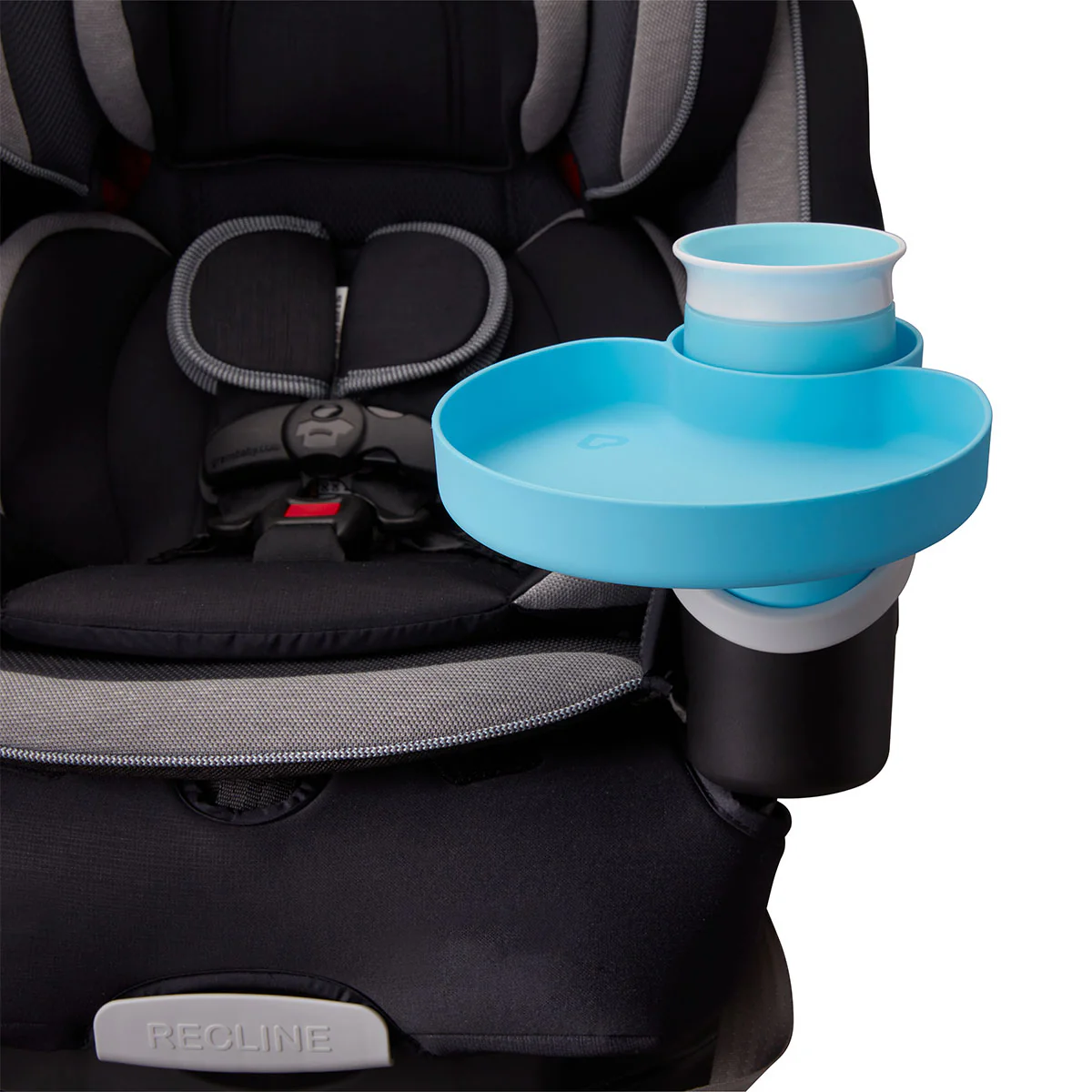
Munchkin Carseat Tray Review: The Two-Pack Sanity Saver for Road Trip Snacking
Honest Munchkin Carseat Tray review road trips — snack containment, car seat compatibility, mess reality, cleaning, and more. $19.86.
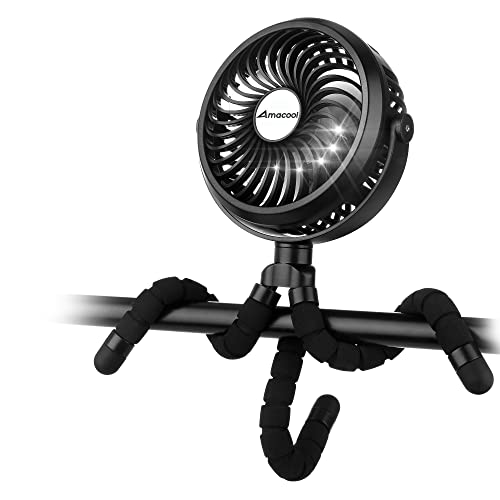
AMACOOL Stroller Fan: 2600mAh, Flexible Legs, One Real Flaw
A spec-led look at the AMACOOL clip-on stroller fan: 2600mAh, 2.5-10 hours, flexible tripod legs, and the non-replaceable battery. $21.99.
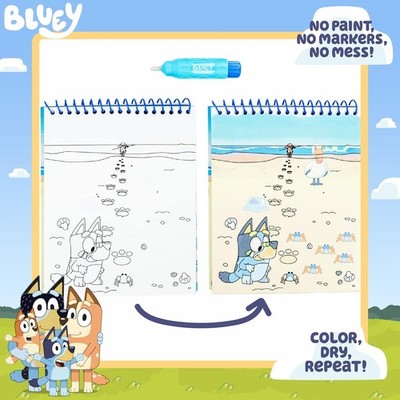
Bluey Aqua Art Review: The $5 Mess-Free Activity That Buys 20 Minutes of Car Peace
Honest Bluey Aqua Art review — reusable water-reveal pages, Bluey characters, includes water pen. $5.99. Specs, trade-offs, and who should skip it.