Flying With a Baby: A Guide for the First 12 Months
Flying with a baby under 12 months: how young is too young, lap infant or own seat, bassinets, feeding for ear pressure, TSA milk rules and safe sleep.
A healthy baby can usually fly within the first weeks of life: the American Academy of Pediatrics says it is generally safe once a newborn is at least 7 days old, though waiting until 2 to 3 months lowers the risk of picking up an illness in crowded airports. Your baby may ride on your lap until their second birthday, but the FAA and the AAP both say the safest place is a rear-facing, aircraft-labeled car seat in a seat you have paid for. Feed during takeoff and descent, keep milk and formula in an easy-to-reach bag for security, and plan sleep around a flat or buckled-in space.
Quick answers
- Youngest age: AAP says 7 days is generally safe; 2–3 months is better. Airlines set their own minimum ages, so check yours before you book.
- Safest seat: a rear-facing car seat labeled for aircraft, in a purchased seat.
- Ears: breast, bottle or pacifier during takeoff and landing.
- Security: formula, breast milk and baby food over 3.4 oz are allowed in your carry-on. Declare them.
This page goes deep on the first year. For toddlers, seat choice at age 2, and meltdown plans, see our complete guide to flying with a toddler.
How young can a baby fly?
The AAP's Flying with Baby page says it is "generally safe to fly when your newborn is at least 7 days old," and that ideally you would wait until your baby is 2 to 3 months old. The AAP's main concern is infection: air travel and crowded airports can raise a newborn's risk of catching colds, flu and other illnesses. Airlines also set their own minimum ages, which differ by carrier. The AAP's travel safety tips add that you should talk to your pediatrician before flying with a newborn or infant who has chronic heart or lung problems or respiratory symptoms.
Should your baby fly on your lap or in their own seat?
US rules let a child under 2 fly on an adult's lap, and on domestic flights that usually means no fare. The FAA says the safest place for a child under 2 is an approved child restraint system, "not in your lap," because your arms cannot hold a child securely in unexpected turbulence. The AAP's short answer to the lap question is "no": it notes that turbulence is the leading cause of children's injuries on airplanes. Buying a ticket is the only way to guarantee you can use a car seat on board.
If a ticket is out of reach, the AAP suggests asking the airline whether you can use an empty seat for the car seat and choosing quieter days and times. Our lap child vs car seat vs CARES guide lays out the decision by age and weight.
Which car seat can a baby use on a plane?
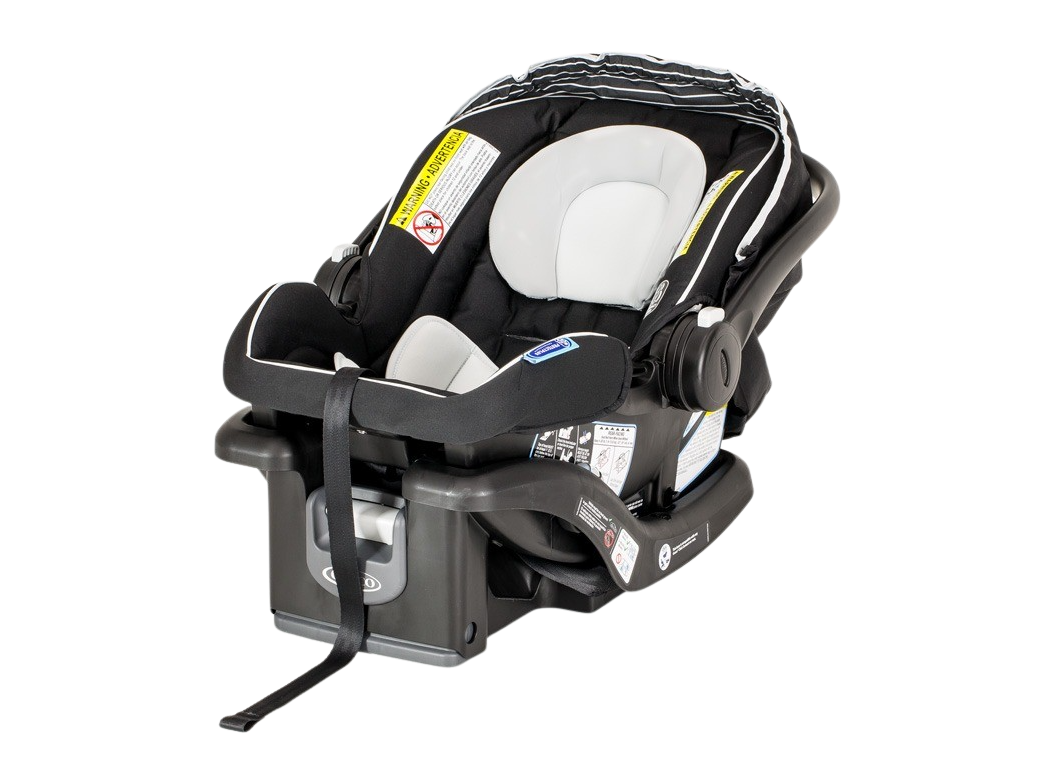
A hard-backed, rear-facing car seat with this printed statement on its label: "This restraint is certified for use in motor vehicles and aircraft." The FAA also accepts seats approved by a foreign government that carry that government's required label. Install it rear-facing, following the manual, with the aircraft lap belt. The CARES harness is not an option for babies: it is certified only for children 22 to 44 lb who can sit upright alone.
An infant carrier is usually the lightest choice for the first year. The Graco SnugRide Lite LX is rated 4–30 lb rear-facing and the carrier weighs about 7 lb; check its label for the aircraft statement before you book a seat for it. Our FAA-approved car seat picks compare other options.
Where on the plane should a car seat go?
Usually the window. The AAP says a rear-facing car seat belongs in a window seat so it does not block anyone's exit, and that aisle seats are riskier for babies because of hot drinks, service carts and items falling from overhead bins. Airlines set their own rules on which rows can take a car seat, so check yours when you choose seats. If an approved, ticketed seat does not fit where you are assigned, the FAA says the airline must find it another seat in the same class.
Can you book a bassinet on the plane?
On some long-haul flights, yes. Some airlines offer bassinets ("sky cots") that attach to the bulkhead wall, and some premium cabins have them built into the seat area. The AAP notes that most airlines offering them require babies to be under about 6 months or 20 pounds and not yet sitting up alone, but each airline sets its own limits and not every aircraft or route has them. Request one when you book, confirm it before the flight, and expect to book a bulkhead seat. During takeoff, landing and turbulence your baby must come out and be held on your lap or buckled into a car seat.
How do you help a baby's ears during takeoff and landing?
Give your baby something to suck or swallow. The AAP says drinking from the breast or a bottle, or sucking on a pacifier, during takeoff and landing can ease the discomfort of pressure changes. Swallowing opens the eustachian tube, the small passage between the middle ear and the back of the throat, which lets pressure even out, according to the National Library of Medicine's MedlinePlus. The AAP's travel safety tips single out the descent, so start a feed when the plane begins to descend rather than at touchdown.
If your baby has had an ear infection or ear surgery in the two weeks before your trip, the AAP says to ask your doctor whether it is OK to fly. If your baby has a cold or an ear infection, ask your pediatrician before the trip whether a pain reliever is appropriate. Our guide to helping a child's ears on a plane covers timing and warning signs in more detail.
What baby milk and food can you take through TSA?
More than the usual 3.4 ounces. The TSA's traveling with children page allows formula, breast milk, toddler drinks and baby food, including puree pouches, in carry-on bags in quantities over 3.4 oz (100 ml), and they do not need to fit in a quart-sized bag. Ice packs, freezer packs and gel packs are allowed whether or not breast milk is present. Tell the officer at the start of screening and take these items out for separate screening. TSA recommends clear bottles over bags or pouches, which may need extra screening.
If you do not want milk or formula X-rayed or opened, tell the officer. You will then go through additional screening. Our TSA rules for baby food, formula and breast milk covers the options step by step.
Pumping or nursing on the trip? Our pumping and breastfeeding when you fly guide covers airport lactation spaces and in-flight pumping.
Can you bring a breast pump on the plane?
Yes. TSA's breast pump page lists breast pumps as allowed in both carry-on and checked bags, with the final decision resting with the officer at the checkpoint. Your baby does not need to be traveling with you for you to carry breast milk and cooling accessories through security, according to the TSA's breast milk page.
Can you wear your baby through airport security?
Usually, yes. The TSA says infants may be carried through the walk-through metal detector in a sling or carrier, though this may lead to additional screening. Strollers, car seats and carriers you are not wearing go through the X-ray. On the plane, the FAA prohibits using a baby carrier during taxi, takeoff and landing, so take your baby out and hold them or buckle them into their car seat for those phases. Whether you can use a carrier during cruise is up to your airline. Our travel baby carrier roundup compares soft carriers that suit airports.
Where do you change a diaper on a plane?
In the lavatory, if it has a fold-down changing table. Not every aircraft has one, so ask a flight attendant when you board. The AAP suggests changing your baby right before boarding, dressing them in outfits that are quick to change in a small space, and packing a disposable changing pad, plastic bags for soiled diapers and clothes, and a change of clothes or two. If there is no table, some parents use the closed toilet lid with a changing pad; the AAP says to keep one hand on your baby the whole time if you do. Skip the tray table, which other passengers eat from.
How can a baby sleep safely on a plane?
Buckled into their car seat is safest. The AAP says a baby should be buckled into a car seat or held on your lap during takeoff, turbulence and landing. If your baby sleeps on your lap, stay awake and alert and check that their face is uncovered and they can breathe easily. In a bassinet, the surface should be firm and flat with no blankets, pillows or stuffed animals.
Do not lay your baby on pillows, an inflatable seat extender or an inclined product to sleep. The AAP's safe sleep guidance says any surface that inclines more than 10 degrees is not safe for infant sleep, and its flying page notes babies under 12 months are safest in their own space, so sleeper-seat setups only make sense after the first birthday.
What should you pack in the diaper bag?
Pack for the flight plus a long delay, and keep everything you need with the seatbelt sign on in the bag under the seat:
- Diapers, wipes, a disposable changing pad and plastic bags
- Two changes of clothes for your baby and a spare top for you
- Formula, pumped milk or feeding supplies, plus extra for delays
- Pacifiers and a clip, burp cloths, a light layer (cabin temperatures vary)
- Earmuffs if you want to cut cabin noise
- Your baby's documents and any medicine your pediatrician has advised
Our toddler packing list covers the rest of the trip.
What documents does a lap infant need?
For a flight within the United States, the AAP notes that a baby traveling with an adult does not need ID at TSA checkpoints and that REAL ID rules do not apply to children. Your airline may still ask for proof of age, such as a birth certificate or passport, when you book a lap infant. Carry a copy.
For any international flight, your baby needs their own valid passport. The AAP explains that you apply in person with your baby, using Form DS-11, and bring the birth certificate and passport photos showing only your baby. Check the US Department of State's passport pages for current requirements and processing times, and the entry rules of every country on your route.
Flight-day checklist
- Seat purchased for the car seat, or bassinet requested and confirmed
- Car seat label checked for the aircraft statement
- Milk, formula and baby food in a separate bag for screening
- Feeding or pacifier ready for takeoff and for the start of descent
- Changing kit, two outfits and plastic bags in the under-seat bag
How we assessed this: This guide is based on FAA, TSA and AAP guidance (checked October 2026) and the manufacturer specifications of the products linked. We have not tested these products. Airline age, bassinet and seating policies vary; check yours before you book.
Disclosure: ToddlerTravelGear is reader-supported. We may earn a commission if you buy through links on our site — at no extra cost to you. As an Amazon Associate, we earn from qualifying purchases. Learn more
Frequently Asked Questions
Products Mentioned
Related Content
Flying Alone With a Toddler: A Solo Parent's Plan
How to fly solo with a toddler: booking flights and seats, packing one bag, getting through security alone, lavatory trips, connections and documents.

Gate Check or Counter Check Your Stroller? How to Decide
When to keep the stroller to the gate, when to check it with your bags, how gate-checking works step by step, and what to do if it comes back damaged.
How to Help a Toddler's Ears on a Plane
Why a toddler's ears hurt on a plane, how drinking and snacks on descent help, flying with a cold or ear infection, and when to call the doctor afterward.