Flying Alone With a Toddler: A Solo Parent's Plan
How to fly solo with a toddler: booking flights and seats, packing one bag, getting through security alone, lavatory trips, connections and documents.
Flying alone with a toddler works when you cut the number of things you have to carry and the number of decisions you have to make on the day. Book a nonstop if you can, pick a window-and-aisle pair, bring one bag you can wear and one way to move your child, and check everything else. At security you can ask for help, and children 12 and under keep their shoes on. On board, take your toddler with you to the lavatory and keep the bag you need at your feet, not in the overhead bin.
Quick plan
- Book: nonstop, at a time your child is usually calm, with two seats together.
- Pack: one backpack, one stroller or carrier, everything else checked.
- Under 2: a lap seat is allowed until the second birthday, but the FAA says a car seat in a purchased seat is safest.
- Security: call TSA Cares ahead if you want help, and use the family lane if there is one.
- On board: snacks and activities in a small pouch you can reach with the seatbelt sign on.
For the general guide to flying with a toddler, including seat choice, ears and meltdowns, see our complete guide to flying with a toddler. This page focuses on what changes when you are the only adult.
What flight should you book when you fly alone?
A nonstop, if the price and schedule allow. A connection alone means getting your child, your bag and a stroller off one plane and onto another, often with a diaper change and a meal in between. If you must connect, choose a longer layover over a tight one, so a late arrival or a slow walk does not turn into a sprint. A flight near nap time can help if your child sleeps well on the move, and an early flight leaves more of the day to recover from a delay. Pick the time your child copes with best, not the time that is cheapest.
Which seats work best for a solo parent?
Two seats together, usually a window for your child and the middle or aisle for you. A window seat gives your toddler a wall and a view and keeps them away from the aisle cart. If you are using a car seat, airlines set their own rules on which seats can take one, usually a window, so check with your airline when you book. Book seats early, or at least confirm that you are seated next to your child, since seat assignment policies vary by airline.
Does your toddler need their own seat?
From the second birthday, yes: children under 2 may fly as lap children, and from 2 they need a ticket. Under 2, the FAA says the safest place is an approved car seat or device in their own seat, "not in your lap," and that buying a ticket is the only way to guarantee you can use one.
For a solo parent there is a practical case too: a second seat gives your child somewhere to sit while you eat, open the bag or rest your arms.
Our lap child vs car seat vs CARES guide walks through the choice by age and weight.
Car seat or CARES when you are alone?
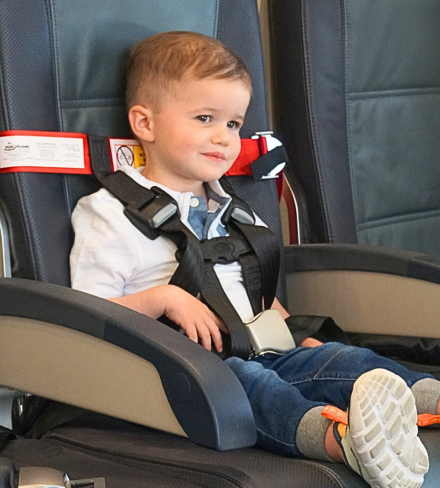
It comes down to what you can carry. A car seat that is labeled for aircraft protects your child on board and gives you a seat at your destination, but it is one more large item to move through the terminal alone. The CARES harness weighs about 1 lb and fits in a bag, but it is aircraft-only and certified for children 22 to 44 lb, up to 40 inches tall, who can sit upright alone in their own seat. If you will need a car seat on arrival, consider renting one there or checking yours.
What gear should a solo parent bring?
As little as you can manage with one free hand. A workable setup is a backpack (not a shoulder bag), one way to move your child, and everything else checked at the counter. The backpack holds the in-flight kit: diapers, wipes, snacks, a change of clothes for your child and a spare top for you, water, any medicine and the documents.
Stroller or carrier?
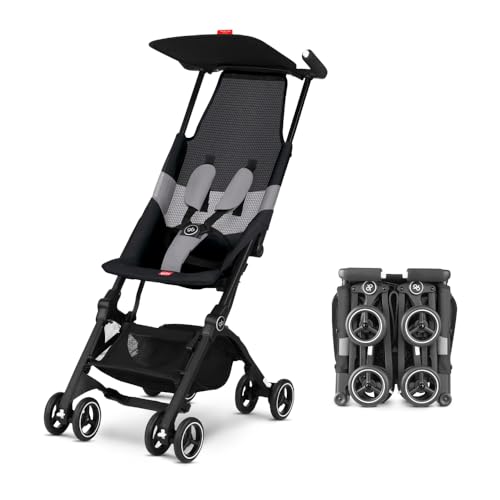
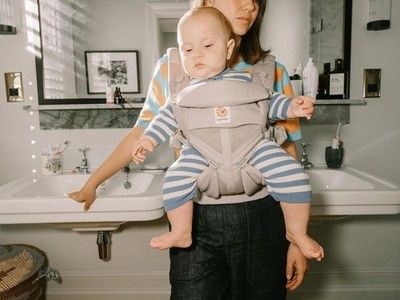
A compact stroller carries the bag as well as the child, which matters more when you are alone. A model like the gb Pockit Air All-Terrain, about 10 lb and sold as hand-luggage compliant, can roll right to the plane door (check its folded size against your airline's carry-on limits). A soft carrier such as the Ergobaby Omni Classic, rated for 7 to 45 lb, leaves both hands free and works on stairs and jet bridges, but it puts all the weight on you. Some parents bring both. Our gate check vs counter check guide recommends gate-checking the stroller when you fly alone, and our travel stroller roundup compares light options.
How do you get through security alone with a toddler?
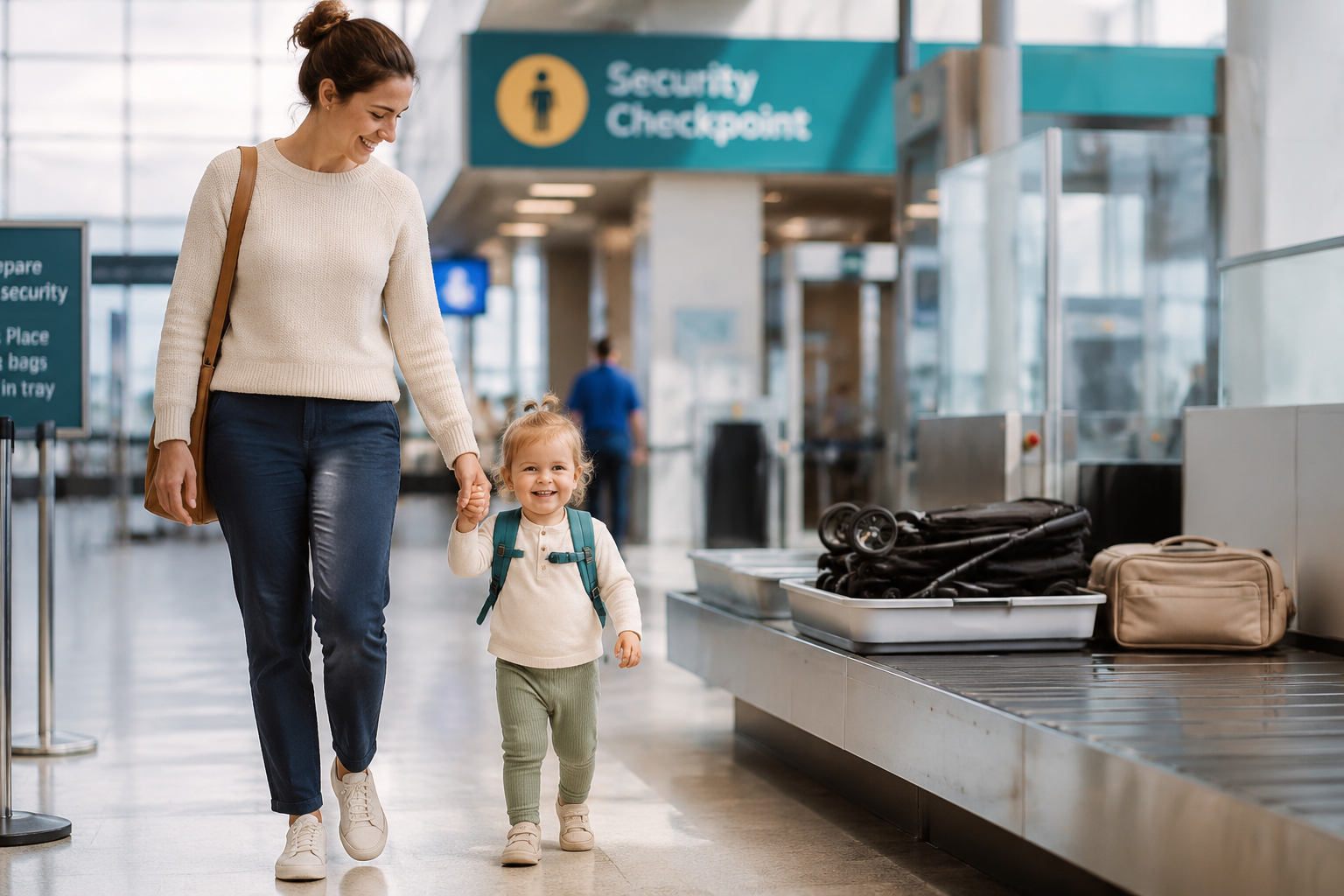
Get everything ready before you reach the belt: liquids and any milk or snacks over 3.4 oz in one pouch, electronics where you can reach them, and your child's shoes left on. The TSA's traveling with children page says children 12 and under can keep their shoes, light jackets and headwear on, and that children will not be separated from their parent or guardian. Strollers, carriers and car seats must go through the X-ray, so you will take your child out and carry them through the metal detector. A child who can walk alone may walk through separately.
Can you ask TSA for help?
Yes. TSA Cares takes calls 72 hours before travel with questions about screening and what to expect, and you can call to request assistance at the checkpoint. The TSA lists the TSA Cares line as (855) 787-2227. If you have TSA PreCheck, the TSA's PreCheck for families page says children 17 and under can join a parent in the PreCheck lane. Our TSA guide to baby and toddler items lists what you can bring.
Should you board early or last?
It depends on what you are carrying. Boarding early gives you time to install a car seat, stow the bag and settle your child before the aisle fills. Boarding last cuts the time a restless toddler spends in a seat. Family boarding is set by each airline and is not offered on every flight, so check with your airline or ask at the gate. If you have a car seat, early boarding usually makes sense. Without one, a toddler who has been walking the terminal may be better off boarding later.
How do you take a toddler to the plane lavatory alone?
Take your child with you. Do not leave a toddler alone in their seat, even asleep. Go when the seatbelt sign is off and before the service cart blocks the aisle, and bring only a small pouch with a diaper, wipes and a bag. Most airplane lavatories are small, so a standing diaper change, or one on the changing table if your aircraft has one, is usually quicker than undressing a child on a lid. Ask a flight attendant when you board whether the lavatory has a changing table. If you need to go yourself, a toddler who can stand can wait in the lavatory with you.
What keeps a toddler busy when you are the only adult?
Things you can hand over one at a time without standing up. Pack snacks in small containers, a few new or long-hidden toys, stickers and a tablet with downloaded shows and child-size headphones. Keep the pouch for these at your feet, because you cannot reach the overhead bin with the seatbelt sign on and a child on your lap. Walk the aisle with your child when the sign is off. Our plane entertainment guide has ideas by age.
Is it OK to ask other passengers for help?
Yes, within limits. Accepting an offer to lift your bag into the overhead bin or to hold your coffee is fine. Ask a flight attendant before you ask a stranger, for things like extra water or warming food. Do not hand your child to someone you do not know. Tell the crew if you need to step away for a moment to fetch something, and take your child with you whenever you can.
How do you handle a connection alone?
Plan it before you land. Look up your arrival and departure gates, find the nearest family restroom on the terminal map, and decide whether you have time for a meal. Wait for the aisle to clear before getting off so you can gather the bag and your child without pressure, and collect a gate-checked stroller at the aircraft door. If a delay makes you miss the connection, go straight to the airline's service desk or app; there is no need to drag a toddler through a long line if the app can rebook you. Our airport guide covers layover timing.
What documents does one parent need to fly abroad with a child?
Your child needs their own passport for any international flight. When one parent travels alone with a child, many countries and some airlines may ask for proof that the other parent agrees to the trip. A signed letter of consent from the other parent, often notarized, with the travel dates, destinations and a copy of their ID, is the document most commonly requested. Carry your child's birth certificate as proof of your relationship, plus custody papers if they apply. Requirements differ by country, so check with the destination's embassy before you book. Our international travel guide covers passports and documents in more detail.
Solo flight checklist
- Nonstop or a long connection, at your child's best time of day
- Two seats together confirmed, car seat label checked if you are bringing one
- One backpack, one stroller or carrier, everything else checked
- In-flight pouch: snacks, activities, diaper, wipes, bag, small change of clothes
- Liquids and food over 3.4 oz in one pouch for security
- Gate maps and family restroom locations for any connection
- Passport, consent letter and birth certificate for international trips
How we assessed this: This guide is based on FAA and TSA guidance checked in October 2026 and the manufacturers' specifications for the products linked. We have not tested these products. Airline boarding, seating and car seat policies vary, so check yours before you book.
Disclosure: ToddlerTravelGear is reader-supported. We may earn a commission if you buy through links on our site — at no extra cost to you. As an Amazon Associate, we earn from qualifying purchases. Learn more
Frequently Asked Questions
Products Mentioned
Related Content
Flying With a Toddler: Seats, Security, Ears and Meltdowns (2026)
Flying with a toddler from booking to landing: lap child and second-birthday rules, FAA car seat advice, TSA formula rules, ears and age-by-age tips.
Navigating Airports With a Toddler: Security, Gate-Checking and Layovers
How TSA screens toddlers, what happens to the stroller and car seat, gate-checking basics, layover timing, and keeping a toddler safe curb to plane.

Gate Check or Counter Check Your Stroller? How to Decide
When to keep the stroller to the gate, when to check it with your bags, how gate-checking works step by step, and what to do if it comes back damaged.