Disclosure: ToddlerTravelGear is reader-supported. We may earn a commission if you buy through links on our site — at no extra cost to you. Learn more
CARES Airplane Harness Review: The Only FAA-Approved Alternative to Lugging a Car Seat on a Plane
Honest CARES airplane harness review — the only FAA-approved alternative to a car seat on planes. $79.98. Specs, trade-offs, and who should skip it.
The gap between a calm flight and a miserable one with a toddler is usually about forty minutes of attention span. The AmSafe CARES Child Airplane Travel Harness is $79.99, ~1 lb, rated 22–44 lbs. This page covers what it does well, what it does not, and the ages it actually suits.
The trade-off worth knowing before you buy: only forward-facing.
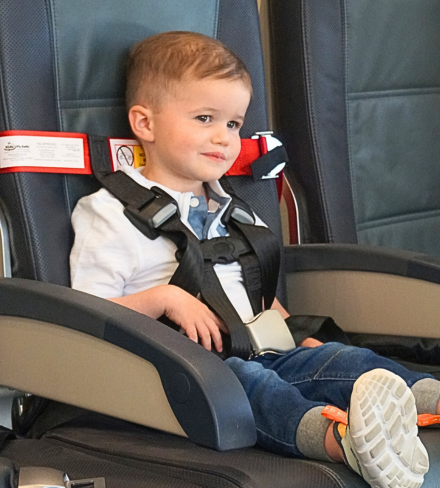
CARES Child Airplane Travel Harness, FAA Approved Safety Restraint System
Best for FlyingAmSafe · $79.99
Price last checked August 15, 2026 — see Amazon for current pricing.
The only FAA-approved car seat alternative — weighs 1 lb, fits in a stuff sack, installs in 60 seconds.
Pros
- Only FAA-approved harness alternative to car seat
- Weighs just 1 lb
- Fits in a small stuff sack
- Easy to install on any airplane seat
Cons
- Only forward-facing
- Limited weight range 22–44 lbs
- Expensive for a harness
- Some flight attendants unfamiliar with it
This product is featured in our Best Airplane Comfort & Entertainment roundup.
Read this before you buy: stock, and the lookalikes
The genuine CARES harness goes in and out of stock on Amazon. At the time of our last price check the listing showed a future availability date rather than an immediate ship. If that is what you see, it usually returns within a few weeks — but do not let an empty listing push you into the alternative below.
Search results are full of unapproved lookalikes. Products sold as "cares harness", "child airplane safety harness" and similar, typically at $20–$40, are not the AmSafe CARES device and are not FAA-approved. Some copy the CARES name outright. An unapproved harness may be refused by cabin crew, and in an accident it has not been tested against the standard the real one is certified to.
How to tell them apart: the genuine article is made by AmSafe, sold under CARES / Kids Fly Safe, carries the FAA approval statement printed on the red webbing, and costs around $80. If it is cheap and the brand is unfamiliar, it is not the certified device.
If you need a restraint before stock returns, the correct fallback is an FAA-approved car seat — not a cheaper harness.
How we assessed this
We have not personally tested this product. This assessment is built from the manufacturer's published specification, the safety standards the product is certified against, and comparison with the alternatives in its category. Where a question can only be answered by handling the product — how a fabric feels, whether a mechanism stiffens after a year — we say so rather than guess. Full methodology: How We Research.
Quick Verdict
The CARES harness eliminates the single worst part of flying with a toddler: the car seat. For children between 22 and 44 pounds who fly in their own seat, it provides FAA-approved restraint in a one-pound package that installs in under a minute. The trade-off is cost — about $80 for what amounts to nylon webbing and a buckle — and the fact that it only works forward-facing, so children under two who should be rear-facing are better served by a car seat. For families who fly even twice a year with a toddler, the CARES harness pays for itself in reduced stress on the first trip.
Who This Is For
- Families who fly regularly — the weight and space savings compound with every flight
- Parents done with hauling car seats through airports — this replaces 25 pounds with 1 pound
- Toddlers 22–44 lbs who sit in their own seat — the sweet spot is roughly ages 2–4
- Anyone who values simplicity — install takes 60 seconds, no LATCH system or belt routing
Who Should Skip
- Children under 22 lbs — below the minimum weight limit, a car seat is required
- Parents who want rear-facing restraint on planes — the CARES is forward-facing only
- Families who need a car seat at their destination — the CARES does not replace a car seat for ground transportation
- Children over 44 lbs — above the weight limit, use the airplane lap belt alone
Key Features Deep Dive
FAA Approval
The CARES harness is the only product other than a car seat that the FAA has approved for use as a child restraint on airplanes. This is not marketing language — it carries an actual FAA Technical Standard Order (TSO-C100b) designation. This means it has been crash-tested and approved for use during takeoff, landing, and turbulence. Every other product marketed for airplane child safety — the inflatable belts, the belly bands, the vest-style harnesses — is not FAA-approved and technically cannot be used during taxi, takeoff, and landing.
The FAA approval also means flight attendants should recognise it — though recognition is not universal. The device has been approved since 2006, but it appears on far fewer flights than a car seat does, and crew familiarity varies by airline and by individual. The approval label is sewn into the harness for exactly this reason. Keep it visible during boarding and installation; if a crew member questions the device, the label settles it.
One-Pound, Stuff-Sack Design
The entire harness weighs approximately one pound and compresses into its own stuff sack — a pouch roughly the size of a grapefruit, small enough for an outer pocket of a carry-on. Compare this to a convertible car seat (15–30 pounds, requiring either a separate bag or gate-checking) or even a travel car seat like the Baby Trend Trooper Slim (about 12 pounds, still awkward to carry).
The weight difference changes the airport experience fundamentally. Instead of managing a stroller, a car seat, carry-on bags, and a toddler, you manage a stroller, carry-on bags, and a toddler. One fewer bulky item makes every transition — security, gate, boarding, deplaning — noticeably easier.
60-Second Installation
Installation is straightforward: loop the strap around the airplane seat back above the headrest area, buckle it, pull the two shoulder straps down over the seat, and buckle the harness across the child's chest. The airplane lap belt goes across the child's lap as normal, and the CARES harness adds shoulder restraint on top.
Expect the first installation to take a few minutes while you work through the instruction card, and well under a minute once the sequence is familiar. It is worth practising once at home rather than learning it in a boarding queue.
The harness adjusts using simple webbing sliders — the same mechanism as a backpack strap. Tightening or loosening for a different-sized child is a seconds-long job, so families sharing one harness between siblings can swap it over quickly. Used for a single child, it can stay set trip to trip.
Forward-Facing Only
The CARES harness only works in the forward-facing position. The child must sit upright in their own seat facing forward, with the airplane lap belt across their lap and the CARES shoulder strness over their shoulders. There is no rear-facing configuration.
For children over two years old, this is not a limitation — they would be forward-facing in a car seat on the plane anyway. For children under two who are still best served by rear-facing restraint, a car seat remains the better option for air travel. The AAP recommends rear-facing as long as possible, and the CARES harness does not support this.
What We Love
The airport experience changes completely. This is the core value. Anyone who has hauled a car seat through an airport knows the specific misery of it — the weight, the bulk, the awkward shape, the squeeze down the aisle. The CARES harness replaces all of that with a pouch in your bag. That is the whole reason the product exists, and it is the reason it costs what it does for what is, materially, webbing and a buckle.
Installation is genuinely fast. Installing a car seat on an aircraft using the lap belt is the slow, awkward alternative — belt routing, angle checks, and a boarding queue backing up behind you. The CARES installs in under a minute with no belt threading, no LATCH connections, and no angle adjustments. You loop, buckle, and adjust. Done.
The CARES chest buckle is harder for small hands to operate than an aircraft lap belt, and the shoulder straps act as a physical reminder to stay seated. In turbulence, that shoulder restraint is the difference between a lap belt and a certified harness.
It packs like nothing. One pound in a stuff sack — small enough that it disappears into a bag until you need it. For families counting every ounce of carry-on space, this is the polar opposite of a car seat.
What We Don't Love
$83 for webbing and a buckle feels steep. The materials are simple — nylon webbing, a plastic buckle, and the stuff sack. The FAA testing and certification process is what you are paying for, not the materials. It is a fair price for what it does, but the sticker shock is real when you first see it.
It does not replace a car seat at your destination. The CARES is an airplane-only product. If you need a car seat for taxis, rental cars, or driving at your destination, you still need to bring or rent a car seat. The CARES saves you from carrying a car seat onto the plane, but not from the car seat itself.
Some flight attendants do not know what it is. Despite being FAA-approved since 2006, the harness remains unfamiliar to some crew, and being asked to remove it before you can point at the label is a documented experience among buyers. Keep the label visible and be prepared to explain the device briefly. This is a friction point, not a dealbreaker.
It requires the child to have their own seat. The CARES does not work for lap infants. Your child needs a purchased seat. For families who have been flying with a lap infant and are transitioning to a paid seat, this is an additional cost consideration — though any restraint system requires a purchased seat.
How It Compares
vs. Bringing a car seat on the plane: The car seat provides rear-facing capability and is free to gate-check. But it weighs 15–30 pounds, requires installation using the airplane belt, takes up significant gate and aisle space, and must be carried or wheeled through the airport. For children over 22 pounds who are forward-facing, the CARES provides equivalent FAA-approved restraint at one pound.
vs. Baby Trend Trooper Slim on the plane ($96): The Trooper Slim is a relatively light full car seat at about 12 pounds and doubles as a car seat at your destination. If you need a car seat for ground transport anyway, the Trooper Slim may be more practical. If you have a car seat waiting at your destination (or are renting one), the CARES at 1 pound is far easier to travel with.
vs. Lap belt only: Children over two can legally sit in an airplane seat using only the lap belt. The CARES adds shoulder restraint, which provides significantly better protection during turbulence and emergency deceleration. The FAA and NTSB recommend restraining children rather than relying on the lap belt alone. The $83 cost of the CARES is a reasonable investment in safety.
CARES Child Airplane Travel Harness, FAA Approved Safety Restraint System
$79.99by AmSafe
Best For
- ✓Only FAA-approved harness alternative to car seat
- ✓Weighs just 1 lb
- ✓Fits in a small stuff sack
Price last checked August 15, 2026and subject to change — see Amazon for current pricing. As an Amazon Associate we earn from qualifying purchases.
Final Verdict
The CARES harness answers a question that every parent who flies with a toddler eventually asks: is there any way to avoid carrying this car seat through the airport? The answer is yes, and it weighs one pound. For children in the 22–44 pound range who fly in their own seat, the CARES provides FAA-approved restraint that installs in under a minute and packs in a stuff sack. It does not replace a car seat for ground transportation, and it does not work for rear-facing children. But within its intended use case — keeping your toddler safely restrained on an airplane without the burden of a car seat — it is the only product that exists, and it works exceptionally well.
For a family that flies more than once or twice a year with a child in the 22–44 lb range, the case for the CARES harness is straightforward: it is the only certified way to avoid carrying a car seat through an airport. The price feels steep for webbing and a buckle, and it is — but it is priced against the certification and the alternative it replaces, not against its materials.
Frequently Asked Questions
Products Mentioned
Related Content
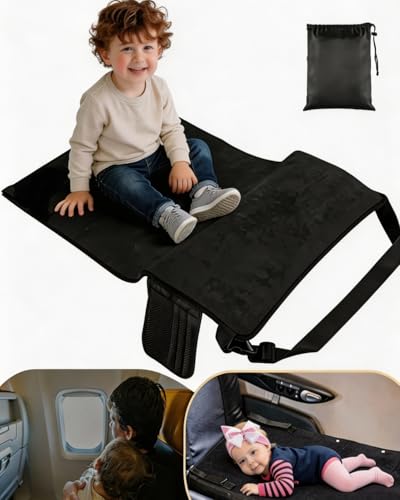
SkyCradleNap Toddler Airplane Bed: Read the Airline Rules First
A spec-led look at the SkyCradleNap toddler airplane bed: under 1 lb, 55 lb limit, and the airline-policy problem that decides whether it is usable at all. $25.99.
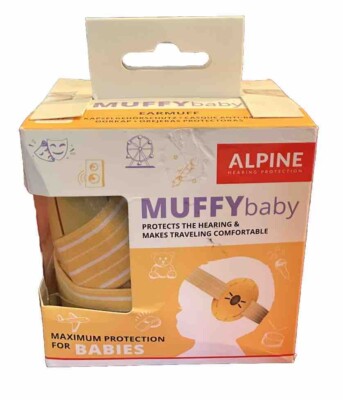
Alpine Muffy Baby Review: Hearing Protection That Actually Stays on a Baby's Head
Honest Alpine Muffy Baby review — CE & ANSI certified noise reduction earmuffs for babies 0–36 months. $30.99. Specs, trade-offs, and who should skip it.
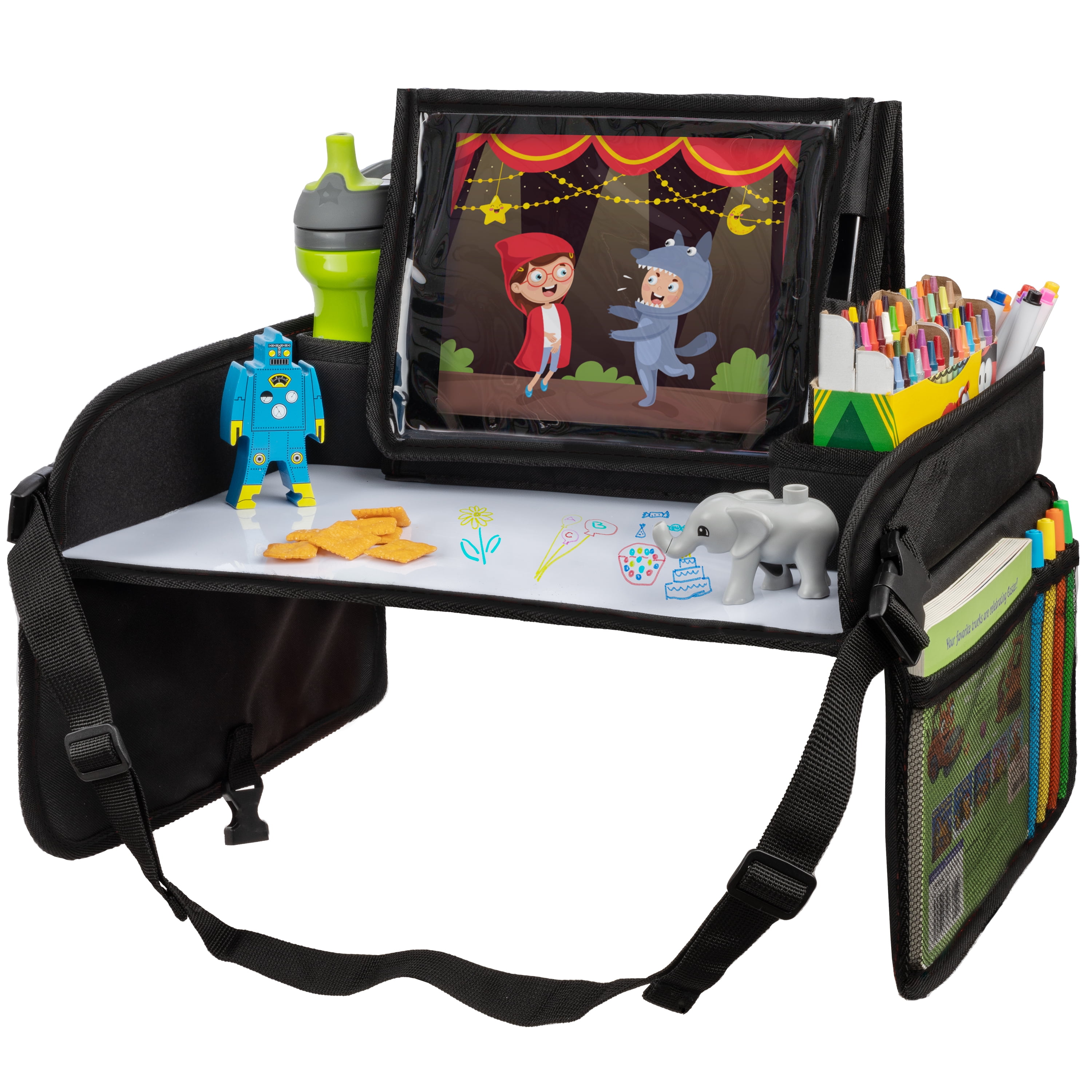
Lusso Gear Airplane Tray Cover Review: A Clean Surface and Activity Station in One
Honest Lusso Gear airplane tray cover review — snack pockets, toy pockets, foldable tablet stand, and a clean surface over germy tray tables. $32.99.