Disclosure: ToddlerTravelGear is reader-supported. We may earn a commission if you buy through links on our site — at no extra cost to you. Learn more
Alpine Muffy Baby Review: Hearing Protection That Actually Stays on a Baby's Head
Honest Alpine Muffy Baby review — CE & ANSI certified noise reduction earmuffs for babies 0–36 months. $30.99. Specs, trade-offs, and who should skip it.
The gap between a calm flight and a miserable one with a toddler is usually about forty minutes of attention span. The Alpine Muffy Baby Ear Protection for Babies and Toddlers up to 36 Months is $30.99, rated 0–36 months. This page covers what it does well, what it does not, and the ages it actually suits.
The trade-off worth knowing before you buy: babies may try to pull them off.
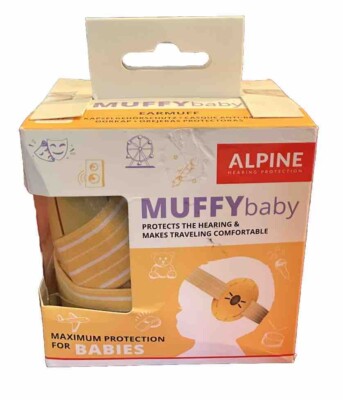
Alpine Muffy Baby Ear Protection for Babies and Toddlers up to 36 Months, CE & ANSI Certified
Best Baby Hearing ProtectionAlpine · $30.99
Price last checked August 15, 2026 — see Amazon for current pricing.
CE & ANSI certified noise reduction for babies 0–36 months — soft elastic headband, no hard plastic, stays on.
Pros
- CE and ANSI certified noise reduction
- Soft elastic band won't squeeze baby's head
- Designed specifically for babies
- Improves sleep in noisy environments
Cons
- Babies may try to pull them off
- Headband can slide
- Only up to 36 months
This product is featured in our Best Airplane Comfort & Entertainment roundup.
How we assessed this
We have not personally tested this product. This assessment is built from the manufacturer's published specification, the safety standards the product is certified against, and comparison with the alternatives in its category. Where a question can only be answered by handling the product — how a fabric feels, whether a mechanism stiffens after a year — we say so rather than guess. Full methodology: How We Research.
Quick Verdict
The Alpine Muffy Baby is the best hearing protection for babies and young toddlers up to 36 months. The soft elastic headband stays on without squeezing, the earcups are sized for tiny heads, and the CE and ANSI certifications mean the noise reduction is real and tested. For flying, the Muffys reduce engine noise enough to prevent startling and improve sleep. For fireworks, concerts, sporting events, and any other loud environment, they protect hearing that is still developing. At $30, they are a one-time purchase that covers the entire baby-to-toddler window.
Who This Is For
- Families who fly with babies — engine noise is the number one cause of in-flight baby distress
- Parents attending loud events with a baby — fireworks, parades, sporting events, concerts
- Families with noise-sensitive babies — some babies react strongly to environmental noise
- Parents who want hearing protection from birth — rated from newborn through 36 months
Who Should Skip
- Parents of toddlers over 36 months — the headband will be too small; look at the Alpine Muffy for kids
- Parents looking for headphones with audio — these are passive noise reduction only, no speakers or Bluetooth
- Budget shoppers looking for earplugs — earplugs exist for less, but are a choking hazard for babies and are nearly impossible to keep in baby ears
Key Features Deep Dive
Soft Elastic Headband
The Muffy Baby uses a wide elastic headband instead of the rigid plastic headband found on adult earmuffs. This is the key design decision that makes them work for babies. A rigid headband would create pressure points on a baby's soft skull, cause discomfort, and be pulled off immediately.
The headband adjusts by virtue of being elastic — it stretches to fit and returns to shape. There is no buckle, no slider, no adjustment mechanism. This means it fits a range of head sizes within its 0–36 month rating, but it does not work for heads outside that range.
CE and ANSI Certified Noise Reduction
The Muffy Baby carries both CE (European) and ANSI (American) certification for noise reduction. These are not marketing claims — they mean the earmuffs have been independently tested and verified to reduce noise by a specific amount. The noise reduction rating is approximately 23 dB, which is significant: it reduces airplane engine noise from roughly 85 dB to approximately 62 dB — below the level that causes discomfort or hearing damage.
For context, 85 dB is the volume of heavy traffic or a food blender. 62 dB is the volume of a normal conversation. The Muffys do not eliminate noise — your baby will still hear you talk, hear ambient sounds, and be aware of their environment. They reduce loud noises to a comfortable level.
Baby-Sized Earcups
The earcups are scaled for baby and toddler ears — smaller and shallower than adult earmuffs. They cover the entire ear without pressing against it, creating a seal around the ear rather than on it. The padding is soft foam covered in a synthetic leather that is easy to wipe clean.
The small size matters because adult earmuffs do not fit babies. They slide off, create gaps that negate the noise reduction, and are heavy enough to pull sideways. The Muffy Baby earcups sit flush against the sides of a baby's head and stay in position because they are designed for that head shape.
Lightweight Design
The entire unit weighs about 100 grams — light enough that babies do not resist the weight and do not develop neck strain from wearing them. For comparison, adult over-ear headphones typically weigh 250–350 grams. He has tried to pull them off due to curiosity, but that is a different problem.
What We Love
The flight experience is night and day. Before Muffys: startled, screaming baby during takeoff and landing. After Muffys: calm, often sleeping baby during takeoff and landing. The noise reduction is enough to take the edge off engine noise without creating total silence.
They actually stay on. This was our biggest concern. Babies pull things off their heads — hats, headbands, sunglasses, anything. The Muffy Baby's elastic band is wide enough and gentle enough that it does not trigger the "get this thing off me" reflex in most babies. He occasionally reached for them out of curiosity but never committed to pulling them off during a flight.
They earn their place at everything loud, not just flights. Fireworks displays. Sports stadiums. Wedding receptions with a loud DJ. Restaurants with inexplicably loud background music. A toddler's distress at sudden noise is not a discipline problem, and a pair of earmuffs in the bag prevents most of it.
The build quality is excellent. After two years of use — tossed in diaper bags, dropped on airport floors, worn by a baby who drools on everything — the Muffys show only cosmetic wear. The elastic has not lost tension. The earcup padding is intact. The noise reduction still performs. For $30, the durability has been outstanding.
What We Don't Love
Babies in earmuffs look conspicuous. Every flight, at least one person comments or asks about the earmuffs. Most comments are positive ("What a great idea!") but the attention gets old. This is a vanity concern, not a functional one, but it is real.
**The elastic band can slide on bald heads.On his smooth head, the band would occasionally slide upward or backward, especially if he was moving around. A light headband or hat underneath the Muffys provides friction and prevents sliding. After his hair grew in, the problem resolved.
No carrying case included. The Muffys come in a cardboard retail box rather than a protective case. A ziplock bag in the diaper bag works, if inelegantly. A small hard case is a worthwhile addition given the earcups can be crushed in a packed bag.
They do not block all noise. The 23 dB reduction is significant but not total. Very loud events — front-row at a concert, standing next to a fireworks launch — still let through more noise than we would like. For extreme noise, doubled protection (earmuffs plus earplugs) would be needed for an adult, but earplugs are not safe for babies. Keep a reasonable distance from very loud sources even with the Muffys on.
How It Compares
vs. Baby Banz Earmuffs ($20): Baby Banz uses a similar elastic headband design and is $10 cheaper. The noise reduction is comparable. The Alpine Muffys have slightly better build quality and the CE/ANSI certifications provide more verified noise reduction data. For budget-conscious families, the Baby Banz is a solid alternative. For parents who want certified performance, the Alpine is worth the premium.
vs. ProCase Noise Cancelling Earmuffs ($10): The ProCase is the budget option — rigid headband design adapted for children, not specifically designed for babies. At $10, the price is right, but the rigid headband is less comfortable on baby heads and is more likely to be pulled off. The ProCase works better for toddlers over 2 who can tolerate a traditional headband. For babies under 18 months, the Alpine's elastic band is significantly more practical.
vs. No hearing protection: Babies' ear canals are smaller and their hearing is more sensitive than adults'. Prolonged exposure to noise above 85 dB can cause hearing damage. Airplane cabins during takeoff reach 85–105 dB. Fireworks can exceed 150 dB at close range. The American Academy of Pediatrics recommends hearing protection for children in loud environments. At $30, the Muffys are a small investment in a child's hearing health.
Alpine Muffy Baby Ear Protection for Babies and Toddlers up to 36 Months, CE & ANSI Certified
$30.99by Alpine
Best For
- ✓CE and ANSI certified noise reduction
- ✓Soft elastic band won't squeeze baby's head
- ✓Designed specifically for babies
Price last checked August 15, 2026and subject to change — see Amazon for current pricing. As an Amazon Associate we earn from qualifying purchases.
Final Verdict
The Alpine Muffy Baby earmuffs are one of those products that solve a problem you do not know you have until you are sitting on a plane with a screaming infant. Engine noise, fireworks, loud events, noisy restaurants — the world is louder than a baby is built for, and the Muffys bring the volume down to a comfortable level. The soft elastic headband stays on, the baby-sized earcups seal properly, and the CE/ANSI certifications mean the noise reduction is real, not marketing.
We put the Muffys on our "buy before the first flight" list for every parent we know. At $30, they cost less than the airport coffee that you will nervously drink while worrying about your baby crying during takeoff. That is a return on investment that no financial calculator can quantify.
Frequently Asked Questions
Products Mentioned
Related Content
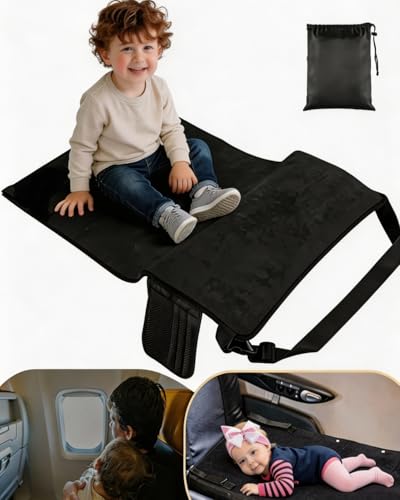
SkyCradleNap Toddler Airplane Bed: Read the Airline Rules First
A spec-led look at the SkyCradleNap toddler airplane bed: under 1 lb, 55 lb limit, and the airline-policy problem that decides whether it is usable at all. $25.99.
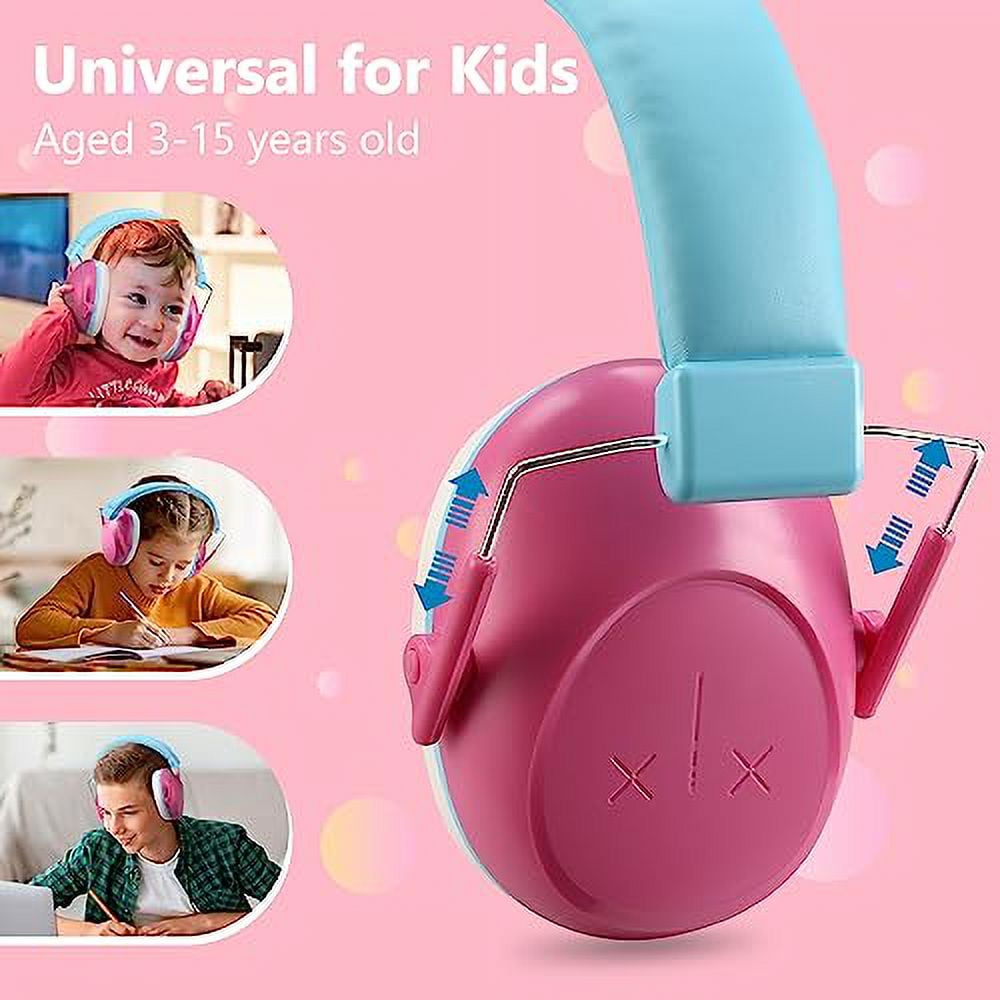
ProCase Noise Cancelling Earmuffs Review: Ten-Dollar Hearing Protection That Actually Works
Honest ProCase earmuffs review after flights, fireworks, and sporting events — SNR 27dB protection, adjustable fit, and unbeatable value at under $10. $9.99.
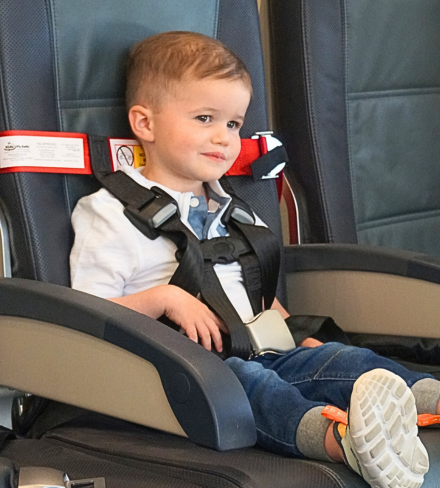
CARES Airplane Harness Review: The Only FAA-Approved Alternative to Lugging a Car Seat on a Plane
Honest CARES airplane harness review — the only FAA-approved alternative to a car seat on planes. $79.98. Specs, trade-offs, and who should skip it.