Lap Child, Car Seat or CARES? Choosing How Your Toddler Flies
Lap child, FAA-labeled car seat or CARES harness? The federal rules, the second-birthday catch, and a decision table by age and weight for 1–3 year olds.
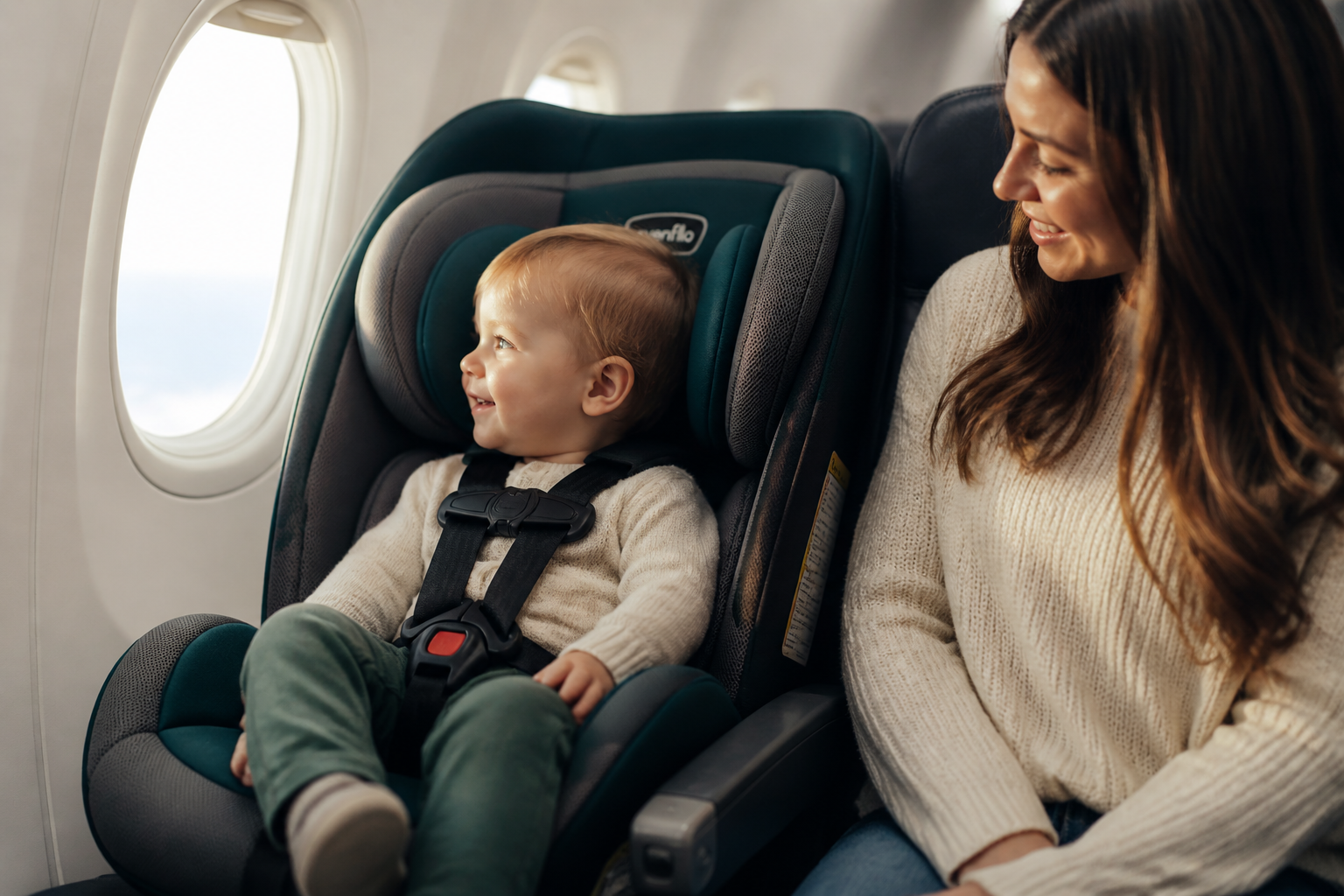
If your child is under 2, US rules let them fly on your lap, but the FAA says the safest place for them is an approved car seat or device in their own purchased seat. Once your child turns 2, they need their own seat, and you choose between an aircraft-labeled car seat, the CARES harness (for 22–44 lb children up to 40 inches tall), or the aircraft seat belt alone. The right answer depends mostly on your child's weight and on whether you need a car seat when you land.
Quick verdict
- Under about 22 lb: a rear-facing car seat with the aircraft label, in a purchased seat. CARES does not fit babies this small. Lap travel is legal but not recommended.
- 22–44 lb and up to 40 in, no car needed at your destination: CARES is the lightest approved option.
- You will drive at your destination: bring the car seat on board. It has to come with you anyway, and it is safer in the cabin than in the hold.
- Turning 2 mid-trip: book a seat for the return flight. Lap travel ends at the second birthday.
What does the FAA actually require?
Less than many parents expect. The FAA does not require children to use a child restraint system (CRS) on a commercial flight. It does strongly urge you to secure your child in an approved CRS or device for the whole flight. Its Flying with Children page states that the safest place for a child under 2 is an approved restraint, "not in your lap", because your arms cannot hold a child securely in unexpected turbulence.
The rules that are mandatory concern what you may use, not whether you use something:
- A car seat must be certified for aircraft (see the label section below).
- The FAA prohibits baby carriers, booster seats and backless child seats during taxi, takeoff and landing.
- A lap child may not be held in any restraining device during taxi, takeoff and landing (14 CFR 121.311).
Can my child fly on my lap, and until when?
Yes, until the day they turn 2. The federal rule (14 CFR 121.311) lets an adult hold a child who "has not reached his or her second birthday." The FAA permits this but says it "strongly discourages this practice."
Age is counted on the day of each flight, not the day you booked. If your child turns 2 between the outbound and return flights, they are no longer a lap child on the way home and need their own seat for that flight. Book that seat when you book the trip. Airlines handle the fare and ticketing differently, so check how your carrier prices it rather than sorting it out at the gate.
How does a lap child compare with a purchased seat on cost?
A lap child on a US domestic flight usually travels without a fare. International itineraries often charge a portion of the adult fare plus taxes. A purchased seat costs a full or discounted child fare. That is the whole trade-off: the lap option saves the price of a ticket, and the purchased seat buys the protection the FAA recommends plus room for your child to sleep or play.
Some parents book a lap ticket and hope for an empty seat next to them. The FAA notes that buying a ticket is the only way to guarantee you can use a car seat for a child under 2. An open seat on the day is a bonus, not a plan.
Which car seats are allowed on the plane?
Hard-backed car seats, rear- or forward-facing, that carry the aircraft certification. On a seat made to US standards, the label must read:
"This restraint is certified for use in motor vehicles and aircraft"
The FAA also accepts seats approved by a foreign government that bear that government's required label. Check the sticker before you book. If it is missing or unreadable, the crew can ask you to check the seat as baggage.
What is not allowed for taxi, takeoff and landing: booster seats (high-back or backless), backless child seats, baby carriers, and vest- or harness-type restraints other than the approved CARES device. A booster needs a shoulder belt, and an airline seat only has a lap belt.
Install the seat in the direction the label calls for at your child's size, following the manual. If your ticketed, approved seat does not fit in the assigned spot, the FAA says the airline is responsible for moving it to another seat in the same class. Airlines also set their own rules on which rows and seats can take a car seat, so check your carrier's policy when you choose seats. Our airline car seat rules guide covers installation, gate-checking and fit problems in more detail.
What is the CARES harness and who can use it?
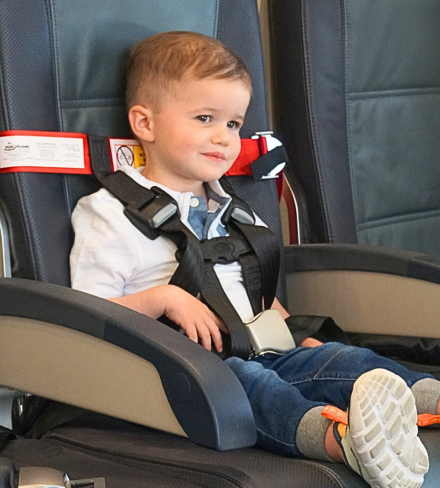
CARES (Child Aviation Restraint System, made by AmSafe) is a belt-and-shoulder harness that loops around the seat back and works with the aircraft lap belt. The FAA certifies it for children who:
- weigh 22 to 44 pounds,
- are up to 40 inches tall,
- can sit upright alone in a forward-facing position, and
- occupy their own seat.
It is approved for every phase of flight, including taxi, takeoff, landing and turbulence. It is approved only for aircraft. You cannot use it in a car.
The device must carry the FAA approval statement printed on it: "FAA Approved in Accordance with 14 CFR 21.305(d)" (or 21.8(d)) and "Approved for Aircraft Use Only." The FAA warns about CARES counterfeits sold online and advises buying direct from the manufacturer (FAA Kids' Corner), and AmSafe warns on KidsFlySafe.com about fakes sold on eBay and Amazon. Buy from AmSafe or an authorized seller, and check the label when it arrives. Our CARES harness review shows what the label says and how to spot a fake.
Car seat or CARES: which is better for a 1–3 year old?
The FAA approves both and does not rank one above the other. The practical differences are clear:
| Aircraft-labeled car seat | CARES harness | Lap child | |
|---|---|---|---|
| Who it fits | Within the seat's own labeled limits | 22–44 lb, up to 40 in, sits upright alone | Under 2 only |
| Needs a purchased seat | Yes | Yes | No |
| Direction | Rear- or forward-facing per label | Forward-facing only | Not applicable |
| Usable in a car after landing | Yes | No | Not applicable |
| What you carry | The car seat, often 7–20 lb | Under 1 lb | Nothing |
| FAA position | Strongly urged | Approved alternative to a car seat | Permitted, strongly discouraged |
Choose the car seat if your child is under 22 lb, if you want rear-facing, if you need a car seat at your destination, or if your child naps better in a familiar seat. Choose CARES if your child is in its weight and height range, you are not driving at the other end (or are renting a car seat there), and you want to keep your hands free in the airport.
Decision table: how should your toddler fly?
| Your child | Legal options | Usually the best fit | Why |
|---|---|---|---|
| Under 2, under 22 lb | Lap, or labeled car seat in a purchased seat | Rear-facing labeled car seat in a purchased seat | CARES starts at 22 lb; the FAA recommends a restraint over a lap |
| Under 2, 22 lb or more, sits upright alone | Lap, labeled car seat, or CARES (both need a purchased seat) | Car seat if you need one on arrival; otherwise CARES | Same protection goal, very different carrying load |
| Turns 2 during the trip | Lap on flights before the birthday; own seat on flights after | Purchased seat on every leg | Avoids a seat problem on the return |
| 2 or older, 22–44 lb, up to 40 in | Labeled car seat, CARES, or aircraft seat belt alone | Car seat or CARES | Both fit a small child better than an adult lap belt |
| 2 or older, over 44 lb or over 40 in | Labeled car seat within its limits, or seat belt | Seat belt, or the car seat you need anyway | CARES is outgrown |
Each car seat's own label sets its weight and height limits in the air, just as it does in a car.
Which products fit each route?
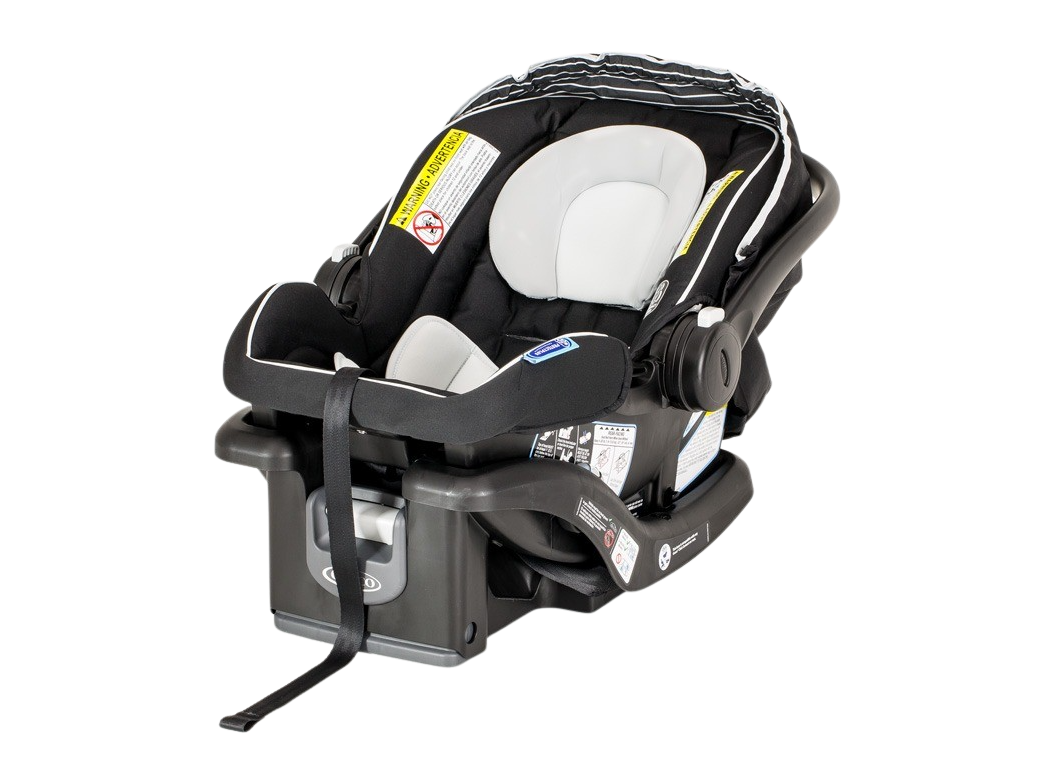
For babies and young toddlers (rear-facing): an infant seat such as the Graco SnugRide Lite LX is rated for 4–30 lb rear-facing and the carrier alone weighs about 7 lb, which keeps it manageable through an airport. Confirm the aircraft statement on the label before you book a seat for it. When your baby outgrows it, you will need a convertible seat.
For toddlers in the CARES range: the CARES harness weighs under 1 lb. Check the printed FAA approval and buy from an authorized seller.
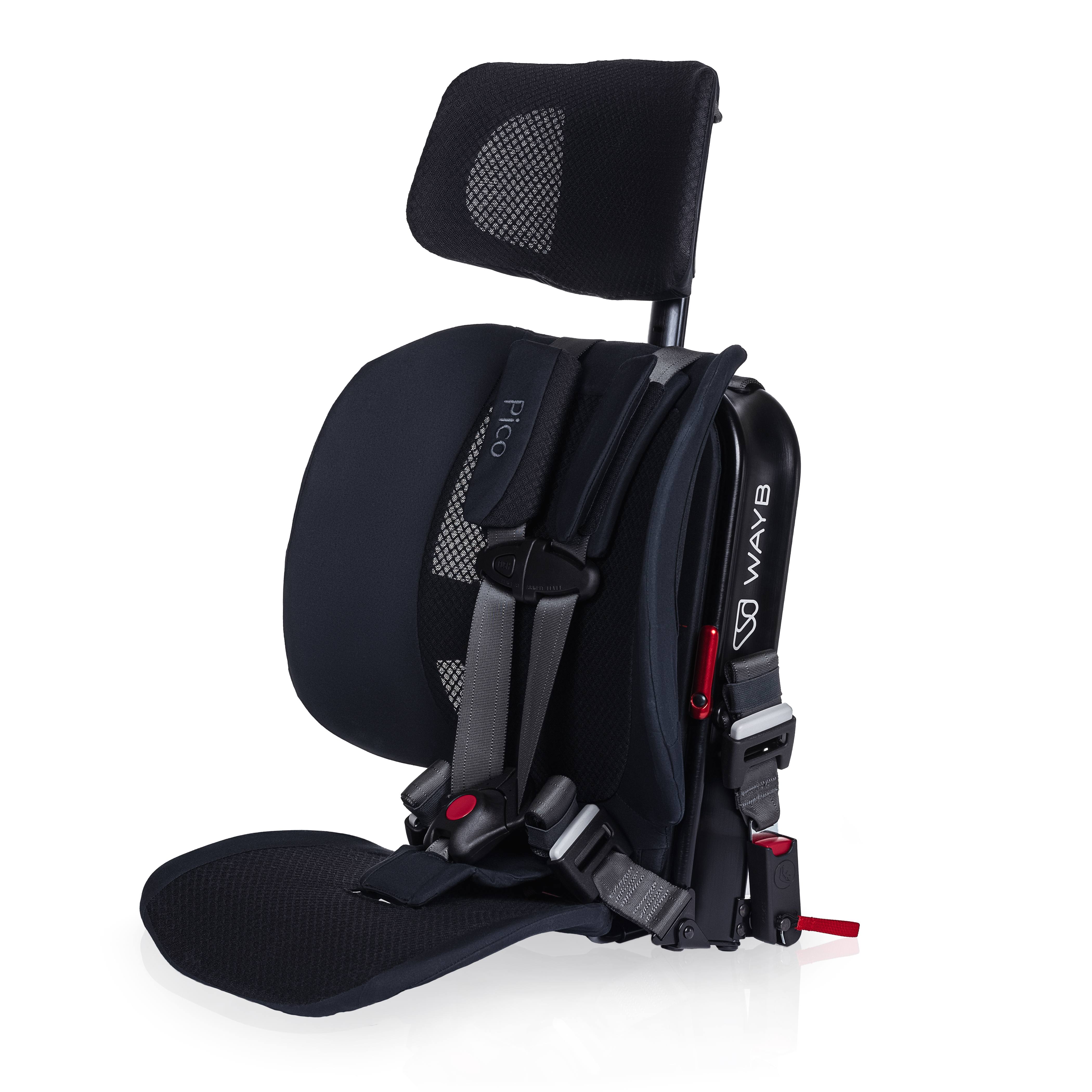
For older toddlers who need a car seat on arrival: the WAYB Pico is a forward-facing seat for children 26.5–50 lb and 33.5–45 inches that weighs about 8 lb and folds into a bag. It is expensive and forward-facing only, so it suits frequent travelers whose child has already outgrown rear-facing.
For a wider comparison, see our FAA-approved car seat picks.
What about baby carriers and harness vests?
They cannot be used during taxi, takeoff or landing. The FAA says there is no regulatory prohibition on a lap-held device such as a baby carrier or harness vest during the cruise portion of the flight, but airlines set their own policies on them. Ask your carrier before you rely on one, and plan to take your child out of it whenever the seat belt sign comes on for taxi, takeoff or landing.
How we put this together
This guide is based on the FAA's published guidance on flying with children, the federal rule at 14 CFR 121.311, and manufacturers' published specifications. We have not tested these products. Airline seat-selection and fare policies vary, so confirm them with your carrier.
Frequently Asked Questions
Products Mentioned
Related Content
Car Seats on Planes: The FAA Rules, Booster Ban and Gate-Check Options (2026)
Which car seats are allowed on planes, why boosters are not, how to install with a lap belt and what to do if the seat does not fit, with FAA sources.
Best FAA-Approved Car Seats for Flying (2026): Lightest Seats First
Car seats you can use on a plane, ranked by how easy they are to fly with: weight, width and limits compared, plus why boosters can't be used onboard.
WAYB Pico vs Baby Trend Trooper Slim: Travel Car Seats Compared
WAYB Pico vs Baby Trend Trooper Slim on weight, fold, child limits, rear-facing, installation, airplane width and FAA label, and which family each suits.