WAYB Pico vs Baby Trend Trooper Slim: Travel Car Seats Compared
WAYB Pico vs Baby Trend Trooper Slim on weight, fold, child limits, rear-facing, installation, airplane width and FAA label, and which family each suits.
Disclosure: ToddlerTravelGear is reader-supported. We may earn a commission if you buy through links on our site — at no extra cost to you. As an Amazon Associate, we earn from qualifying purchases. Learn more
These two seats solve different problems. The Baby Trend Trooper Slim is a budget convertible that rides rear-facing from 4 to 40 lb and forward-facing to 65 lb, so it fits a baby, a toddler and a preschooler. The WAYB Pico is a premium, 8 lb folding seat that only faces forward and, on seats made from June 30, 2025, starts at 26.5 lb. If your child still fits rear-facing, the Trooper Slim is the safer match. If your child is past rear-facing and you fly or take rideshares often, the Pico is far easier to carry.
Both are sold as certified for aircraft use, but neither decides where it sits on your flight. That is up to your airline.
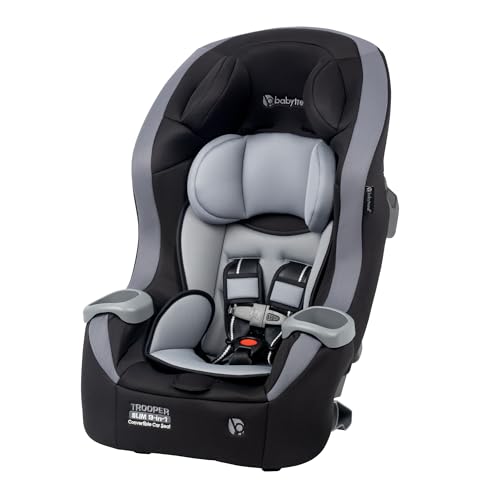
Baby Trend Trooper Slim 3-in-1 Convertible Car Seat
Rear-facing, budgetBaby Trend
A 12 lb convertible that rides rear-facing to 40 lb and forward-facing to 65 lb, with Baby Trend's certified-for-aircraft marking, at a budget price.
Pros
- FAA approved for air travel
- 17.75 in at its widest, narrower than many convertible seats
- Three harnessed modes: rear-facing 4–18 and 18–40 lb, forward-facing 30–65 lb
- Lightweight at roughly 12 lb, at a budget price
Cons
- Heavier than dedicated travel seats like the WAYB Pico
- Basic padding and comfort features
- No booster mode on Baby Trend's current page — check the manual for your version
- No premium recline adjustment
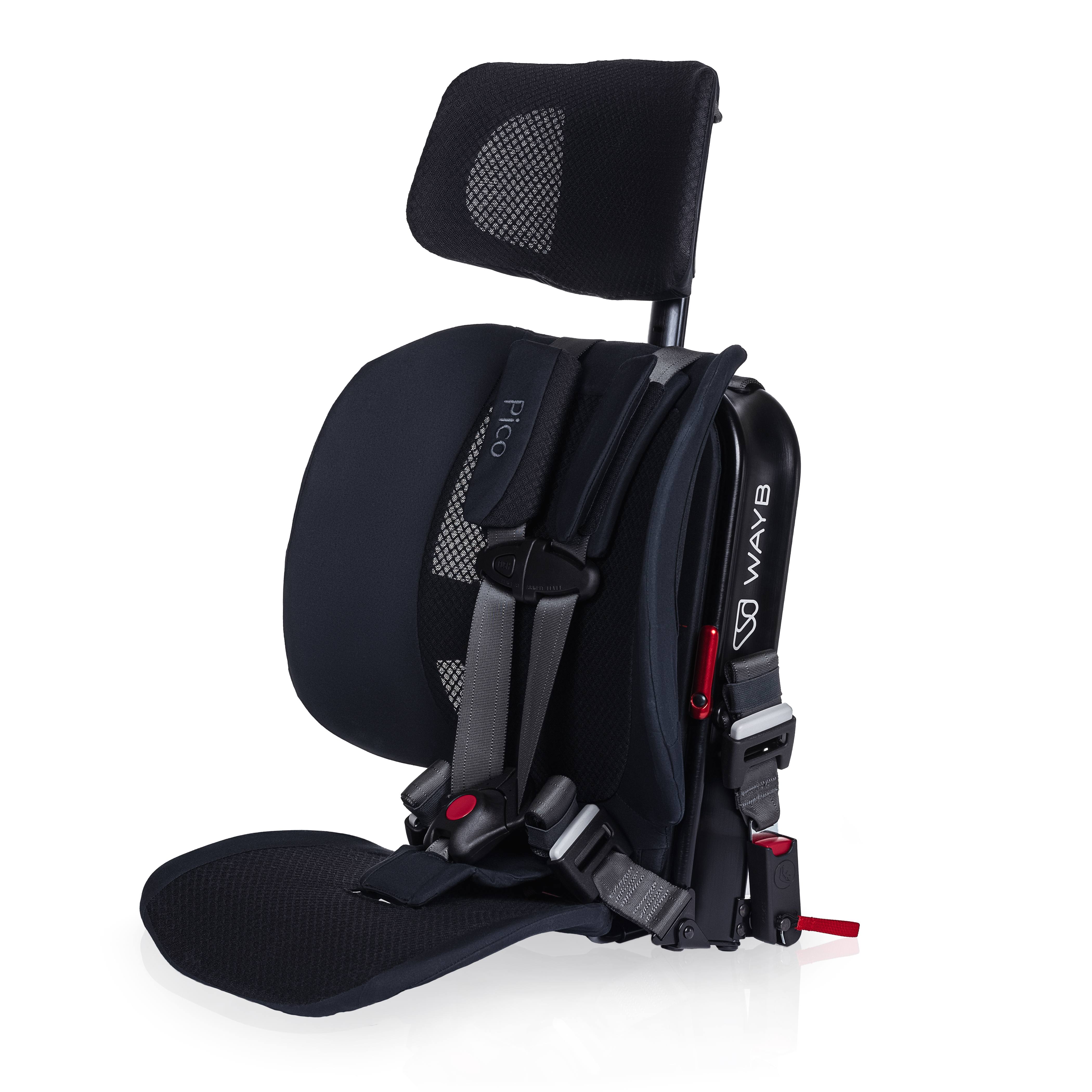
WAYB Pico Travel Car Seat with Premium Carrying Bag, Lightweight Portable Foldable
Lightest, foldsWAYB
An 8 lb forward-facing seat with an aluminum frame that folds to about 11.6 x 14.5 x 18.9 in and carries WAYB's aircraft certification label.
Pros
- Ultra-lightweight at 8 lbs
- Folds flat into carrying bag
- Perfect for airplanes and rideshares
- Premium build quality
Cons
- Very expensive
- Forward-facing only
- Limited weight range
- No rear-facing option
How do the specs compare side by side?
Figures come from WAYB's Pico product page and safety-standards page and Baby Trend's Trooper Slim product page. Price tiers are relative; check the current price on Amazon.
| WAYB Pico | Baby Trend Trooper Slim | |
|---|---|---|
| Seat weight | 8 lb | 12 lb |
| Folds? | Yes, to 11.6 x 14.5 x 18.9 in | No; 17.75 x 21 x 26.5 in |
| Width | 14.5 in (storage and in use) | 17.75 in at its widest, per Baby Trend |
| Rear-facing | No | 4–40 lb (infant mode 4–18 lb, toddler mode 18–40 lb) |
| Forward-facing harness | 26.5–50 lb and 33.5–45 in (made on/after June 30, 2025); 22–50 lb and 30–45 in (made before) | 30–65 lb; Baby Trend lists a 50 in maximum height |
| Age guidance | WAYB recommends 2 years and up | No minimum age; rear-facing from 4 lb |
| Car installation | LATCH, lap-and-shoulder belt or lap-only belt; V-shaped top tether | LATCH (to 55 lb child weight) or vehicle belt |
| Aircraft | Label reads "This restraint is certified for use in motor vehicles and aircraft" | Baby Trend's page shows a "Certified for Aircraft Use" badge; confirm the label on the shell |
| Expiry | 7 years from manufacture | Check the label and manual |
| Price tier | Premium | Budget |
Two figures need a note. Baby Trend's own page gives the Trooper Slim's widest point as 17.75 in, while some retail listings say about 16.75 in; plan around the larger number. And Baby Trend's current page describes three harnessed modes (rear-facing infant, rear-facing toddler, forward-facing) without a booster mode. Some listings describe a booster mode to 100 lb. Check the manual for the version you buy. A booster cannot be used on a plane in any case.
Which one can a baby or young toddler use?
Only the Trooper Slim. The Pico has no rear-facing mode, and the AAP recommends that infants and toddlers ride rear-facing as long as possible, until they reach the highest rear-facing weight or height their seat allows. It notes that most convertible seats let children ride rear-facing for 2 years or more.
The Trooper Slim's 40 lb rear-facing limit gives a lot of room for that. The Pico starts where rear-facing ends: WAYB recommends it for children 2 and up who also meet its weight and height minimums. Check which minimum applies to your seat. WAYB raised it from 22 lb and 30 in to 26.5 lb and 33.5 in for seats manufactured on or after June 30, 2025, and the label on your seat is the one to follow.
How much easier is the Pico to carry?
The weight gap is 4 lb, but shape matters more. The Pico folds into a package roughly the size of a small carry-on, and WAYB says it fits most overhead bins; bin sizes vary by aircraft, so do not count on it. The Trooper Slim does not fold. At 17.75 x 21 x 26.5 in you carry it whole, strap it to a luggage cart, or put it in a travel bag.
On a trip with one connection, a rental car and a hotel shuttle, that difference shows up every time you move the seat. On a single nonstop flight with a car waiting at the other end, it matters much less.
Will each one fit in an airplane seat?
The Pico is the safer bet at 14.5 in wide. The Trooper Slim, at Baby Trend's 17.75 in, is close to the width of many economy seats, and seat widths vary by aircraft. If your approved seat does not fit the seat you bought, the FAA says the airline is responsible for accommodating it in another seat in the same class of service. Lifting the armrest before you install helps in tight rows.
Direction also matters. A rear-facing Trooper Slim takes more legroom and can stop the passenger in front from reclining. The FAA requires a car seat to be installed in the direction shown on its label for your child's size, so a rear-facing child stays rear-facing on the plane. Airlines set their own rules on which rows and seats can take a car seat; the FAA does not. Our airline car seat rules guide explains the details.
Are both FAA-approved?
Both are sold as certified for aircraft, but the makers document it differently. WAYB states that the Pico carries "This restraint is certified for use in motor vehicles and aircraft" in red text on the bottom of the seat. Baby Trend's product page shows a "Certified for Aircraft Use" badge for the Trooper Slim, but no text describing the label. The Trooper Slim review places the label on the shell near the recline foot.
The FAA tells parents to confirm that exact statement is printed on the seat and that the child is within the seat's limits. Find it on either seat before you fly. To use either one on board you need to buy your child a seat. For lap infants, gate-checking is the usual option. Our guide to lap child vs car seat vs CARES covers that decision.
How do they install at the destination?
Both install with LATCH or the vehicle's seat belt. The Pico also accepts a lap-only belt, which helps in some older taxis and the middle seats of some vehicles. It uses a V-shaped top tether, and WAYB recommends attaching it whenever the vehicle has a tether anchor. The AAP says the top tether should always be used with a forward-facing seat, whether you install with the belt or the lower anchors, so that applies to the Trooper Slim in forward-facing mode too.
Baby Trend lists LATCH use up to a 55 lb child; above that, install the Trooper Slim with the vehicle belt. In rental cars and rideshares, practice the belt route at home first, because lower anchors can be hard to find in unfamiliar back seats. Our rental car car seat guide walks through installing in a vehicle you have not used before.
How long will each seat last?
The Trooper Slim covers far more years. A newborn can ride rear-facing from 4 lb, and the forward-facing harness runs to 65 lb, so one seat can take a child from the first trip home to the preschool years.
The Pico is outgrown at 50 lb or 45 in, or when the harness straps sit below the shoulders, whichever comes first. A child who rear-faces until age 3 or later, as the AAP encourages where the seat allows, gets fewer years from it. WAYB also sets a seven-year expiry from the date of manufacture.
Choose the Baby Trend Trooper Slim if…
- Your child is under 2, or still fits a rear-facing seat.
- You fly once or twice a year and drive a car at the destination.
- You want one seat to cover home and travel from birth onward.
- A budget price matters, or you would rather not worry about baggage-handling damage to an expensive seat.
Read our full Baby Trend Trooper Slim review.
Choose the WAYB Pico if…
- Your child is at least 2, forward-facing, and above the Pico's minimum weight and height for your seat's manufacture date.
- You fly several times a year, or use taxis and rideshares often enough that carrying a seat between them is a daily task.
- You need a narrow seat for small aircraft seats or three across.
- A premium price is acceptable for the 4 lb saving and the fold.
Read our full WAYB Pico review.
What about a plane-only option?
If you will have a car seat waiting at your destination, you may not need either seat on the plane. The FAA approves the CARES harness for children who weigh 22 to 44 lb and are up to 40 in tall, for use in aircraft only. It cannot replace a car seat in a car. Compare the full field in our best FAA-approved car seats.
How we put this together
This comparison draws on WAYB's and Baby Trend's published specifications, the FAA's guidance on child restraints and the AAP's car seat recommendations. We have not used either seat. Specifications change, so check the manufacturer's page and your seat's label before you buy or fly.
Frequently Asked Questions
Products Mentioned
Related Content
WAYB Pico Review: The 8 lb Folding Car Seat, Limits and FAA Label
WAYB Pico specs checked: 8 lb, forward-facing only, 26.5–50 lb on seats made from mid-2025, FAA aircraft label, LATCH or belt install, who should skip.
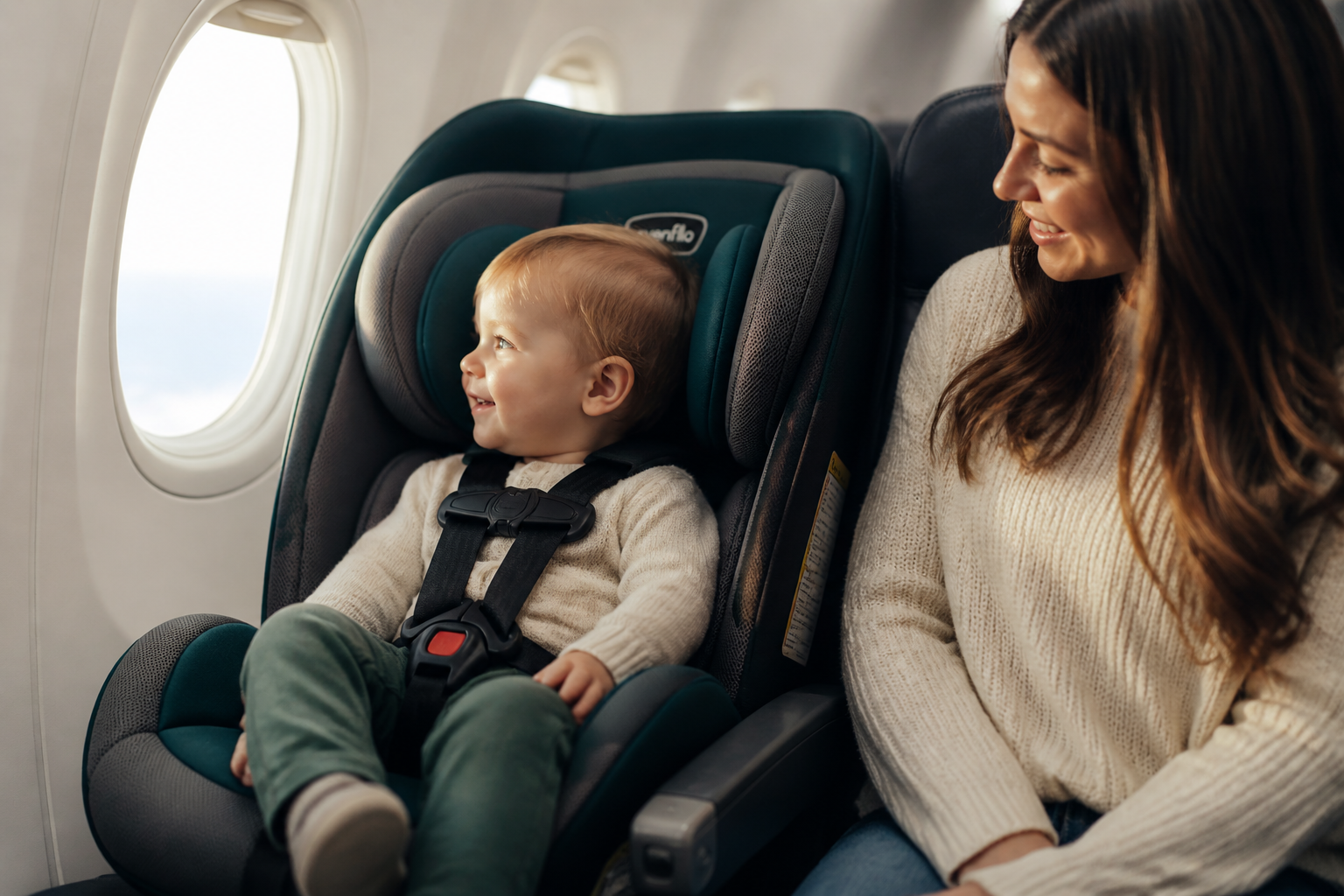
Lap Child, Car Seat or CARES? Choosing How Your Toddler Flies
Lap child, FAA-labeled car seat or CARES harness? The federal rules, the second-birthday catch, and a decision table by age and weight for 1–3 year olds.
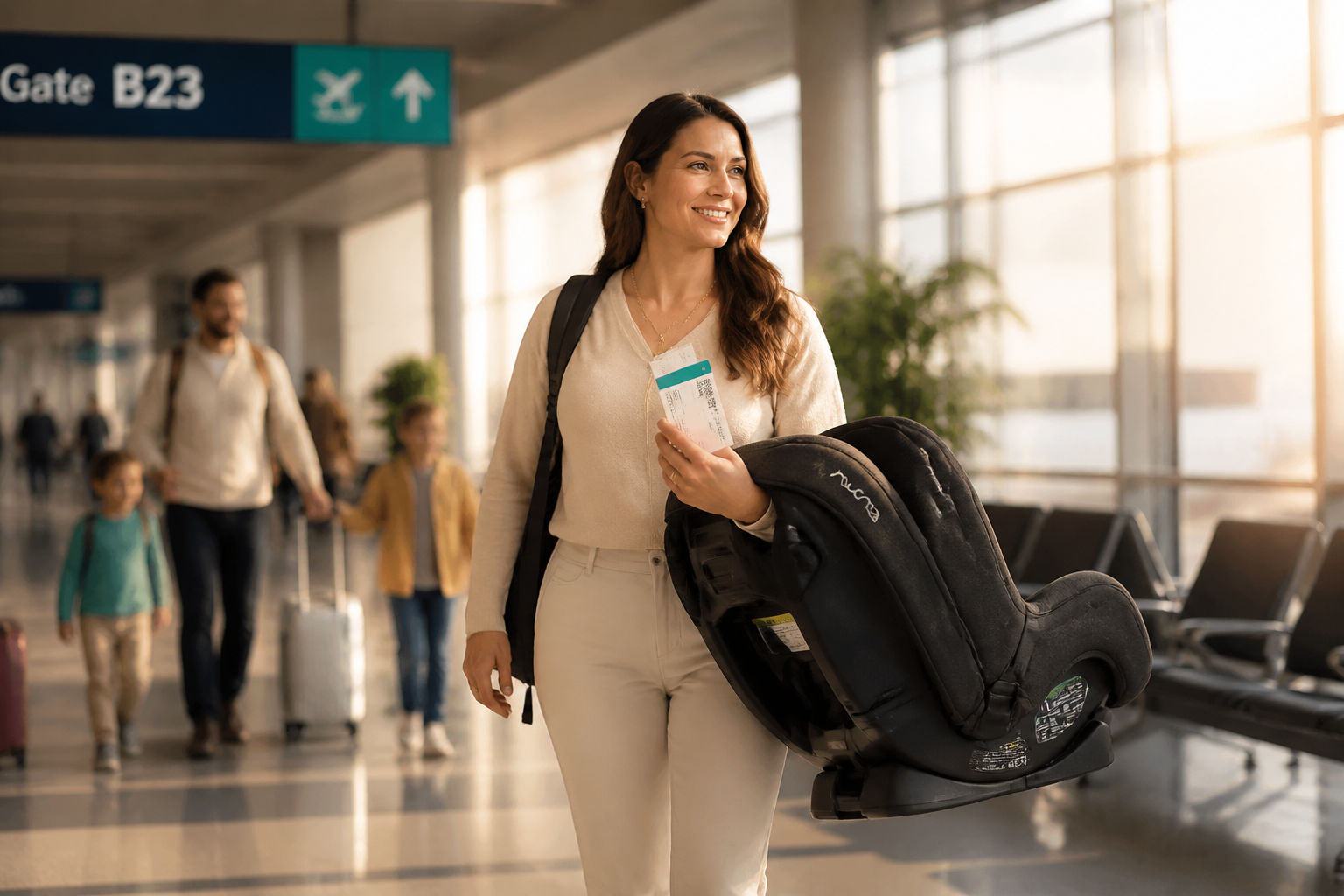
Car Seats on Planes: The FAA Rules, Booster Ban and Gate-Check Options (2026)
Which car seats are allowed on planes, why boosters are not, how to install with a lap belt and what to do if the seat does not fit, with FAA sources.