Disclosure: ToddlerTravelGear is reader-supported. We may earn a commission if you buy through links on our site — at no extra cost to you. Learn more
Best Baby Carriers for Hiking & Travel (2026): Airport to Trail
From airport terminals to national park trails — the best baby and toddler carriers for traveling families, based on real parent reviews from parents who actually hike with kids.
Mile 2 on the trail, our 18-month-old decided she was done walking. Without a carrier, we would have been carrying 25 pounds of squirming toddler on our hip for the remaining 3 miles back to the trailhead. Instead, she went into the hiking backpack, had some goldfish crackers, and fell asleep before we hit the next switchback. That is the difference a carrier makes — it turns a potential trail disaster into a normal Tuesday.
Parents use baby carriers on flights from JFK to LAX, through the cobblestoned nightmare streets of Lisbon with a stroller we gave up on by day two, on 8-mile hikes in the Smokies, and through the absolute chaos of Disney World on a 92-degree afternoon. A carrier is the single most versatile piece of travel gear you can own. It replaces a stroller in crowds, gets you through airport security faster, keeps your hands free for luggage, and lets you access trails and terrain that no stroller can handle.
But here is the thing nobody tells you: there is no single carrier that does everything well. The stretchy wrap that is perfect for a newborn at the airport is useless on a mountain trail with a 30-pound toddler. The frame backpack that conquers every national park trail is absurd overkill for a walk through a museum. You need to match the carrier to the situation, the child's age, and the kind of travel you actually do.
We evaluated all eight carriers in this guide based on real parent experiences across travel scenarios — airports, hikes, city days, and long walks where kids decided they were simultaneously too tired to walk and too restless to sit still. Here is what parent feedback shows.
How we chose these carriers
We evaluated each carrier across the criteria that matter when you are actually traveling with a small child:
- Weight distribution — Does the carrier put the load on your hips or murder your shoulders after 30 minutes? We evaluated each carrier based on parent reports of extended continuous wear with a child at or near the weight limit.
- Ease of use — Can you get the child in and out without a helper? Can you do it in the narrow aisle of an airplane or at a crowded trailhead? Parents report using every carrier in tight spaces.
- Packability — How small does it fold? How much carry-on or daypack space does it consume? For travel, size and weight when not in use matter almost as much as performance when in use.
- Temperature — Does the fabric breathe, or do both parent and child end up soaked in sweat? Parents report using carriers in temperatures from 50 to 95 degrees.
- Age and weight range — How long will this carrier last as your child grows? Carriers with wider ranges scored higher because toddlers grow fast and replacement costs add up.
- Safety certifications — We verified all claimed certifications, hip-healthy design approvals, and manufacturer weight limits.
We also read thousands of verified parent reviews, paying attention to comments about actual travel use rather than at-home impressions. A carrier that works great in the kitchen is not necessarily a carrier that works great in an airport terminal at 5 AM with a diaper bag on one shoulder.
Our top picks at a glance
Three types of carriers — and when to use each
Before we get into individual products, you need to understand the three categories. Choosing the wrong type is a more expensive mistake than choosing the wrong brand within the right type.
Wraps and slings (best for newborns through about 6 months)
Wraps are long stretchy pieces of fabric that you tie around your body to create a pouch for your baby. They provide the closest, most secure hold and are ideal for newborns who need head and neck support. They pack down to almost nothing — about the size of a large scarf. The trade-off is a learning curve (tying the wrap correctly takes practice) and a weight limit that makes them impractical for larger babies and toddlers. Most parents stop using wraps around 15 to 20 pounds because the stretchy fabric does not support heavier children securely.
Best travel scenario: Airport navigation with a newborn. The wrap goes through the TSA metal detector without a second glance, folds into your diaper bag when not in use, and keeps your hands free for boarding passes and luggage.
Structured carriers (best from birth through 3 to 4 years)
Structured carriers have padded shoulder straps, a waistband, and buckles. They look more like a small backpack than a piece of fabric. The structure means better weight distribution for heavier children, easier on-and-off transitions, and no wrapping technique to learn. Most offer multiple carry positions — front inward, front outward, hip, and back. The best ones work from birth without a separate infant insert and last until your child is 45 pounds or more.
Best travel scenario: Everything from airport terminals to city sightseeing to light trail walking. This is the all-rounder category, and if you buy only one carrier, it should probably be a structured one.
Frame backpack carriers (best from about 6 months through age 4)
Frame carriers have an aluminum or steel frame, a padded hip belt borrowed from backpacking packs, and a child cockpit with a 5-point harness. They distribute weight to your hips like a proper hiking pack, which is why hikers can carry a 35-pound toddler plus gear for miles without destroying their back. They also include kickstands for safe loading and unloading, sun shades, and storage compartments for diapers, snacks, and extra layers. The trade-off is size and weight — these carriers weigh 6 to 8 pounds empty, do not fold down, and are impractical for airports or casual walks.
Best travel scenario: Hiking and outdoor adventures. If your family does national parks, mountain trails, or any terrain where a stroller cannot go, a frame carrier is not optional — it is essential.
| Type | Best For | Age Range | Carrier Weight | Typical Price |
|---|---|---|---|---|
| Wraps | Airports, newborns, light travel | 0–6 months (7–20 lbs) | 1–1.5 lb | $30–$40 |
| Structured carriers | Everything from airports to light hikes | 0–48 months (7–45 lbs) | 1.2–2 lb | $40–$135 |
| Frame backpacks | Hiking, trails, outdoor adventures | 6–48 months (16–48 lbs) | 6–8 lb | $195–$395 |
Best Wraps for Travel
Wraps are the smallest, lightest carriers you can pack. For newborn travel — especially flying — there is nothing better. You wear the baby through security, both hands stay free for juggling luggage, and the wrap balls up in your diaper bag between uses. The two wraps below take slightly different approaches, and the right choice depends on your budget and how much wrapping practice you want to do.
1. Boba Baby Wrap Carrier
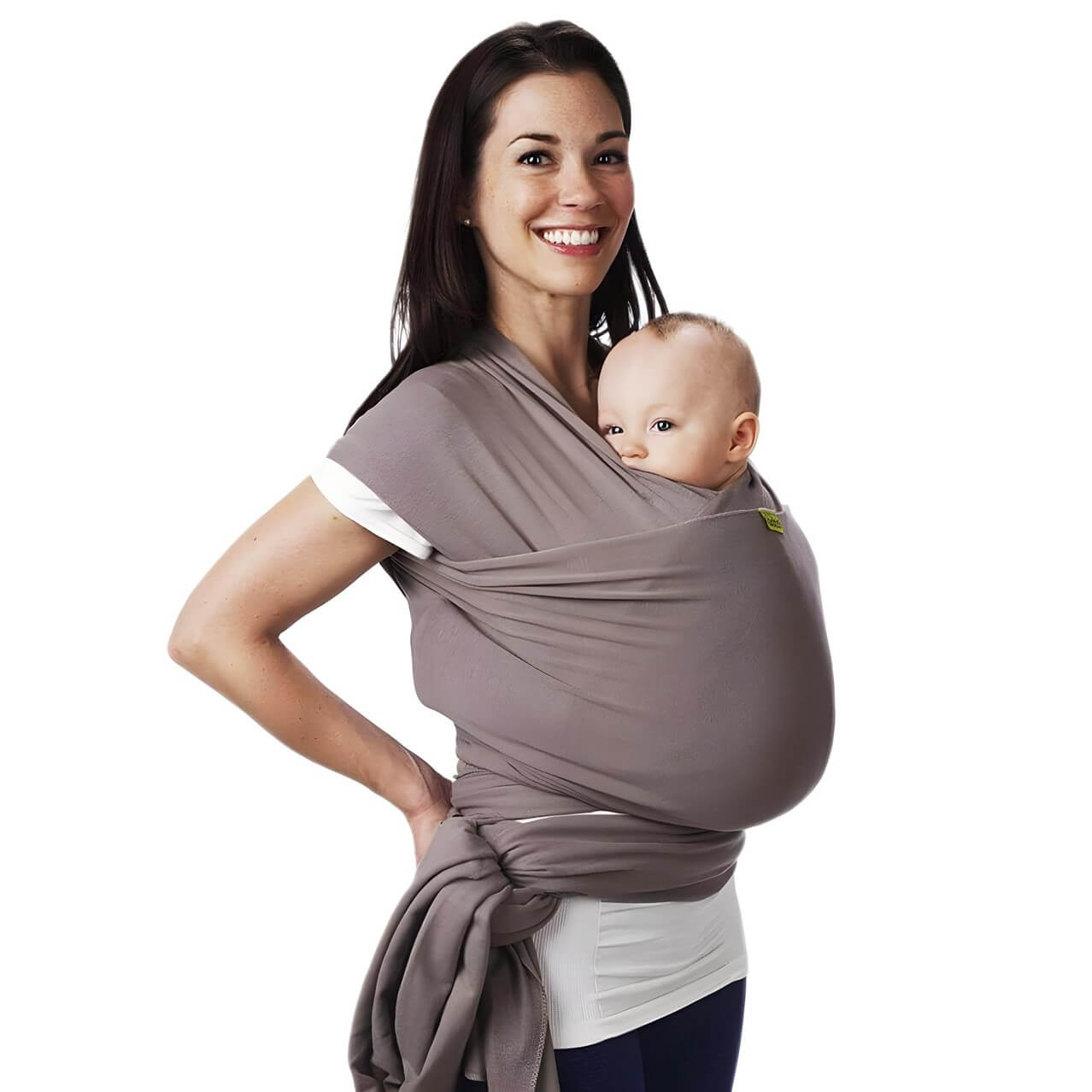
Boba Baby Wrap Carrier – Original Baby Sling Carrier for Newborns
Best WrapBoba · $34.99
Price last checked August 15, 2026 — see Amazon for current pricing.
Soft stretchy cotton blend that creates a secure, womb-like hold for newborns — the gold standard travel wrap.
Pros
- Soft and secure wrap hold
- Ergonomic for parent and baby
- Machine washable
- Compact when folded
Cons
- Learning curve for wrapping
- Can be warm in hot weather
- Less structured support for older toddlers
The Boba Wrap is the wrap that most pediatricians and babywearing educators recommend, and after using it through two babies and dozens of flights, we understand why. The fabric is a soft, stretchy cotton-spandex blend that has just enough give to create a secure pocket for your baby without feeling like you are wrestling with a piece of elastic. Once tied correctly, it distributes your baby's weight evenly across your back and shoulders in a way that feels surprisingly natural for something that is basically just a long piece of cloth.
For travel, the Boba has a specific advantage: it is machine washable and dries fast. That matters more than it sounds when a baby is sick on you in a terminal two hours before boarding. Washed in a hotel sink overnight, it is dry enough to use by morning. It folds to roughly the size of a rolled-up t-shirt, so it disappears into a diaper bag when it is not in use.
The learning curve is real. Plan on spending 20 to 30 minutes at home practicing the wrap technique before you try it in public. Watch two or three YouTube tutorials, try it with a stuffed animal first, then practice with your baby. By the third or fourth try, it becomes muscle memory. On a recent trip through O'Hare, I had the Boba on and our newborn secured in under two minutes while standing in the gate area. But that speed came from practice, not from the first attempt.
The practical weight limit is around 20 to 25 pounds, even though the stated limit is 35. Past 20 pounds, the stretchy fabric starts to sag and you lose the secure, snug feeling. For newborns through about 5 to 6 months, though, this is the top-rated airport travel carrier based on parent reviews.
Best for: Newborn travel, especially airport days and city sightseeing in the first 6 months. Machine washable for inevitable spit-up situations.
2. KeaBabies Baby Wrap Carrier
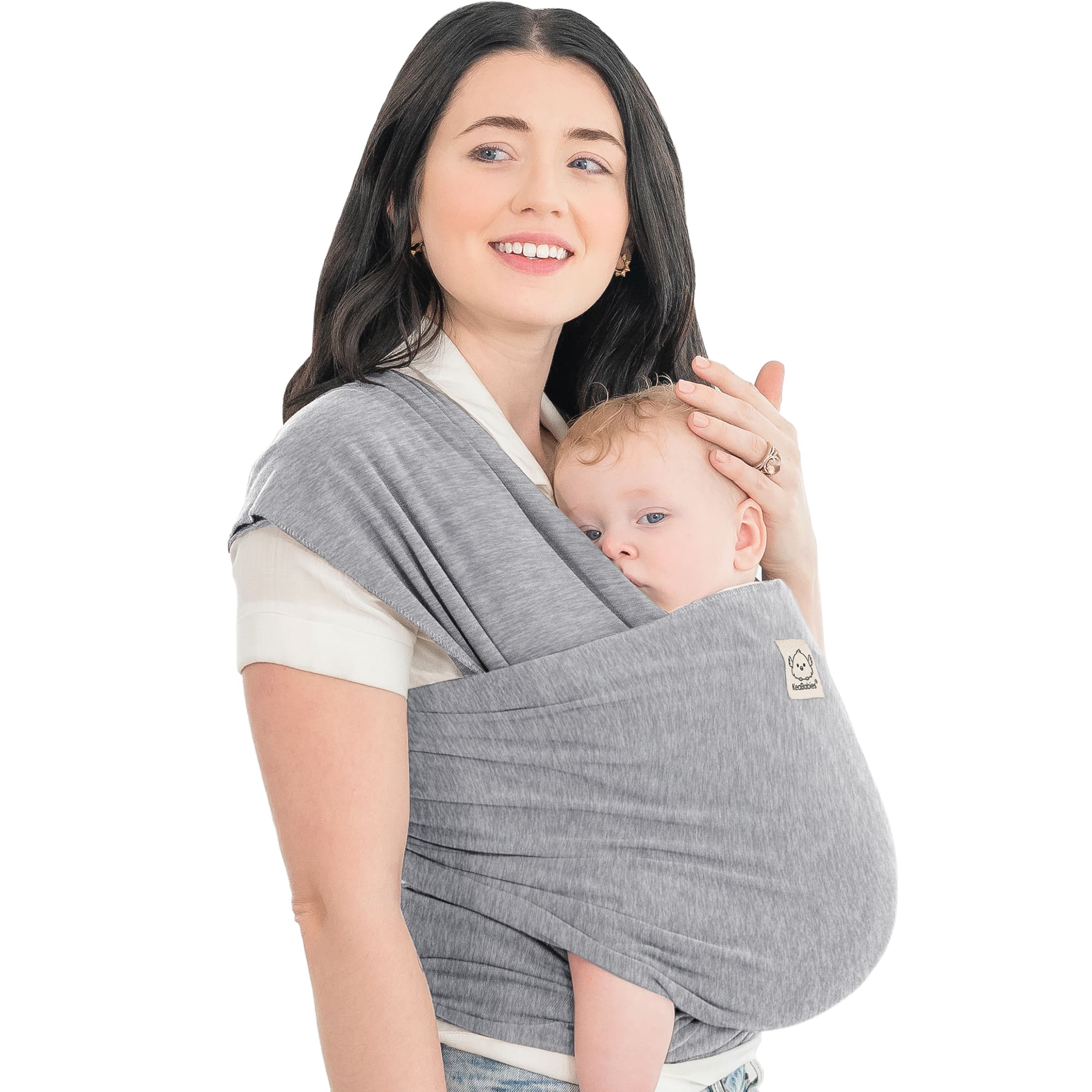
KeaBabies Baby Wrap Carrier - All in 1 Original Baby Carrier Newborn to Toddler Sling
Budget Wrap PickKeaBabies · $29.96
Price last checked August 15, 2026 — see Amazon for current pricing.
The most affordable quality wrap at under $30 — lightweight, breathable, and easy for beginners.
Pros
- Very affordable
- Lightweight and breathable
- Easy to learn wrapping technique
- Hands-free bonding
Cons
- Stretchy fabric loosens over time
- Not ideal for heavier toddlers
- Takes practice to master
The KeaBabies wrap does almost everything the Boba does at a meaningfully lower price, and in one way it does better: the fabric is lighter and more breathable, making it our pick for warm-weather travel. If you are heading to Florida, Hawaii, or anywhere with humidity, the KeaBabies wrap will keep you and your baby cooler than the thicker Boba fabric.
At under $30, this is the wrap we recommend to parents who are not sure whether they will like babywearing. Rather than spending $40 on a wrap you might use twice and stuff in a drawer, the KeaBabies lets you try the wrap experience at a price where it does not sting if wrapping turns out not to be your thing. If you love it, great — you have a genuinely good carrier that weighs only 1.2 pounds and packs smaller than a rolled-up sweater.
The KeaBabies company includes a helpful instruction card and online tutorial links that make the wrapping process more approachable for beginners. Parent feedback shows the wrapping technique is slightly easier to learn with this wrap compared to the Boba, partly because the lighter fabric is less cumbersome to manipulate while you are learning.
The trade-off is longevity. The KeaBabies fabric stretches out a bit faster with repeated use and washing compared to the Boba's denser cotton blend. For a wrap you plan to use with one child through the newborn stage, this is completely fine. For a wrap you want to last through multiple children, the Boba is the more durable investment.
One honest note: the "newborn to toddler" marketing on this product is aspirational. Like all stretchy wraps, this works best with babies under 20 pounds. By the time your baby is approaching toddlerhood, you will want a structured carrier, not a wrap.
Best for: Budget-conscious parents, warm-weather travel, and parents who want to try babywearing without a big investment.
Best Structured Carriers for Travel
Structured carriers are the Swiss Army knives of the baby carrier world. They buckle on in under a minute, distribute weight better than wraps for heavier children, and offer multiple carrying positions that adapt as your baby grows. For most traveling families, a structured carrier is the one carrier that covers 80 percent of all situations.
3. Ergobaby Omni Classic
Ergobaby Omni Classic Baby Carrier for Newborn to Toddlers 0-48 Months
Top PickErgobaby · $179.00
Price last checked August 15, 2026 — see Amazon for current pricing.
Four carry positions from newborn to 48 months with breathable mesh and lumbar support — the best all-around travel carrier.
Pros
- 4 carry positions including forward-facing
- Breathable mesh keeps cool
- No infant insert needed
- Lumbar support for parent
Cons
- Premium price point
- Bulky when not in use
- Learning curve for back carry
If you are going to own one carrier and use it for everything from the airport to the zoo to a moderate hike, the Ergobaby Omni Classic is the one. Parents praise this carrier through two children, three continents, and more airports than we care to count. It is the carrier families reach for when we do not know exactly what the day will look like, because it handles everything.
The four carry positions — front inward, front outward, hip, and back — mean this carrier adapts to every age and every situation. Newborns ride front inward without a separate infant insert (a huge improvement over older Ergobaby models that required a $30 accessory for newborns). Our 10-month-old loved the front outward position for museum visits and zoo days when he wanted to see everything. By 14 months, we transitioned to back carry for longer walks, and the weight distribution shifted to our hips where it belongs.
The breathable mesh fabric is critical for travel. On a July trip to Rome, where temperatures hit 95 degrees and we were walking 8 miles a day through ancient ruins, the mesh version kept both of us from overheating.
The lumbar support is the feature that parents who have not used an Ergobaby do not appreciate until they try it. After an hour of carrying a 25-pound toddler, the difference between a carrier with lumbar support and one without is the difference between feeling fine and having a sore lower back for the rest of the day. This matters enormously when you are on vacation and walking all day.
At $134, the Omni Classic is a meaningful investment. But consider the math: this carrier works from 7 pounds (newborn) to 45 pounds (roughly 4 years old). Divide the cost by the number of times you will use it over those four years and it is pennies per use. We have friends who bought cheaper carriers, replaced them twice as their kids grew, and ended up spending more in total.
Best for: The one carrier that does everything. Airport travel, city sightseeing, theme parks, light hiking, and everyday use from newborn through age 4. Our strongest recommendation in this roundup.
4. Ergobaby Embrace
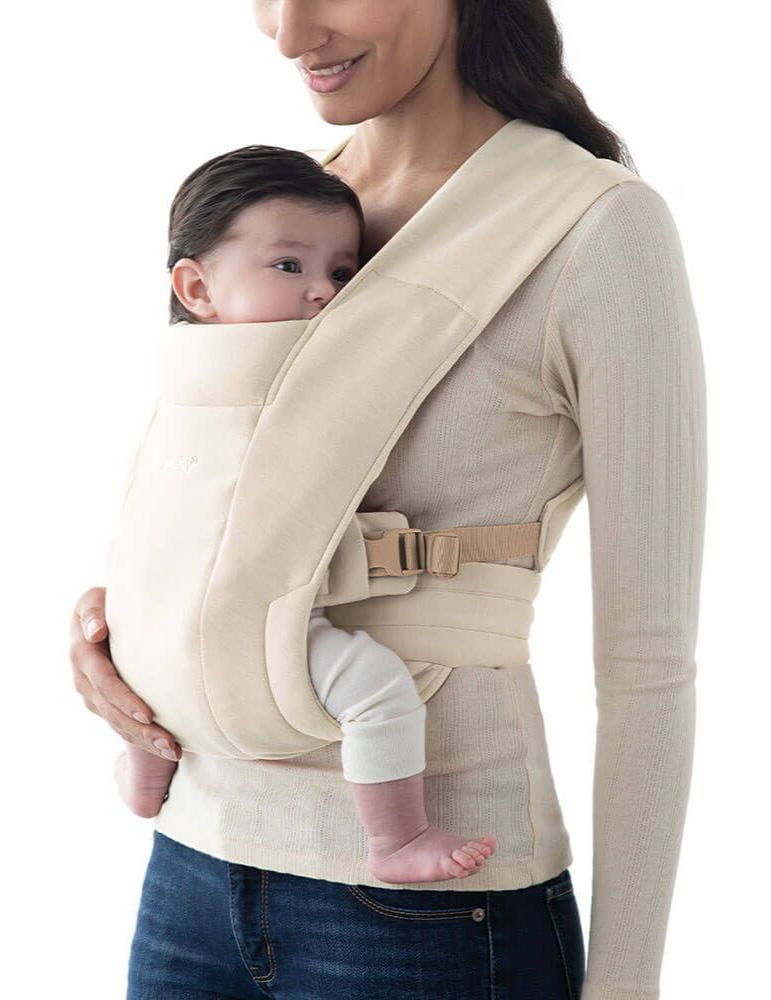
Ergobaby Embrace Newborn Baby Carrier for Infants 0-12 Months
Best for NewbornsErgobaby · $99.00
Price last checked August 15, 2026 — see Amazon for current pricing.
The simplicity of a wrap with the structure of a carrier — no wrapping, no learning curve, and ultra-soft knit fabric.
Pros
- Simple to put on—no wrapping needed
- Ultra-soft knit fabric
- Hip-healthy design certified
- Compact and lightweight
Cons
- Only up to 25 lbs
- 2 positions only
- Not for older toddlers
The Ergobaby Embrace answers a very specific question: what if you want the soft, close hold of a wrap but cannot deal with 15 feet of fabric? The Embrace uses the same soft knit material as a wrap but builds it into a structured carrier shape with simple buckles and stretchy straps. No wrapping technique. No YouTube tutorials. You put it on like a vest, buckle two points, and you are done.
We originally bought this as our "backup airport carrier" and it ended up becoming our primary carrier for the entire newborn stage. The reason is simple: when you are sleep-deprived and fumbling with luggage and a boarding pass, the last thing you want is to execute a wrapping technique in the middle of a crowded gate area. The Embrace goes on in about 30 seconds. That matters at 5 AM.
The soft knit fabric has the same cozy, close feeling as a wrap. Our newborn would fall asleep in the Embrace within minutes, which made it invaluable for both flights and long layovers. The hip-healthy design certification means the carrier supports the natural M-position of baby's legs — something not all carriers in this price range can claim.
The limitation is the weight range. At 25 pounds max, this is a newborn-to-12-months carrier for most children. It is not going to carry a 2-year-old. Think of it as the perfect complement to the Omni Classic: the Embrace for the first year, then transition to the Omni Classic for toddlerhood. Or, if you are budget-conscious, skip the Embrace and use a wrap for the newborn stage before moving to the Omni Classic.
At 1.2 pounds and a compact fold, the Embrace takes up less room in a diaper bag than a bottle and two nappies. On a trip carrying both a travel stroller and a carrier, that is the deciding factor — a carrier that disappears when it is not in use is one you will actually bring.
Best for: Newborns through 12 months. First-time parents who want wrap-like closeness without the wrapping process. The ideal airport carrier for the first year.
5. Infantino Flip Luxe 4-in-1
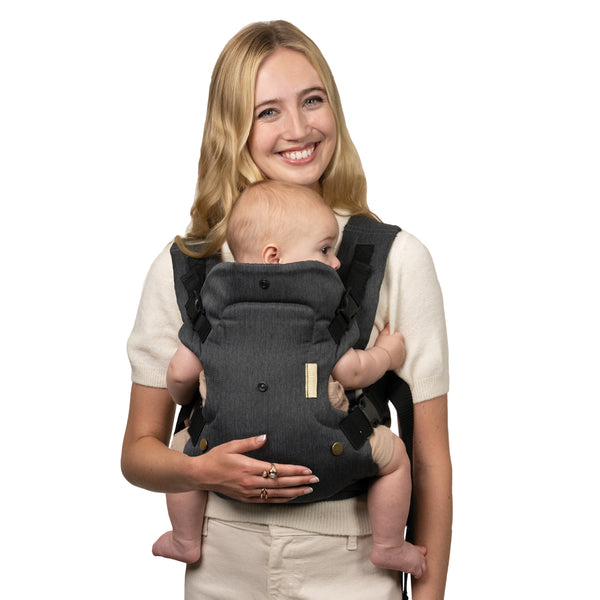
Infantino Flip Luxe 4-in-1 Convertible Baby Carrier
Best Budget CarrierInfantino · $39.99
Price last checked August 15, 2026 — see Amazon for current pricing.
Four carry positions and premium herringbone fabric at $40 — the best structured carrier under $50.
Pros
- 4 carry positions for flexibility
- Updated lumbar support
- Premium herringbone fabric
- Very affordable
Cons
- Less padding than premium carriers
- May feel warm in summer
- Limited toddler weight range
The Infantino Flip Luxe is the carrier that proves you do not need to spend $130 to get a genuinely functional travel carrier. At $40, it offers four carry positions, updated lumbar support, and a premium herringbone fabric that does not look or feel like a budget product. We have recommended this carrier to at least a dozen parent friends over the years, and every one of them has been surprised by how good it is for the price.
The four carry positions — narrow-seat newborn facing in, wide-seat facing in, facing out, and back carry — cover the same range as the Ergobaby Omni Classic at one-third the price. The weight range of 7 to 35 pounds is slightly narrower than the Ergobaby (which goes to 45 pounds), but that range covers from birth through about age 2 for most children. For many families, that is enough.
It handled Sedona red rock trails, the crowded Grand Canyon rim, and multiple restaurant meals where we wore her instead of hunting for a high chair. At 1.5 pounds, it added basically nothing to our already-overstuffed luggage.
Where you will feel the difference from the Ergobaby is padding and long-duration comfort. After about 90 minutes of continuous wear, the shoulder straps on the Infantino start to dig in a bit if your child is on the heavier end. The lumbar support is a welcome addition but not as substantial as the Ergobaby's padded lumbar panel. For sub-90-minute carrying sessions — which covers most airport walks, shopping trips, and sightseeing stops — this is a non-issue. For all-day wear or hiking, the Ergobaby's superior padding and weight distribution justify the higher price.
The herringbone fabric is genuinely nice to touch and looks stylish. Multiple friends have asked us what brand of carrier we were wearing, clearly expecting us to name a $150 premium brand. At $40, the Infantino Flip Luxe is the best value in the structured carrier category by a wide margin.
Best for: Budget-conscious families, backup travel carrier, parents who want multiple carry positions without the premium price. The best carrier under $50.
Best Hiking Backpack Carriers
When the trail gets real — elevation gain, uneven terrain, multi-mile distances — you need a frame carrier. Soft carriers cannot distribute the weight properly for sustained hiking, and wraps are completely out of the question with a toddler on your back over rough ground. Frame carriers use the same suspension systems as hiking backpacks because they are, in fact, hiking backpacks that happen to carry a child instead of gear. The three carriers below span from excellent value to the best money can buy.
6. Osprey Poco Child Carrier
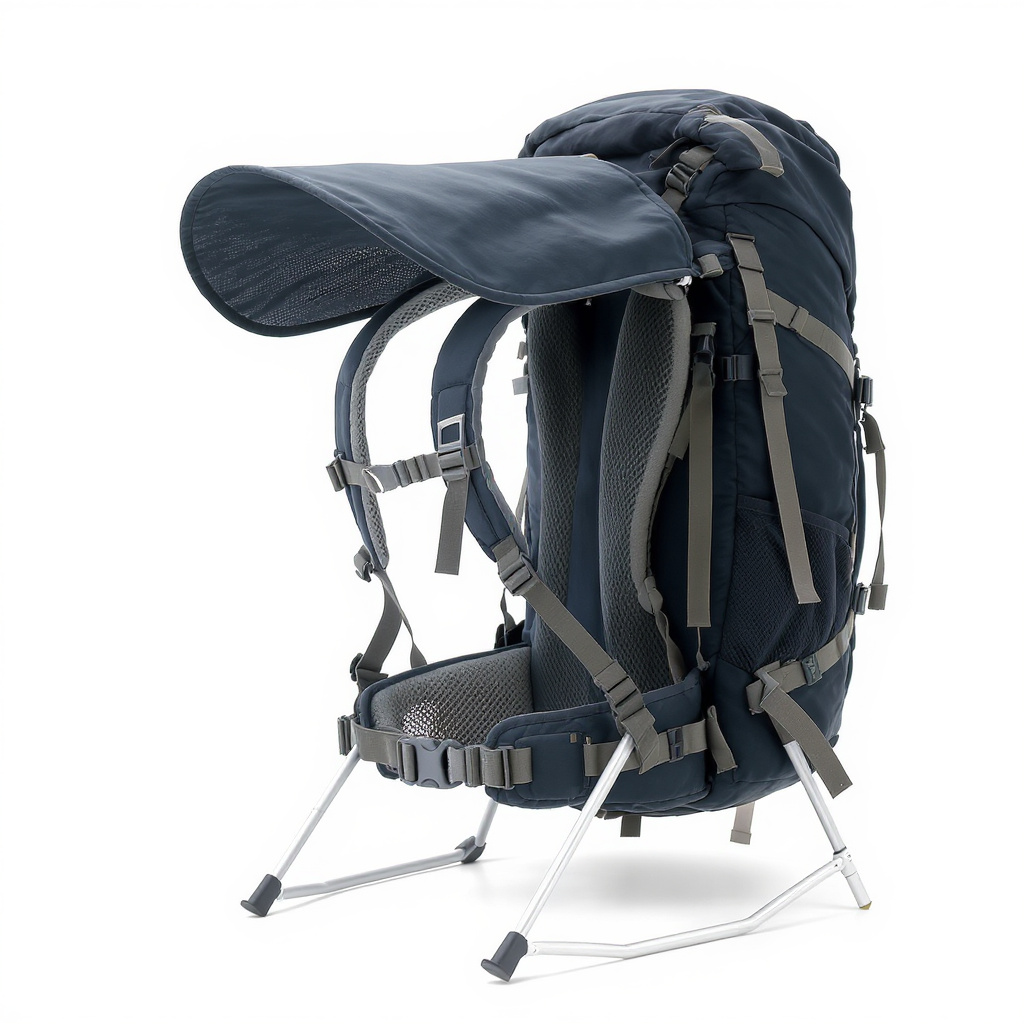
Osprey Poco Child Carrier Backpack - Adjustable Travel Baby Carrier with Sunshade
Best Hiking CarrierOsprey · $339.95
Price last checked August 15, 2026 — see Amazon for current pricing.
Built-in sunshade, legendary Osprey comfort, and the AllMighty Guarantee — the best hiking carrier for families who hit the trails regularly.
Pros
- Built-in sunshade included
- Excellent ventilation system
- Integrated kickstand
- Osprey's AllMighty Guarantee
Cons
- Premium price
- Back carry only
- Too bulky for airports
Osprey makes the best hiking backpacks in the world. That is not marketing — ask any serious backpacker and the conversation usually starts with Osprey. The Poco takes that same engineering and applies it to carrying a child, and the result is the most comfortable hiking carrier among parents who have logged hundreds of trail miles.
The ventilated back panel is what separates the Osprey from everything else in this category. On a sweaty August hike up to Grotto Falls in the Smokies, the difference between the Osprey's AirSpeed suspension and a cheaper carrier's foam padding was immediately obvious. My back was damp but not soaked. The person behind us on the trail wearing a less expensive carrier looked like they had run through a sprinkler. When you are hiking uphill with 30-plus pounds on your back, ventilation is not a luxury.
The built-in sunshade is included — not a $40 accessory sold separately, which is what some competitors do. It deploys in about three seconds and retracts flat against the carrier when not needed.
The integrated kickstand locks the carrier upright for loading and unloading your child. This is a safety feature, not a convenience feature. Loading a 30-pound toddler into a frame carrier while the carrier is lying on the ground is an awkward two-person operation. With the kickstand, one parent holds the carrier steady while the other positions the child, and the carrier stays upright and stable throughout.
Then there is the AllMighty Guarantee. Osprey will repair or replace your carrier for any reason, at any time. We have a friend whose dog chewed through a hip belt buckle. Osprey replaced it free of charge. For a piece of gear that costs $395 and takes a beating on trails, that guarantee matters.
The weight range of 16 to 48.5 pounds means most children can use this from the time they can sit unassisted (around 6 months) until they insist on hiking independently (roughly age 4 to 5). The built-in daypack storage holds diapers, snacks, water, an extra layer, and a first aid kit without needing a separate daypack.
At $395, this is the most expensive carrier in our roundup. For families who hike regularly — once a month or more — the comfort difference over cheaper carriers justifies every dollar across years of trail use. For families who hike a few times a year, the Luvdbaby or Deuter below offer much of the same functionality for less.
Best for: Serious hiking families. Regular trail use. Multi-day trips to national parks. The best hiking carrier you can buy.
7. Deuter Kid Comfort
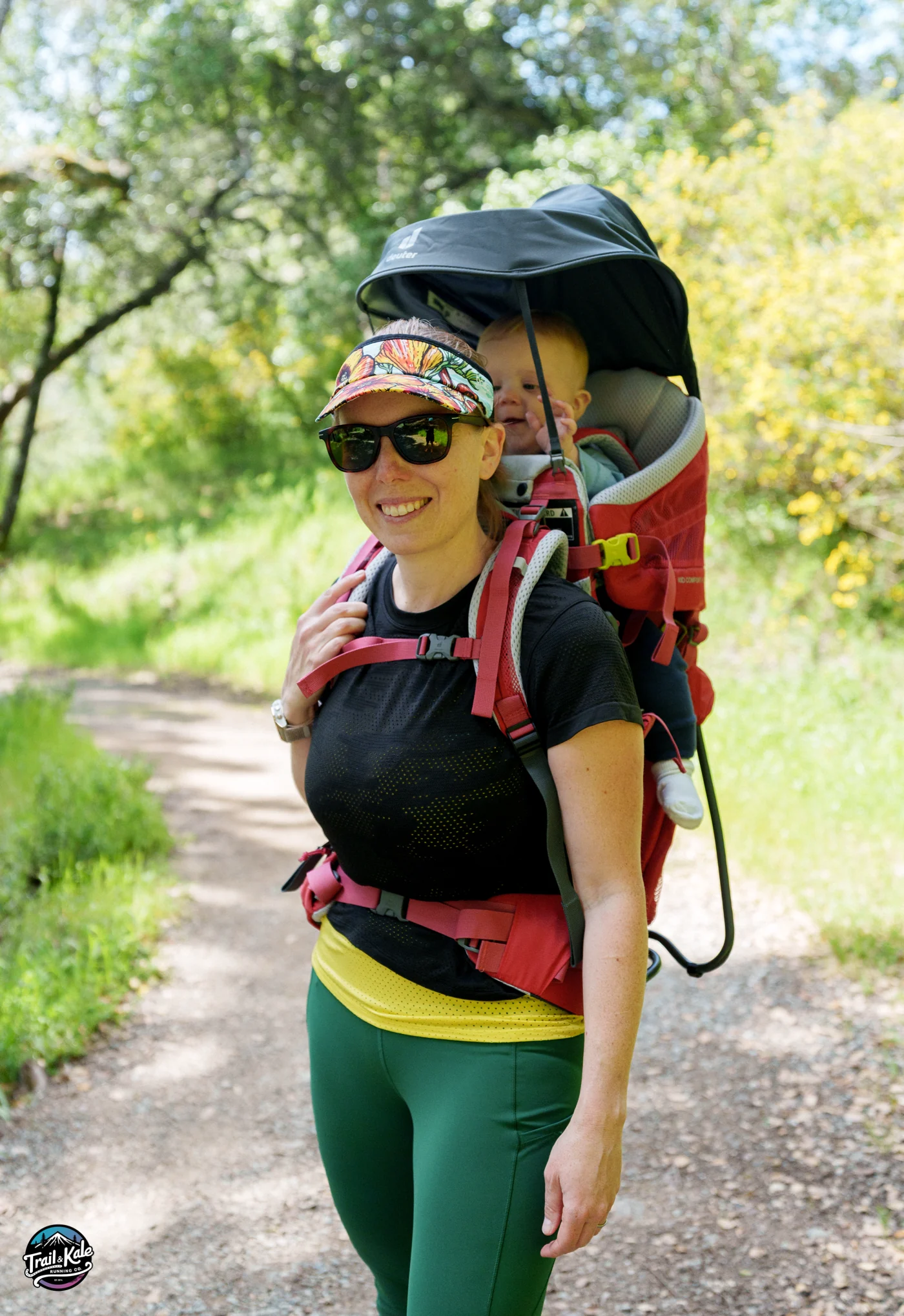
Deuter Kid Comfort Child Carrier and Backpack for Travel & Hiking with Toddlers
Best StorageDeuter · $309.00
Price last checked August 15, 2026 — see Amazon for current pricing.
18 liters of gear storage plus a comfortable carrying system — the hiking carrier that doubles as your daypack.
Pros
- Excellent ventilated back system
- Integrated kickstand for easy loading
- Adjustable fit for multiple carriers
- Good gear storage
Cons
- Heavy at 7.5 lb
- Not suitable for infants
- Too bulky for airports
Deuter is a German brand that has been making hiking packs since the 1890s. Their Kid Comfort takes a slightly different approach than the Osprey: instead of optimizing purely for the lightest possible weight, Deuter optimized for the most storage you can get while still being comfortable to carry.
The 18 liters of integrated storage is the standout number. For context, the Osprey Poco has about 11 liters. That extra 7 liters means the Deuter can comfortably hold all of the following: four diapers, a full change of clothes, two snack containers, two water bottles, a compact first aid kit, an extra fleece layer, your phone, keys, wallet, and sunscreen. On day hikes, you do not need a separate daypack. Everything rides in one carrier on one parent's back.
The ventilated back system is not quite as airy as the Osprey's AirSpeed design, but it is still very good and noticeably better than carriers in the under-$200 range. The adjustable fit system allows both parents to use the same carrier without spending five minutes readjusting straps, which matters when you swap carriers at the mid-hike lunch spot.
The kickstand is rock-solid and gives a reassuring click when it locks. We have set this carrier down on uneven ground at trailhead parking lots, on rocky rest spots, and on sloped picnic areas, and it has never tipped. The 5-point child harness feels substantial and keeps even the most wiggly toddlers secure.
At 7.5 pounds, the Deuter is the heaviest carrier in our roundup. You feel that weight on longer hikes — add a 30-pound toddler and gear and you are carrying close to 45 pounds total. If you are primarily doing shorter hikes (under 3 miles) and want the storage, the extra weight is manageable. For longer hikes, the Osprey's lighter weight and better ventilation make a meaningful difference.
At $300, the Deuter sits between the budget Luvdbaby and the premium Osprey. For families who want one pack to serve as both a child carrier and a daypack, the Deuter's storage advantage makes it the right choice.
Best for: Day hikers who want to ditch the separate daypack. Families who pack a lot of gear for trail days. The best balance of storage and comfort.
8. Luvdbaby Hiking Baby Carrier Backpack
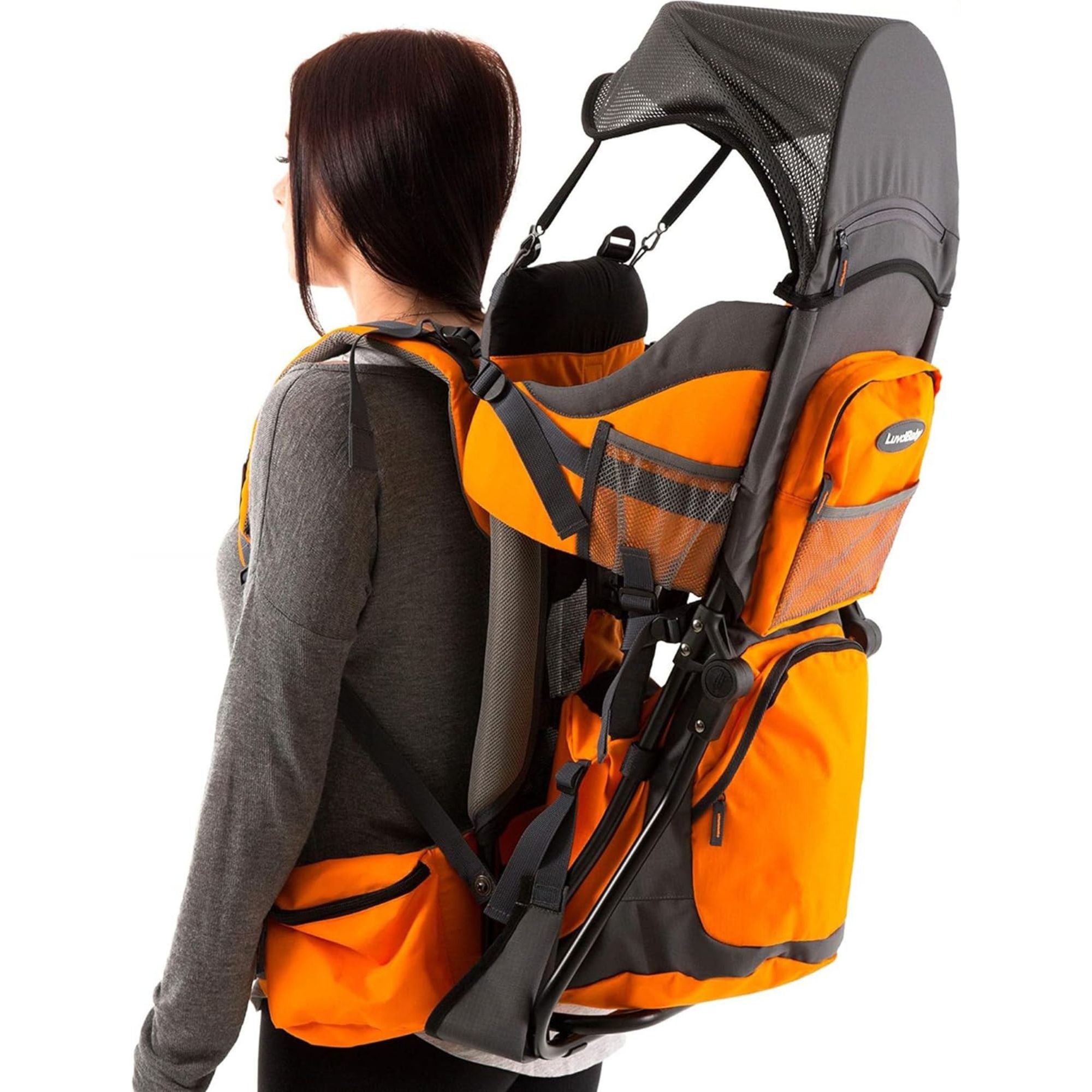
Hiking Baby Carrier Backpack with Diaper Change Pad, Insulated Pocket, Rain and Sun Hood
Best Value Hiking CarrierLuvdbaby · $194.90
Price last checked August 15, 2026 — see Amazon for current pricing.
Rain and sun hood, diaper change pad, insulated bottle pocket — more accessories than carriers twice the price.
Pros
- Includes rain and sun hood
- Built-in diaper change pad
- Insulated pocket for bottles
- Great value for features
Cons
- Less brand recognition
- Heavier than minimalist carriers
- Limited fit adjustability
The Luvdbaby is the carrier that made us rethink what you need to spend on a hiking carrier. At $195, it costs less than half the Osprey and includes accessories that neither the Osprey nor the Deuter include: a rain and sun hood, a built-in diaper change pad, and an insulated pocket that keeps a bottle warm (or a water cold) for hours.
Let us talk about that rain hood for a second. On a hike in Shenandoah National Park, a thunderstorm rolled in that was not in the forecast. We had the Luvdbaby's integrated rain hood deployed in about 10 seconds. If we had been using the Osprey that day, we would have been scrambling for a rain cover we probably did not bring because we trusted the forecast. The included rain hood means you always have weather protection without needing to remember to pack it.
The diaper change pad is genuinely useful on trails. Changing a diaper on a log or a rock without a pad is doable, but it is uncomfortable for the baby and messy for everyone. Having a clean, waterproof pad built into the carrier means you are always ready for an unexpected blowout at mile 3.
The insulated pocket is big enough for a standard baby bottle or a small hydration bottle. On cold-weather hikes, it keeps milk or formula warm. On summer hikes, it keeps water refreshingly cool. It is a small feature that you use on every single hike.
The carrying comfort is good but not Osprey or Deuter good. The hip belt is adequately padded but does not transfer weight as efficiently as the more expensive carriers' hiking-specific suspension systems. For hikes under 4 miles, we could not tell the difference. On a 7-mile hike in Rocky Mountain National Park, the difference became noticeable by mile 5 — a bit more shoulder fatigue, a bit less hip support. At 6 pounds, it is lighter than both the Osprey and the Deuter, which partially offsets the less sophisticated suspension.
For families who hike occasionally — a few national park trips a year, weekend trail walks — the Luvdbaby offers fantastic value. You get features that cost extra on premium carriers, at a total price that is roughly the cost of the sunshade accessory plus the rain cover accessory for the Osprey alone. If you hike seriously and frequently, the Osprey's superior comfort system is worth the upgrade. For everyone else, the Luvdbaby delivers.
Best for: Budget-conscious hiking families. Occasional hikers. Families who want all-weather capability without buying accessories separately.
Age-by-Age Carrier Guide: What Works When
Not every carrier works for every age. Here is what parents actually use and when, based on years of community feedback from traveling with kids at every stage.
Newborn to 4 Months
At this age, your baby wants to be held close. They need head and neck support, and they sleep constantly. This is wrap territory.
- Boba Baby Wrap or KeaBabies Wrap — for airport travel, sightseeing, and hands-free navigation
- Ergobaby Embrace — if wrapping is not your thing, the Embrace gives you the same closeness with buckles instead of fabric
- Avoid frame backpacks entirely — your baby cannot sit unassisted and does not have the neck strength for a frame carrier
At this age, the carrier is mostly about freeing your hands at the airport and letting your baby sleep against your chest during travel days. Keep it simple.
4 to 12 Months
Your baby can hold their head up, they are getting heavier, and wraps start to feel less supportive. This is the transition to structured carriers.
- Ergobaby Omni Classic — the front inward position with the wide seat setting is perfect for this age. Switch to front outward for curious babies who want to see the world.
- Ergobaby Embrace — still works great through the end of this stage for smaller babies
- Infantino Flip Luxe — the budget option that handles this age beautifully
- Starting around 6 months (when baby can sit unassisted), you can introduce frame carriers for hiking
12 to 24 Months
This is the golden age for carriers. Your toddler is heavy enough that wraps are impractical, young enough that they still tolerate being carried for extended periods, and too unpredictable to walk independently on trails or through airports.
- Ergobaby Omni Classic in back carry — distributes the increasing weight to your hips
- Infantino Flip Luxe — still solid for shorter carrying sessions
- Osprey Poco, Deuter Kid Comfort, or Luvdbaby Hiking Backpack — for hiking, this is when frame carriers really earn their value
- Start practicing back carry at home before you try it on a trip
2 to 4 Years
Carriers become more situational at this age. Your toddler walks much of the time but still needs a ride when tired, when terrain is too rough, or when you need to move faster than toddler legs allow.
- Ergobaby Omni Classic in back carry — good up to 45 pounds
- Osprey Poco or Deuter Kid Comfort — ideal for the hiking toddler who walks some and rides some
- At this age, many families use both a carrier and a travel stroller — the stroller for flat ground and long distances, the carrier for stairs, crowds, terrain, and naps
Travel Scenario Guide: Which Carrier Where
Airport and Flying
Soft carriers and wraps are king at the airport. Here is what matters:
TSA security: The TSA allows you to wear a soft-structured carrier or wrap through the walk-through metal detector with your baby. You do not need to remove the carrier or the baby. Frame backpack carriers will likely need to go through the X-ray machine, which means removing your child. For this reason alone, we recommend soft carriers for airport days. If you have TSA PreCheck, the process is even simpler.
Boarding and the airplane: Wear the carrier through boarding, then remove it once seated. For lap infants, the carrier can stay loosely on you during the flight (check with your specific airline). For a toddler in their own seat, fold the carrier into your personal item. During turbulence or if you need to walk the aisle with a fussy baby, having a carrier is infinitely better than carrying a baby bare-armed through a narrow, bumpy airplane aisle.
Gate areas and layovers: A carrier lets your toddler nap while you sit comfortably in a gate chair instead of pacing with them in your arms. On a 3-hour layover at DFW, our 11-month-old slept in the Ergobaby Omni Classic for 90 minutes while we ate lunch and charged our devices. Without the carrier, one of us would have been standing and bouncing for that entire time.
Hiking and Trails
Frame carriers for any hike over a mile. For quick nature walks on paved paths, a structured carrier works fine. Here is our specific recommendation by trail type:
- Flat, paved paths: Structured carrier (Ergobaby or Infantino) — lighter and less bulky than a frame carrier
- Moderate dirt trails (under 3 miles): Frame carrier recommended but structured carrier workable for children under 20 pounds
- Longer or steeper hikes: Frame carrier required. The weight distribution makes a massive difference when you are climbing elevation with a child on your back.
- Rocky or uneven terrain: Frame carrier required. The hip belt keeps the load stable and prevents the dangerous weight shifting that happens with soft carriers on uneven ground.
Always bring more water than you think you need. You are working harder than normal because of the extra weight, and your child needs hydration too. We carry one bottle in the carrier's side pocket and one in a hip belt holder.
City Sightseeing and Theme Parks
Structured carriers dominate here. You need something that goes on and off easily (because your toddler will want to walk, then be carried, then walk, then be carried — repeat for 8 hours), packs small when not in use, and handles cobblestones, stairs, and escalators that make strollers miserable.
On the published specification, the best theme park setup is a lightweight travel stroller for the main walkways and a carrier for rides with long queues where the stroller has to stay outside. The stroller holds your stuff and gives the child a comfortable seat. The carrier keeps them close and contained when the stroller is impractical.
For European cities with cobblestones, stairs, and narrow sidewalks, we have essentially given up on strollers and go carrier-only. Two days into a Lisbon trip, our travel stroller was sitting in the hotel room permanently because every sidewalk was either too narrow, too steep, or too cobblestoned for wheels. The Ergobaby Omni Classic handled all of it.
What NOT to Buy: Carrier Red Flags
We believe in telling you what to avoid just as much as what to buy. These problems show up repeatedly in cheap carriers and carriers from brands with no babywearing expertise:
Carriers without hip support for the parent. If the carrier puts all the weight on your shoulders with no waistband or a thin, unpadded waistband, you will be in pain within 20 minutes when carrying any child over 15 pounds. This eliminates most carriers under $20 from serious consideration. A good waistband transfers 60 to 70 percent of the load to your hips, where your body is designed to carry weight.
Narrow-base carriers that let baby's legs dangle. A proper carrier supports the baby from knee to knee, creating an M-shaped leg position where the knees are higher than the hips. Carriers with a narrow crotch panel let the baby's legs hang straight down, putting pressure on the hip joints and spine. The International Hip Dysplasia Institute maintains a list of carriers with hip-healthy design certification — check it before buying any carrier not on our recommended list.
Cheap knockoffs of premium brands. We have seen $25 "Ergobaby" carriers on third-party marketplace listings that are counterfeit. The fabric is thinner, the buckles are weaker, and the stitching is inconsistent. A buckle failure while wearing a baby is a catastrophic safety risk. Buy from authorized retailers or directly from the brand's website.
Forward-facing-only carriers. Some cheap carriers only support a forward-facing outward position. This position is only appropriate for babies with full head and neck control (4+ months) and should not be used for extended periods because it does not support the natural spinal curve. A carrier that only offers forward-facing is not a carrier — it is a novelty that will hurt both you and your baby.
Crotch-style or bag-style carriers. If the carrier looks like it is holding your baby by the crotch, with legs dangling and no thigh support, it is bad for your baby's hips and bad for your back. These designs have been discouraged by pediatric orthopedic associations for years. They are still sold because they are cheap to manufacture and parents who do not know better buy them.
Carrier Fit Tips for Different Parent Body Types
One carrier does not fit every body the same way. Here is what we have learned from fitting carriers on parents ranging from 5'0" to 6'4", from 110 to 250 pounds:
Petite parents (under 5'4"): The Ergobaby Omni Classic adjusts small enough for most petite parents, but the waistband can feel bulky on very small torsos. The Ergobaby Embrace and the wrap carriers tend to fit petite frames better because the fabric conforms to your body rather than relying on fixed-size straps. For frame carriers, the Luvdbaby has less size-specific adjustability than the Osprey or Deuter — petite parents should try the Osprey first, as its harness adjusts to a wider range of torso lengths.
Tall parents (over 6'0"): The Ergobaby Omni Classic's shoulder straps extend long enough for most tall parents without issue. For frame carriers, both the Osprey and the Deuter have torso-length adjustments that accommodate tall frames well. The Luvdbaby's fixed sizing can feel short in the torso for parents over 6'2".
Plus-size parents: The Ergobaby Omni Classic's waistband extends to fit waists up to about 52 inches with the included waistband extender. The Infantino Flip Luxe is slightly less accommodating and may feel tight on larger frames. Wrap carriers are naturally inclusive of all body sizes because the fabric wraps to fit — the Boba Wrap's length (about 5.5 yards) is generous enough for any body type.
When two parents share a carrier: If both parents will use the same carrier on a trip, the Ergobaby Omni Classic and the Deuter Kid Comfort have the most intuitive strap adjustment systems for swapping between bodies. Readjusting takes about 30 seconds once you know where each parent's settings are. Some parents mark the strap positions with a small piece of tape so they can swap quickly.
The most important fit check: Once the carrier is on and your child is in it, lean forward at the waist. If the child shifts significantly or you feel them pulling away from your body, the carrier is too loose. Tighten the straps until the child feels like a secure extension of your torso. When properly fitted, you should be able to lean forward, bend your knees, and twist at the waist without the child shifting.
Packing a Carrier for Travel
How you pack your carrier depends on what type it is:
Wraps (Boba, KeaBabies): Roll tightly and stuff into a large zip-lock bag or the bottom of your diaper bag. They take up about as much space as a rolled towel. Keep them accessible if you plan to use them at the airport — do not bury them in checked luggage.
Structured carriers (Ergobaby, Infantino): Most structured carriers fold down to roughly the size of a large purse. The Ergobaby Embrace folds smaller than a hardcover book. Clip them to the outside of your backpack with a carabiner if you want them within reach but do not want them taking up space inside your bag. Do not check structured carriers — they are too useful at the airport.
Frame carriers (Osprey, Deuter, Luvdbaby): These do not fold. They check as luggage or sports equipment on most airlines, usually without an extra fee (check your airline). Put them in a large duffel bag or the airline's bag-check wrap to protect the straps and buckles from the baggage handling system. If you are driving to your destination, they go in the trunk standing upright. Add these to your packing checklist as a separate item — they take up real space.
Individual Reviews
We have written in-depth reviews for several products in this roundup. Each review includes detailed testing, comparisons, and our honest take after months of real-world use.
Disclosure: ToddlerTravelGear is reader-supported. We may earn a commission if you buy through links on our site — at no extra cost to you. Learn more
Frequently Asked Questions
Products Mentioned
Boba
Boba Baby Wrap Carrier – Original Baby Sling Carrier for Newborns
Read review →
Deuter
Deuter Kid Comfort Child Carrier and Backpack for Travel & Hiking with Toddlers
Read review →
Ergobaby
Ergobaby Embrace Newborn Baby Carrier for Infants 0-12 Months
Read review →
Ergobaby
Ergobaby Omni Classic Baby Carrier for Newborn to Toddlers 0-48 Months
Read review →
Luvdbaby
Hiking Baby Carrier Backpack with Diaper Change Pad, Insulated Pocket, Rain and Sun Hood
Read review →
Infantino
Infantino Flip Luxe 4-in-1 Convertible Baby Carrier
Read review →
KeaBabies
KeaBabies Baby Wrap Carrier - All in 1 Original Baby Carrier Newborn to Toddler Sling
Read review →
Osprey
Osprey Poco Child Carrier Backpack - Adjustable Travel Baby Carrier with Sunshade
Read review →
Related Content
Luvdbaby Hiking Baby Carrier Backpack Review: The Budget Trail Carrier That Comes With Everything
Honest Luvdbaby hiking carrier review — built-in rain/sun hood, diaper pad, insulated pocket, and a $195 price that undercuts Osprey and Deuter by half.
KeaBabies Baby Wrap Carrier Review: The $30 Wrap That Breathes Better Than Its Competition
Honest KeaBabies Baby Wrap review of daily use — lightweight breathable fabric, budget price, newborn to toddler carrying. $29.96.
Boba Baby Wrap Review: The $40 Stretchy Wrap That Taught Me to Babywear
Honest Boba Baby Wrap review after using it from birth through 8 months — soft stretchy cotton blend, hands-free newborn carrying, and more. $34.99.