Disclosure: ToddlerTravelGear is reader-supported. We may earn a commission if you buy through links on our site — at no extra cost to you. Learn more
Osprey Poco Review: The Hiking Carrier That Made Us Actually Enjoy Trail Days
Honest Osprey Poco review after a season on the trails — comfort on long hikes, sunshade performance, storage capacity, and more. $339.95.
The Osprey Poco Child Carrier Backpack costs $339.95, ~7.2 lb, rated 16–48.5 lbs. This page covers what the specification supports, where the real trade-offs are, and who should choose something else — before you spend the money.
The trade-off worth knowing before you buy: premium price.
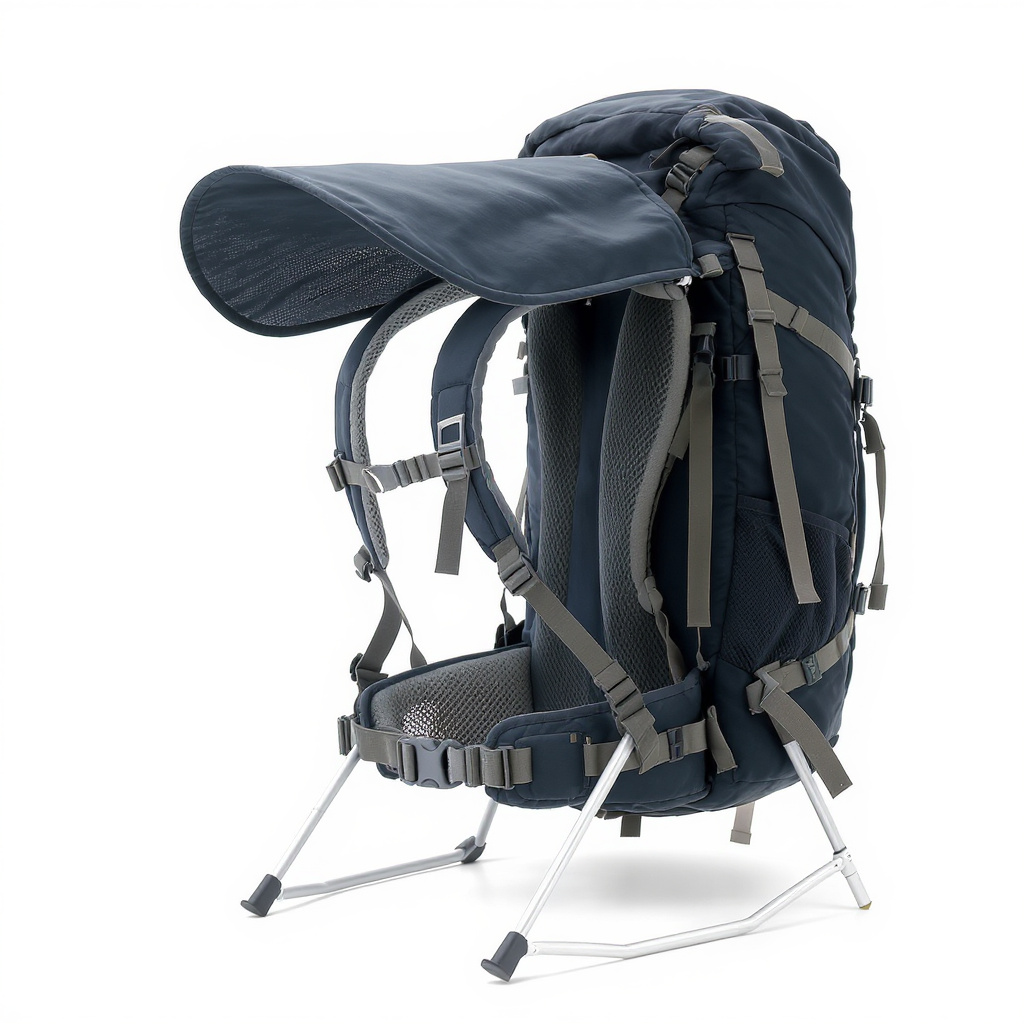
Osprey Poco Child Carrier Backpack - Adjustable Travel Baby Carrier with Sunshade
Best Hiking CarrierOsprey · $339.95
Price last checked August 15, 2026 — see Amazon for current pricing.
The best-in-class frame carrier for families who travel to hiking destinations — built-in sunshade, excellent ventilation, generous storage, and Osprey's lifetime AllMighty Guarantee make it worth the premium for serious trail use.
Pros
- Built-in sunshade included
- Excellent ventilation system
- Integrated kickstand
- Osprey's AllMighty Guarantee
Cons
- Premium price
- Back carry only
- Too bulky for airports
This product is featured in our Best Baby Carriers for Travel roundup.
How we assessed this
We have not personally tested this product. This assessment is built from the manufacturer's published specification, the safety standards the product is certified against, and comparison with the alternatives in its category. Where a question can only be answered by handling the product — how a fabric feels, whether a mechanism stiffens after a year — we say so rather than guess. Full methodology: How We Research.
Quick Verdict
The Osprey Poco is the best child carrier for families who prioritize hiking and outdoor adventures when they travel. The integrated sunshade, ventilated back panel, built-in kickstand, and daypack-level storage solve the specific problems that make hiking with a toddler hard. The comfort system distributes a toddler's weight so effectively that five-mile hikes feel genuinely manageable, not heroic. And Osprey's AllMighty Guarantee means you are buying this carrier for every child you will ever have, not just the one riding in it now.
The catch is everything that happens before and after the trail. The Poco is too large to fly with easily, too bulky for urban sightseeing, and too specialized for everyday errands. It is a destination tool — extraordinary at what it is designed for, and borderline useless outside that context. If your family travels to hike, this is the carrier. If you occasionally hike but mostly need a carrier for airports and theme parks, a soft-structured carrier like the Ergobaby Omni 360 is more versatile.
Who This Is For
Buy the Osprey Poco if you are:
- A family that plans vacations around hiking — national parks, mountain towns, trail-heavy destinations
- Parents who want to do real hikes (three miles and up, elevation changes, uneven terrain) with a toddler who cannot walk the full distance
- Traveling by car to trailheads where the carrier can live in the trunk until you need it
- Willing to invest in a single piece of gear that will last through multiple children and a decade of use
- Planning trips to places like Glacier, Zion, Acadia, the Dolomites, or Banff where trails are the main attraction
Skip the Poco if you are:
- Looking for a carrier that doubles as airport transport — this is not that carrier
- Budget-conscious and cannot justify $395 for a specialized hiking tool
- Primarily doing urban travel, theme parks, or beach vacations where trails are not the focus
- Wanting front carry capability for younger babies (the Poco is back carry only, minimum 16 pounds)
- Flying to your destination and packing light — the Poco is an entire piece of luggage unto itself
Who Should Skip
- Budget-conscious families who hike occasionally — At nearly $400, the Poco is hard to justify if you only hit the trails a few times a year; a soft carrier or the Deuter Kid Comfort at $300 will serve you fine
- Families who fly to hiking destinations — The rigid frame does not fold or collapse, making it a logistical headache to check as luggage and impractical to carry through airports
- Parents of babies under 6 months — The Poco is back-carry only with a 16-pound minimum, so it cannot serve as your carrier during the infant stage
- Urban travelers and theme park families — This carrier is comically out of place in shops, restaurants, and crowded sidewalks, and too bulky for anything that is not a trail
Key Features Deep Dive
The Sunshade: Not an Afterthought
Most frame carriers either skip the sunshade entirely or sell it as a $40 add-on that you inevitably forget to pack. The Poco's sunshade is integrated — it lives in its own zippered compartment on top of the carrier and deploys in about five seconds. You pull it out, extend the two flexible arms, and it pops into a canopy that covers your child's head and upper body.
The coverage is genuinely good. She could still look around, point at things, and do her nature commentary. The shade just kept the sun off her skin and out of her eyes, which meant she stayed comfortable and happy for longer stretches.
When you do not need it, the sunshade tucks back into its compartment and adds essentially no bulk. It is worth deploying more often than the weather suggests: UV exposure at elevation is stronger than most parents expect even under cloud, and a fabric shade protects a child who cannot be reliably re-sunscreened mid-hike.
The one limitation: wind. On exposed ridgelines with sustained wind, the sunshade catches air and flutters. In those conditions, we tucked it away and relied on a sun hat instead.
The Ventilation System: Why It Matters at Mile Three
If you have ever carried a child on your back in a soft carrier on a warm day, you know the problem. Your child's body heat meets your body heat, and by mile two your entire back is a swamp. The Poco addresses this with a tensioned mesh back panel that creates an air gap between the carrier frame and your back.
The engineering is borrowed from Osprey's adult hiking packs, and it works the same way here. Air circulates through the gap, evaporating sweat and preventing that miserable hot-and-stuck feeling that makes you want to stop hiking. On a 75-degree day at Shenandoah National Park, we finished a four-mile hike with a damp but not soaked back. With our soft carrier on a similar day, we were completely drenched by mile two.
The ventilation does not make you cool. You are still hiking uphill with 25-plus pounds on your back. But it manages the heat well enough that comfort is not the reason you stop. You stop because you are tired, not because you cannot stand the sweat anymore. That distinction matters on longer hikes.
The Kickstand: Loading Made Simple
Getting a toddler into a frame carrier that is lying on the ground is an exercise in frustration. The carrier flops over, the child squirms, straps get tangled under the frame, and by the time everyone is buckled in, you have already lost fifteen minutes and most of your patience.
The Poco's integrated kickstand solves this completely. You set the carrier upright on the ground — the kickstand locks into position and holds the carrier stable at a slight backward angle. Then you place your child in the cockpit from above, buckle the five-point harness, and the child is secure before you ever pick the carrier up. The kickstand holds firm on flat ground, packed dirt, gravel parking lots, and even slightly uneven grass.
One important note: the kickstand is designed for level or near-level surfaces. On a slope, the carrier can tip. Always check that the kickstand is locked before you let go, and never leave the carrier unattended on uneven ground with your child in it.
The Storage: A Daypack on the Back of a Child Carrier
One of the Poco's most practical features is the built-in storage compartment. The lower section of the carrier functions as a legitimate daypack — large enough for diapers, wipes, a change of clothes, snacks, a water bottle or two, sunscreen, and a lightweight rain jacket. There is also a zippered hip belt pocket for your phone or keys, and a stretch mesh pocket on the side for quick-access items.
Everything we needed for a three-to-five-hour hike with a toddler fit in the carrier's storage. This is a significant advantage over soft-structured carriers, which have no storage at all and require you to wear a separate backpack — turning you into a person carrying both a child and a full pack, with all the discomfort that implies.
The storage does add to the Poco's overall bulk, which is part of why this carrier is not something you want to carry through an airport. But on the trail, having everything in one integrated unit makes a real difference in comfort and convenience.
The Harness System: Five Points of Peace of Mind
The child sits in a padded cockpit with a five-point harness — two shoulder straps, two waist straps, and a crotch strap, all connecting at a central buckle.
The cockpit itself is well-padded with a structured frame that holds its shape. Unlike some carriers where the child's seat area is essentially a fabric sling, the Poco's cockpit provides genuine support on all sides. The stirrups at the bottom give her feet somewhere to rest, which helps with circulation on longer hikes — dangling legs go numb, and numb legs lead to a cranky toddler.
The harness adjustment requires two hands and a moment of attention, but it is not complicated.
What We Love
All-day comfort that is not an exaggeration
We have done five-mile hikes, four-hour outings, and full-day national park explorations with the Poco. The comfort system genuinely works for extended use. The padded hip belt transfers most of the weight to your hips — where your legs can support it — rather than loading your shoulders. The shoulder straps are wide and padded enough that they do not dig in. The sternum strap keeps everything in place.
At Acadia National Park, we did the Jordan Pond Path (3.3 miles) followed by a section of the Carriage Roads, totaling about five miles with our 27-pound daughter. We were tired at the end. Our legs were tired. But our backs and shoulders were fine. That would not have happened with a soft carrier. The frame makes all the difference for sustained carrying over distance.
The sunshade means one less thing to worry about
Hiking with a toddler involves an exhausting amount of logistical thinking. Sunscreen reapplication every two hours. Hat management (toddlers remove hats approximately every three minutes). Finding shady rest spots. The Poco's integrated sunshade does not eliminate sun protection concerns, but it reduces them. Your child has continuous shade without needing to keep a hat on, which is one fewer battle on the trail.
Storage eliminates the second bag
Not carrying a separate daypack is a quality-of-life improvement that is hard to appreciate until you experience it. One bag, one carrier, everything together. Your center of gravity is in one place. You are not managing competing shoulder straps. You are not trying to reach around to the bag on your front while a child is on your back. Everything is integrated. It sounds like a small thing, but five miles into a hike, small things become big things.
The kickstand changes rest stops
Being able to set the carrier down with the child still harnessed in it is a bigger advantage than it sounds. At overlooks, picnic areas and trail junctions it means both hands free to eat, check a map, or simply stretch. The alternative with a soft carrier is holding a toddler or chasing one near a drop-off, which is the situation the kickstand exists to prevent.
Osprey build quality is the real deal
The materials, stitching, zippers, and buckles on the Poco feel like they belong on a serious piece of outdoor gear — because they do. Osprey makes some of the most respected hiking packs in the world, and the Poco gets the same attention to construction. Nothing is loose, nothing is fraying, nothing has broken.
What We Don't Love
The price is hard to ignore
At $339.95, the Poco costs more than some families spend on a stroller. You can get a functional soft-structured carrier for a third of this price, and a budget frame carrier for about half. The Poco is not four times better than a $100 carrier — it is meaningfully better in specific ways that matter on trails, but those ways have diminishing returns if you only hike occasionally.
Our honest assessment: if you hike with your toddler ten or more times per year, the Poco earns its price through comfort, durability, and the AllMighty Guarantee. If you hike two or three times a year, a Deuter Kid Comfort at $300 delivers 85 percent of the experience for 75 percent of the price. If you hike once a year on vacation, a soft carrier will get you through it.
Getting it to the trailhead is a project
The Poco is approximately 28 inches tall, 15 inches wide, and 18 inches deep. It does not fold, collapse, or flatten. It is a rigid frame carrier that takes up the space of a rigid frame carrier at all times — on the trail, in the car, in the hotel room, and anywhere else it goes.
For road trips this is manageable — the Poco lives in the boot and comes out at trailheads. For fly-in hiking holidays it is a genuine logistical problem. You cannot carry it on a plane in any practical way, so checking it means buying a travel bag (Osprey sells one) and accepting baggage handling risk on a $300-plus carrier. Between the oversized baggage counter at both ends and the retrieval wait, hiring a carrier at the destination is often the better call.
If you drive to your hiking destinations, this is a non-issue. If you fly, plan accordingly.
Back carry only limits your window
The Poco requires a child who can sit up unassisted and weighs at least 16 pounds. For most children, that means roughly six to eight months at the earliest. There is no front carry position, no inward-facing mode, no newborn configuration. If you want to hike with a baby younger than six months, you need a different carrier.
This is not a design flaw — frame carriers are back carry devices by nature, and the Poco is excellent at back carry. But it means the Poco cannot be your only carrier. You will likely also need a soft-structured carrier (like the Ergobaby) for the first six months, for airports, for urban days, and for any situation where a frame carrier is impractical. The Poco is a specialist, not a generalist.
It is heavy before you add the child
At approximately 7.2 pounds empty, the Poco weighs more than most daypacks you would carry on a hike without a child. Add a 25-pound toddler, a liter of water, diapers, snacks, and a jacket, and you are carrying 35-plus pounds before you take a step. For fit hikers, this is fine. For parents who do not hike regularly, the first outing with a loaded Poco can be a shock.
We recommend building up to longer hikes. Start with a mile. Then two. Let your body adapt to the weight. The carrier distributes it well, but 35 pounds is still 35 pounds, and your knees and ankles will remind you of that fact on steep descents.
Too bulky for anything but hiking
We tried using the Poco for a day of sightseeing in Gatlinburg after hiking in the Smokies. It lasted about an hour. A frame carrier in a tourist town draws stares, does not fit through narrow doorways easily, and makes you feel like you are about to knock things off shelves in every shop. The Poco is spectacular on trails and comically out of place in restaurants, stores, and downtown sidewalks.
This is why we emphasize that the Poco is a destination tool. You use it at the trailhead. You leave it in the car for the rest of the trip.
On the Trail
Rocky Mountain National Park (Emerald Lake Trail)
The Emerald Lake trail is 3.6 miles round trip with about 650 feet of elevation gain. It is one of the most popular hikes in the park, and the trail surface varies from packed dirt to rocky sections with some root exposure.
The comfort system handled the elevation gain without issue. The hip belt kept the weight centered, and the ventilation panel kept our backs from overheating despite the climb. The sunshade was deployed the entire time — at 9,500 feet of elevation, the sun is intense even on a cool morning.
The storage compartment held a full Nalgene bottle, diapers and wipes, a snack bag, sunscreen, and a packable rain jacket. We did not need a separate bag.
Acadia National Park (Jordan Pond Path and Carriage Roads)
A combined five-mile outing on relatively flat terrain. The Jordan Pond Path has some sections of wooden boardwalk and rocky shoreline trail that require careful footing. The Carriage Roads are wide, smooth gravel.
This was our longest single outing with the Poco, and the carrier proved its comfort credentials. After five miles and three and a half hours, the primary fatigue was in our legs, not our shoulders or back. The hip belt padding showed no signs of compressing or causing pressure points.
Great Smoky Mountains (Laurel Falls Trail)
A 2.6-mile round trip paved trail with moderate elevation gain. This is an extremely popular, often crowded trail.
The kickstand got heavy use at the overlook while we spent fifteen minutes watching the falls.
Shenandoah National Park (Stony Man Trail)
A 1.6-mile round trip with about 340 feet of elevation gain to one of the best viewpoints in Shenandoah. The trail is rocky and uneven in sections. We did this hike on a warm September afternoon (about 78 degrees at the trailhead) and the ventilation system earned its engineering. The air gap between our back and the carrier frame kept airflow moving even on the uphill sections.
A small moment, but the kind that makes you grateful for gear that works.
How It Compares
The Deuter Kid Comfort is the Poco's most direct competitor. Both are premium frame carriers from respected outdoor brands, and both are excellent. The choice between them comes down to specific priorities.
| Feature | Osprey Poco | Deuter Kid Comfort |
|---|---|---|
| Price | ~$395 | ~$300 |
| Weight | ~7.2 lbs | ~7.5 lbs |
| Child weight range | 16-48.5 lbs | 16-48 lbs |
| Sunshade | Built-in, integrated | Sold separately (~$40) |
| Kickstand | Integrated | Integrated |
| Back ventilation | Tensioned mesh panel | Aircomfort mesh system |
| Storage capacity | Built-in daypack | 18L gear compartment |
| Warranty | AllMighty Guarantee (lifetime) | Limited lifetime |
| Adjustability | Torso and hip belt | Torso and hip belt |
| Stirrups | Yes, adjustable | Yes, adjustable |
Where the Poco wins
The built-in sunshade is the Poco's clearest advantage. On the Deuter, you either buy the sunshade separately and remember to pack it, or your child hikes in full sun. Over a season of use, the convenience of an integrated sunshade that is always there — no separate purchase, no forgetting it at home — is significant.
The Poco also has a slight edge in ventilation. Both carriers use mesh back panels, but the Poco's tensioned design holds a more consistent air gap across the whole panel rather than only where the mesh is pulled tight. In warm weather that is the difference between damp contact points and a soaked back.
Osprey's AllMighty Guarantee is also a differentiator. Osprey will repair or replace the Poco for any reason, at any time. Deuter's warranty is solid but more conditional. For a $400 carrier, knowing it is covered for life regardless of what happens to it provides real peace of mind.
Where the Deuter wins
The Deuter Kid Comfort costs about $95 less than the Poco, and 95 dollars is 95 dollars. If budget is a factor and you are willing to buy the sunshade separately (or skip it), the Deuter delivers a very similar experience on the trail for meaningfully less money.
The Deuter's 18-liter gear compartment is slightly more organized than the Poco's storage, with more internal pockets and dividers. Both carry similar volumes of gear, but the Deuter makes it easier to find specific items without digging.
Some parents find the Deuter's hip belt more comfortable for very long hikes (five miles and beyond). The padding distribution is slightly different, and body shape plays a role in which carrier feels better. If possible, try both in a store with weight in them before committing.
The Bottom Line
If you want the best overall package and the budget allows, the Poco is our pick. The integrated sunshade and the AllMighty Guarantee tip the scales. If you want to save $95 and are willing to buy the sunshade separately, the Deuter Kid Comfort is an excellent carrier that will not disappoint you on any trail.
Osprey's AllMighty Guarantee
This deserves its own section because it meaningfully affects the value calculation.
Osprey's AllMighty Guarantee covers the Poco against defects in materials and workmanship for the life of the product. But it goes further than most warranties. Osprey will also repair damage from wear and tear — broken buckles, torn fabric, zipper failures — at no cost or for a reasonable repair fee depending on the damage. If the carrier cannot be repaired, Osprey will replace it.
There are no receipts to save, no registration to complete, no time limits. You own an Osprey product, it is covered. We have friends who have sent in Osprey hiking packs that were ten years old with blown-out zippers and received them back repaired, free of charge.
For a $395 carrier, this guarantee transforms the purchase from a single-child expense to a multi-child, multi-year investment. If you plan to have another child, or if you want to pass the carrier to a sibling or friend, it will be repairable and functional for years beyond your own use. The per-hike cost of the Poco drops dramatically when you think in terms of total lifetime use rather than a single season.
Osprey Poco Child Carrier Backpack - Adjustable Travel Baby Carrier with Sunshade
$339.95by Osprey
Best For
- ✓Built-in sunshade included
- ✓Excellent ventilation system
- ✓Integrated kickstand
Price last checked August 15, 2026and subject to change — see Amazon for current pricing. As an Amazon Associate we earn from qualifying purchases.
Final Verdict
The Osprey Poco is not a versatile carrier. It does not work at airports. It does not fit in a restaurant. It does not make sense for a beach vacation or a trip to Disney World. It is a large, expensive, single-purpose piece of gear that does one thing.
But it does that one thing better than anything else buyers report using.
If your family travels to hike — if you plan vacations around national parks, if you book cabins near trailheads, if the highlight of your trips is getting above treeline with your kids — the Poco is the carrier that makes those experiences not just possible but genuinely enjoyable. It turns hikes that would be miserable into hikes that are memorable. It lets you go farther, stay out longer, and enjoy the trail instead of enduring it.
When she does, we will clean it, store it, and wait. Because either we will have another child who needs it, or we will hand it to a friend who is just starting to take their toddler on trails. And thanks to the AllMighty Guarantee, it will be ready.
The Poco costs $395. The memories of your toddler pointing at elk from a mountain trail are worth considerably more.
Frequently Asked Questions
Products Mentioned
Related Content
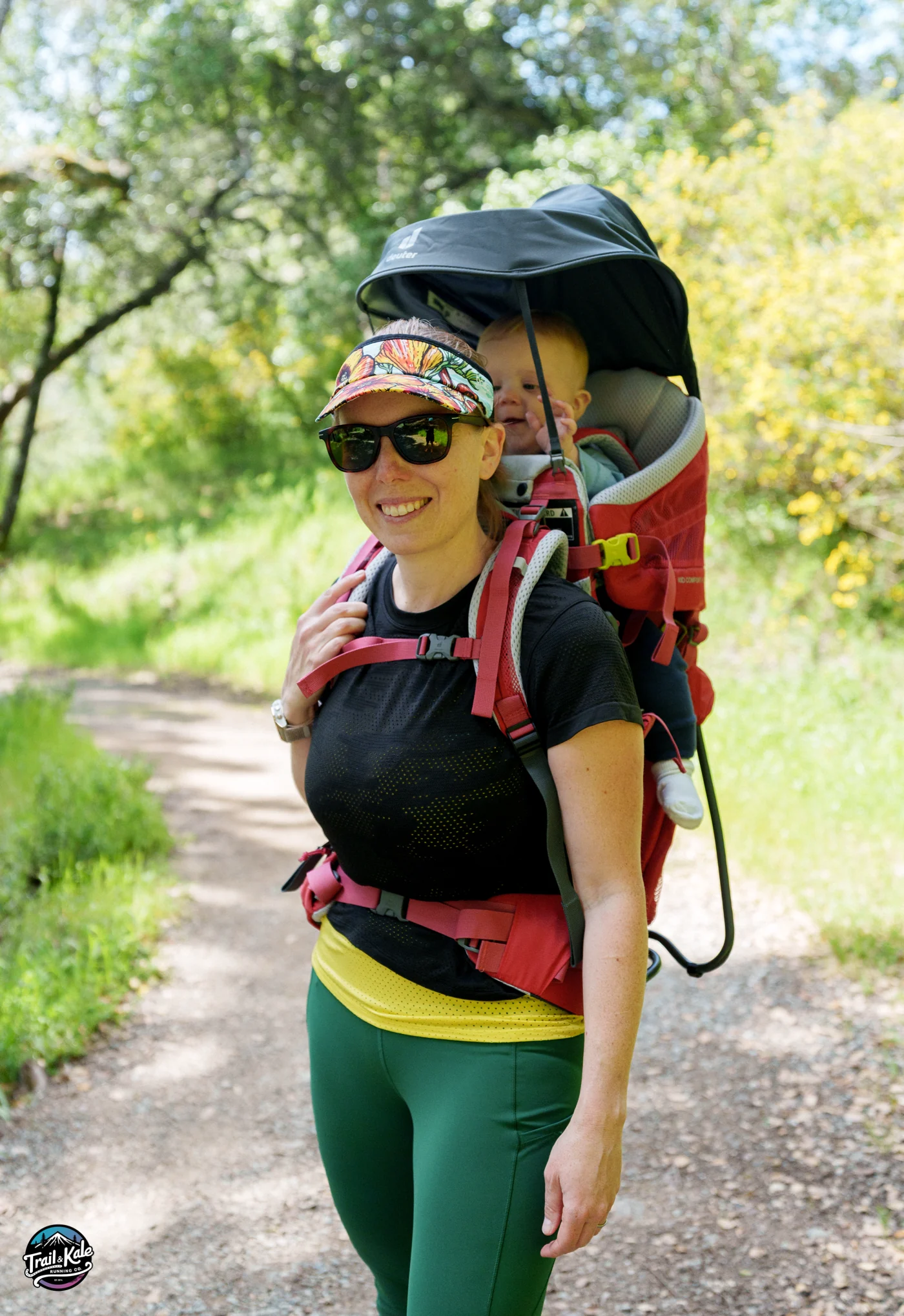
Deuter Kid Comfort Review: The Storage-First Hiking Carrier for Gear-Heavy Families
Honest Deuter Kid Comfort review — 18L storage, ventilated back system, how it compares to the Osprey Poco, and more. $309.00.
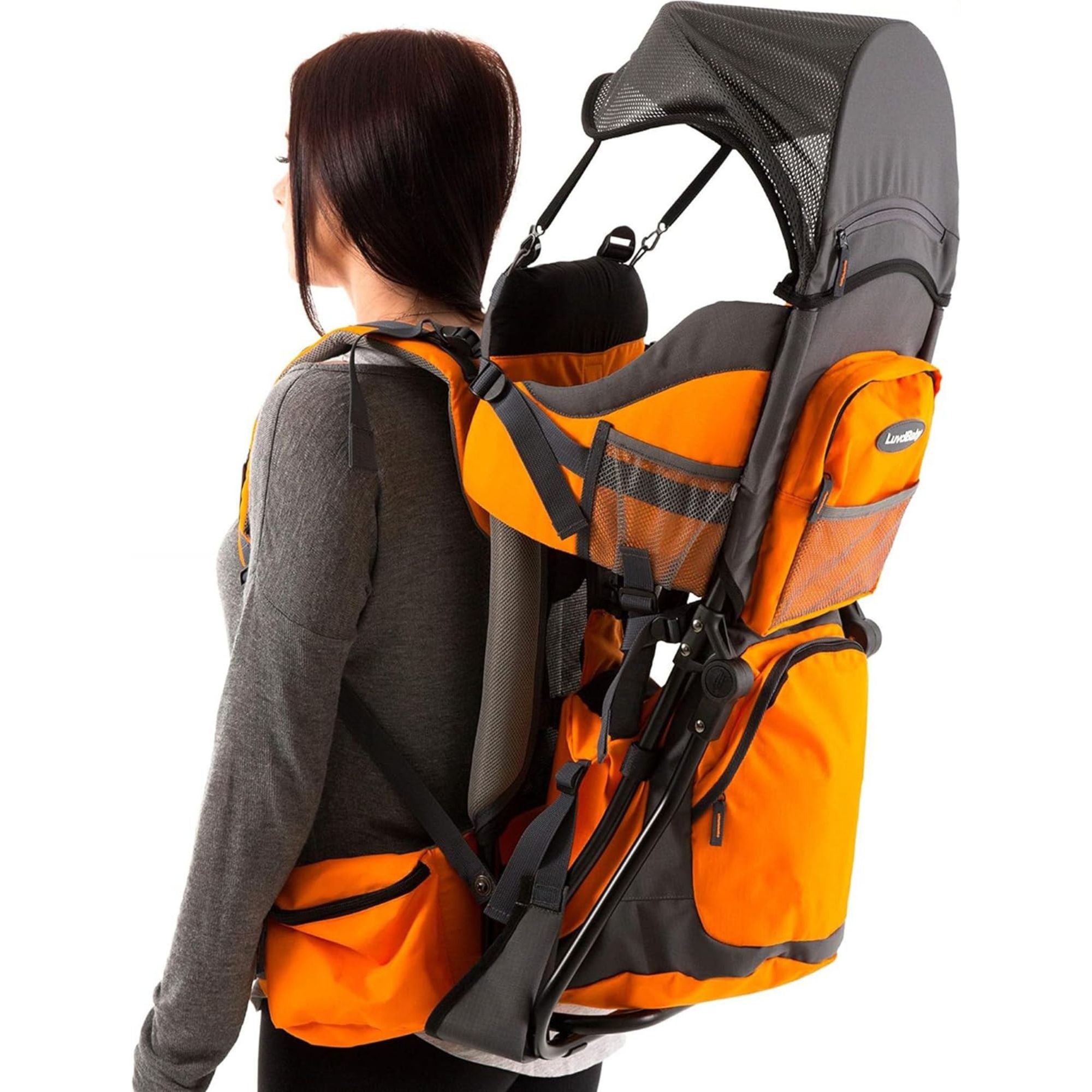
Luvdbaby Hiking Baby Carrier Backpack Review: The Budget Trail Carrier That Comes With Everything
Honest Luvdbaby hiking carrier review — built-in rain/sun hood, diaper pad, insulated pocket, and a $195 price that undercuts Osprey and Deuter by half.
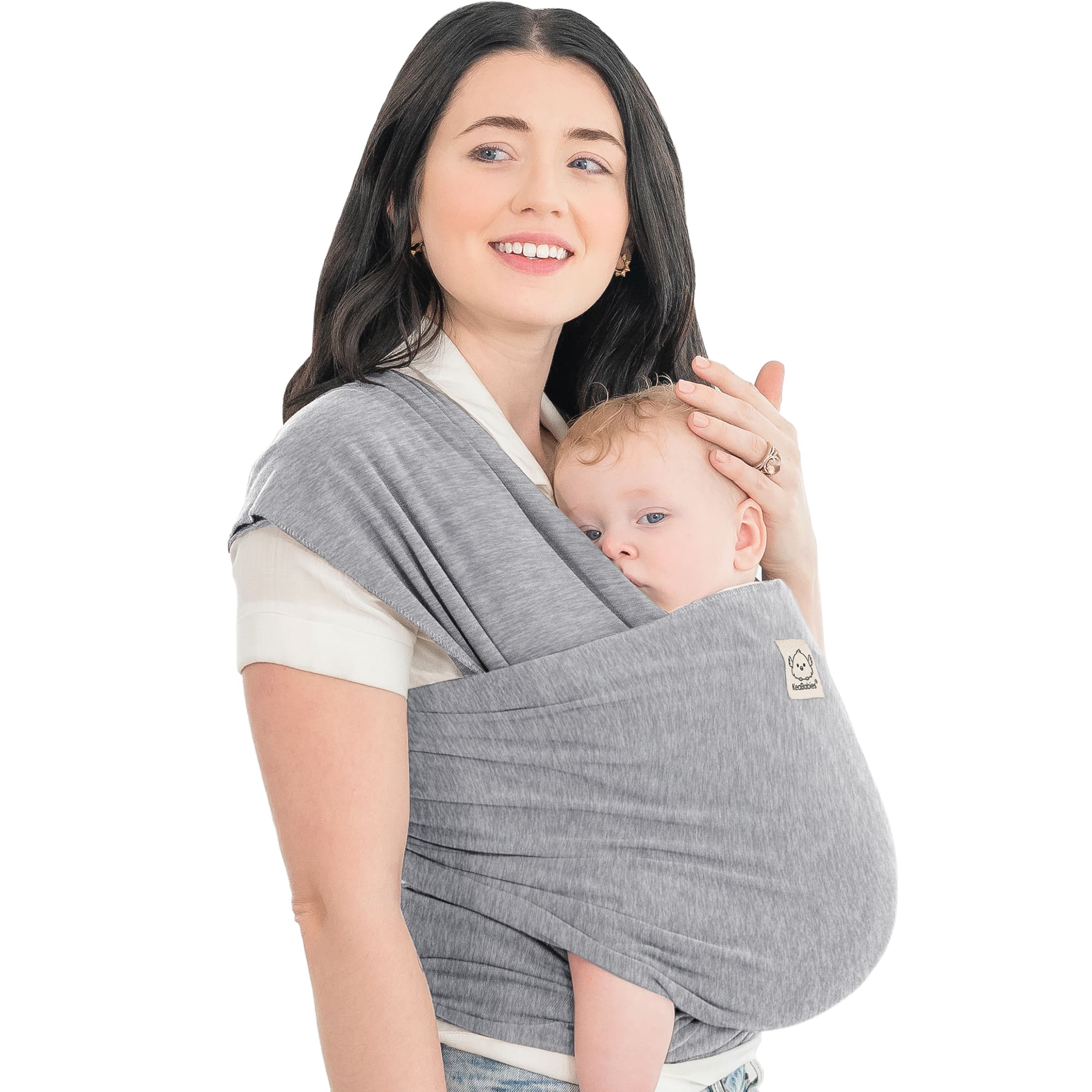
KeaBabies Baby Wrap Carrier Review: The $30 Wrap That Breathes Better Than Its Competition
Honest KeaBabies Baby Wrap review of daily use — lightweight breathable fabric, budget price, newborn to toddler carrying. $29.96.