TSA Rules for Formula, Breast Milk and Baby Food (2026)
TSA lets you carry formula, breast milk, toddler drinks and baby food over 3.4 oz. How to declare them, what screening involves, and ice pack rules.
Formula, breast milk, toddler drinks and baby or toddler food, including puree pouches, are exempt from the TSA's 3.4-ounce liquids limit. You can carry more than 3.4 oz in your carry-on, it does not have to fit in the quart-sized bag, and your child does not have to be traveling with you. You do have to tell the TSA officer at the start of screening, and the items are screened separately from your other bags.
The short version
- Allowed in carry-on: formula, breast milk, toddler drinks, baby/toddler food and puree pouches over 3.4 oz. Baby food is allowed "in reasonable quantities."
- Also allowed: ice packs, freezer packs, gel packs and other cooling accessories for these items, even with no breast milk present, plus liquid-filled teethers.
- What you do: declare the items at the start of screening and take them out of your bag.
- What may happen: officers may test the liquids. Nothing is ever placed into the liquid.
- If you don't want X-ray or opening: say so; you will get additional screening instead.
Everything on this page comes from the TSA's own guidance. Links to the source pages are below each section.
Are formula, breast milk and baby food exempt from the 3-1-1 rule?
Yes. The standard liquids rule limits most carry-on liquids to containers of 3.4 oz (100 ml) or less in a single quart-sized bag. The TSA classifies formula, breast milk, toddler drinks and baby/toddler food, including puree pouches, as medically necessary liquids. They are allowed in carry-on bags in quantities over 3.4 oz and do not need to fit inside the quart bag.
The TSA's baby food page says baby food is allowed "in reasonable quantities." The TSA does not publish a number. Pack what the journey plausibly needs, including delays, and keep the rest in checked luggage. All of these items are also allowed in checked bags.
For pumps, lactation rooms and pumping on board, see pumping and breastfeeding when you fly.
Do I have to declare formula or breast milk at security?
Yes, if you are carrying more than 3.4 oz. The TSA asks you to tell the officer at the beginning of the screening process, then take these items out of your carry-on so they can be screened separately from your other belongings.
In practice, that means packing them where you can reach them: one pouch or bin-ready bag with the bottles, pouches and cooling packs together. Pulling them out of the bottom of a diaper bag at the belt slows the line and makes it easier to miss one.
Source: TSA, Baby Formula and Breast Milk.
How does the TSA screen breast milk and formula?
The items go through X-ray, and officers may need to test the liquids for explosives or concealed prohibited items. The TSA states that screening "will never include placing anything into the medically necessary liquid." It also states that its X-ray machines do not adversely affect food or medicines.
Packaging affects how screening goes. The TSA recommends, though does not require, carrying formula and breast milk in clear, translucent bottles rather than plastic bags or pouches. Liquids in bags or pouches may not be readable by the Bottle Liquid Scanners, and you may be asked to open them, where feasible, for alternative screening such as Explosive Trace Detection and Vapor Analysis.
If you pump into storage bags, consider decanting what you need for the flight into a bottle and keeping the bags for later, or expect the extra step.
Can I refuse X-ray or opening of breast milk?
Yes. If you do not want formula, breast milk, toddler drinks or baby food X-rayed or opened, tell the TSA officer. The TSA will use other steps to clear the liquid, and you, or the guardian traveling with the items, will go through additional screening. That can include Advanced Imaging Technology screening and enhanced screening of your other carry-on property.
Allow extra time if you plan to ask for this. You may also request private screening at any point in the process.
Source: TSA, Traveling with Children.
Are ice packs and gel packs allowed?
Yes. Ice packs, freezer packs, frozen gel packs and other accessories needed to cool formula, breast milk, toddler drinks and baby/toddler food are allowed in carry-on bags, regardless of whether breast milk is present. That last part matters if you pump on a trip: you can carry empty, frozen cooling packs on the outbound flight.
One condition: if the packs are partially frozen or slushy, they get the same screening as the liquids described above. Liquid-filled teethers are also allowed in carry-ons.
Can I bring a cooler bag through security?
The TSA allows the cooling accessories needed to keep these items cold, and a cooler goes through X-ray like the rest of your carry-on. Take the milk or formula out for separate screening as described above.
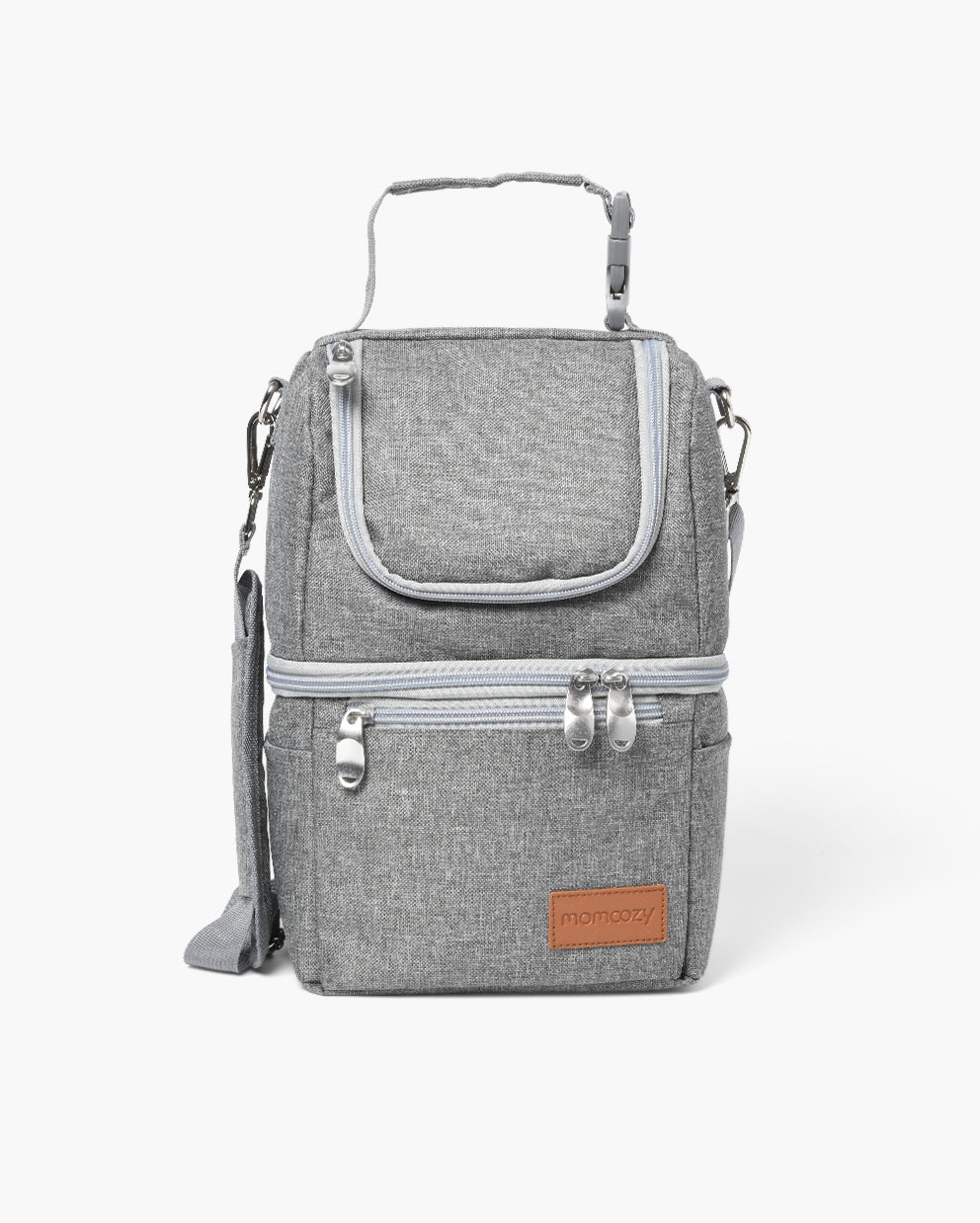
When you choose a cooler, think about the screening step as well as the cooling time. A bag that opens wide and holds bottles upright is easier to unpack at the belt. If you want an option with included bottles, the Momcozy breastmilk cooler holds 22 oz with two bottles and Momcozy rates it for 24 hours of cooling. Our travel feeding bottles roundup covers bottles and containers that pack well.
Can you fly with breast milk if your baby is not with you?
Yes. The TSA states that your child does not need to be present or traveling with you to bring breast milk, formula or related supplies, including cooling accessories. The same exemption from the 3.4 oz limit applies. Declare the milk at the start of screening, as you would with your baby there.
TSA rules cover US airport checkpoints only. If you are flying home from another country, that country's security rules apply on departure. Check them before you pack milk you need to bring home.
Do puree pouches and toddler drinks count?
Yes. The TSA names toddler drinks and baby/toddler food, including puree pouches, alongside formula and breast milk in the same exemption. The same steps apply: declare them if you are over 3.4 oz and take them out for separate screening. Pouches may be among the items an officer asks you to open, since packaging that is not clear can be harder to screen with a bottle scanner.
Adult snacks and drinks are a separate category. Under the TSA's general food guidance, solid food can go in carry-on or checked bags, while other liquid or gel foods over 3.4 oz belong in checked bags.
What about strollers, car seats and other baby gear at the checkpoint?
The TSA requires strollers, umbrella strollers, baby carriers, car and booster seats, and backpacks to go through the X-ray machine. Gear that does not fit through X-ray gets a visual and physical inspection by an officer. Put loose items in the stroller basket, a bag or a bin.
For the rest of the airport routine, see our guides to navigating the airport with a toddler and feeding a toddler while traveling.
How do I get help before the trip?
Two official channels:
- TSA Cares: call (855) 787-2227 about 72 hours before your flight with questions about screening procedures, or to request assistance at the checkpoint.
- AskTSA: text "Travel" to 275-872, or message @AskTSA on X or Facebook Messenger. Live help runs 8 a.m. to 6 p.m. ET.
The TSA notes on each item page that the final decision on whether an item goes through rests with the TSA officer. Arriving with the items declared, accessible and in clear bottles where you can gives that decision the best chance of going quickly.
Checklist for the security line
- Pack formula, milk, pouches and cooling packs together in one easy-to-reach bag.
- Use clear bottles for formula and breast milk where you can.
- Tell the officer at the start that you have these items over 3.4 oz.
- Take them out and place them in a bin for separate screening.
- If you don't want X-ray or opening, say so before screening begins and allow extra time.
- Keep reserve supplies in checked luggage if you are carrying more than the flight needs.
How we put this together
Every rule on this page is taken from the TSA's published pages, linked above, as checked on the date shown. TSA guidance changes, so check the linked pages before you fly. We have not tested the products mentioned.
Frequently Asked Questions
Products Mentioned
Related Content
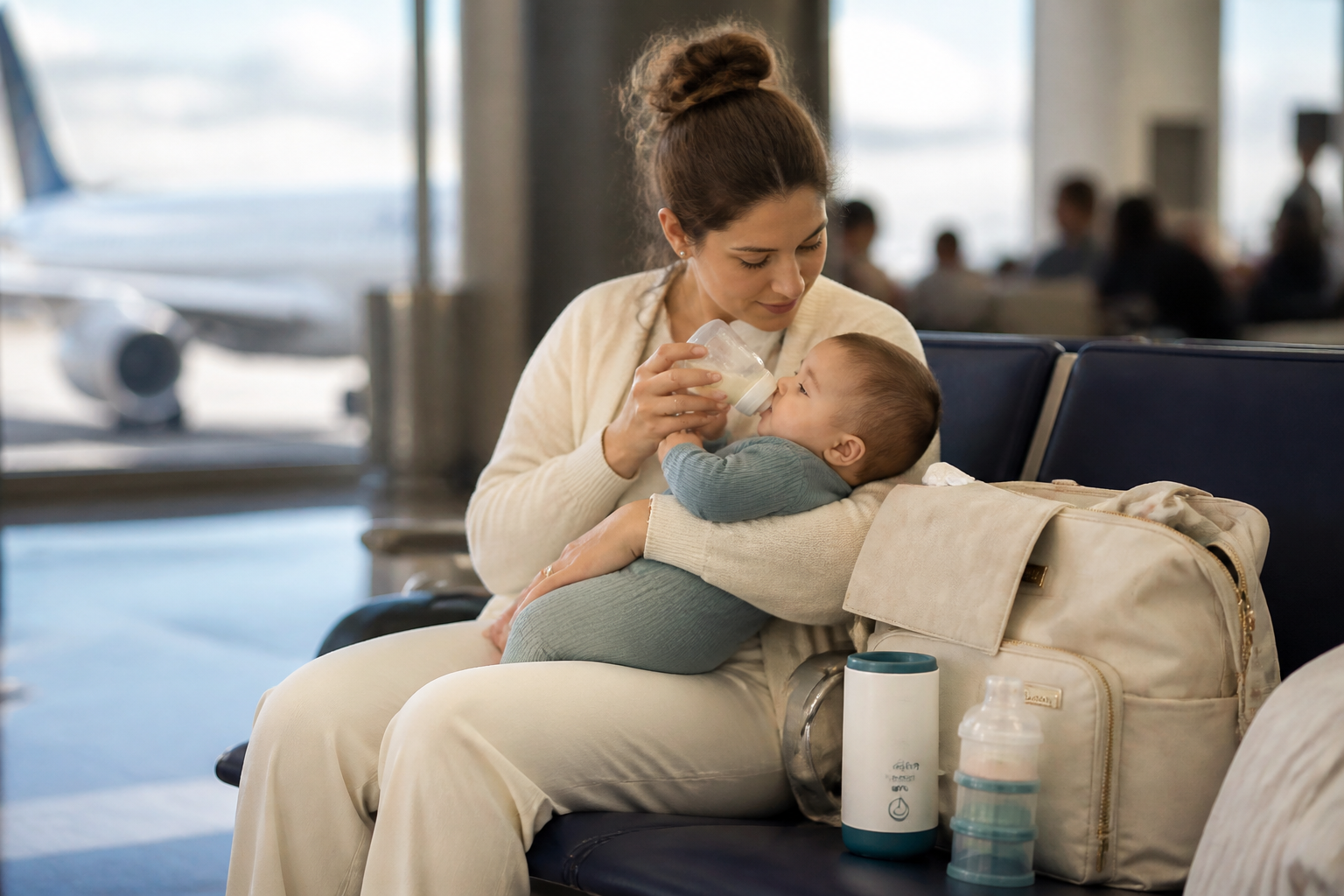
Pumping and Breastfeeding When You Fly: Airport and In-Flight Guide
How to bring a breast pump and milk through TSA, find an airport lactation room, nurse or pump on the plane, and keep milk cold on a long travel day.
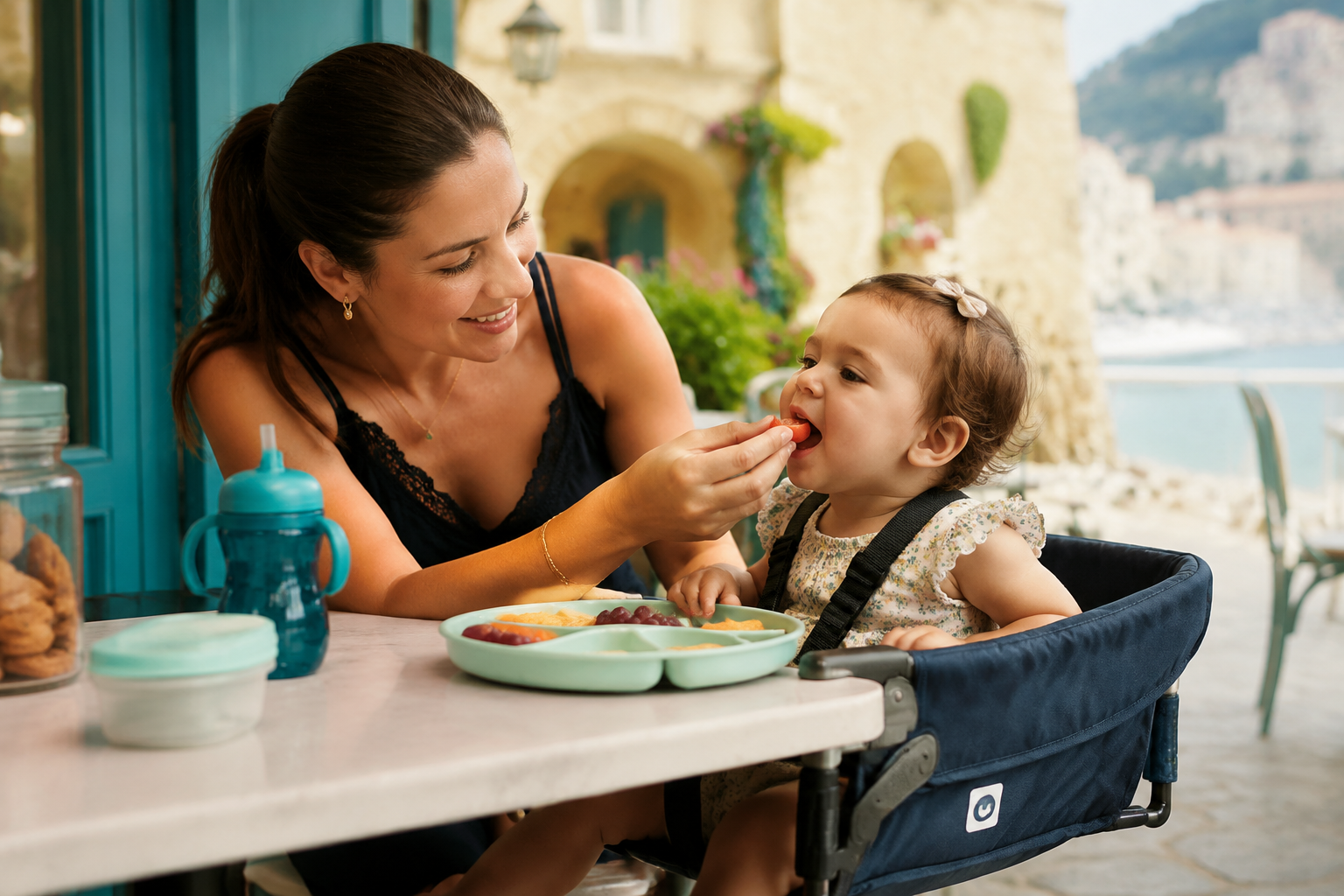
Feeding a Toddler While Traveling: Snacks, Restaurants, Formula and TSA (2026)
Feeding a toddler on a trip: snack packing, TSA rules for formula and baby food, keeping milk cold, restaurants, food safety abroad and picky eating.
Best Travel Bottles & Feeding Gear (2026): Bottles, Formula, Milk Storage
Travel bottles, formula dispensers, a portable warmer, milk storage, sippy cups and a snack bowl, plus the TSA rules for formula and breast milk.