Are Hotel Cribs Safe? A 5-Minute Check Before Your Baby Sleeps
Are hotel cribs safe? What federal crib and play yard rules require, a 5-minute in-room check, how to look up recalls, and what to do if the crib fails.
A hotel crib can be safe, but you can't assume it is. Federal rules require hotels in the US to provide cribs that meet the current Consumer Product Safety Commission (CPSC) crib standard, yet a compliant model can still arrive with a loose bolt, a torn mesh side, a mattress that doesn't fit or a duvet folded inside. Spend five minutes checking the frame, slats or mesh, mattress and bedding before your baby sleeps in it, look the model up for recalls, and have a backup plan if it fails.
The 5-minute check at a glance
- Type: a fixed-side crib or a play yard. No drop sides.
- Frame and hardware: nothing missing, loose or broken; it doesn't wobble.
- Sides: slat gaps no wider than 2 3/8 inches, or mesh with tiny holes and no tears.
- Mattress: the one made for it, firm, flat and snug at every edge.
- Inside: one fitted sheet. Nothing else.
- Placement: away from windows, blind cords, lamps and heaters.
For the rest of the room (doors, water, balconies, tip-overs), use our hotel room baby-proofing checklist.
What safety rules apply to hotel cribs?
Two federal standards cover what a hotel is likely to bring to your room. Full-size cribs must meet the CPSC's full-size crib standard (16 CFR part 1219), in force since June 28, 2011. Portable play yards, the folding mesh-sided "pack and play" type, must meet the separate play yard standard (16 CFR part 1221). A play yard that comes with a bassinet attachment has to meet both the play yard and the bassinet requirements. Either kind can be a safe sleep space; the checks differ slightly.
Do hotels have to provide cribs that meet the current standard?
Yes. The CPSC's crib information center states that cribs that places of public accommodation provide for use must comply with current CPSC crib standards. When the rule took effect, the CPSC said hotels and motels had until December 28, 2012 to replace older cribs. That means any full-size crib a US hotel hands you should be a model built to the 2011 rule or later. The rule covers the design, not the condition of that particular crib after years of housekeeping, which is why you still check it.
Why are drop-side cribs banned?
The 2011 rule stopped the manufacture and sale of traditional drop-side cribs, in which one side slides down so you can lift the baby out. It also strengthened slats and mattress supports, improved hardware quality and required tougher testing. The CPSC was explicit that a drop-side crib fitted with an immobilizer kit still does not meet the standard. So if the crib in your room has a side that moves up and down, don't use it, even if the side has been screwed or clipped in place. Ask for a different crib.
Can you tell from looking whether a crib meets the standard?
Not reliably. The CPSC says you cannot tell from looking at a crib whether it meets the standard. What you can check is the manufacture date on the label: for enforcement, the CPSC presumes that a full-size crib manufactured after June 28, 2011 complies. Look for the date and model number on a label on the frame or the play yard's floor or rail. If there's no label at all, or the date is before mid-2011, treat that as a reason to ask for another crib.
How do you check a hotel crib in 5 minutes?
Do this before you put on the sheet, ideally when the crib is first delivered so housekeeping can swap it while you are still unpacking. Most of these checks come from the CPSC's crib safety tips.
1. Is the frame solid and the hardware complete?
Grab a top rail and shake it. The crib should not rack, wobble or shift. The CPSC says there should be no missing, loose, broken or improperly installed screws or brackets. Look at each corner and under the mattress support. On a play yard, press down on the center of each top rail: every rail should be locked rigid, and the floor should sit flat. If anything is missing, loose or held with tape or wire, don't try to fix it yourself. Ask for a replacement.
2. Are the slats or mesh sides safe?
On a crib with slats, the CPSC limits the gap between slats to no more than 2 3/8 inches, with no missing or cracked slats. Wider gaps can let a baby's body slip through while the head gets stuck. Corner posts should not stick up more than 1/16 inch, so clothing can't catch, and the headboard and footboard should have no cutouts. On a mesh-sided play yard, the CPSC says the mesh holes should be smaller than 1/4 inch, with no tears, holes or loose threads. The mesh should be securely attached to the top rail and floor, the top rail cover should be intact, and no staples should be missing, loose or exposed.
3. Does the mattress fit snugly?
The mattress should be firm and fit tightly so your baby can't get trapped between it and the side. Push it hard against one side and end and look at the opposite edges: there should be no gap. Press the center with your hand. The AAP describes a firm surface as one that does not indent when your baby lies on it. In a play yard, use only the thin mattress designed for that model. Some hotels add a padded mattress or a folded comforter "for comfort." Remove it. The CPSC warned in July 2026 that babies can suffocate in gaps between an undersized mattress, or extra padding, and the side walls of a play yard, and that any replacement mattress should specify use in your particular model.
4. Does the sheet fit?
Use one fitted sheet made for that size of crib or play yard, pulled fully over all four corners. An adult flat sheet tucked under the mattress, or a fitted sheet that rides up at the corners, is a loose-bedding hazard. A full-size crib sheet will be too large for a play yard mattress, so if housekeeping brings the wrong size, ask for the right one or pack your own play yard sheet.
5. Is the crib empty and placed safely?
Take out everything except the fitted sheet: pillows, blankets, comforters, bumpers, mattress toppers, toys and any hotel "welcome" plush. Then look at where the crib sits. Move it away from windows, blind and curtain cords, lamps and their cords, heaters and air conditioning units, and any furniture your child could reach or climb from. Keep it in your room. Our toddler sleep on vacation guide covers where the crib should go for darkness and quiet.
How do you check a hotel crib for recalls?
Get the brand and model number from the label, then search the CPSC's recalls database. You can type the brand or model into the search box, or filter by the "Cribs" category, and each listing describes the hazard and the remedy. Search the brand name as well as the category, since a play yard may not be filed under "Cribs." You can also search SaferProducts.gov, the CPSC's public database of reports about unsafe products. It shows reports filed by consumers, not only official recalls. If the model is recalled, don't use it. Ask the hotel for another.
What should you ask the hotel before you book?
Ask a few direct questions by phone or email rather than relying on a "crib available" tick box:
- Is it a full-size crib or a play yard? Play yards are smaller and lighter; full-size cribs need more floor space.
- What brand and model? This lets you check recalls before you arrive.
- Can you reserve one? Supply is often limited, and a crib that's "on request" may not be available on a busy weekend.
- What bedding comes with it? You want one fitted sheet of the right size, and no bumper, quilt or topper.
- Can it be set up before arrival? You still check it, but you aren't waiting for one at bedtime.
If the answers are vague, plan to bring your own.
What should you do if the hotel crib fails the check?
Don't make do. Ask the front desk for a different crib or play yard and explain what failed, such as a missing bolt, a torn mesh side or a drop side. If no safe replacement is available, use your own travel crib. Do not put a baby in an adult hotel bed or on a sofa: soft mattresses, toppers, pillows and heavy duvets are not a safe sleep surface for infants, and the AAP advises against bed-sharing. A car seat, stroller or swing is not a substitute either. The AAP says to move a sleeping baby from these to a firm, flat surface.
Should you bring your own travel crib instead?
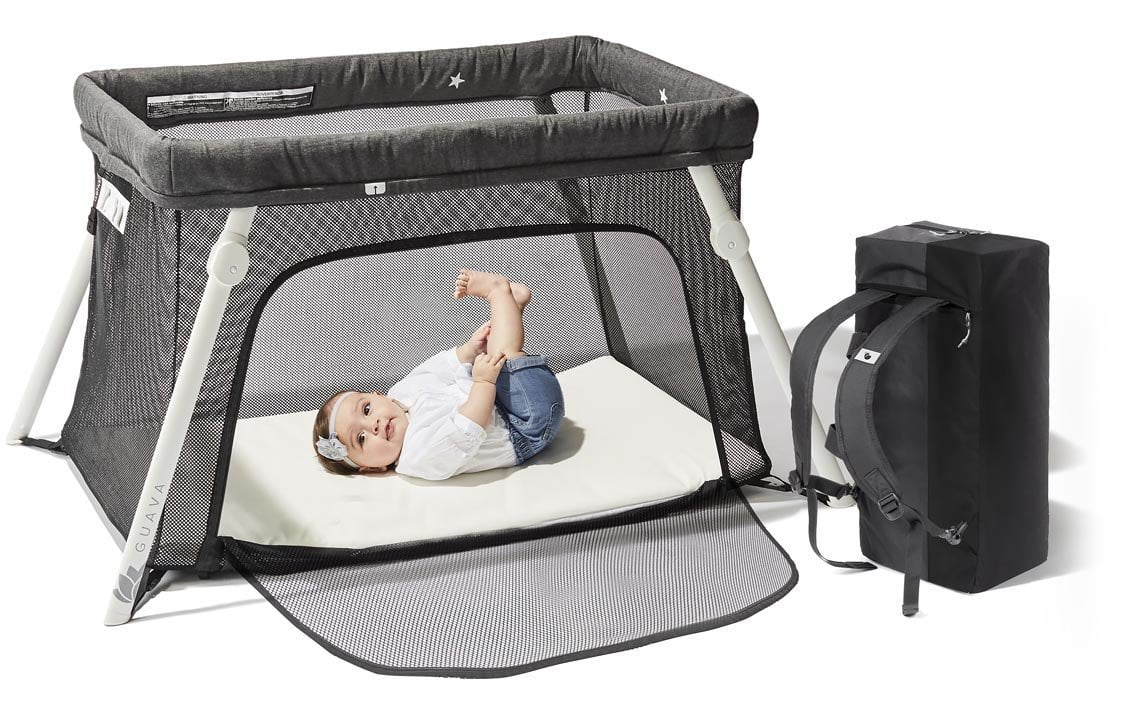
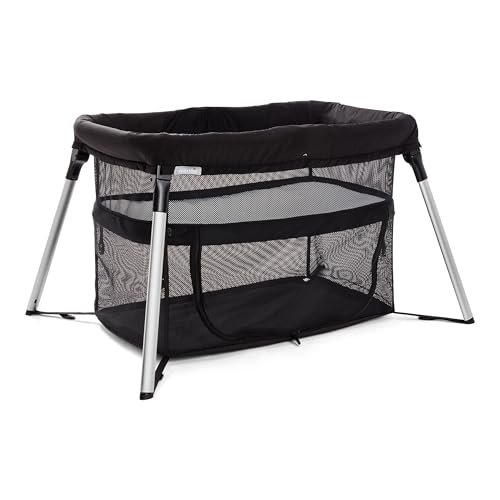
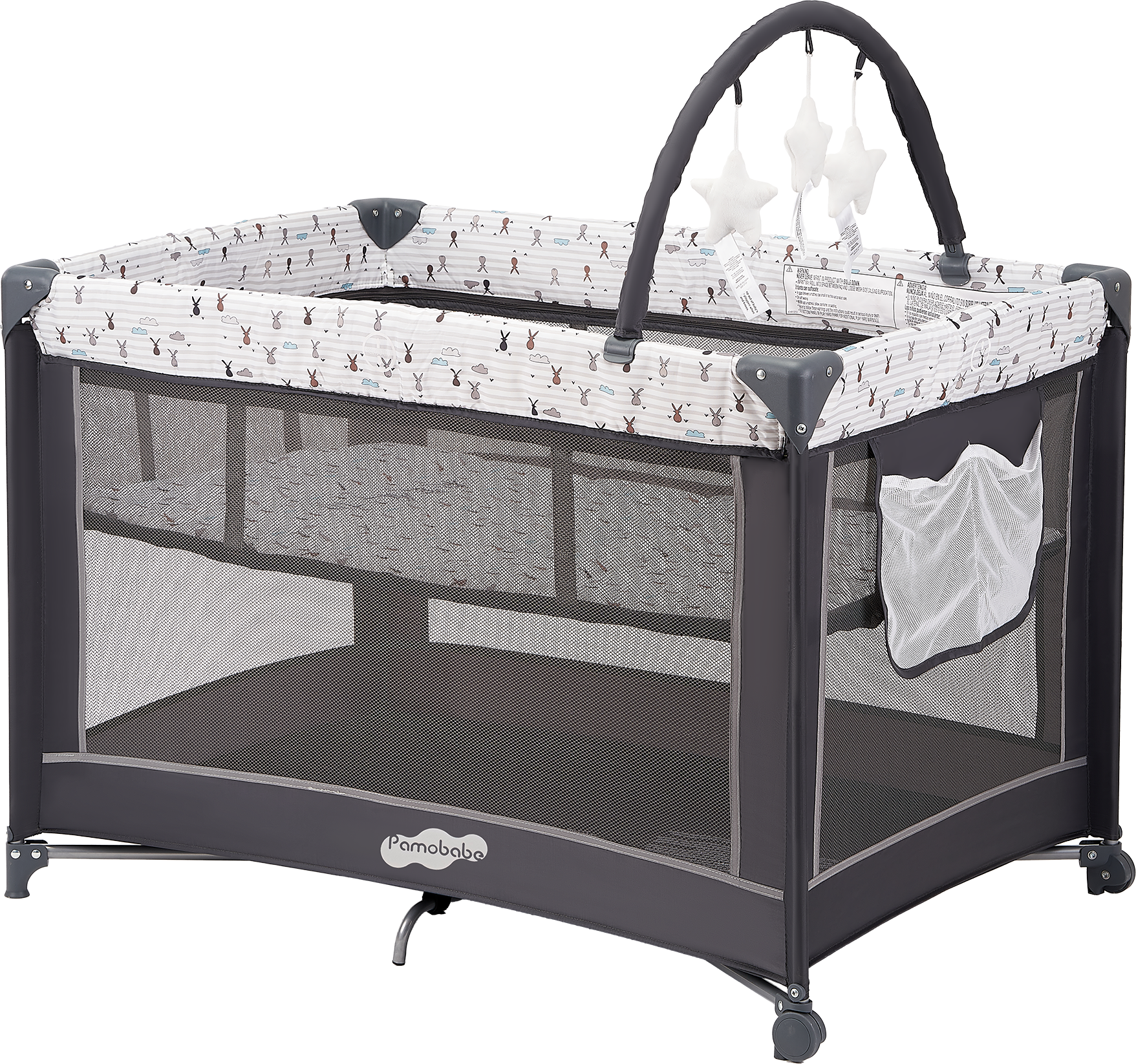
If you already know the setup, a travel crib you own removes the guesswork, and your baby sleeps in something familiar. Weigh it against the hassle of carrying one. The Guava Lotus travel crib weighs about 15 lb with its bag and carries as a backpack; the Munchkin Ultra-Lite 3-in-1 is under 14 lb and rated to 24 months or 30 lb in crib mode; the Pamo Babe pack and play is about 17–18 lb and rated to 36 months and 33 lb. Whatever you bring, use only the mattress it came with. Our portable cribs for travel roundup compares weight, folded size and age limits.
What are the AAP's safe sleep rules for hotel stays?
The same as at home. The AAP's safe sleep guide says to place your baby on their back for all naps and at night, on a firm, flat surface in a crib, bassinet, portable crib or play yard that meets CPSC standards. Use a fitted sheet only: no pillows, quilts, comforters, mattress toppers, blankets, toys or bumper pads. The AAP recommends sharing a room, but not a bed, for at least the first six months. Any surface inclined more than 10 degrees is not safe for sleep.
How warm should a baby be in a hotel room?
Hotel rooms can run hot, especially with the heating on, and the AAP warns against overheating. Its guidance is that your baby needs only one more layer than you would wear in the same room to be comfortable. The AAP suggests a wearable blanket, which does the job of a blanket without loose fabric in the crib. Set the thermostat before bedtime rather than adding layers, and avoid hats for sleep indoors.
Hotel crib checklist
- Fixed sides, no drop side
- Label found; model checked on cpsc.gov/Recalls
- No wobble; no missing, loose or broken hardware
- Slat gaps no wider than 2 3/8 in, or mesh intact with no tears
- Original mattress, firm, no gaps at the edges
- One correctly sized fitted sheet, nothing else in the crib
- Away from windows, cords, lamps and heaters
- Room comfortably cool; baby in a wearable blanket if needed
How we assessed this: This guide is based on CPSC crib and play yard rules and safety tips and the AAP's safe sleep guidance (checked October 2026), plus the manufacturer specifications of the travel cribs linked. We have not tested these products or inspected any hotel's cribs.
Disclosure: ToddlerTravelGear is reader-supported. We may earn a commission if you buy through links on our site — at no extra cost to you. As an Amazon Associate, we earn from qualifying purchases. Learn more
Frequently Asked Questions
Products Mentioned
Related Content

Hotel Room Baby Proofing Checklist: A 10-Minute Room-by-Room Sweep (2026)
A room-by-room baby proofing checklist for hotels and vacation rentals: doors, water, balconies, tip-overs, cords, outlets, pools and a small travel kit.
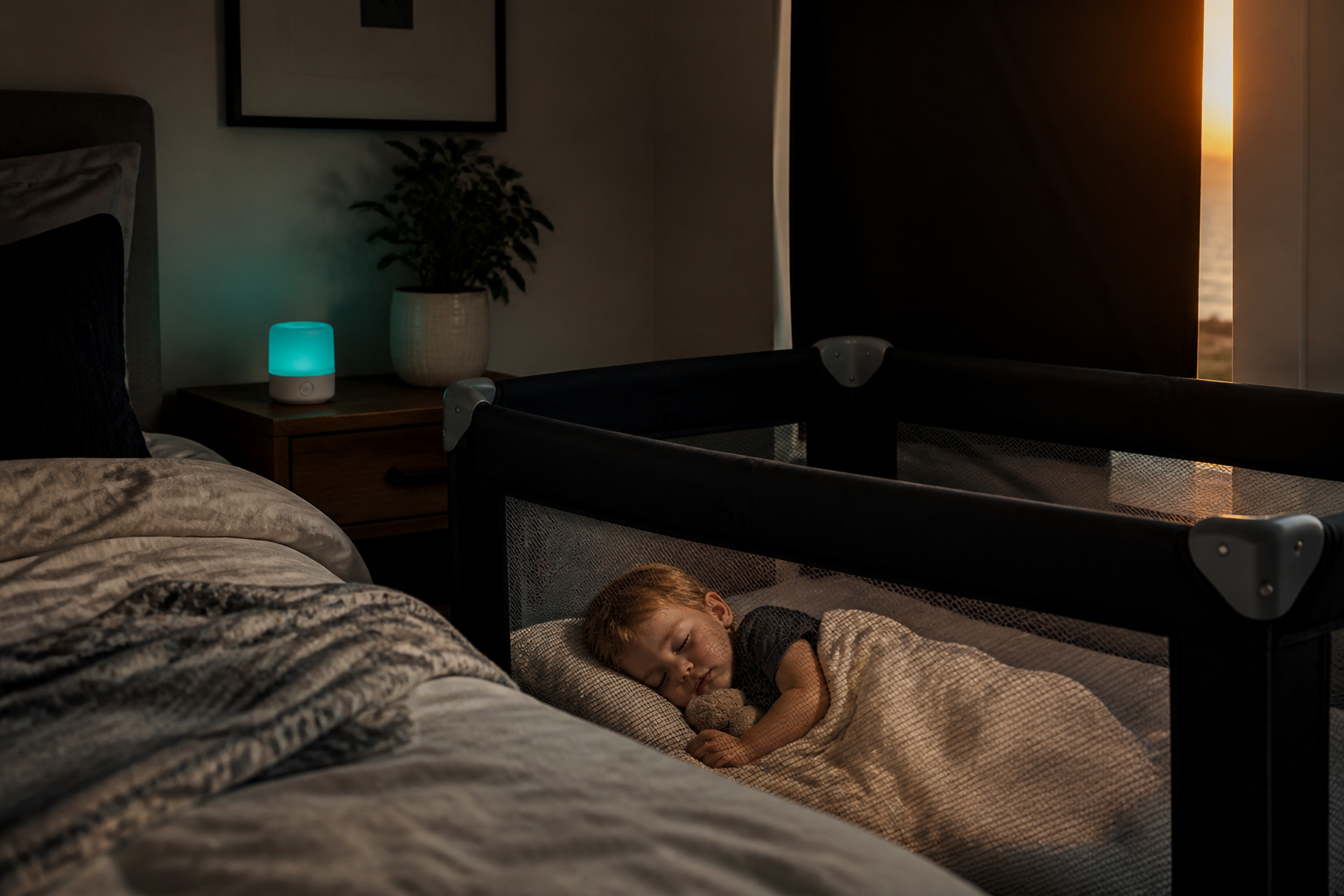
Where Does a Toddler Sleep When Traveling? Cot, Travel Bed or Hotel Bed
Where should a toddler sleep when traveling? When to leave the crib, how cots, floor beds and bed rails compare, CPSC bed rail rules, and a by-age table.
Best Travel Sleep Accessories for Toddlers (2026): Dark, Quiet, Safe
Sound machines, blackout tents and curtains, toddler travel beds and sleep sacks for hotels and rentals, checked against AAP and CPSC safe-sleep guidance.