Hotel Room Baby Proofing Checklist: The 10-Minute Safety Sweep (2026)
A room-by-room baby proofing checklist for hotels, Airbnbs, and vacation rentals — with a portable safety kit you can pack in 5 minutes and deploy in 10.
One parent walked into a beachfront hotel room in San Diego, set her 14-month-old down, and within ninety seconds he had yanked a floor lamp toward himself, pulled the ironing board off its wall hook, and found a thumbtack behind the nightstand. Ninety seconds. She had not even set her bags down yet.
Stories like this are why experienced traveling parents have developed a system — a fast, repeatable safety sweep to run in every hotel room, vacation rental, and guest bedroom before kids are free to roam. It takes about ten minutes and parents report it has prevented more injuries than they can count.
This guide gives you that system. It walks you through every room, every hazard, and the exact portable kit that makes it all possible. No generic advice. Just the specific things that have caught parents off guard over dozens of trips with toddlers.
Why Hotel Rooms Are Dangerous for Toddlers
Your home is baby-proofed. You spent months crawling around on your hands and knees, covering outlets, padding corners, locking cabinets, and anchoring furniture. Every hazard in your house has been identified and neutralized.
Hotel rooms have none of that. Zero. And the false sense of security is the real danger — you are tired from traveling, the room looks clean and pleasant, and your brain tells you it is safe. It is not.
Here is what hotels do not childproof:
Outlets are completely uncovered. A standard hotel room has 12 to 20 exposed electrical outlets. Many are at floor level. Some are behind furniture where your toddler will inevitably explore but you will not easily see.
Furniture is not anchored. That dresser, that TV stand, that nightstand — none of it is bolted to the wall. A 25-pound toddler can topple a 60-pound dresser. According to the Consumer Product Safety Commission, a child is sent to the emergency room every 17 minutes due to a furniture tip-over. Hotels are not exempt from that statistic.
Cleaning products are stored in the open. Housekeeping carts in the hallway, mini-bar items at toddler height, bathroom cleaners left behind — these are all realities of hotel stays.
Glass is everywhere. Glass coffee tables, glass shower doors, glass shelves in the bathroom. Your home probably does not have a glass-topped coffee table anymore. Hotels love them.
Balconies are designed for adults. The railing gap might be wide enough for a small child to fit through. The furniture on the balcony gives climbers a boost to the railing. The latch is at adult height but reachable if a toddler stands on a chair.
The door to the hallway (or the outside) has a handle your toddler can reach. Lever-style door handles are standard in modern hotels. A two-year-old can operate a lever handle. Imagine your child walking into a hotel hallway at 2 AM while you are asleep.
This is not about being paranoid. It is about being realistic. Your toddler does not know this is a different space with different rules. They explore the same way they explore at home — with their hands, their mouths, and absolutely no concept of danger.
The 10-Minute Safety Sweep: Step by Step
This is the exact process experienced traveling parents recommend. It takes about ten minutes once you have practiced it. The first few times might take fifteen. Eventually it becomes automatic.
Step 1: The Entry and Main Door (1 minute)
Start at the front door. This is priority one because it is the difference between your child being in the room and your child being in a hallway, parking lot, or pool area.
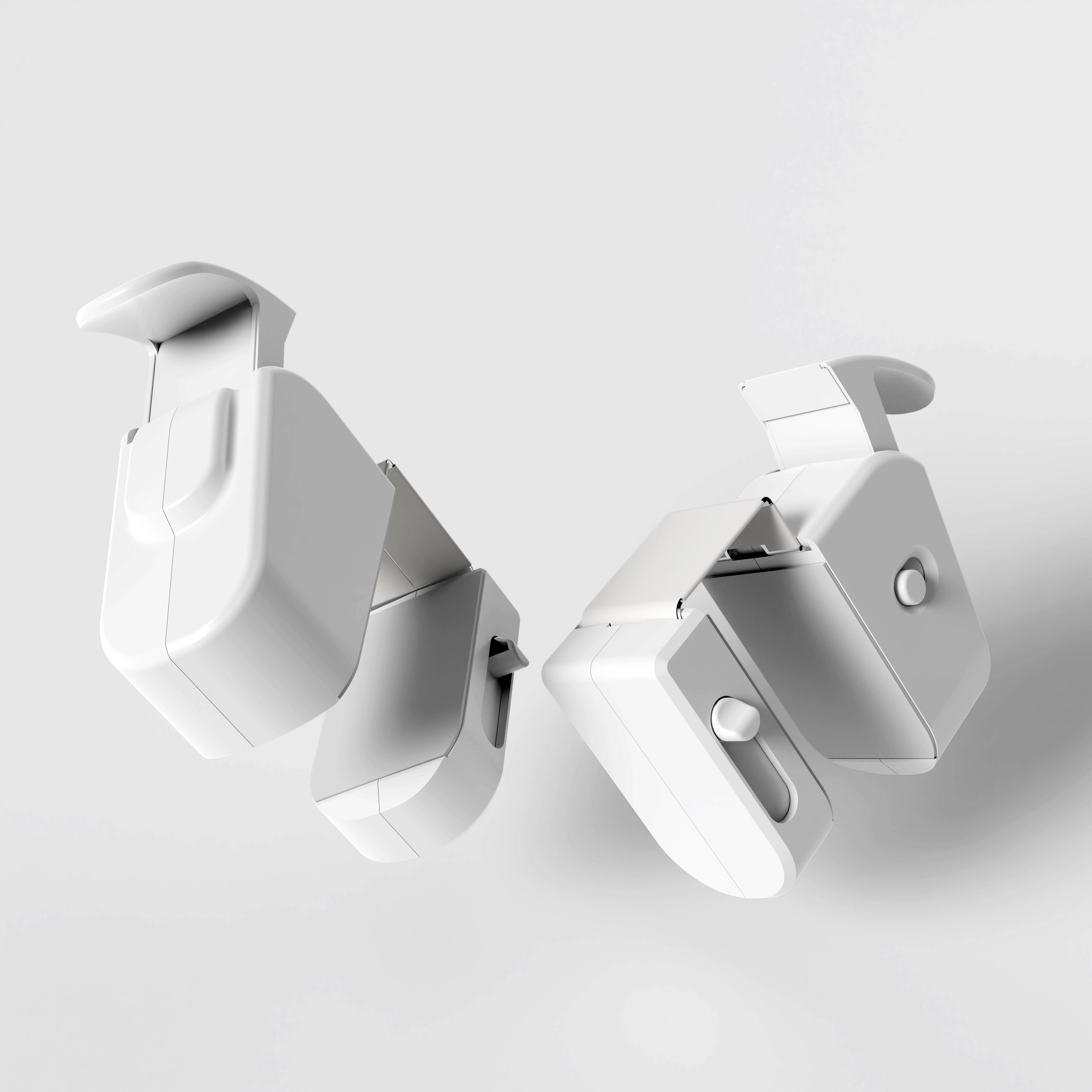
- Test the door handle. If it is a lever handle (most modern hotels), your toddler can open it. Put a door knob cover on it or use a Huglock Snap-On Door Lock placed at the top of the door where your child cannot reach it.
- Check the deadbolt and security latch. Engage the deadbolt and the swing bar or chain lock. But do not rely on these alone — your child will watch you use them and eventually figure them out.
- Look at the connecting door if there is one. These doors between adjoining rooms often have simple thumb-turn locks. A toddler can open them. If you are not using the connecting room, push a piece of furniture against it.
- Check for the auto-close mechanism. Hotel doors close automatically and they close hard. Little fingers get crushed in hotel doors constantly. Drape a towel over the top of the door if you plan to keep it propped open, so it cannot slam shut on small hands.
Step 2: The Bedroom Area (3 minutes)
This is where you will spend the most time because it has the most hazards.
- Get on the floor. Literally. Get down on your hands and knees and look at the room from your toddler's height. You will see things you missed standing up — pins, coins, batteries, small items left behind by previous guests, outlet covers that are missing.
- Cover every outlet. Count them. A typical hotel room has 8 to 12 outlets in the bedroom area alone. Use a pack of outlet covers — the clear push-in style works in virtually every standard outlet. Traveling with at least 15 covers is recommended.
- Check the nightstand drawers. Hotels put all kinds of things in nightstand drawers — pens, stationery, sewing kits with needles, Bibles with thin pages a baby will eat. Pull everything out and put it up high.
- Check the mini bar. If the room has one, it is at floor level. Glass bottles, metal cans, snacks in wrappers a toddler could choke on. Empty it onto the top of the dresser or ask the front desk to have it emptied and locked.
- Inspect the curtains and blinds. Older hotels may still have looped blind cords. These are a strangulation hazard — not a maybe, a serious one. Wind them up and secure them with a rubber band or clip, or better yet, tie them to a curtain rod hook well above your child's reach. Also check for heavy curtains that a toddler could pull down on themselves if they grab and hang on the fabric.
- Move the floor lamp. If there is a standing floor lamp, move it behind furniture or into a corner where it cannot be pulled over. If it has an exposed bulb or a hot halogen bulb, it is a burn risk too.
- Pad the sharp corners. Hotel nightstands, desks, and coffee tables almost always have sharp edges and corners at toddler-head height. Use corner protectors — the clear adhesive-backed ones. You need about 8 to 12 for a standard room.
- Check under the bed. Previous guests leave things. Parents have found broken glass, bottle caps, pen caps, loose change, and even single earrings. All of these are choking hazards or worse.
- Anchor or assess heavy furniture. You cannot bolt hotel furniture to the wall, so you need to think about which pieces a toddler could climb and tip. Push the dresser against the wall as tightly as possible. If there is a tall, narrow bookshelf or armoire, consider whether your child could tip it by pulling on a drawer. Remove drawers from lightweight dressers if needed.
- Check the TV. If it is a flat-screen sitting on a stand (not wall-mounted), it is a tip hazard. Push it as far back as possible and consider whether your toddler could reach it by climbing on a chair.
- Look at the closet. The ironing board and iron inside the closet are heavy and hot (if recently used). Move the iron to a high shelf. Make sure the ironing board is secured so it cannot fall if your toddler opens the closet.
Step 3: The Bathroom (3 minutes)
Bathrooms are the most dangerous room in any building for a toddler. In a hotel, they are even worse because nothing is childproofed and everything is hard, slippery, or both.
- Lock the bathroom door from the outside. If the bathroom door does not have an exterior lock (most do not), use a door knob cover to keep your toddler from accessing it unsupervised.
- Check the toilet. Toddlers are fascinated by toilets and they are a drowning hazard. According to the AAP home safety guidelines, a child can drown in as little as one inch of water. Keep the lid down and consider a toilet lock if your child is a persistent lid-lifter. A simple SKYLA HOMES Baby Lock strap will hold the lid closed.
- Remove all hotel toiletries and cleaning products. Shampoo bottles, conditioner, soap bars, the tiny sewing kit, the shoe shine cloth — all of it goes up high or into your suitcase. Those little shampoo bottles look exactly like something a toddler would drink.
- Check the water temperature. Hotel water heaters are often set higher than residential ones. Run the hot water and check how hot it gets. If it is scalding, tell the front desk — and always run cold water first when preparing a bath.
- Inspect the shower and tub. Glass shower doors, if cracked or poorly maintained, are a serious risk. Check for a nonslip surface in the tub. If there is not one, ask the front desk for a nonslip bath mat — most hotels have them. If you travel frequently, pack a cheap stick-on set.
- Look for electrical outlets near water. Hotel bathrooms should have GFCI outlets, but not all do, especially in older properties or international hotels. Check that outlets near the sink and tub have the test/reset buttons. If they do not, use those outlets for nothing and cover them.
- Check the trash can. Hotel bathroom trash cans sometimes contain items from previous guests — razors, dental floss, medication packaging. Empty it and check.
- Secure the hair dryer. Wall-mounted hotel hair dryers have cords at toddler height. Push the cord up and around the mount so it cannot be pulled down.
Step 4: The Balcony (2 minutes)
If your room has a balcony, this deserves its own assessment — because the consequences of a failure here are catastrophic.
- Check the latch. Can your toddler reach it? If the sliding glass door has a low handle, your child can open it. Use a secondary lock — a balcony door stopper bar, or place a wooden dowel in the track so the door cannot slide open.
- Measure the railing gaps. If you can fit a soda can between the railing bars, a small child can fit their head through. This is not acceptable. If the gaps are too wide, do not use the balcony with your child in the room, or push furniture against the door from the inside.
- Remove or rearrange balcony furniture. Chairs, tables, or planters near the railing are climbing aids. Move everything away from the railing. Far away. A toddler who can climb a chair can reach the top of a standard balcony railing.
- Check the floor. Balcony floors collect debris — cigarette butts, broken glass, bird droppings. Sweep or wipe before letting your child out there (supervised, always supervised).
Step 5: The Kitchen Area — Airbnb and Vacation Rentals Only (2 minutes)
If you are in a hotel, you can skip this. If you are in a vacation rental or Airbnb with a kitchen, this is critical.
- Lock every cabinet below counter height. This is where cleaning products, trash bags, sharp objects, and heavy pots live. Use adhesive cabinet locks — the SKYLA HOMES strap-style locks work on almost every cabinet and drawer type.
- Move all cleaning products to a high shelf or locked cabinet. Under-sink storage is the most dangerous cabinet in any kitchen. Dish soap, garbage disposal cleaner, dishwasher pods — all of it looks like candy to a toddler.
- Secure the stove. Check if the knobs are removable — remove them and store them if so. If not, use stove knob covers. Check that the oven door cannot be opened by a toddler.
- Remove knife blocks from the counter. Put them on top of the refrigerator.
- Check the dishwasher. Open dishwashers are full of sharp utensils at toddler face height. Keep it latched.
- Look at the trash can. If it has a pedal-open lid, your toddler will find it instantly. Move it inside a locked cabinet or onto a counter.
The Portable Baby Proofing Kit: What to Pack
Here is the exact kit parents recommend for every trip. Everything fits inside a gallon-size ziplock bag, weighs under a pound, and covers 90% of hotel room hazards.
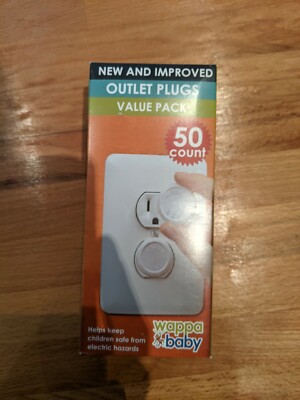
Outlet covers (15 to 20) — Clear Outlet Covers 50-Pack by Wappa Baby or Power Gear Outlet Covers 30-Pack. The Power Gear pack is under $6 for 30 covers. Parents typically grab about 15 for each trip and leave the rest at home. Clear, push-in, no tools. Takes about two minutes to cover every outlet in a hotel room.
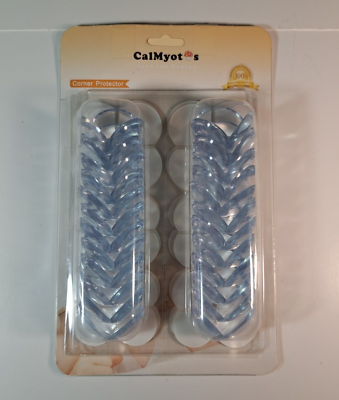
Corner protectors (8 to 12) — CalMyotis Corner Protectors 12-Pack or Betertek Corner Protectors 12-Pack. Both are clear, adhesive-backed, and under $10. They go on coffee table corners, nightstand edges, and desk corners, and peel off cleanly when you check out.
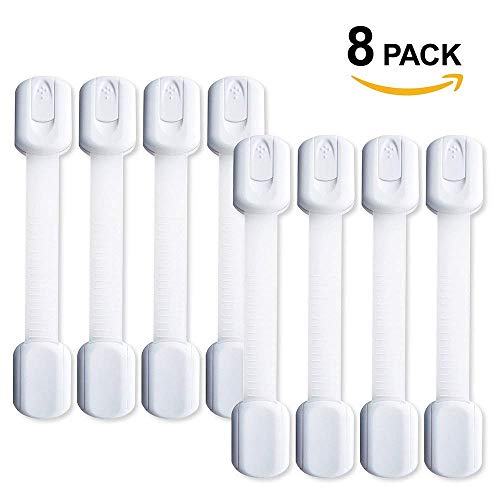
Cabinet locks (4 to 6) — SKYLA HOMES Baby Locks 8-Pack. These flexible strap locks work on cabinets, drawers, toilets, and oven doors. At $10 for eight, they are one of the most versatile tools in the kit. Parents use them everywhere — especially in Airbnb kitchens and on hotel mini-bars.
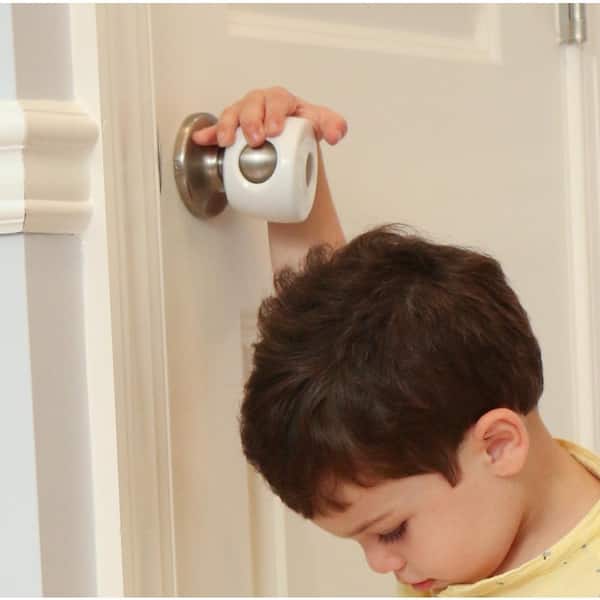
Door knob covers (2 to 3) — Child Safety Door Knob Covers 4-Pack. These dual-lock covers snap onto round door knobs and prevent toddlers from opening the door. They cost $9 for a four-pack and they are reusable trip after trip. If your hotel has lever handles instead of knobs, bring a Huglock Snap-On Door Lock instead — it works on levers, knobs, and handles and installs in seconds without any adhesive.
A door-top pinch guard. A simple foam door stop or C-shaped door guard prevents the heavy hotel door from slamming on little fingers. You can find these at any dollar store, or just use a folded washcloth over the top of the door.
Rubber bands and binder clips (3 to 4 of each). For securing blind cords, bundling loose cables behind the TV, and clipping curtain cord loops out of reach. They weigh nothing and solve a dozen problems.
Painter's tape (one small roll). For taping down cords, securing loose furniture backing, and marking hazards. It removes without residue.
That is the whole kit. Under a pound, costs less than $40 total for supplies that last dozens of trips, and it fits in the outer pocket of your diaper bag.
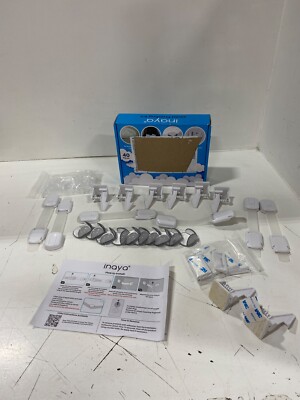
If you want a single-purchase option that covers most of these items, the Inaya Complete Baby Proofing Kit includes cabinet locks, latches, corner guards, and outlet covers in one pack for about $24. It is a solid starter kit, though parents recommend supplementing it with a few extra outlet covers and the door knob covers.
For the complete list of recommended safety gear with pricing and reviews, see our Travel Safety & Baby Proofing roundup.
Hotel-Specific Hazards: The Things That Catch Parents Off Guard
Beyond the room-by-room sweep, hotels have specific hazards that do not exist in homes or rentals. These are the ones that experienced traveling parents learn about the hard way.
The Mini Bar
This was covered briefly in the sweep, but it deserves emphasis. Hotel mini bars are essentially a cabinet of glass bottles, metal cans, and choking-hazard snacks placed at perfect toddler height. In many hotels, the mini bar is an open shelf — not even a closed cabinet. One parent reports her 18-month-old removed three tiny liquor bottles from a mini bar in the time it took her to hang up a jacket. Call the front desk and ask them to empty and lock it, or move everything to a high surface immediately.
Heavy Curtains and Window Cords
Modern hotels are generally better about this, but older properties and international hotels still have looped blind cords. These are among the most dangerous things in any room a child occupies. Between 1990 and 2023, hundreds of children died from blind cord strangulation in the United States, according to the CPSC safety data. It is the kind of hazard that looks completely harmless until it is not. Cut the loop if you can (seriously), or wind it up and secure it with a rubber band well above your child's reach. Do not just drape it over a hook — toddlers can pull it down.
Heavy curtains themselves are a risk too. A toddler who grabs the bottom of a heavy drape and pulls can bring down the curtain rod, hardware and all, onto their head. Check that the rod is securely mounted. If it feels loose, keep the curtains tied back and out of reach.
Glass Coffee Tables
Nearly every upscale hotel room has a glass coffee table. These are a double hazard — sharp corners at toddler head height, and the glass itself can break if a child falls against it hard enough. Pad the corners with your corner protectors, and if the glass looks thin or the table is wobbly, consider pushing it against a wall or into a corner where your child is less likely to crash into it during play.
Balconies
We covered the sweep steps above, but here is the reality check: if your hotel room has a balcony and your child is mobile, you need to treat that sliding glass door as the most important barrier in the room. A toddler who gets onto a hotel balcony unsupervised can climb furniture and go over a railing in less time than it takes you to walk from the bathroom to the balcony door. Request a room without a balcony if possible. If that is not possible, secure that door with a secondary lock and never leave the balcony door accessible when your child is awake.
The Pool
Hotel pools are rarely fenced with self-closing, self-latching gates the way residential pools are required to be in many states. Many hotel pools have no barrier at all — just an open deck area accessible from the lobby, the hallway, or even your room's patio. Know where the pool is in relation to your room. Make sure your child cannot access it independently. If your room opens directly onto a pool area (as many ground-floor rooms at resort hotels do), request a room change. It is not worth the risk.
Hotel Cribs
If you request a crib from the hotel, inspect it before use. Check for:
- Broken or missing slats
- A mattress that fits snugly against all four sides (no gaps wider than two fingers)
- Working locking mechanisms
- No loose screws or sharp edges
- A clean, firm mattress (not a folded blanket sitting on a frame)
Many hotel cribs are old, poorly maintained pack-and-plays that have been assembled and disassembled hundreds of times. If the crib looks questionable, do not use it. Bring your own portable crib instead — it is one less variable you have to worry about.
The Ironing Board and Iron
Hotel closets almost always contain an ironing board and iron. The ironing board is heavy and unstable when leaning against a wall. The iron, even when off, retains heat. And the cord on the iron is exactly the kind of thing a toddler will grab and pull. Move the iron to the highest shelf in the closet. Make sure the ironing board is secured or stored flat so it cannot fall.
Connecting Doors
If your room has a connecting door to an adjacent room, check the lock. These doors often have simple thumb-turn locks that a toddler can operate. If the room next door is occupied by strangers, this is a serious issue. Engage the lock on your side and push a chair or suitcase against the door.
Airbnb and Vacation Rental Hazards
Vacation rentals are a different beast from hotels. They offer more space and a kitchen, but they are private homes — and most private homes are not childproofed, even when the listing says "family friendly."
The Kitchen
This is the biggest difference between a hotel room and a vacation rental, and it is the most dangerous room for a toddler. In your home, every cabinet under the counter is locked. In a rental, nothing is locked.
Cleaning supplies are usually under the kitchen sink. Bleach, dishwasher pods (which look like candy and are one of the leading causes of poisoning in children under 5), oven cleaner, drain opener. Move all of it to a locked cabinet or a high shelf immediately. If there is no high shelf, put cleaning supplies in a suitcase and zip it shut.
Knives are in a block on the counter or in a drawer at toddler height. Move the block to the top of the refrigerator. Lock the knife drawer.
The stove often has accessible knobs. Check if they are removable. Gas stoves are particularly dangerous because a toddler can turn on the gas without producing a flame.
Trash cans in rental kitchens are almost always accessible — pedal-open or simple swing-top. Move the trash inside a locked cabinet or onto the counter.
Use the SKYLA HOMES Baby Locks or the Inaya Complete Baby Proofing Kit to lock down the kitchen quickly. The adhesive strap locks take about 30 seconds each to install and will cover cabinets, drawers, and the trash cabinet.
Stairs
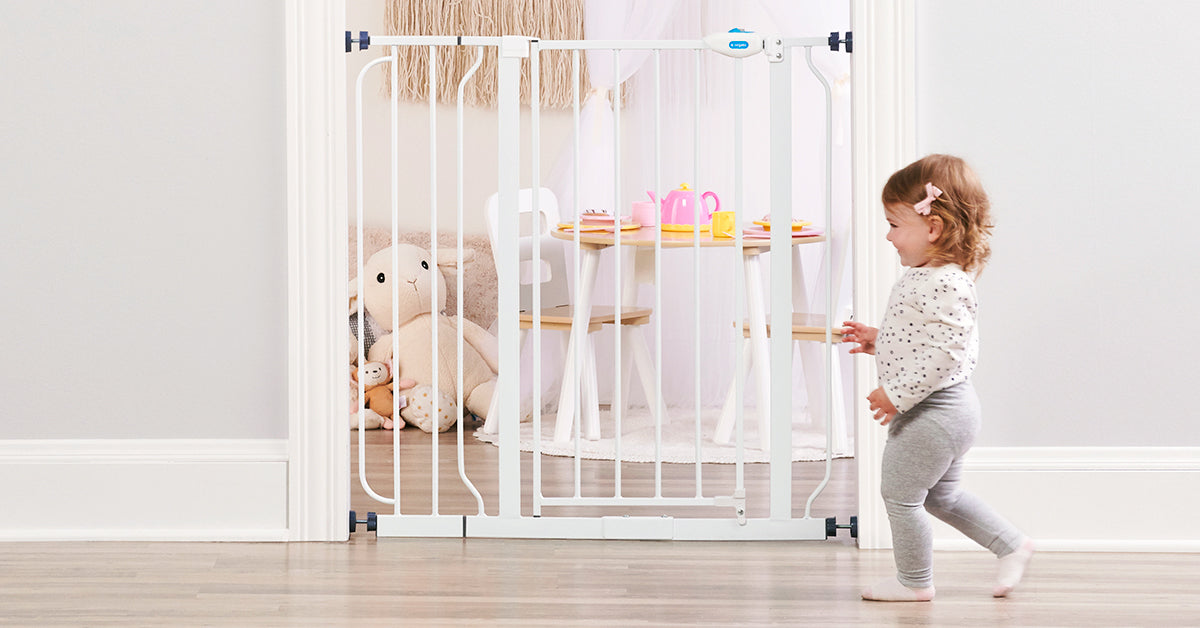
Many vacation rentals are multi-level. Stairs with no gate are the single most common injury hazard in rentals for toddlers. If the rental has stairs, bring a pressure-mounted baby gate like the Regalo Safety Baby Gate. It adjusts from 29 to 38.5 inches, installs without drilling, and has a walk-through door so adults do not have to climb over it. Use it at the bottom of stairs. For the top of stairs, a pressure-mounted gate is not safe enough — you need a hardware-mounted gate, or you need to keep the upstairs completely blocked and supervised.
Pools and Hot Tubs
Many vacation rentals have unfenced pools or hot tubs. Unlike hotels, there is no lifeguard and often no barrier between the living space and the water. This is the number one safety concern in any rental with a pool. Before you book, ask the host about pool fencing, gate latches, and pool covers. When you arrive, verify everything. If the pool fence gate does not self-close and self-latch, it is not safe enough. Add a secondary latch or alarm.
Hot tubs are equally dangerous and often forgotten. They should be covered and locked when not in use.
Unfamiliar Layouts
At home, you know every step, every corner, every threshold. In a rental, you do not — and neither does your toddler. Spend the first ten minutes walking the entire property while your child is secured in a portable crib or stroller. Look for drop-offs, uneven floors, low windows, stairs without gates, and doors that lead to unsafe areas (garages, laundry rooms with detergent, basements).
Pet Allergens
Many vacation rentals allow pets. Even if the listing says "cleaned after every stay," pet dander embeds in carpets and upholstery. If your child has allergies or asthma, ask the host directly whether pets have been in the property. Consider bringing an allergen spray for soft surfaces and a portable air purifier for the bedroom.
Grandparents' House: The Diplomacy Challenge
Visiting grandparents is wonderful and also — from a safety perspective — potentially treacherous. Not because grandparents do not care, but because their home was childproofed 25 or 30 years ago and has since returned to its natural, adult-optimized state.
If you are deciding whether to bring your own safety gear or rely on what is available at your destination, our renting vs bringing gear guide covers the cost and convenience tradeoffs.
The Common Hazards
Medications at accessible heights. This is the big one. Grandparents often take multiple medications and keep them on counters, nightstands, and in purses left on the floor. Prescription medications are the leading cause of poisoning death in children under 5. You must address this directly, even if it feels uncomfortable. Ask that all medications be moved to a locked cabinet or a shelf above your child's reach.
Stairs without gates. Most grandparents removed their baby gates decades ago. Bring your own.
Small objects everywhere. Decorative items, coins in dishes, sewing supplies, batteries in remotes with loose covers, candy dishes on coffee tables. Walk through the house with your parent or in-law and gently point out anything that is a choking hazard.
Unfenced or uncovered pools and ponds. Older homes sometimes have decorative ponds, unfenced pools, or rain barrels. All are drowning hazards.
Cleaning products under the sink. Grandparents' cleaning products are often stored the way everyone stored them before we had kids — under the kitchen and bathroom sinks, completely accessible.
The Diplomacy
Here is the hard part. You do not want to walk into your in-laws' house and start criticizing everything. But you do need to address safety. What works for many families:
Frame it as "help us out" rather than "you are doing it wrong." Say: "We brought some outlet covers and cabinet locks — could you help us figure out where to put them? You know this house better than we do."
Bring your own supplies. Do not ask grandparents to buy baby proofing gear. Bring everything in your kit and offer to install and remove it yourself.
Focus on the big three: medications, choking hazards, and water. You do not need to childproof every inch of the house for a weekend visit. But medications, small objects, and any water features (pools, ponds, bathtubs) are non-negotiable.
Be specific. Instead of "can you put your medications away," say "could we move these pill bottles to the top shelf of the hall closet? She can reach the bathroom counter now."
The Inaya Complete Baby Proofing Kit is particularly good for grandparents' houses because it has a bit of everything — cabinet locks, corner guards, outlet covers — and the adhesive removal is clean enough that grandparents will not worry about damage to their furniture.
Age-Specific Concerns: Crawlers, Walkers, and Climbers
Not all toddlers are dangerous in the same way. A seven-month-old crawler and a two-and-a-half-year-old climber are both mobile, but they are looking for entirely different kinds of trouble.
Pre-Crawlers (0-6 months)
You might think babies who cannot move yet are safe in a hotel room. They mostly are — but the sleeping environment is the concern. Hotel bed surfaces are not safe sleep environments for infants. If you do not have a portable crib, request one from the hotel and inspect it thoroughly. Never co-sleep in a hotel bed with an infant — hotel bedding is thick, soft, and full of suffocation hazards. Also check the room temperature. Hotel climate control can be erratic, and overheating is a SIDS risk factor.
Crawlers (6-12 months)
Crawlers are floor-level threats only. Their world is the bottom 18 inches of the room. Your priorities:
- Floors. Inspect every square foot of floor for small objects, pins, coins, crumbs, and debris. Get down on your hands and knees.
- Outlets. Every uncovered outlet at floor level is a target. Cover them all.
- Cords. Lamp cords, phone charger cords, and curtain cords on the floor are grab-and-pull hazards.
- Furniture legs. Crawlers pull themselves up on anything. Make sure floor lamps, side tables, and luggage racks are stable enough to support a pulling baby.
- Bathroom access. Keep the bathroom door closed at all times. A crawler who gets into the bathroom can reach the toilet, the bathtub, and every cleaning product under the sink in seconds.
Walkers (12-18 months)
Walkers are the most dangerous age in a hotel room because they are mobile enough to reach things but too young to understand "no." Their world extends to about 30 inches off the floor, and they are unsteady enough to fall into sharp corners constantly. Your priorities shift to:
- Sharp corners. This is the peak age for head-to-coffee-table-corner collisions. Pad everything.
- Tabletop items. Walkers can reach the edge of nightstands and low tables. Move everything — lamps, glasses, the phone, the alarm clock — to the center of the surface or to a higher location.
- Doors. Walkers can reach door handles, especially lever-style handles. Use door knob covers or the Huglock.
- Falling hazards. Beds, chairs, and couches are climbing targets. A walker who climbs onto a hotel bed can fall off the other side onto a hard floor. Consider putting pillows on the floor beside the bed.
Climbers (18 months to 3+ years)
Climbers are a different challenge entirely. They can reach high surfaces. They can move chairs to use as step stools. They can open doors, drawers, and containers. And they are fast.
- Furniture tipping. A climber pulling open dresser drawers and using them as stairs will tip the dresser. This is one of the most serious hazards in any room. If a dresser has accessible drawers, push it flat against the wall and consider removing the drawers.
- Window access. A climber can push a chair to a window, stand on it, and lean against the screen. Hotel window screens are not designed to prevent falls. Move all furniture away from windows.
- Balcony access. Climbers plus balcony furniture equals disaster. Secondary locks on balcony doors are mandatory at this age.
- Escaping the room. Two-year-olds can operate lever door handles, deadbolts, and some chain locks. The Huglock placed at the top of the door or a chain-lock cover is essential.
- Reaching the mini bar, the iron, and the contents of drawers. Climbers have a vertical reach of three feet or more with a step stool. Put dangerous items truly out of reach — on top of the closet, in a zipped suitcase, or locked in the room safe.
What to Request from Hotels Before and During Your Stay
Hotels are more accommodating than most parents realize. You just have to ask. Here is what to request:
Before you arrive (call 48 hours ahead):
- A crib in the room, inspected and set up before your arrival
- A room on a lower floor (safer if you are worried about balconies, and easier with gear)
- A room away from the pool (reduces the risk of your child heading toward water)
- A room without a balcony, if available
- Confirmation that the mini bar can be emptied and locked
At check-in:
- Outlet covers (some family-friendly hotels have them — ask)
- A non-slip bath mat for the tub
- Extra towels (for padding sharp furniture edges, cushioning the gap between the bed and the wall, and draping over doors to prevent finger-pinching)
- A nightlight (if the room does not have one — navigating a dark, unfamiliar hotel room with a child is a recipe for a stumble)
- The location of the nearest first aid kit
- The hotel's emergency procedures, especially the location of the nearest stairwell (not the elevator) for fire evacuation
If the hotel provides a crib, ask:
- When was it last inspected?
- What brand and model is it?
- Does it meet current CPSC standards?
Most hotels will happily accommodate these requests. They deal with families every day and they do not want a child injured on their property. Do not be shy about asking.
For a complete list of what to pack beyond safety gear, check out our toddler packing list. And if you are bringing your own sleep setup instead of using the hotel crib, our portable cribs roundup and travel sleep accessories guide cover the best options. For tips on actually getting your toddler to sleep once the room is safe, our toddler sleep on vacation guide has you covered.
Emergency Prep: Before You Need It
Emergencies do not wait until you are ready. Spend five minutes at the start of every trip getting this information, before anything goes wrong.
Nearest Hospital
Before you leave home, Google the nearest hospital or urgent care center to your hotel. Save the address and phone number in your phone. Know how long the drive takes. If you are traveling internationally, know the local emergency number (it is not always 911 — in Europe it is 112, in the UK it is 999).
Poison Control
The US Poison Control number is 1-800-222-1222. Save it in your phone right now if you have not already. They are available 24/7 and they can tell you within minutes whether something your child ate, drank, or touched requires a hospital visit. For international travel, research the local poison control number before your trip.
Hotel First Aid Kit
Ask the front desk where the hotel's first aid kit is located. Some hotels keep one at the front desk. Others have them with security. Some do not have one at all. If the hotel does not have a first aid kit, you need to have your own basic supplies:
- Adhesive bandages (various sizes)
- Antibiotic ointment
- Children's acetaminophen or ibuprofen
- Tweezers (for splinters)
- A digital thermometer
- Saline drops or nasal aspirator
Emergency Exit Routes
Walk the path from your room to the nearest stairwell. Count the doors between your room and the exit — in a smoke-filled hallway, you may need to find the exit by touch. This is not paranoia. This is the advice of every fire department in the country.
Your Child's Medical Information
Keep a note in your phone with your child's:
- Date of birth
- Weight (current)
- Known allergies
- Current medications
- Pediatrician's name and phone number
- Insurance information
If you are traveling internationally, bring a printed copy of this information in the local language.
The Printable Checklist: Room by Room
Use this checklist for every hotel, rental, and guest room. Run through it before letting your child roam free.
Entry and Doors
- Main door handle secured (knob cover or high lock)
- Deadbolt and security latch engaged
- Connecting doors checked and locked
- Door pinch guard in place
- Lever handles covered or secured
Bedroom
- All outlets covered
- Floor inspected on hands and knees
- Nightstand drawers emptied of hazards
- Mini bar emptied or secured
- Blind cords secured up high
- Floor lamps moved or stabilized
- Sharp corners padded
- Under-bed area inspected
- Heavy furniture pushed against walls
- TV secured or pushed back
- Closet inspected — iron and ironing board secured
- Curtain rods checked for stability
Bathroom
- Door secured with knob cover
- Toilet lid down (lock if needed)
- All toiletries and cleaning products removed or elevated
- Hot water temperature checked
- Non-slip mat in tub
- GFCI outlets confirmed near water
- Trash can inspected and emptied
- Hair dryer cord secured
Balcony (if applicable)
- Sliding door has secondary lock
- Railing gaps checked (no space wider than a soda can)
- All furniture moved away from railing
- Floor swept for debris
- Balcony door always locked when not in supervised use
Kitchen (Airbnb/Rental only)
- All lower cabinets locked
- Cleaning products moved up high or locked away
- Stove knobs removed or covered
- Knife block moved to top of refrigerator
- Dishwasher latched
- Trash can secured in locked cabinet or on counter
Emergency Information
- Nearest hospital address and phone number saved
- Poison Control number saved (1-800-222-1222)
- Hotel first aid kit location known
- Emergency exit route walked
- Child's medical info accessible on phone
Print this checklist or screenshot it on your phone. Parents who run through it every single time report it has never once been wasted effort.
Destination-Specific Safety Considerations
Different types of vacations come with different baby-proofing challenges. For destination-specific advice beyond the hotel room, check out these guides:
- Beach Vacation with a Toddler — sun, sand, and water safety essentials
- Camping with a Toddler — outdoor hazards and campsite childproofing
Disclosure: ToddlerTravelGear is reader-supported. We may earn a commission if you buy through links on our site — at no extra cost to you. Learn more
Frequently Asked Questions
Products Mentioned
Inaya
Inaya Complete Baby Proofing Kit – Cabinet Locks, Latches, Corner Guards & Outlet Covers
Read review →
Wappa Baby
Clear Outlet Covers (50 Pack) – Baby Safety Outlet Plug Covers
Read review →
CalMyotis
Corner Protector for Baby, Furniture Corner Guard & Edge Safety Bumpers, Clear (12 Pack)
Read review →
Wappa Baby
Child Safety Door Knob Cover (4 Pack), Hard-to-Remove Dual-Lock Door Handle Covers
Read review →
Huglock
Huglock Snap-On Door Lock (2 Pack), Childproof Safety Lock for Knobs, Levers & Handles
Read review →
Vmaisi
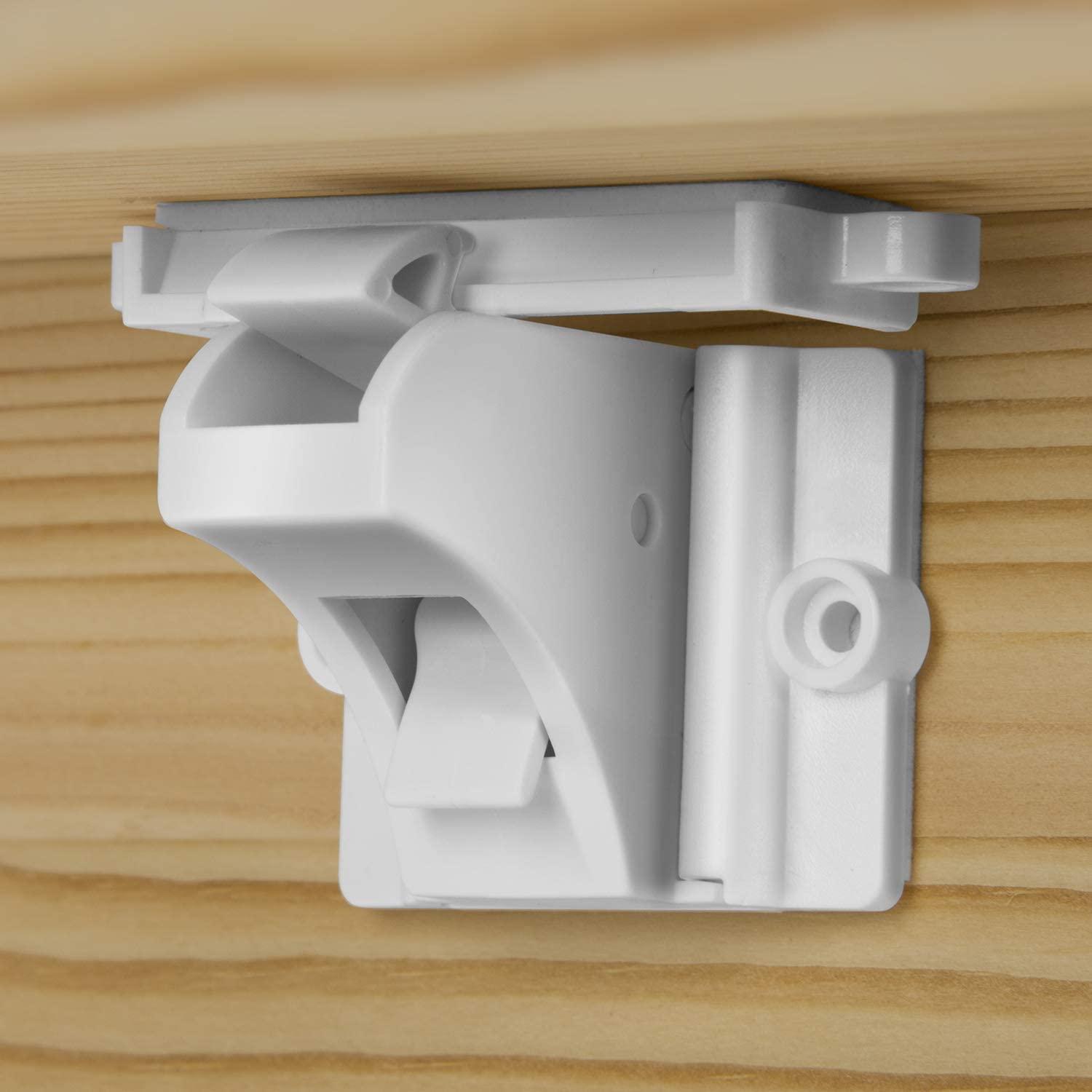
Vmaisi 20 Pack Magnetic Cabinet Locks Baby Proofing, Adhesive Easy Installation
Read review →
Regalo
Regalo Safety Baby Gate for Doorways & Stairs, 29–38.5", Pressure Mounted with Door
Read review →
SKYLA HOMES
SKYLA HOMES Baby Locks (8-Pack) Child Safety Cabinet Proofing, 3M Adhesive
Read review →
Related Content
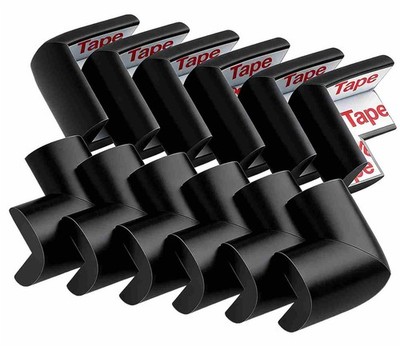
Corner Protectors Patented 12-Pack Review: The Invisible Guards That Saved Us at Every Vacation Rental
Honest corner protectors 12-pack review — patented clear design, adhesive strength of travel. $8.99. Specs, trade-offs, and who should skip it.
Vmaisi Magnetic Cabinet Locks Review: 20-Pack Travel Baby Proofing That Actually Works
Honest Vmaisi 20 Pack Magnetic Cabinet Locks review — adhesive magnetic locks for Airbnbs, hotel rooms, and relatives' houses. $39.98. Specs and where they fail.
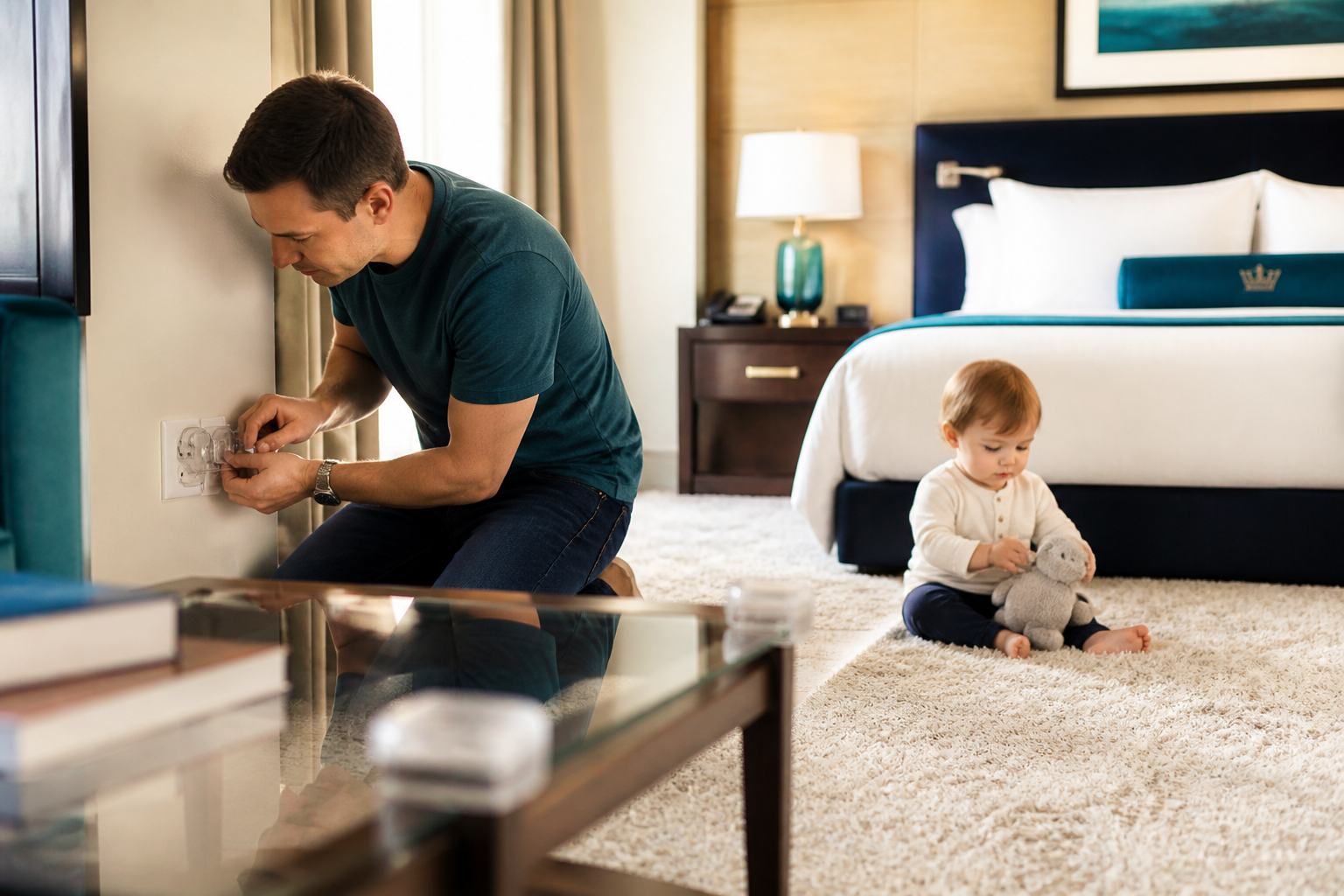
Best Travel Safety & Baby Proofing Kit for Toddlers (2026): Hotel Rooms, Rentals & Grandma's House
Portable outlet covers, cabinet locks, corner guards, door locks, and gates that fit in your suitcase. Baby-proof any hotel room, Airbnb, or grandparents' house in under ten minutes.