Osprey Poco vs Deuter Kid Comfort: Hiking Child Carriers Compared
Osprey Poco vs Deuter Kid Comfort on load limits, carrier weight, storage, sunshade, torso fit and flying with a framed carrier, plus who should pick each.
Disclosure: ToddlerTravelGear is reader-supported. We may earn a commission if you buy through links on our site — at no extra cost to you. As an Amazon Associate, we earn from qualifying purchases. Learn more
The Osprey Poco and the Deuter Kid Comfort are both framed hiking carriers for a child who can sit up unassisted, but they count the limit differently: Osprey caps the child at 40 lb within a 48.5 lb total load, while Deuter lists a 22 kg (about 48.5 lb) child limit. The Poco comes with a built-in sunshade and more storage, and Osprey backs it with a seven-year repair guarantee. The Kid Comfort weighs slightly less on Deuter's current spec sheet and fits a longer range of adult torsos. Pick the Poco for sunny, exposed trails and long days. Pick the Kid Comfort if the tallest adult in your family will do most of the carrying, or you want the slightly lighter, slightly cheaper pack.
Neither is an airport carrier. Both are too big for the overhead bin on most flights, so plan to check one or rent at your destination.
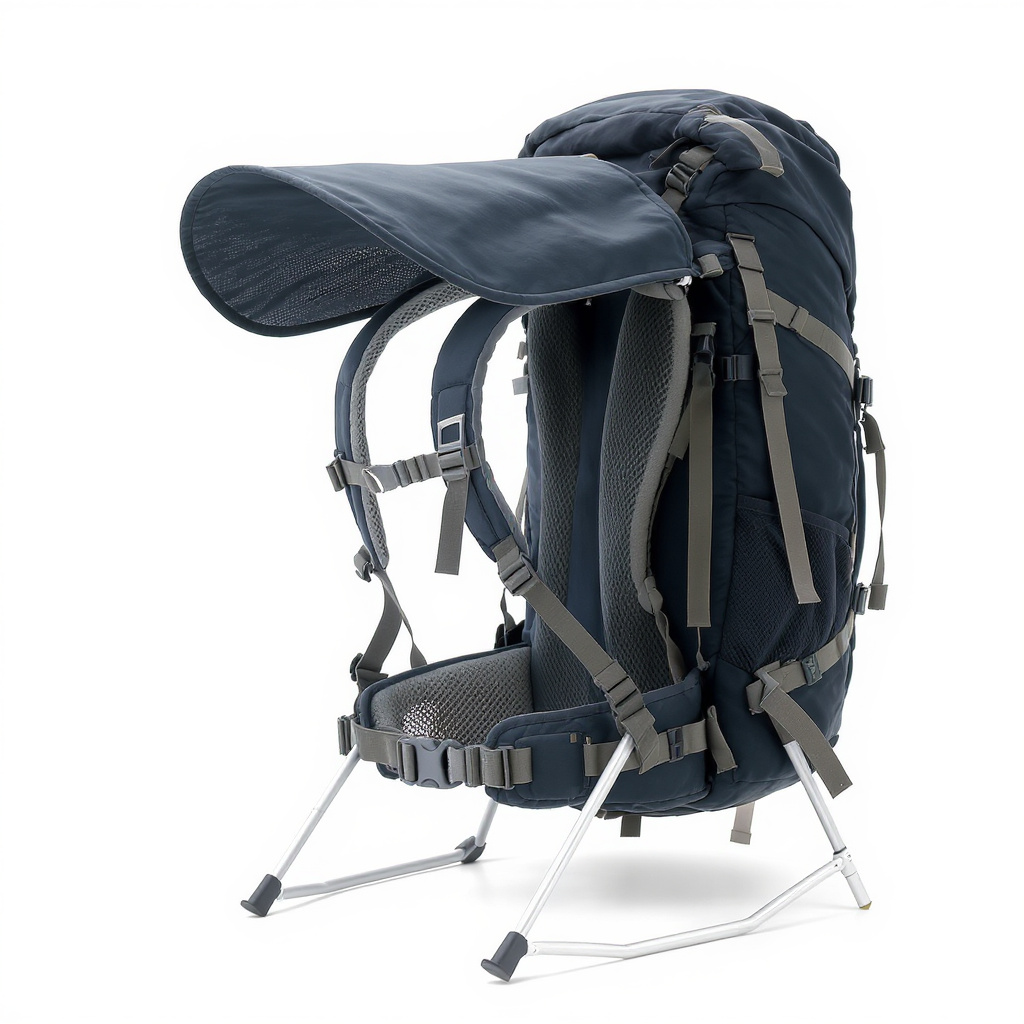
Osprey Poco Child Carrier Backpack - Adjustable Travel Baby Carrier with Sunshade
Built-in sunshadeOsprey
Rated to a 48.5 lb total load, 20 liters of storage, integrated sunshade and kickstand, and Osprey's seven-year All Mighty Guarantee on Poco carriers.
Pros
- Built-in sunshade included
- Excellent ventilation system
- Integrated kickstand
- Osprey's AllMighty Guarantee
Cons
- Premium price
- Back carry only
- Too bulky for airports
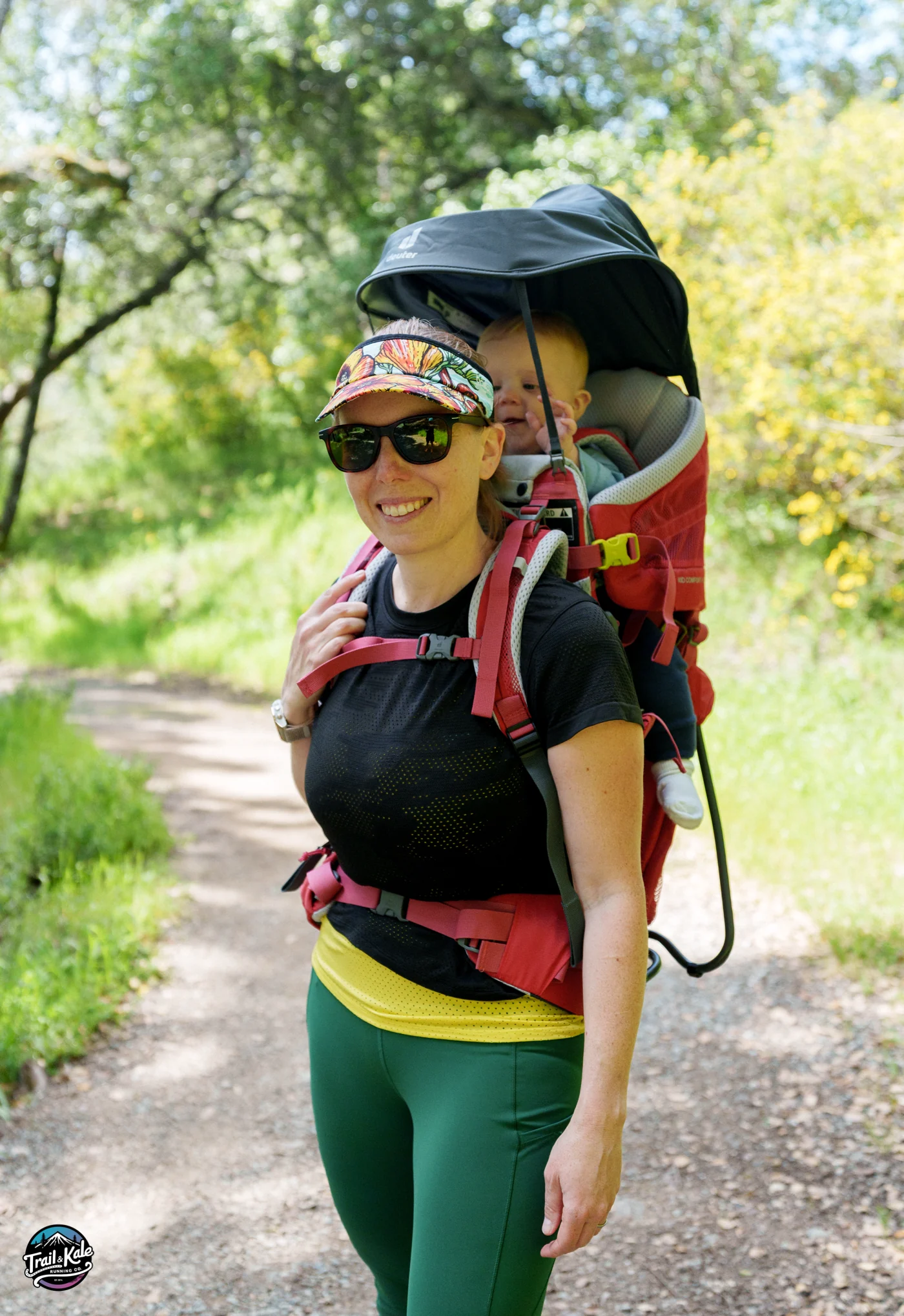
Deuter Kid Comfort Child Carrier and Backpack for Travel & Hiking with Toddlers
Longer torso rangeDeuter
Deuter lists 3,230 g (about 7.1 lb), a 22 kg child limit, a VariSlide back that adjusts from 44 to 58 cm, and a hydration sleeve for up to 3 liters.
Pros
- Excellent ventilated back system
- Integrated kickstand for easy loading
- Adjustable fit for multiple carriers
- Good gear storage
Cons
- About 7.1 lb before the child and gear
- Not suitable for infants
- Too bulky for airports
How do the specs compare side by side?
The Poco figures come from Osprey's Poco series owner's manual. The Kid Comfort figures come from Deuter's US product page. Price tiers are relative; check the current price on Amazon.
| Osprey Poco | Deuter Kid Comfort | |
|---|---|---|
| Maximum load | 22 kg / 48.5 lb, child, gear and pack combined | Child 22 kg / 48.5 lb, plus luggage 2 kg / 4.4 lb |
| Child weight | 16 to 40 lb (7.25 to 18 kg) | Not stated separately; recommended load 9 to 24 kg |
| Minimum age | 6 months, and able to sit upright unassisted | Not stated on Deuter's US page |
| Carrier weight | 3.49 kg / 7.69 lb | 3,230 g / about 7.1 lb |
| Storage | 20 liters | 14 liters, three outer pockets, zip-out divider |
| Sunshade | Built in | Not listed on Deuter's US page |
| Adult fit | Torso 15 to 21 in; hip belt 26 to 48 in | Back length 44 to 58 cm (17.3 to 22.8 in) |
| Kickstand | Yes | Yes (a folding rear stand) |
| Size | 28 x 16 x 18 in; 29 x 16 x 11 in stored flat | 72 x 43 x 34 cm (28.3 x 16.9 x 13.4 in) |
| Price tier | Premium | Premium, usually the cheaper of the two |
What does the maximum load actually include?
This is where the two makers word things differently, so read it carefully.
Osprey sets one number for everything: 48.5 lb is the child, whatever you pack and the carrier itself, combined. The manual also caps the child at 40 lb. So a 35 lb toddler in a 7.69 lb pack leaves you only about 5.8 lb for water, layers and snacks.
Deuter's product page lists the child limit (22 kg) and a separate luggage limit (2 kg) under "maximum load". Its child-carrier category page instead says the carriers take up to 22 kg of child and belongings together. Because the two Deuter pages disagree, follow the label and manual that come with your carrier.
Either way, a toddler near the top of the range leaves little room for gear.
When is a child old enough for a framed carrier?
When they can sit upright unassisted. That is the line both the CPSC and the makers draw. Osprey adds a 16 lb minimum and says not to use the Poco before 6 months. Deuter's US page does not publish a minimum age or weight; its recommended load starts at 9 kg (about 20 lb). Many babies sit steadily somewhere in the second half of the first year, but go by development, not a birthday.
For a younger baby, use a soft structured carrier instead. See our best baby carriers for travel for front-carry options.
Which fits the adults better?
It depends on your torso length. Osprey lists a 15 to 21 inch torso range with a hip belt from 26 to 48 inches. Deuter's VariSlide back adjusts from 44 to 58 cm (17.3 to 22.8 inches) and is listed for adults 158 to 195 cm tall (about 5 ft 2 in to 6 ft 5 in).
In practice, the Poco reaches shorter torsos and the Kid Comfort reaches longer ones. If two adults will share the carrier, measure both torsos and check that both fall inside one range. A carrier that fits neither of you well will feel heavy fast.
Which is better on a hot or exposed trail?
The Poco, on paper. Its sunshade is built in, and the manual tells you to deploy it for sun protection and add sunscreen for the child's exposed skin. Deuter's US page does not list a sunshade for the standard Kid Comfort, so check the product listing for what is included before you buy, and plan for a hat if there is no shade.
On the adult's side, Deuter lists its Aircomfort back system. A child sitting still also gets cold or overheated before you notice. Osprey's manual says to check the child's ears and face for temperature from time to time.
Can you fly with either carrier?
Yes, but plan to check it. Neither folds small: the Poco measures 29 x 16 x 11 inches even with the seat lowered and stored flat, and the Kid Comfort is about 28 x 17 x 13 inches. That is larger than the carry-on size most airlines allow, though limits vary, so check with your airline. Some airlines treat child carriers like strollers for gate-check purposes, and others count them as checked bags.
If you do take one through security, TSA says baby carriers must be screened by X-ray, and items too big for the machine get a physical inspection. To protect the frame in the hold, empty the pockets, fold the kickstand, cinch every strap and pack it in a duffel. Osprey sells a Poco carry case separately. On arrival, check the frame, the kickstand and every buckle before you load your child.
For a trip that is mostly airports and cities with one or two hikes, renting a framed carrier at your destination is often easier than flying with one.
Choose the Osprey Poco if…
- You hike sunny or exposed trails and want shade built in.
- You want the larger storage compartment (20 liters versus 14).
- The adults who will carry it have short to average torsos.
- A seven-year repair guarantee matters to you on a carrier you may pass down or resell.
Read our full Osprey Poco review.
Choose the Deuter Kid Comfort if…
- The main carrier is tall: Deuter's back length runs to 58 cm (22.8 in).
- You want the slightly lighter pack on the makers' current specs.
- You prefer the lower price band and will add your own sun protection.
- You carry water in a hydration bladder (Deuter lists a sleeve for up to 3 liters).
Read our full Deuter Kid Comfort review.
Is there a recall I should know about?
Yes, for some Deuter carriers. In May 2025 the CPSC announced recall 25-256, covering about 5,080 Kid Comfort, Kid Comfort Pro and Kid Comfort Active carriers sold from March 2023 through March 2025, including on Amazon. The hinges on the folding rear kickstand leg can crack or break, posing a fall hazard. Affected units have production codes ending in 0123, 1223 or 0423, printed on a tag inside the main storage pocket at the bottom of the carrier. If you buy or borrow a Kid Comfort, check that tag. If the code matches, stop using the carrier and contact Deuter for a free replacement, as the CPSC notice explains.
What else should you pack for a trail day?
Plan the gear around the load limit, not the size of the pockets. Water is the heaviest thing most families carry, so a second adult with a daypack takes pressure off the carrier's total. Our camping with a toddler guide covers layering, sun and sleep for longer outdoor trips.
How we put this together
We have not tested either carrier. This comparison uses Osprey's Poco series owner's manual, Deuter's Kid Comfort US product page and child-carrier category page, and the CPSC pages linked above. Osprey's own product pages were not reachable for this update, so check its site for any changes to the current model. Specifications change; confirm the label on the carrier you buy.
Frequently Asked Questions
Products Mentioned
Related Content
Deuter Kid Comfort Review: A Framed Hiking Carrier for Taller Adults
Deuter Kid Comfort: a 7.1 lb framed hiking carrier with a 22 kg child limit, 14 L of storage and a 2025 kickstand recall to check. Who should buy it.
Osprey Poco Child Carrier: Who Needs a Hiking Carrier on a Trip
The Osprey Poco hiking carrier weighs 7.69 lb, takes a 16–40 lb child and has a built-in sunshade. Who it suits, flying with it, and Deuter compared.

Ergobaby Embrace vs Omni Classic: Which Carrier for Travel?
Ergobaby Embrace vs Omni Classic: weight range, positions, fabric, packability and back carry, plus TSA and FAA carrier rules and who should pick each.