Doona vs an Infant Car Seat Plus a Travel Stroller
Doona or an infant car seat plus a travel stroller? Weight, how long each lasts, flying, storage, gate-checking, safe-sleep limits and cost tiers compared.
Disclosure: ToddlerTravelGear is reader-supported. We may earn a commission if you buy through links on our site — at no extra cost to you. As an Amazon Associate, we earn from qualifying purchases. Learn more
Choose the Doona if your trips are a string of short hops between vehicles that are not yours: taxi, airport, rideshare, rental car. One item does both jobs and switches in seconds. Choose a light infant car seat plus a compact stroller if you will walk for hours at your destination, want a basket, or want the stroller to keep working after your baby outgrows the infant seat. The Doona ends at the same point as a typical infant seat. A travel stroller can carry on for years.
Neither option is a place for long naps. The AAP advises moving a sleeping baby out of a car seat once you arrive.
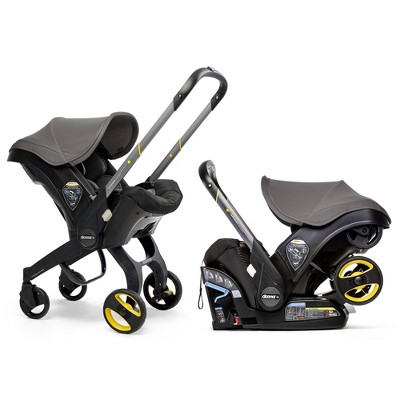
Doona Car Seat & Stroller, All-in-One Travel System
All-in-oneDoona
A rear-facing infant car seat with wheels that fold out, so one item covers the car, the terminal and the sidewalk. Doona lists it as FAA aircraft approved.
Pros
- Car seat and stroller in one
- No separate frame needed
- Instant transition from car to stroll
- Compact and innovative design
Cons
- Very expensive
- Heavy for an infant seat
- Outgrown at 30 lb or 32 in on Doona's US page
- Small canopy
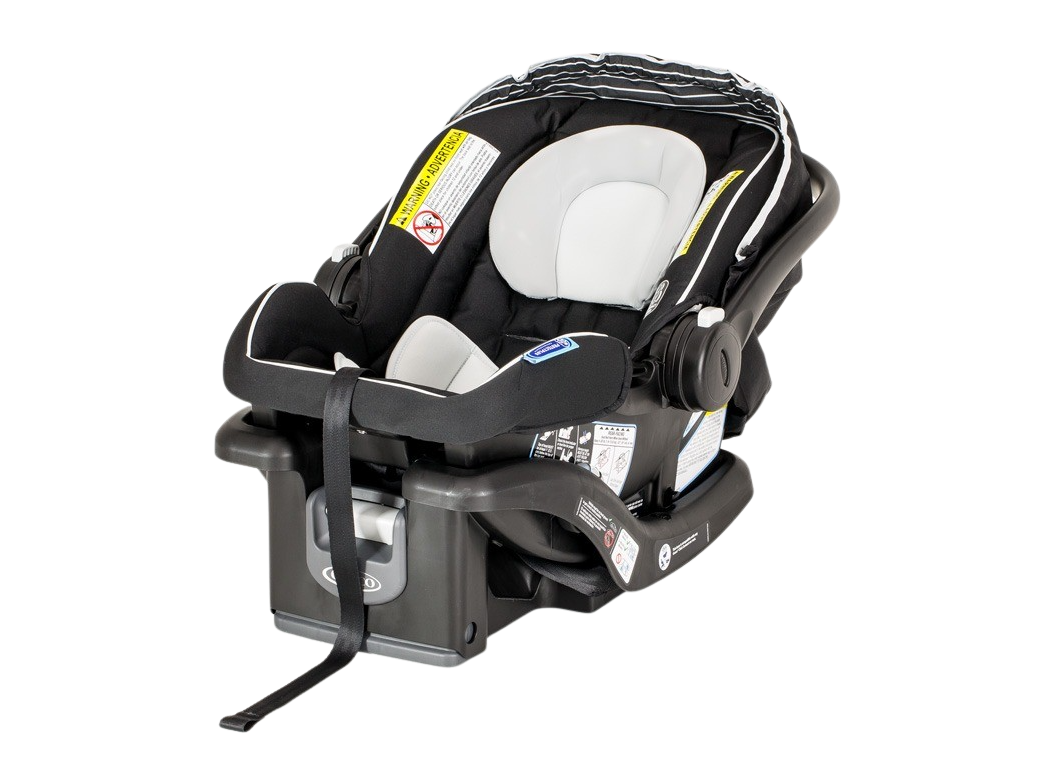
Graco SnugRide Lite LX Infant Car Seat, Lightweight Rear-Facing Seat
Light infant seatGraco
A rear-facing infant carrier of about 7 lb that clicks into Graco Click Connect strollers and costs far less than the Doona.
Pros
- Ultra-lightweight at 7 lbs
- 4-position adjustable base
- ProtectPlus Engineered safety
- LATCH for easy install
Cons
- Rear-facing only
- Outgrown by 30 lbs
- Base sold separately for second car
What does each setup involve?
The Doona is an infant car seat with built-in wheels and a handle. In the car it is a rear-facing seat, on its base or belted in. Outside, you unfold the wheels and push it.
The two-piece setup is a separate infant car seat and a stroller it clicks into. The key word is "clicks into." An infant seat only attaches to strollers whose makers publish compatibility with it, sometimes through adapters. Three published pairings:
- Graco SnugRide Lite LX clicks into Graco Click Connect strollers, per Graco. None of the strollers in our travel-stroller roundup lists it as compatible.
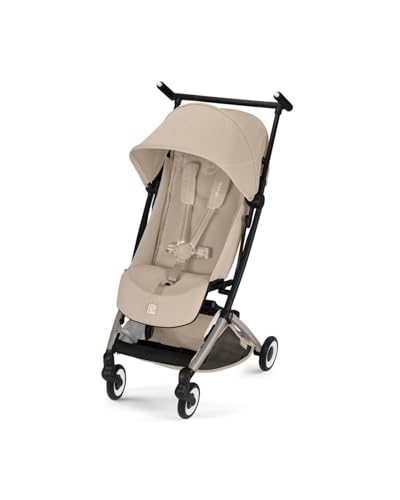
- Cybex Libelle comes with adapters for Cybex infant car seats, and Cybex says those adapters generally fit most Nuna and Maxi-Cosi infant seats, with confirmation from Cybex for a specific model.
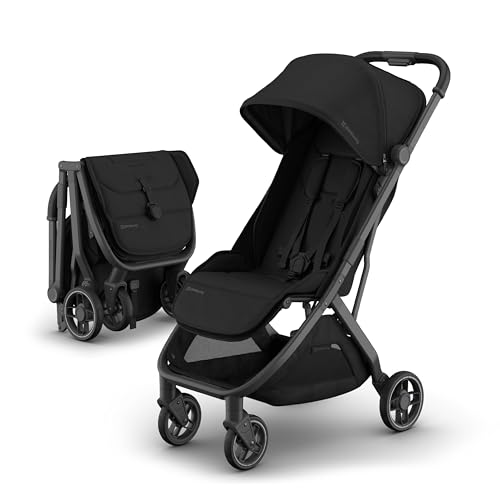
- UPPAbaby Minu V3 takes UPPAbaby's own Mesa and Aria seats with one adapter set, and listed Nuna Pipa, Maxi-Cosi Mico, Cybex Aton and Clek Liing models with another, each sold separately.
So "an infant seat plus a travel stroller" means picking a matched pair. A SnugRide Lite LX on a Graco stroller is the budget route; a Cybex or UPPAbaby stroller with an infant seat from its published list is the compact-fold route.
How do the two compare side by side?
Doona figures are from Doona's US product page. SnugRide figures are from Graco's listing, and Libelle figures from Cybex's product page. Price tiers are relative; check the current price on Amazon.
| Doona | SnugRide Lite LX + compact stroller (Libelle shown) | |
|---|---|---|
| Items to manage | 1 | 2 |
| Weight you lift | 17.2 lb seat, plus baby | About 7.2 lb carrier, plus baby; the 13.7 lb stroller rolls or folds separately |
| Infant seat limits | 4–30 lb, up to 32 in | 4–30 lb, up to 32 in |
| Stroller after the infant stage | None; it is outgrown with the seat | Libelle seat from 6 months to about 4 years (Cybex lists 55 lb max) |
| Folded size | 17.4 x 26 x 22.4 in | Libelle 12.6 x 7.8 x 18.9 in, plus the carrier |
| Basket | None in Doona's spec list | Libelle basket rated 11 lb |
| On the plane | Doona lists it as FAA aircraft approved; check the label | Check the carrier's label; the stroller is never used in flight |
| Price tier | Premium | Budget seat plus a mid-range stroller |
One figure needs a note. Doona's current US pages list 17.2 lb and a 4–30 lb range up to 32 in. Older listings show about 16.5 lb and up to 35 lb. Follow the limits printed on the label of the seat you buy.
Which is lighter to carry?
You lift less with the two-piece setup, but you manage more. The SnugRide Lite LX carrier is about 7.2 lb, so with a 15 lb baby you lift roughly 22 lb from car to stroller. The Doona is 17.2 lb on its own, so the same baby makes it about 32 lb. You push it most of the time, but you carry it up stairs, through narrow aisles and into a car.
The two-piece setup adds a stroller to unfold, fold and stow. The Libelle weighs 13.7 lb; UPPAbaby lists the Minu V3 at 16.7 lb. On a trip with many quick vehicle changes, the Doona's single motion saves effort even though the seat is heavier.
How long does each one last?
On paper, the same time for the car seat part. Doona and Graco both rate their seats to 30 lb and 32 in, and many babies reach the height limit before the weight limit. After that, the AAP says a rear-facing convertible seat is next.
The difference is the stroller. The Doona has no stroller life beyond its car seat, so you will buy a stroller anyway later. A compact travel stroller keeps going: Cybex rates the Libelle's seat from 6 months to about 4 years, and UPPAbaby rates the Minu V3 from birth to 50 lb. If you will need a travel stroller for toddler trips, buying it now spreads its cost across more years.
How does each one work at the airport and on the plane?
The Doona rolls through the terminal with your baby in it. At the gate you either install it in a purchased seat or gate-check it. Doona lists it as "TUV and FAA aircraft approved." The FAA says a car seat must have "This restraint is certified for use in motor vehicles and aircraft" printed on it, so find that label before you fly. It does not fold small enough for an overhead bin.
The two-piece setup gives you choices. You can install the infant carrier in a purchased seat and gate-check or stow the stroller. Our SnugRide Lite LX review could not confirm aircraft certification in Graco's own documentation, so check that carrier's label before you book a seat for it. If your baby flies on your lap, you can gate-check both, or carry the carrier on and bring a stroller that may fit the overhead bin if your airline allows it.
Either way, the safest place for a baby under 2 is an approved car seat in their own seat, according to the FAA. See flying with a baby and lap child vs car seat vs CARES for that decision.
Which is easier to gate-check?
The Doona is one item at the jet bridge, and you wait for one item on arrival. The two-piece setup means two tags, or one if you carry the infant seat on board and check only the stroller. A gate-check bag protects either, and you should inspect any car seat for cracks after it has been handled as baggage. Our guide to gate-checking versus counter-checking covers the trade-offs.
Can a baby nap in either one?
Not for long in the car seat part. HealthyChildren.org, the AAP's site for parents, says that if a baby falls asleep in a car seat, you should move them out of the seat when you arrive. It warns that spending too much time in a car seat outside the car has health consequences, including flat head and breathing concerns. Brief periods are fine; long stretches are not. On long road trips, the AAP suggests breaks every 2 to 3 hours during the day.
This matters more with the Doona, because it makes leaving a baby in the seat all day easy. The two-piece setup has a partial answer: once you are out of the car, a stroller rated for use from birth, such as the Minu V3 with its foot barrier and a deep recline that UPPAbaby says lies flat, gives a baby somewhere to lie back without the car seat. The Libelle's own seat starts at 6 months, so under that age it carries the infant seat. For overnight sleep, use a crib or play yard; see our portable cribs for travel.
Choose the Doona if…
- Your baby is under the 30 lb and 32 in limits and will stay there for the trip.
- Your days involve many short transfers between taxis, rideshares and rental cars.
- You want one item at security, at the gate and on the jet bridge.
- You can lift a 17.2 lb seat plus baby where you cannot roll it.
- A premium price for a single-stage product is acceptable.
Read our full Doona Car Seat & Stroller review.
Choose an infant seat plus a travel stroller if…
- You will walk for long stretches and want bigger wheels and a basket.
- You want a stroller that keeps working into the toddler years.
- You want a lighter carrier to lift in and out of cars.
- You prefer a budget infant seat, such as the SnugRide Lite LX, and are happy to match it to a compatible stroller.
Browse compact options in our best travel strollers for flying.
How we put this together
This guide uses Doona's, Graco's, Cybex's and UPPAbaby's published specifications and compatibility lists, the FAA's guidance on car seats in aircraft and AAP guidance on HealthyChildren.org. We have not used any of these products. Specifications and compatibility lists change, so check with the manufacturer and your airline before you buy or fly.
Frequently Asked Questions
Products Mentioned
Related Content

Bugaboo Butterfly 2 vs UPPAbaby Minu V3: Which Travel Stroller?
Bugaboo Butterfly 2 vs UPPAbaby Minu V3 on weight, fold, newborn use, recline, basket and suspension, with clear reasons to pick each for travel.
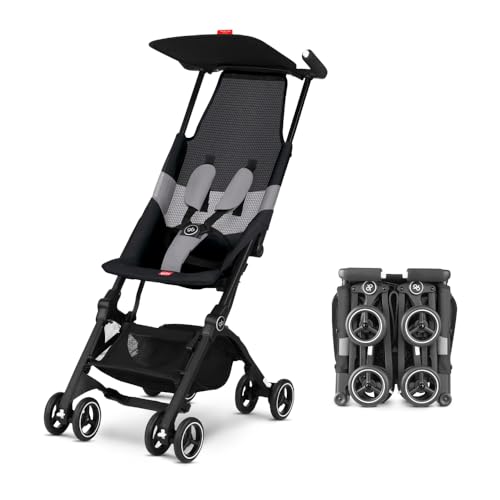
gb Pockit Air vs Mompush Nexis: Lower-Cost Carry-On Strollers Compared
gb Pockit Air All-Terrain vs Mompush Nexis on weight, fold, recline, age range, wheels and basket, and which suits older toddlers, nappers or rare flyers.
Stokke YOYO3 vs Bugaboo Butterfly 2: Which Travel Stroller?
Stokke YOYO3 vs Bugaboo Butterfly 2 on weight, folded size, newborn options, recline and price, with who should pick each and two budget alternatives.