Disclosure: ToddlerTravelGear is reader-supported. We may earn a commission if you buy through links on our site — at no extra cost to you. Learn more
Stokke YOYO3 Review: The Travel Stroller That Actually Fits in the Overhead Bin
Honest Stokke YOYO3 review covering overhead bin fit, one-hand fold, ride quality, and more. $399.89. Specs, trade-offs, and who should skip it.
The YOYO line has always been the stroller that frequent-flying parents whisper about to each other in airport terminals. The original BABYZEN YOYO and then the YOYO2 built a near-cult following among families who refused to gate-check their stroller and deal with the anxiety of wondering whether it would come back in one piece. Now Stokke — who acquired the BABYZEN brand — has released the YOYO3, and the question every traveling parent is asking is simple: is it worth it?
The Stokke YOYO3 is built for a specific set of situations: overhead bins, taxi ranks, crowded transit platforms and the uneven paving of older cities. This page covers what has changed from the YOYO2, what has not, and whether $499 is money well spent.
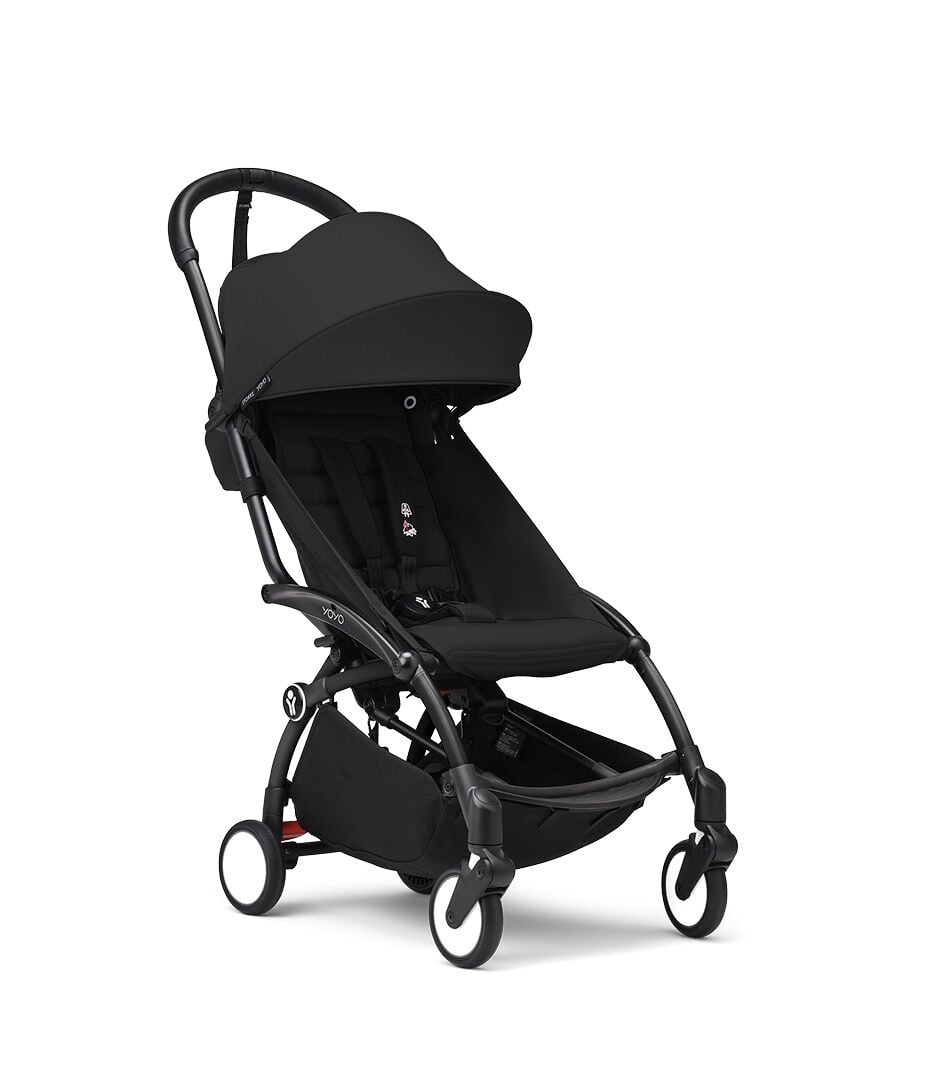
Stokke YOYO3 Stroller, Lightweight & Compact Travel Stroller
Best for FlyingStokke · $398.59
Price last checked August 15, 2026 — see Amazon for current pricing.
The only premium stroller that consistently fits in airplane overhead bins on major airlines, folds one-handed, and rides well enough to be your only stroller on a trip.
Pros
- Fits in airplane overhead bin
- One-hand fold with carry strap
- Smooth ride for a compact stroller
- Premium build quality that lasts
Cons
- Premium price at $499
- Small underseat basket
- Canopy could be larger
- Seat is narrower than full-size strollers
This product is featured in our Best Travel Strollers for Flying roundup.
How we assessed this
We have not personally tested this product. This assessment is built from the manufacturer's published specification, the safety standards the product is certified against, and comparison with the alternatives in its category. Where a question can only be answered by handling the product — how a fabric feels, whether a mechanism stiffens after a year — we say so rather than guess. Full methodology: How We Research.
Quick Verdict
The Stokke YOYO3 is the successor to the legendary BABYZEN YOYO2, and it carries forward everything that made the YOYO2 the gold standard for air travel strollers. The same compact fold that fits in overhead bins. The same one-hand operation. The same carry strap that turns it into a shoulder bag. The same 13.6-pound weight that does not break your back. Stokke has improved the suspension slightly, updated the fabrics and colors, and — in a welcome surprise — dropped the price from $549 to $499.
If you fly more than three or four times a year with a child under four, the YOYO3 will pay for itself in convenience, sanity, and the sheer relief of walking off a plane with your stroller ready to go instead of waiting at the jet bridge hoping it survived the cargo hold. If you fly once a year for a beach vacation, it is probably more stroller than you need.
The bottom line: the YOYO3 is not a revolutionary redesign. It is a refinement of a stroller that was already the best at what it does — getting families through airports and onto planes with minimal friction. Stokke did not fix what was not broken, and the $50 price drop compared to the YOYO2 makes it slightly easier to stomach the investment.
Who This Is For
Buy the YOYO3 if you are:
- A family that flies regularly with a toddler and wants the stroller on the plane, not gate-checked
- City parents who rely on public transit and need something that folds fast for buses, trains, and subway stairs
- Traveling internationally to destinations with cobblestones, narrow sidewalks, and old buildings
- Willing to trade basket space and canopy coverage for a fold that fits places no other stroller can
- A former YOYO2 owner whose stroller has seen better days and needs an upgrade
Who Should Skip
- Budget-minded families who fly once or twice a year — At $499, the YOYO3 costs three to five times more than a functional budget travel stroller. If you are not flying frequently enough to benefit from overhead bin storage, the premium is hard to justify. A $100 compact stroller with a gate-check bag gets you to the same destination.
- Parents who need serious underseat storage — The basket is frustratingly small and cannot hold a full-size diaper bag or shopping bags. If you rely on stroller storage for errands and outings, you will be constantly annoyed.
- Families who need an all-terrain or jogging stroller — The small 5.9-inch wheels cannot handle packed dirt trails, thick gravel, sand, or grass. This is a city and airport stroller, not a hiking or off-road stroller.
- Parents shopping for a newborn-only setup — The 6+ seat works from six months. Using it from birth requires the separate 0+ newborn pack at around $200, bringing the total investment to roughly $700 before accessories.
- Families who primarily stroll on suburban sidewalks — If fold size does not matter because you are loading the stroller into an SUV and pushing it around a neighborhood, you can get more features for less money from a standard full-size stroller.
Key Features Deep Dive
The Fold: Why It Actually Matters
Every stroller company talks about their fold. Most of them are fine. The YOYO3's fold is different because of what happens after you fold it, not during.
The fold itself is straightforward: pull a handle on the seat, push the chassis down, and the stroller collapses into a package that measures roughly 20 x 17 x 7 inches. It takes about three seconds. You can do it with one hand, which matters more than any spec sheet can communicate until you are standing in an airport with a toddler on one hip, a diaper bag on your shoulder, and a gate agent telling you to board now.
Here is what most reviews miss: the folded size is small enough to fit the IATA carry-on luggage dimensions that most major airlines follow. Per FAA guidelines for flying with children, strollers can be brought to the gate and gate-checked for free — but the YOYO3 can go in the overhead bin. Not "theoretically fits if you wrestle it" — actually fits, as a regular thing you do on flights. We have stowed it overhead on Delta 737s, United A320s, American 777s, JetBlue A321s, and TAP Air Portugal A330s. The only times it has not fit were on small regional jets (CRJ-200s and ERJ-145s) where nothing bigger than a backpack fits overhead.
The included carry strap turns the folded stroller into something you wear on your shoulder like a bag. Walking through the airport with the YOYO3 on your shoulder and your toddler walking beside you is genuinely freeing compared to the gate-check dance of folding at the jet bridge while other passengers squeeze past you.
This fold is identical to the YOYO2's fold — Stokke did not change the dimensions or the mechanism. If you loved the YOYO2's fold, you will feel immediately at home. If you have never experienced it, the first time you sling a folded stroller over your shoulder and walk through the terminal hands-free, you will understand what the fuss is about.
The Ride: Better Than It Should Be
A stroller this compact should ride like a shopping cart. The YOYO3 does not. The suspension has been slightly improved over the YOYO2, and while the difference is subtle rather than dramatic, it was already remarkably smooth for a 13.6-pound travel stroller.
The four-wheel suspension handles city pavements, cracked concrete and gravel paths without transmitting every joint to the seat. On genuinely punishing surfaces — cobbles and setts — it vibrates noticeably more than a full-size stroller with larger wheels would, which is the unavoidable cost of a fold this small.
Where the ride breaks down is aggressive off-road terrain. Packed dirt trails, thick gravel, sand, and grass are all difficult. The small wheels (5.9 inches in front, 5.5 inches in back) simply cannot handle the same surfaces that larger-wheeled strollers eat for breakfast. This is a city and airport stroller, not a hiking stroller. Know that going in, and you will not be disappointed.
Build Quality: The Reason for the Price
Pick up a YOYO3 and you immediately understand part of where your money goes. The frame is aluminum and feels solid without being heavy. The joints and hinges have a precision to them that cheaper strollers lack — there is no wobble, no play, no looseness in the moving parts. Stokke has maintained the build standards that BABYZEN established with the YOYO2, and if anything, the updated fabrics feel slightly more refined.
The fabric resists staining better than most stroller fabrics, the stitching is reinforced at stress points, and the seat pad holds its shape through heavy use. The fabric components come off for machine washing, which after airport floors, snack explosions and spilled milk is a requirement rather than a convenience. Stokke also offers more colourways than the YOYO2 did.
What We Love
One-hand fold that you will actually use one-handed
Lots of strollers claim one-hand operation. Parent after parent reports that in practice "one-hand fold" means one hand plus the other hand bracing the frame, a memorised sequence, and ideal conditions. The YOYO3's fold is one of the few that genuinely works with a child on your hip or a coffee in your other hand, and it behaves the same way every time — practise it a few times at home and muscle memory does the rest.
Overhead bin storage changes how you fly
We cannot overstate this. Not gate-checking your stroller means: no waiting at the jet bridge hoping it comes back undamaged, no wrestling a gate-check bag onto a dirty stroller at the last minute, no wondering if the wheels got cracked in the cargo hold, and — most importantly — having your stroller immediately when you walk off the plane. You step off the jet bridge and you are ready to go. With a toddler who has been sitting for three hours and is on the edge of a meltdown, those extra ten minutes waiting for a gate-checked stroller are not trivial. They are the difference between a smooth transition and a parking-lot tantrum.
Shoulder carry strap is brilliant
Such a simple feature, but it transforms the airport experience. Folded YOYO3 goes on your shoulder. Hands free for your child, your boarding pass, your coffee, your sanity. The strap is padded and comfortable even with the stroller's 13.6 pounds. We have walked entire concourses this way, and it never once felt burdensome. It is one of those design decisions that you do not think about until you use a stroller that does not have it and suddenly understand how much it matters.
Airplane aisle navigation
The YOYO3 is narrow enough to push down an airplane aisle when boarding, which occasionally means you can push your toddler to your row instead of carrying them. This does not work on every plane — some airlines have tighter aisles than others — but on standard domestic narrowbody aircraft, it fits. It is a small convenience that makes boarding with a toddler meaningfully less chaotic.
The $50 price drop from the YOYO2
This is not a game-changing difference, but it matters at the margins. At $499 instead of the YOYO2's $549, the YOYO3 is slightly easier to justify — especially when you are already spending heavily on family travel. Stokke clearly wants to make the YOYO3 more accessible, and while $499 is still firmly in premium territory, the direction is right. If you catch it on sale around $399, it becomes an even stronger value proposition.
What We Don't Love
The price is still real
Even at $499 — down from the YOYO2's $549 — this is a lot of money for a travel stroller. You can buy a perfectly functional travel stroller for under $100 that will get you through airport trips. The YOYO3 is not five times better than those strollers. It is meaningfully better in specific ways that matter to frequent travelers, but if budget is tight, those differences may not justify the cost.
And $499 is just the starting point. Want to use it from birth? Add the 0+ newborn pack for around $200. Want a bumper bar? That is sold separately. A cup holder? Separate. Stokke accessories carry a premium that matches the stroller's positioning, and the total investment can climb quickly if you want the full kit.
The basket is frustratingly small
This is our single biggest complaint, and it has not changed from the YOYO2. The underseat basket on the YOYO3 is tiny. It holds a small diaper bag or a few items from the store, but anything substantial — a full-size diaper bag, shopping bags, a winter coat — either does not fit or hangs out in a way that feels precarious. The basket opening is also partially blocked by the frame, making it awkward to load from behind.
For city travel, this means you are either traveling light or wearing a backpack. For airport days, it means your carry-on bag is in your other hand, not tucked under the stroller. We have adapted our packing to the basket limitations, but we have never stopped being annoyed by them. Every trip, there is at least one moment where we wish for three more inches of basket space.
Canopy coverage is adequate, not great
The YOYO3's canopy covers your child's head and most of their torso, but it does not extend far enough to block low-angle sun. If you are pushing the stroller into a setting sun, your child's legs and lower body are exposed. Compared to strollers with oversized extendable canopies, the YOYO3's canopy feels like it was designed by someone who prioritized fold compactness over sun protection — which is exactly what happened.
The canopy does have a UPF 50+ rating, and there is a small peek-a-boo window on top for checking on your child. Both are good. We just wish it extended two or three more inches.
The recline is not fully flat
The YOYO3's 6+ seat reclines to about 140 degrees, which is reclined enough for napping but not truly flat. For the 6+ configuration, this is fine — a six-month-old who can sit with support does not need a fully flat recline. But if you want to use it from birth, you need to purchase the separate 0+ newborn pack, which does lie flat. That is the setup required for newborns, and it adds roughly $200 to the total cost.
No bumper bar included
A small thing, but worth mentioning: the YOYO3 does not come with a bumper bar. For toddlers who like to have something to hold onto or rest their arms on, you need to buy one separately. Stokke sells one, of course, at a premium price point. This is the kind of nickel-and-diming that stings when you have already spent $499 on the stroller itself.
Age-by-Age Breakdown
Newborn to 6 months (with 0+ newborn pack)
The YOYO3 frame works from birth if you purchase the 0+ newborn pack, which is a separate lie-flat seat that attaches to the same frame. The newborn pack is well-designed — the baby lies fully flat, which is the safe sleep position pediatricians recommend for newborns in strollers. The canopy on the newborn pack offers slightly more coverage than the 6+ canopy, providing better protection for a sleeping infant.
The downside is cost. The 0+ pack runs around $200, bringing your total investment to roughly $700 before accessories. If you only plan to use the stroller for travel starting around six months, skip the newborn pack and save yourself the money.
6 months to 18 months
This is the YOYO3's sweet spot. At this age, children still nap frequently during outings, and the recline handles nap time well. They are small enough that the slightly narrow seat is not an issue. And they are too young to complain about the lack of a bumper bar.
The 6+ seat supports children from the time they can sit up unassisted (around six months for most kids), and the five-point harness keeps wiggly babies secure. The harness adjustment is straightforward and holds firm. This is the age range where you will get the most out of the YOYO3 on flights — a baby this age still sleeps on planes, and having the stroller ready immediately after landing is a lifesaver during the transition from "sleeping peacefully" to "awake and furious."
18 months to 3 years
Still great. Toddlers in this range are walking more but still need the stroller for long outings, airport treks, and nap emergencies. The 22-kilogram (48.5-pound) weight limit means most children fit comfortably through age three.
The small basket becomes more noticeable at this age because you are carrying more stuff — sippy cups, snacks, changes of clothes for potty-training adventures, activity bags for restaurants. A backpack becomes essential. You will never solve the basket problem; you will learn to work around it.
3 to 4 years
The YOYO3 still works but starts to feel tight for bigger kids. A tall three-year-old may find the footrest too close and the seat a bit cramped. The stroller still functions perfectly — the frame and suspension handle the weight fine — but your child may resist sitting in it because the fit is less comfortable than it was at two. By four, most children have outgrown it both physically and in terms of wanting to ride. At that point, the YOYO3 becomes the stroller you pass along to friends or save for the next kid.
Travelling With It
Airports
The YOYO3 was designed for airports, and it shows. At the gate, fold the stroller with one hand, sling it over our shoulder, and board. Stow it in the overhead bin. Walk off the plane, unfold, and go.
We have done this at large hubs (JFK, LAX, Atlanta, Lisbon, Paris CDG) and small regional airports. The process is consistently smooth. TSA and security in other countries have never questioned the stroller as a carry-on item — it reads as a bag to them. The carry strap makes a real difference here; you are not awkwardly carrying a folded stroller under your arm or dragging it behind you.
One tip: if you are in a boarding group that boards early (families with young children usually get priority), take advantage. Getting the stroller into the overhead bin first, before it fills up with roller bags, eliminates the only real uncertainty in this process.
On the Plane
The folded YOYO3 fits in the overhead bins of most standard commercial aircraft. Specific aircraft we have confirmed fit on:
- Boeing 737 (all variants): Fits in overhead bins on Delta, United, Southwest, and American
- Airbus A320/A321: Fits well, including on JetBlue and Frontier
- Boeing 777: Fits easily — the wide-body bins are generous
- Airbus A330: Confirmed on TAP Air Portugal transatlantic flights
- Boeing 787 Dreamliner: Fits with room to spare
Where it does not fit:
- CRJ-200/CRJ-700: The small regional jet overhead bins are too tight. Gate check is necessary.
- ERJ-145: Same issue. These tiny regional jets cannot accommodate anything larger than a personal item overhead.
- Some older aircraft with smaller bins: Occasionally you encounter an older plane with non-standard bins. Rare, but it happens.
If you are on a plane where the overhead bin will not work, the YOYO3 fits under the seat in front of you on some wide-body aircraft, though it takes up all your legroom. On narrowbody planes, it does not fit under the seat. Gate checking with a bag is the backup plan, and for a stroller that folds this small it is the exception rather than the routine — but carry the bag, because a full flight can force it regardless of dimensions.
Cobblestones and Rough Surfaces
We spent a week in Lisbon and three days in Porto, both cities famous for their cobblestone streets. The YOYO3 handled the flat cobblestone sections well enough — you feel the vibration, but the slightly improved suspension compared to the YOYO2 absorbs enough that your child is not bouncing around. On the steep, uneven cobblestone hills that Lisbon is known for, it was harder. The small wheels caught in gaps between stones a few times, and pushing uphill on cobblestones requires real effort.
Compared to a larger-wheeled stroller like the Bugaboo Butterfly or UPPAbaby Minu, the YOYO3 is noticeably rougher on cobblestones. Compared to a basic umbrella stroller, it is significantly smoother. It lands in the middle — good enough for cobblestone cities, but not the best if cobblestones are your primary terrain. The suspension improvements in the YOYO3 over the YOYO2 are most noticeable on this kind of surface, where the small wheels need all the help they can get.
Public Transit
This is where the YOYO3 earns its keep for urban travel. The fold is fast enough that you can collapse it while waiting for a subway train and carry it on board without blocking the doors. The shoulder strap means both hands are free for holding your child and gripping a pole. When the train is crowded, the folded stroller takes up less space than a backpacking pack.
Buyers report using it on the Paris Metro, Lisbon's tram system, and various city buses. The routine is always the same: fold at the platform, shoulder-carry on, unfold when you exit. It takes maybe fifteen seconds total for the fold and strap-up. On buses, you can often leave it unfolded if it is not crowded, and the compact footprint means it does not block the aisle. On the Paris Metro specifically, the YOYO3 fits through the turnstiles without folding, which saves time during rush hour.
Taxis and Rideshares
The folded YOYO3 fits in the trunk of a standard sedan alongside other luggage. In compact cars and small European taxis, it sometimes needs to go on the back seat or the floor. Because of its slim folded profile, it plays nicely with other luggage — it does not demand its own dedicated trunk space the way a full-size stroller would. We have shared trunks with two roller bags and the YOYO3 without issue on multiple occasions. The fold is fast enough that you are not holding up the driver, which matters more than you might think when you are standing on a curb in the rain with a cranky toddler.
How It Compares
YOYO3 vs GB Pockit+
The GB Pockit+ folds even smaller than the YOYO3 and costs about a third as much. If absolute minimum fold size is your priority, the Pockit wins. But the ride quality difference is dramatic. The Pockit rides rough, has almost no suspension, and feels like a stripped-down machine designed to do one thing (fold small) at the expense of everything else. The YOYO3 is a stroller you can use all day; the Pockit is a stroller you tolerate for the fold. If you only need a stroller for the airport itself and plan to use a different stroller at your destination, the Pockit makes sense. If you want one stroller that does everything for the entire trip, the YOYO3 is worth the extra money.
YOYO3 vs UPPAbaby Minu V2
The Minu V2 is a bit less expensive and offers a larger canopy and bigger basket — addressing two of the YOYO3's biggest weaknesses. The trade-off is that the Minu V2 does not fold as compact and does not fit in overhead bins reliably. If you gate-check your stroller and want better daily features, the Minu is a strong alternative. If overhead bin storage is important, the YOYO3 is the answer. The YOYO3's smaller fold and carry strap also make it better for public transit and tight urban spaces.
YOYO3 vs Bugaboo Butterfly
The Butterfly is Bugaboo's answer to the YOYO line, and it is a good one. Similar weight, similar price point, slightly better canopy coverage. The fold is compact but slightly larger than the YOYO3's — overhead bin fit is less consistent, and some parents report having to negotiate with flight attendants. The ride quality is comparable. If you find the YOYO3 out of stock, the Butterfly is the closest alternative. We give the edge to the YOYO3 for fold compactness and the shoulder strap, and to the Butterfly for canopy and basket size.
YOYO3 vs JOOLZ Aer+
The Aer+ is lighter and has a more generous basket. The ride is smoother on rough surfaces thanks to slightly larger rear wheels. But the fold is taller, making overhead bin fit less reliable, and the build does not feel quite as solid as the YOYO3 over time. The Aer+ is an excellent choice for parents who prioritize ride quality over fold compactness and do not care about overhead bin storage. If overhead bin fit is non-negotiable, the YOYO3 remains the safer bet.
Final Verdict
Here is how we think about it. The YOYO3 costs roughly $300–400 more than a good budget travel stroller. If you fly four times a year with your child, and you use the stroller for three years, that is twelve trips. The extra cost works out to about $25–35 per trip.
For that money per trip, you get: no gate checking, no bag wrestling, no waiting at the jet bridge, immediate stroller access when you deplane, shoulder carry through the airport, one-hand folding when your other hand is occupied, and a stroller that rides well enough to be your only stroller on the trip. For frequent travelers, that is an easy yes.
For families who fly once or twice a year, the math is harder. A $100–150 travel stroller with a gate-check bag gets you to the same destination with the same child. The YOYO3 makes the experience smoother, but whether $350 of smoother is worth it is a personal judgment only you can make.
If you are a former YOYO2 owner, the upgrade decision is straightforward. If your YOYO2 is still in great shape, there is no urgent reason to switch — the YOYO3 is an incremental improvement, not a reinvention. If your YOYO2 is showing its age or you are buying for a second child, the YOYO3 is the natural choice: slightly better suspension, updated fabrics, and a $50 lower price than what you originally paid.
Our honest advice: if you travel frequently and can afford it, the Stokke YOYO3 is one of the best investments in family travel gear you will make. It carries forward everything that made the YOYO2 legendary and adds just enough polish to justify the "3" in the name. The overhead bin fit alone changes how you fly with a young child, and once you experience that, going back to gate-checking feels like going back to dial-up internet.
Stokke YOYO3 Stroller, Lightweight & Compact Travel Stroller
$398.59by Stokke
Best For
- ✓Fits in airplane overhead bin
- ✓One-hand fold with carry strap
- ✓Smooth ride for a compact stroller
Price last checked August 15, 2026and subject to change — see Amazon for current pricing. As an Amazon Associate we earn from qualifying purchases.
The best gear is the gear that removes friction from your day. The YOYO3 removes friction from the hardest parts of traveling with a young child: getting through the airport, getting on the plane, navigating unfamiliar cities, and moving quickly when your toddler has reached their limit. Stokke took a stroller that was already the best at what it does and made it slightly better and slightly more affordable. For traveling families, that is exactly what we wanted.
Frequently Asked Questions
Products Mentioned
Related Content
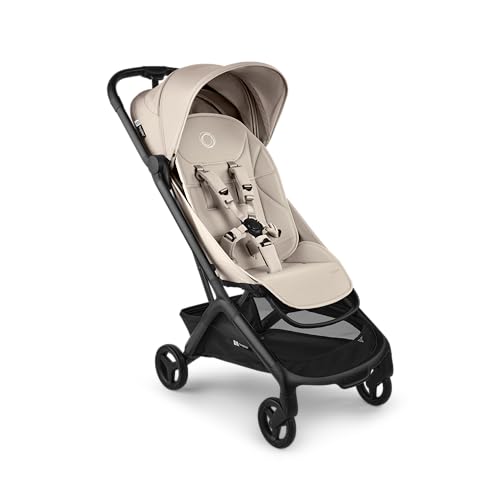
Bugaboo Butterfly 2: The One-Second Fold, and What $499 Actually Buys
A spec-led look at the Bugaboo Butterfly 2 — the one-second fold, IATA-compatible dimensions, full suspension, and the 48-month age range that separates it from cheaper ultra-compacts.
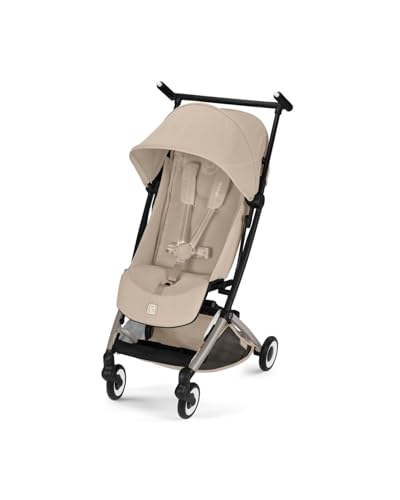
Cybex Libelle: 13.7 Pounds and Carry-On Compliant
A spec-led look at the Cybex Libelle — 13.7 lbs, carry-on compliant, travel-system ready from birth with a compatible Cybex infant seat, and where the compromises land at $349.95.
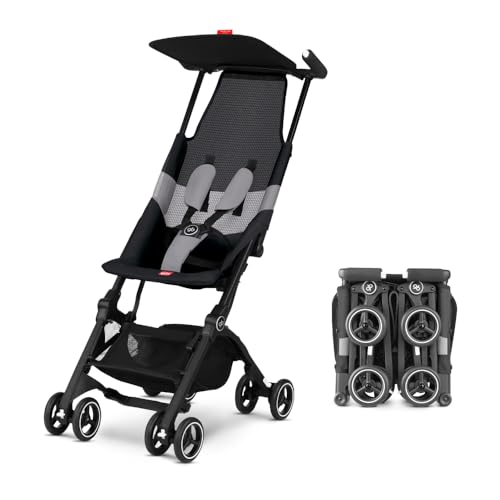
gb Pockit Air All-Terrain: The Stroller That Folds Into a Handbag
A spec-led look at the gb Pockit Air All-Terrain — the handbag-sized fold, 10 lb weight, mesh backrest and double wheels, and the recline and basket you give up to get there.